
How a Father-Daughter Duo Built a $428,000 Fidget Toy Business in the Booming 'Feelconomy'
Former teacher Victoria Baumann and her father turned a 3D-printing hobby into a lucrative business, tapping into a global sensory toy market projected to reach $17.6 billion by 2034.
By Factlen Editorial Team
- Creator-Entrepreneurs
- Independent makers leveraging 3D printing to build direct-to-consumer businesses.
- Market Analysts
- Financial researchers tracking the macroeconomic growth of the sensory toy industry.
- Sensory Health Advocates
- Therapists and educators advocating for the destigmatization of adult fidgeting.
What's not represented
- · Traditional Toy Manufacturers
- · Environmental Critics of Plastic Toys
Why this matters
The success of micro-manufacturers highlights a massive shift in consumer behavior: adults are increasingly spending on tactile, sensory tools to manage digital fatigue and anxiety, creating a multi-billion-dollar market for niche creators.
Key points
- Former teacher Victoria Baumann and her father built a $428,000 business selling 3D-printed fidget clickers.
- The toys use mechanical keyboard switches to provide satisfying tactile feedback for stress relief.
- The global fidget toy market is projected to grow from $9.57 billion in 2026 to $17.65 billion by 2034.
- Demand is driven by the 'Feelconomy,' as adults increasingly purchase sensory tools to manage anxiety and digital fatigue.
- Desktop 3D printing allows independent creators to bypass traditional manufacturing and scale rapidly.
When Victoria Baumann realized her teaching career was leading to severe burnout, she didn't just change schools—she changed industries. Partnering with her 51-year-old father, Charlie Moreton, the 32-year-old transformed a side hustle into Victoria Essie Studio, a North Carolina-based business that generated $428,000 in revenue last year.[1]
The father-daughter duo specializes in 3D-printed fidget clickers. Unlike the spinning toys that dominated classrooms a decade ago, these devices are designed with the exact mechanical components found in high-end mechanical keyboards. The result is a satisfying, tactile "click" that users can press repeatedly to help regulate their focus and emotions.[1]
Moreton, a 3D-printing hobbyist, joined the venture after discovering designs that perfectly matched his daughter's artistic vision: cute, colorful, and heavily influenced by Y2K nostalgia. By sharing ASMR-style, behind-the-scenes videos of their manufacturing process on social media, the studio captured the attention of millions, turning a two-printer home operation into a full-fledged manufacturing hub.[1][4]
Victoria Essie Studio's rapid ascent is not an isolated phenomenon; it is a micro-example of a massive macroeconomic shift. The global fidget toy market is currently valued at $9.57 billion and is projected to nearly double to $17.65 billion by 2034. What was once dismissed as a playground fad has matured into a sustained, high-growth consumer category.[2]

Analysts attribute this surge to the rise of the "Feelconomy"—a consumer trend where individuals purchase small, affordable goods specifically to manage their emotional states. With rising living costs and pervasive digital fatigue, young adults and university students are increasingly seeking out physical, tactile comforts that offer immediate stress relief without breaking the bank.[3]
The demographic for these toys has fundamentally shifted. While fidgets were originally marketed toward children, they are now commonplace on office desks and university campuses. Health experts note that tactile tools are particularly beneficial for individuals managing anxiety, attention deficit hyperactivity disorder (ADHD), and Autism Spectrum Disorders (ASD), helping to keep the hands busy so the mind can focus.[1][3][4]
While fidgets were originally marketed toward children, they are now commonplace on office desks and university campuses.
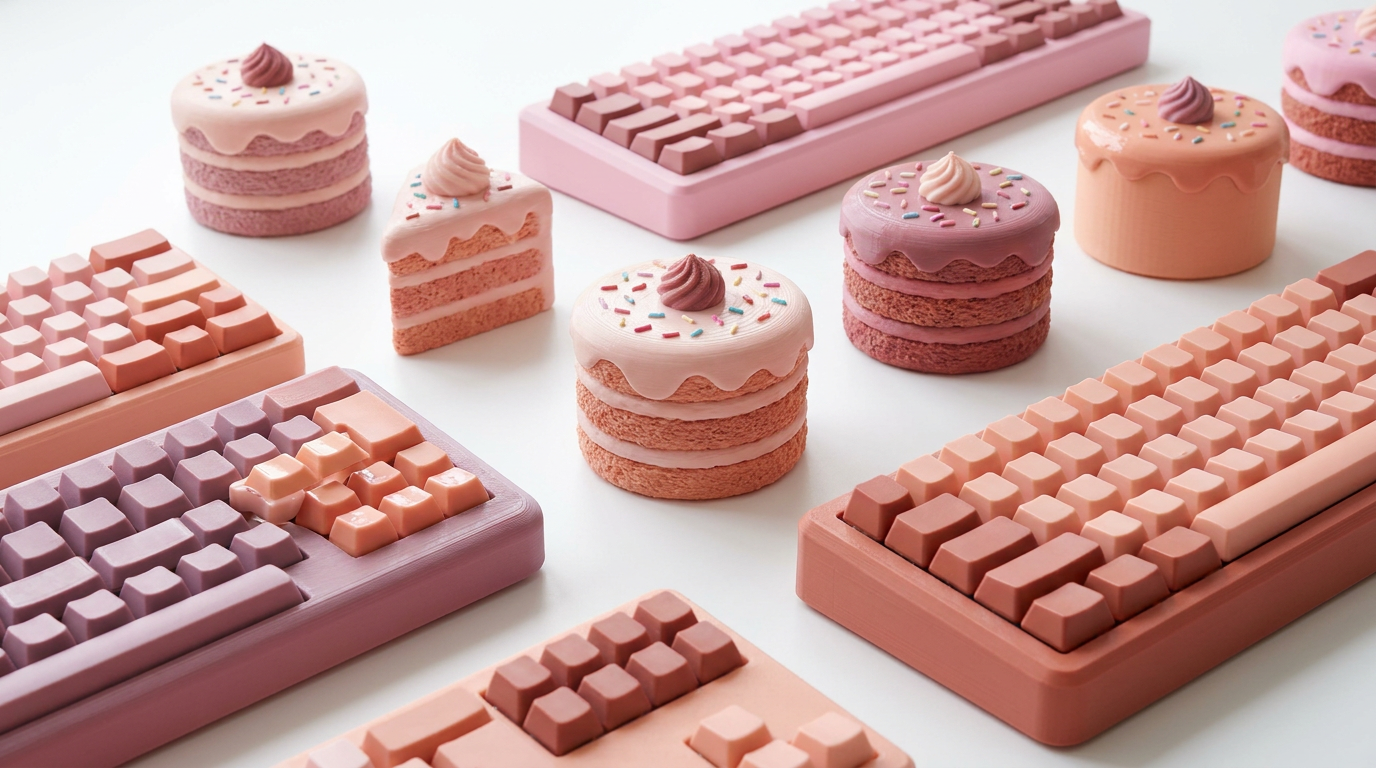
The aesthetic appeal of these modern fidgets is a far cry from the utilitarian medical devices of the past. By leaning into pastel palettes, food-inspired shapes like cake slices, and retro gaming motifs, creators are destigmatizing sensory aids. They are positioned as lifestyle accessories rather than therapeutic crutches, which broadens their appeal to a mainstream audience looking for "desk jewelry" that doubles as a stress reliever.[4][6]
The demand is so robust that it is reshaping global wholesale markets. B2B platforms have reported a 24% year-over-year growth in buyers seeking squeeze and clicker toys, with retailers scrambling to stock products that cater to budget-conscious, stress-seeking consumers. Plastic remains the dominant material, accounting for over 52% of the market due to its durability and cost-effectiveness.[2][5]

For creators like Baumann and Moreton, the barrier to entry has never been lower. Desktop 3D printing allows independent designers to bypass traditional overseas manufacturing, iterating on designs rapidly and producing goods on demand. This agile model allows small studios to respond to internet trends in real-time, a distinct advantage over legacy toy manufacturers.[1][6]
As home-based plastic manufacturing scales, creators are also addressing environmental concerns. Victoria Essie Studio, for instance, utilizes PLA (polylactic acid)—a biodegradable bioplastic derived from renewable resources like corn starch. Scrap materials from test prints are repurposed, and leftover plastics are sent to specialized recycling facilities, mitigating the carbon footprint of their viral success.[4]
The business model also relies heavily on the digital creator economy. Rather than designing every product from scratch, the studio licenses 3D models from independent artists through platforms like Patreon, creating a collaborative ecosystem where multiple creators profit from a single viral trend.[4][6]

Looking ahead, industry analysts expect the market to fragment further into specialized niches. While mass-produced silicone poppers dominate big-box retailers, the premium segment—characterized by custom 3D-printed clickers, weighted metal sliders, and artisanal designs—is where independent creators are finding their most lucrative margins.[2][6]
The success of Victoria Essie Studio underscores a broader truth about the modern creator economy: niche passions, when combined with accessible manufacturing tech and viral marketing, can yield life-changing revenue. For Baumann, who left the burnout of the classroom behind, the satisfying click of a mechanical switch has provided both financial independence and a blueprint for the next generation of home-based entrepreneurs.[1][6]
How we got here
Late 2010s
Fidget spinners become a massive global fad, primarily marketed toward children and students.
2018
Victoria Baumann starts Victoria Essie Studio as a side hustle selling watercolor paintings and jewelry.
2019
Experiencing severe burnout, Baumann quits her full-time teaching job.
2022
Baumann transitions Victoria Essie Studio into her full-time career.
2025
Charlie Moreton joins the business, introducing 3D-printed mechanical fidget clickers that drive $428,000 in annual revenue.
2026
The global fidget toy market reaches $9.57 billion, driven heavily by adult consumers and the 'Feelconomy'.
Viewpoints in depth
Creator-Entrepreneurs
Independent makers leveraging 3D printing and social media to build direct-to-consumer businesses.
For former teachers like Victoria Baumann, the creator economy offers an escape from traditional workplace burnout. By utilizing accessible desktop 3D printing and viral social media marketing, these entrepreneurs can bypass legacy manufacturing and retail gatekeepers. They argue that the low barrier to entry allows for rapid iteration, enabling them to serve niche communities—like adults seeking aesthetically pleasing sensory tools—that major toy corporations historically ignored.
Market Analysts
Financial researchers tracking the macroeconomic growth of the sensory toy industry.
Industry analysts view the fidget toy boom not as a fleeting social media trend, but as a sustained consumer category driven by the 'Feelconomy.' They point to the projected $17.65 billion market size by 2034 as evidence that tactile stress-relief tools are becoming permanent fixtures in adult life. From a B2B perspective, analysts note that the demand for diverse materials—from biodegradable PLA to premium metals—indicates a maturing market with distinct budget and luxury segments.
Sensory Health Advocates
Therapists and educators advocating for the destigmatization of adult fidgeting.
Mental health professionals and neurodivergent advocates emphasize the functional benefits of tactile tools. They argue that devices mimicking mechanical keyboard switches provide essential sensory feedback that helps regulate the nervous system, particularly for individuals with ADHD or ASD. This camp celebrates the mainstreaming of fidget toys, noting that when sensory aids are redesigned as trendy, Y2K-inspired desk accessories, it removes the clinical stigma and normalizes emotional regulation in public and professional spaces.
What we don't know
- Whether the current boom in adult sensory toys will sustain its projected growth rate or plateau as a passing cultural trend.
- How legacy toy manufacturers will adapt to compete with the agile, direct-to-consumer models of independent 3D-printing studios.
Key terms
- Feelconomy
- A consumer trend where individuals purchase small, affordable goods specifically to manage their emotional state and relieve stress.
- PLA (Polylactic Acid)
- A biodegradable bioplastic derived from renewable resources like corn starch, commonly used in 3D printing.
- Mechanical Switch
- A physical mechanism used under the keys of high-end computer keyboards, prized in fidget toys for its satisfying tactile click.
- ASMR
- Autonomous Sensory Meridian Response; a tingling sensation triggered by specific auditory or visual stimuli, often used in marketing to highlight the satisfying sounds of a product.
Frequently asked
How much money did Victoria Essie Studio make?
The father-daughter business generated $428,000 in revenue in 2025 by selling 3D-printed fidget toys.
Why are adults buying fidget toys?
Adults use fidget toys to manage stress, digital fatigue, and anxiety. The trend is part of the 'Feelconomy,' where consumers seek small, tactile comforts to regulate their emotions.
Are 3D-printed plastic toys bad for the environment?
Many independent creators, including Victoria Essie Studio, use PLA, a biodegradable bioplastic made from renewable resources like corn starch, and recycle their scrap materials to reduce environmental impact.
How big is the fidget toy market?
The global fidget toy market is valued at $9.57 billion in 2026 and is projected to reach $17.65 billion by 2034.
Sources
Source coverage
6 outlets
3 viewpoints surfaced





[1]CNBCCreator-Entrepreneurs
32-year-old quit teaching and built a fidget-toy business with her dad. It brought in $428,000 last year
Read on CNBC →[2]Fortune Business InsightsMarket Analysts
Fidget Toys Market Size, Share, Trends | Growth Report
Read on Fortune Business Insights →[3]The University LifeSensory Health Advocates
The Rise of Sensory Fidget Toys
Read on The University Life →[4]Victoria Essie StudioCreator-Entrepreneurs
Frequently Asked Questions
Read on Victoria Essie Studio →[5]Alibaba.com Seller BlogMarket Analysts
Squeeze Toy Material Selection Guide 2026
Read on Alibaba.com Seller Blog →[6]Factlen Editorial TeamSensory Health Advocates
Synthesis by Factlen editorial team
Read on Factlen Editorial Team →
Every angle. Every day.
Get business stories with full source coverage and perspective breakdowns delivered to your inbox.