
UEFA Women's Champions League Final Shatters Viewership Records, Validating New Format
The 2026 final in Oslo set a new attendance record for women's football in Norway, while the tournament's revamped 18-team structure drove unprecedented global broadcast audiences.
By Factlen Editorial Team
- European Broadcasters
- Argue that removing paywalls and prioritizing free-to-air distribution is the fastest way to build a generational fanbase and drive market share.
- Tournament Organizers
- Emphasize that the 18-team Swiss model and the new Europa Cup are essential for competitive balance and ecosystem depth.
- Sports Media & Analysts
- Focus on the commercial validation of the sport, noting that selling out a stadium in Oslo proves its standalone drawing power.
What's not represented
- · Domestic league organizers
- · Players' union representatives
Why this matters
The massive commercial and competitive success of the 2026 season proves that structural investments in women's sports yield exponential returns. By prioritizing free-to-air accessibility and expanding the competitive ecosystem, organizers have established a sustainable blueprint that will shape the future of global club football.
Key points
- The 2026 UEFA Women's Champions League final in Oslo set a new attendance record for women's football in Norway.
- A revamped 18-team league format successfully reduced lopsided victories and increased competitive balance.
- Free-to-air broadcasting by 22 EBU networks drove cumulative tournament viewership past 40 million.
- Official social media channels saw a 50 percent year-over-year increase, nearing one billion video views.
- The season also marked the successful debut of the second-tier UEFA Women's Europa Cup.
The 2025/26 European women's club football season has officially concluded, and the final tallies reveal a watershed moment for the sport. When the final whistle blew in Oslo late last month, it marked more than just the crowning of a champion. It provided concrete validation for a massive structural gamble taken by the sport's governing bodies. After years of predictable group stages and concentrated dominance by a handful of elite clubs, organizers completely overhauled the competitive ecosystem. The resulting data—spanning stadium attendance, television ratings, and digital engagement—suggests the redesign was a resounding success.[1][6]
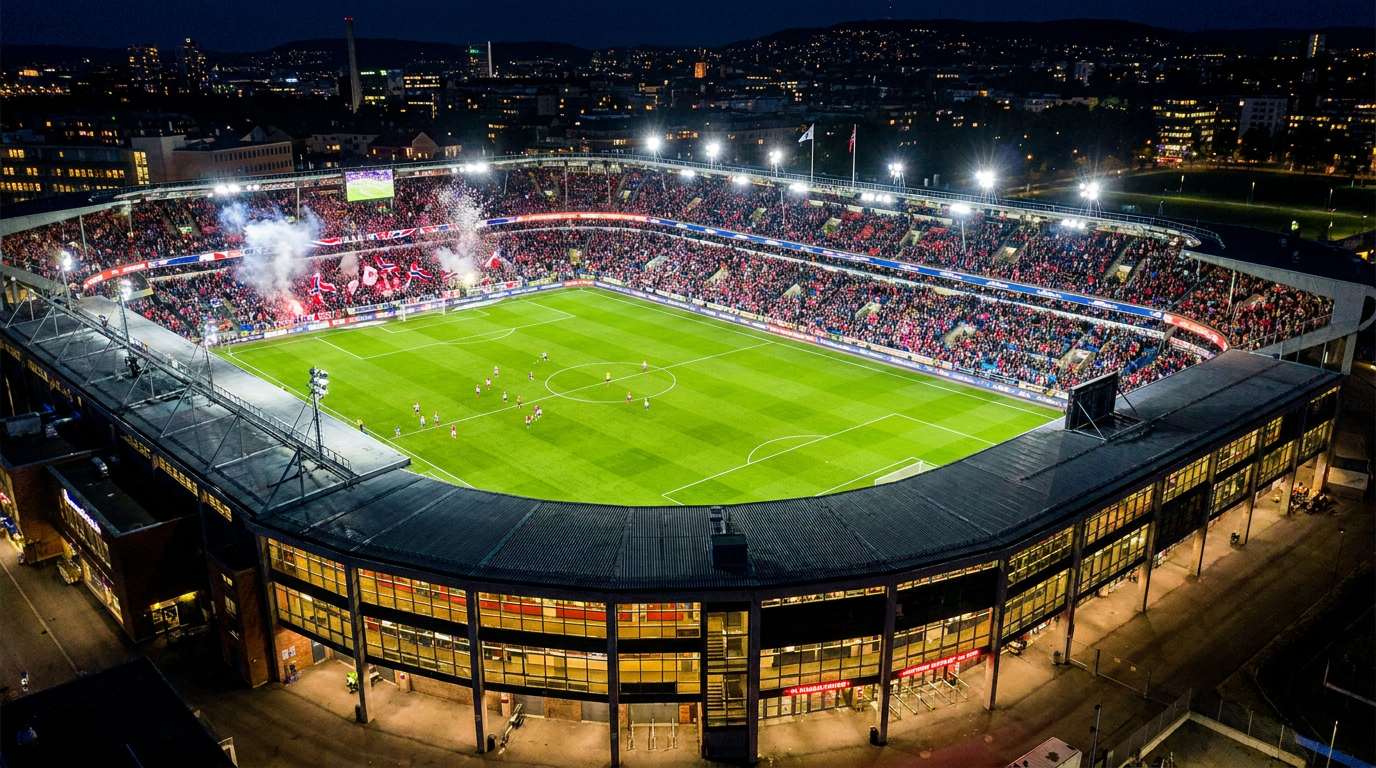
On May 23, FC Barcelona defeated Olympique Lyonnais 4–0 at the Ullevaal Stadion in Norway to capture their fourth UEFA Women's Champions League title. The matchup featured the two most dominant forces in the modern women's game, delivering a marquee conclusion to a season defined by sweeping changes. While the two finalists were familiar faces on the European stage, the path they took to reach the Norwegian capital was entirely unprecedented, testing the depth and endurance of their respective rosters against a wider array of continental challengers.[1][3]
The event itself shattered local benchmarks and proved the viability of emerging markets. An official crowd of 24,258 packed the historic Oslo venue, setting a new all-time attendance record for any women's football match in Norway. The decision to host the final outside of traditional massive European football hubs like London or Barcelona was a deliberate test of the sport's expanding geographic appeal. By filling a mid-sized national stadium to capacity, organizers demonstrated that the women's game possesses the standalone cultural gravity to anchor a major international event anywhere on the continent.[1][4]
But the most staggering metrics emerged off the pitch, driven by a concerted effort to remove barriers to entry for fans. According to the European Broadcasting Union (EBU), the tournament's new free-to-air broadcast strategy yielded unprecedented global engagement. For the first time, 22 EBU member networks broadcast the final live, prioritizing wide accessibility over the short-term revenue of paywalled exclusivity. This coordinated rollout ensured that the sport's premier showcase was available in millions of living rooms that might otherwise have been excluded.[2]

The localized television ratings underscore the strategy's overwhelming success. In Spain, public broadcaster RTVE recorded a historic high for the competition, drawing an average audience of 1.15 million viewers and capturing a massive 14.9 percent market share. In the host nation of Norway, the numbers were even more concentrated; NRK saw a peak audience of 264,000, commanding nearly 37 percent of all active television viewers during the match. In Portugal, RTP1 reached a total audience of 872,000, proving the appeal extended well beyond the home countries of the finalists.[2][3]
Across the entire tournament, cumulative viewership had already eclipsed 39.7 million before the final even kicked off. Organizers project the final global tally will surpass 44.5 million viewers once all regional data is finalized—more than double the audience of the previous season. This exponential leap in viewership represents a fundamental shift in how women's club football is consumed, transitioning from a niche broadcast property into a mainstream sporting staple capable of anchoring weekend television schedules across multiple European nations. The sheer volume of viewers provides a compelling data point for future commercial negotiations, proving the sport's value to advertisers and sponsors.[1][2]
Across the entire tournament, cumulative viewership had already eclipsed 39.7 million before the final even kicked off.
Digital engagement mirrored the broadcast boom, capturing a younger, highly active demographic. Official tournament channels generated nearly 950 million video views across social media platforms throughout the campaign. This represents a 50 percent year-over-year increase, signaling a rapidly expanding audience engaging with the sport's daily narratives, highlight reels, and behind-the-scenes content. The near-billion view milestone confirms that fan interest is no longer limited to the 90 minutes of match play, but extends into a continuous digital conversation. Players are increasingly recognized as global influencers, and the viral nature of the tournament's best goals and dramatic comebacks has helped cultivate a dedicated online community that drives sustained interest between match weeks.[1][3]
Analysts and organizers attribute this explosive growth directly to the tournament's radically revamped format. The 2025/26 season was the first to abandon the traditional 16-team group stage in favor of an 18-team single-league phase. This shift was designed to address long-standing criticisms that the early stages of the competition were too predictable, often featuring severe mismatches between fully professional juggernauts and semi-professional clubs from smaller leagues. By restructuring the preliminary rounds, UEFA aimed to elevate the baseline quality of play and ensure that every match carried tangible stakes for qualification.[1][6]

Under the new 'Swiss model' system, teams play a wider variety of opponents in the preliminary rounds rather than facing the same three clubs twice. The top four clubs advance automatically to the quarter-finals, while those finishing fifth through twelfth enter a high-stakes, two-legged playoff round. The structure was explicitly designed to eliminate dead-rubber matches and force heavyweight clashes earlier in the calendar, ensuring that broadcasters and fans were treated to premium matchups from the opening week of the season. This dynamic format kept the league table fluid and unpredictable, rewarding consistent performance while punishing early complacency.[1]
The competitive data strongly supports the redesign. UEFA reported a significant reduction in lopsided victories during the league phase, with nearly half of all matches ending in narrow, one-goal margins. Comeback victories also occurred at a noticeably higher rate than in previous iterations, keeping audiences engaged through the final minutes of play. The days of double-digit blowouts in the Champions League appear to be fading, replaced by a much tighter, more fiercely contested middle class of European clubs. This competitive parity is essential for retaining neutral viewers, who are far more likely to tune into a closely fought battle than a predetermined rout.[3]
Beyond the premier competition, the 2025/26 season also saw the successful launch of the UEFA Women's Europa Cup. This newly minted second-tier tournament provides a continental proving ground for clubs that fall short of the Champions League, effectively doubling the number of professional women's teams gaining vital European experience. The introduction of this tournament mirrors the highly successful structure of the men's game, offering a crucial stepping stone for ambitious programs. By expanding the footprint of European competition, UEFA has ensured that a single domestic stumble does not lock a quality team out of international play for an entire year.[1]
The creation of a secondary tournament is a crucial step in building a sustainable economic ecosystem. It allows emerging clubs in developing leagues to secure broadcast revenue, attract international sponsors, and retain top-tier talent who might otherwise migrate to a handful of super-clubs. By distributing wealth and high-level match experience more broadly across the continent, the Europa Cup helps raise the overall standard of the women's game, ensuring that the Champions League itself remains fiercely competitive in the years to come. A deeper pool of battle-tested clubs ultimately benefits the entire sport, creating a more resilient and commercially viable industry.[1][5]

The success in Oslo also sets a powerful precedent for future host cities. By proving that a mid-sized market can sell out a major stadium and anchor a global broadcast event, organizers have opened the door for a wider variety of nations to bid for future finals. The vibrant atmosphere at Ullevaal Stadion demonstrated that the passion for women's football is not confined to a few select countries, but is a genuinely pan-European phenomenon capable of transforming a host city into a festival of the sport. This geographic diversification is vital for inspiring the next generation of players and fans across different cultures and communities.[4][5]
As the sport looks toward the 2027 cycle and the upcoming expansion of the FIFA Women's Club World Cup, the blueprint established this season will serve as the foundation. The 2026 campaign demonstrated that when structural investment meets accessible broadcasting, the audience for women's club football is not just growing—it has definitively arrived. The record-breaking numbers out of Oslo are not an anomaly, but the new baseline for a sport that has finally been given the platform it deserves. With a proven format, a thriving secondary competition, and an audience of tens of millions tuning in free-to-air, the European women's game enters its next era stronger and more visible than ever before.[1][2][6]
How we got here
July 2023
UEFA announces the bidding process for the 2026 and 2027 Women's Champions League finals.
May 2024
Ullevaal Stadion in Oslo is officially selected to host the 2026 final.
August 2025
The newly expanded 18-team single-league phase kicks off the 2025/26 season.
May 23, 2026
Barcelona defeats Lyon 4-0 in front of a record-breaking crowd in Oslo.
June 2026
The EBU releases broadcast data confirming record-shattering global viewership.
Viewpoints in depth
European Broadcasters
Advocates for free-to-air distribution as the primary engine for audience growth.
Public broadcasting networks argue that the staggering viewership numbers in countries like Spain and Norway prove that accessibility is the key to building a generational fanbase. By removing paywalls, broadcasters were able to capture casual viewers who might not have sought out the match otherwise, ultimately driving up market share and proving the sport's viability to major advertisers.
Tournament Organizers
Focuses on how structural changes improved the competitive integrity of the sport.
Governing bodies like UEFA point to the reduction in blowout victories and the increase in narrow margins as proof that the 18-team 'Swiss model' was a necessary evolution. They argue that forcing heavyweight clashes earlier in the tournament and introducing the Europa Cup has elevated the baseline quality of play across the continent, ensuring that every match carries tangible stakes.
Sports Media & Analysts
Highlights the commercial and cultural validation of the women's game.
Industry observers note that selling out a mid-sized national stadium in Oslo—rather than relying on traditional football capitals like London or Barcelona—demonstrates the standalone drawing power of women's club football. Analysts argue this geographic diversification sets a sustainable blueprint for future growth, proving the sport can anchor major international events across a wider variety of European markets.
What we don't know
- Whether the massive free-to-air viewership numbers will translate into more lucrative commercial broadcast rights in the next cycle.
- How the introduction of the FIFA Women's Club World Cup will impact the scheduling and physical demands on top European clubs.
Key terms
- Swiss model
- A tournament format where teams play a set number of games against different opponents in a single massive league table, rather than being divided into small, isolated groups.
- Free-to-air
- Television broadcasts that are available to the public without a subscription or paywall, maximizing potential audience reach.
- UEFA Women's Europa Cup
- A newly introduced second-tier continental club competition designed to give more European teams international playing experience.
- Market share
- The percentage of all active television viewers in a specific region who are tuned into a particular broadcast at a given time.
Frequently asked
Who won the 2026 UEFA Women's Champions League?
FC Barcelona defeated Olympique Lyonnais 4-0 in the final to claim the title.
Where was the 2026 final held?
The match took place at the Ullevaal Stadion in Oslo, Norway, setting a new national attendance record for women's football.
How many people watched the tournament?
Cumulative global viewership is projected to surpass 44.5 million, more than double the previous season's total, driven by free-to-air broadcasting.
What was the new format for the 2025/26 season?
The tournament replaced its 16-team group stage with an 18-team single-league phase, ensuring more competitive matchups and fewer lopsided victories.
Sources
Source coverage
6 outlets
3 viewpoints surfaced





[1]UEFATournament Organizers
A new era peaks in Oslo: UEFA Women's Champions League and UEFA Women's Europa Cup reshape the landscape
Read on UEFA →[2]European Broadcasting UnionEuropean Broadcasters
EBU delivers strong audiences for Women's Champions League Final 2026
Read on European Broadcasting Union →[3]Mundo DeportivoSports Media & Analysts
Women's Champions League breaks records with huge audiences and sold out stadiums
Read on Mundo Deportivo →[4]Visit OsloTournament Organizers
UEFA Women's Champions League final 2026
Read on Visit Oslo →[5]Vodafone TravelSports Media & Analysts
UEFA Women's Champions League Final: How did we get here?
Read on Vodafone Travel →[6]Factlen Editorial TeamSports Media & Analysts
Synthesis by Factlen editorial team
Read on Factlen Editorial Team →
More in sports
See all 13 stories →Injury
Tour de France 2026 Injury Report: Carapaz Returns as Van Aert and Tarling Face Setbacks
0 sources

Standings
Isaac Del Toro Claims Tour Auvergne-Rhône-Alpes Title in Dominant Pre-Tour Display
0 sources
Injury
UFC Injury Report: 5-Year Leg Rehab Culminates in July Return, Aspinall Nears Clearance
0 sources

Academy Investment
European and Global Football Bodies Unleash Record Investments in Women's Academies and Grassroots
0 sources
Every angle. Every day.
Get sports stories with full source coverage and perspective breakdowns delivered to your inbox.