
How Parametric Insurance Uses Real-Time Data to Eliminate Claims Adjusters
A new model of insurance bypasses the traditional claims process by triggering automatic payouts based on objective data like weather sensors and flight logs. By removing human adjusters from the equation, parametric policies are delivering funds to affected individuals and businesses in days rather than months.
By Factlen Editorial Team
- Insurtech Innovators
- Argue that automated, data-driven policies eliminate friction, reduce fraud, and provide crucial immediate liquidity to policyholders.
- Global Resilience Advocates
- Focus on the macroeconomic benefits, noting that rapid parametric payouts are essential for developing nations recovering from climate disasters.
- Consumer Regulators
- Emphasize the dangers of basis risk and stress the need for transparent marketing so buyers understand they are not guaranteed full indemnity.
What's not represented
- · Traditional Claims Adjusters
- · Small Business Owners
Why this matters
Traditional insurance often involves months of paperwork, disputes, and delayed payouts when money is needed most. Parametric insurance offers a faster, transparent alternative that could fundamentally change how you protect your home, travel, and business against unpredictable events.
Key points
- Parametric insurance pays out automatically based on data triggers, eliminating the need for claims adjusters.
- The model relies on independent 'oracles' like weather sensors, satellites, and flight logs to verify events.
- Payouts are typically processed in days rather than months, providing immediate liquidity after a disruption.
- The primary drawback is 'basis risk'—the possibility that a policyholder suffers damage but the specific data trigger is not met.
The aftermath of a severe storm or a canceled flight usually kicks off a secondary, bureaucratic disaster: the insurance claim. For decades, the fundamental model of insurance has relied on a process of "indemnity," where a policyholder suffers a loss, files a claim, and waits for a human adjuster to verify the damage. This process is inherently adversarial and notoriously slow, often taking months to resolve while the policyholder remains out of pocket. But a quiet revolution in financial technology is replacing the adjuster's clipboard with real-time data feeds, fundamentally altering how risk is managed.[2][4]
Enter parametric insurance, a model that discards the traditional claims investigation entirely. Instead of paying out based on the assessed value of physical damage, a parametric policy pays a pre-agreed, fixed amount when a specific, objective event occurs. If a hurricane's wind speeds cross a certain threshold, or an earthquake hits a specific magnitude on the Richter scale, the policy triggers automatically. There is no haggling over the cost of drywall or the depreciation of a roof; if the data confirms the event happened, the money is wired immediately.[2][6]
The mechanism relies on three core components: a measurable trigger, an independent data source (often called an "oracle"), and a pre-defined payout matrix. The trigger must be entirely objective and outside the control of either the insurer or the insured. For example, a policy might stipulate a $10,000 payout if the National Weather Service records more than 10 inches of rain in a 24-hour period at a specific zip code. Because the parameters are binary—the event either happened or it didn't—the administrative overhead of processing the claim drops to near zero.[1][2]

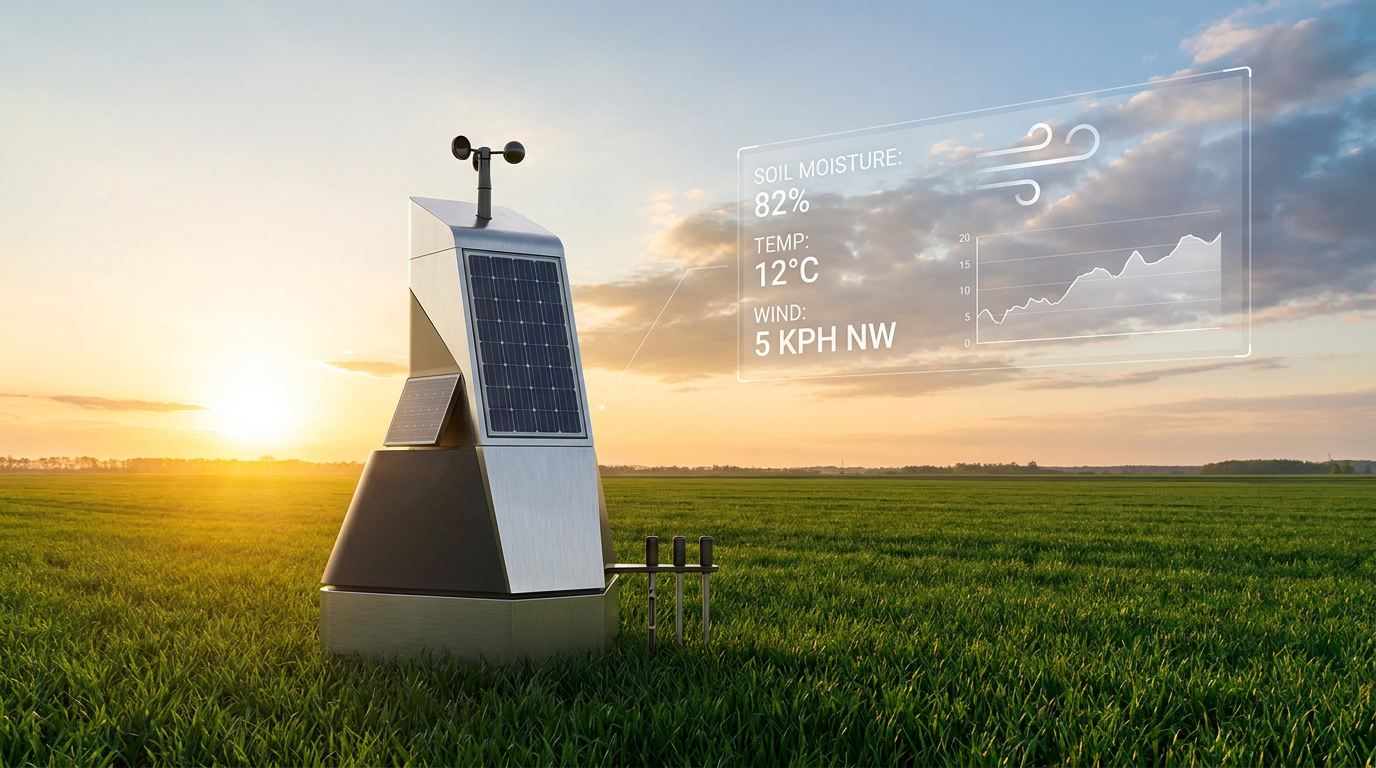
This model is only possible today because of the explosion of high-fidelity, real-time data. In the past, verifying hyper-local weather conditions or supply chain disruptions was difficult and expensive. Today, a global network of IoT (Internet of Things) sensors, commercial satellites, and automated reporting APIs provides a continuous stream of verifiable truth. Insurtech startups are leveraging this data infrastructure to build automated smart contracts that constantly monitor these feeds, ready to execute payouts the moment a threshold is breached without any human intervention.[3][6]
While parametric insurance originated in high-level corporate finance, it is now reaching everyday consumers, most visibly in travel insurance. Several modern travel policies now include parametric flight delay coverage. If a traveler's flight is delayed by more than two hours, the airline's automated departure data triggers the policy. The traveler receives a text message with a cash transfer or a lounge pass before they even reach the customer service desk. This micro-insurance model transforms a frustrating delay into a seamlessly resolved inconvenience.[4]
On a larger scale, parametric policies are becoming a lifeline for the agricultural sector. Traditional crop insurance requires adjusters to physically inspect fields after a drought or flood, a process that can take entire growing seasons to settle. With parametric coverage, farmers can purchase policies tied to soil moisture sensors or satellite-measured rainfall data. If a severe drought metric is hit by mid-July, the payout is distributed immediately, allowing the farmer to purchase alternative feed or replant a different crop before the season is entirely lost.[2][3]

On a larger scale, parametric policies are becoming a lifeline for the agricultural sector.
The macroeconomic applications are even more profound, particularly for developing nations highly vulnerable to climate change. The World Bank has pioneered the use of parametric catastrophe bonds for countries in the Caribbean and the Pacific. When a major cyclone strikes, these nations do not have the luxury of waiting for international damage assessments to fund emergency response. Parametric triggers ensure that sovereign governments receive tens of millions of dollars in liquidity within days of a disaster, financing immediate rescue and rebuilding efforts when every hour counts.[5]
Traditional insurance giants are eagerly adopting parametric models because they solve one of the industry's most expensive problems: claims management. Maintaining armies of field adjusters, legal teams, and fraud investigators consumes a massive portion of an insurer's premium revenue. Parametric policies eliminate the possibility of traditional claims fraud—a policyholder cannot fake a Category 4 hurricane or a seismograph reading. By stripping out these operational costs, insurers can offer coverage in higher-risk areas that were previously deemed uninsurable.[2][4]
However, the parametric model is not without a significant structural flaw, known in the industry as "basis risk." Basis risk is the gap between the objective data trigger and the actual loss experienced by the policyholder. Imagine a business buys a parametric policy that pays out if wind speeds hit 100 mph. If a storm hits and causes catastrophic damage, but the nearest official anemometer only records a maximum gust of 98 mph, the policy pays nothing. The business is left devastated with zero compensation, despite holding a policy.[1][6]

Conversely, a policyholder might experience no damage at all but still receive a massive payout simply because the data trigger was met, turning the insurance policy into something resembling a speculative financial derivative. To combat basis risk, the industry is racing to increase the density and accuracy of its sensor networks. Instead of relying on a single weather station miles away, newer policies use localized, multi-sensor arrays and highly granular satellite imagery to ensure the trigger accurately reflects the reality on the ground.[3][6]
Regulators are watching this space closely. Organizations like the National Association of Insurance Commissioners (NAIC) are working to establish frameworks that protect consumers from poorly designed parametric triggers. Regulators want to ensure that these products are sold transparently, so buyers fully understand that a parametric policy does not guarantee full indemnity for all losses. There is an ongoing debate about whether certain parametric products should be classified as traditional insurance at all, or regulated more strictly as financial derivatives.[1]

Looking ahead, the integration of parametric insurance with blockchain technology and smart contracts promises to further accelerate the industry. By hardcoding the policy terms into a decentralized ledger, the payout process becomes entirely trustless. Neither the insurer nor the insured can dispute the outcome once the agreed-upon oracle provides the data. This level of automation could eventually allow for micro-parametric policies, where individuals insure specific, small-scale events—like a power outage lasting more than four hours—for pennies a day.[3][4]
Ultimately, parametric insurance represents a fundamental shift in how society manages risk. By moving away from subjective damage assessments and embracing objective, data-driven triggers, the industry is prioritizing speed and certainty over exact indemnity. While it will likely never fully replace traditional insurance for complex, nuanced losses like a house fire or a multi-car collision, parametric coverage is rapidly becoming the standard for events where time is of the essence and the data is undeniable.[2][6]
How we got here
Late 1990s
The first parametric catastrophe bonds are issued to help corporations hedge against massive natural disasters.
2014
The World Bank issues its first parametric catastrophe bond to provide immediate liquidity to developing nations after extreme weather.
2018
Insurtech startups begin offering micro-parametric policies to consumers, popularizing automatic payouts for flight delays.
2024-2026
Advancements in IoT sensors and satellite imagery drastically reduce basis risk, leading to widespread adoption in the agricultural sector.
Viewpoints in depth
Insurtech Innovators
Advocates for the technology argue that speed and efficiency outweigh the need for perfect indemnity.
Technology firms and modern insurers view the traditional claims process as an outdated, adversarial bottleneck. By utilizing smart contracts and real-time data, they argue that parametric insurance removes the friction and emotional toll of fighting for a payout after a disaster. For these innovators, providing immediate liquidity—even if it doesn't perfectly match the exact cost of the damage—is far more valuable to a recovering business or individual than a perfectly calculated check that arrives six months too late.
Global Resilience Advocates
Focus on the macroeconomic impact of parametric policies for vulnerable populations.
Organizations like the World Bank emphasize that parametric insurance is a vital tool for climate justice and sovereign resilience. When a Category 5 hurricane strikes a developing island nation, the government cannot wait for international assessors to survey the damage before funding emergency services. Parametric triggers guarantee that millions of dollars in relief funds are unlocked the moment the storm's wind speed is verified, saving lives during the critical initial response window.
Consumer Regulators
Highlight the risks of consumer misunderstanding and the dangers of basis risk.
Insurance regulators acknowledge the efficiency of parametric models but warn that they fundamentally change the nature of the product being sold. Their primary concern is basis risk: the scenario where a consumer pays premiums for years, suffers a catastrophic loss, but receives nothing because the data trigger fell just short of the threshold. Regulators are pushing for strict transparency mandates to ensure that parametric products are not marketed as traditional indemnity insurance, preventing consumers from being blindsided during a crisis.
What we don't know
- How regulators will ultimately classify highly speculative parametric policies that resemble financial derivatives.
- Whether the increasing density of IoT sensors will be enough to entirely eliminate basis risk for localized events.
- How traditional insurance giants will balance their legacy adjuster workforces with the shift toward automated payouts.
Key terms
- Parametric Insurance
- A type of insurance that does not indemnify the pure loss, but agrees to pay a set amount upon the occurrence of a triggering event.
- Indemnity
- The traditional insurance principle of compensating a policyholder for the exact amount of their verified financial loss, returning them to their previous financial state.
- Basis Risk
- The risk that the payout from a parametric policy does not perfectly match the actual financial loss experienced by the policyholder.
- Oracle
- An independent, third-party data source (like a national weather service or flight tracking API) that provides the objective data required to trigger a smart contract payout.
Frequently asked
What is the main difference between parametric and traditional insurance?
Traditional insurance pays out based on the actual cost of the damage assessed after the fact. Parametric insurance pays a fixed, pre-agreed amount automatically when a specific data trigger (like wind speed) is met, regardless of the exact damage cost.
What happens if I have damage but the trigger isn't met?
This is known as 'basis risk.' If the objective data trigger (e.g., 100 mph winds) is not reached, the policy will not pay out, even if you suffered severe damage.
How fast do parametric policies pay out?
Because they rely on automated data feeds and smart contracts rather than human adjusters, payouts are often initiated within 24 to 72 hours of the event occurring.
Can individuals buy parametric insurance?
Yes. While initially used by large corporations and governments, parametric policies are now available to consumers, most commonly for travel delays and localized weather events.
Sources
Source coverage
6 outlets
3 viewpoints surfaced






[1]National Association of Insurance CommissionersConsumer Regulators
Parametric Disaster Insurance and Regulatory Frameworks
Read on National Association of Insurance Commissioners →[2]Swiss ReGlobal Resilience Advocates
Understanding Parametric Insurance: Speed and Certainty
Read on Swiss Re →[3]BloombergInsurtech Innovators
Climate Tech Startups Are Rewriting the Rules of Disaster Insurance
Read on Bloomberg →[4]The EconomistInsurtech Innovators
How real-time data is speeding up disaster relief and travel claims
Read on The Economist →[5]World BankGlobal Resilience Advocates
Parametric Insurance for Climate Resilience in Developing Nations
Read on World Bank →[6]Factlen Editorial TeamConsumer Regulators
Synthesis by Factlen editorial team
Read on Factlen Editorial Team →

More in finance
See all 5 stories →

Every angle. Every day.
Get finance stories with full source coverage and perspective breakdowns delivered to your inbox.