
The Rise of Local AI: How Open-Weight Models Are Putting Private LLMs on Personal Laptops
In 2026, running powerful AI models directly on personal devices has shifted from a developer hobby to a mainstream solution for privacy and cost savings. Driven by highly optimized open-weight models and frictionless software, local AI is challenging the dominance of cloud-based intelligence.
By Factlen Editorial Team

- Privacy & Compliance Advocates
- Argue that local AI is essential for data sovereignty, ensuring sensitive information never touches corporate servers.
- Indie Developers & Makers
- Value local AI for eliminating recurring API subscription costs and avoiding vendor lock-in.
- Hardware Ecosystem Builders
- Focus on the architectural shift toward edge computing, unified memory, and silicon optimization.
- Enterprise Cloud Providers
- Maintain that frontier-level reasoning and complex agentic tasks still require the massive compute of centralized data centers.
What's not represented
- · Cybersecurity Researchers
- · Regulatory Bodies
Why this matters
By running AI locally, users can process sensitive documents, proprietary code, and personal data without ever sending it to a corporate server. This shift not only guarantees absolute privacy but also eliminates the recurring subscription costs associated with cloud AI.
Key points
- Running AI locally ensures that sensitive prompts and data never leave the user's device.
- Open-weight models like Llama 4 and Gemma 4 now offer frontier-level performance on consumer hardware.
- Tools like Ollama and LM Studio have made installing and running local AI frictionless.
- Apple's WWDC 2026 announcements cemented on-device processing as a core privacy feature.
- Local AI eliminates the recurring subscription costs associated with cloud-based API usage.
The story of artificial intelligence has largely been written in megawatts and massive data centers. For years, the default assumption was that intelligence lived in the cloud, requiring prompts to travel to remote server farms to be processed by enterprise-grade GPUs. [1][5][1][5]
But in 2026, a quiet revolution is happening on personal desks. Running a Large Language Model (LLM) locally—directly on a laptop or desktop—has transitioned from a frustrating developer hobby into a frictionless, mainstream alternative to cloud subscriptions. [1][8][1][8]
The primary catalyst for this shift is absolute data privacy. When a user queries a cloud service, their data leaves their machine, creating potential vulnerabilities for sensitive legal documents, proprietary code, or personal journals. [1][6] Local AI flips this architecture: the model comes to the data, ensuring that prompts never touch the internet. [3][4][1][3][4][6]

Economics are also driving the migration. Developers and power users are increasingly fleeing the "cloud API trap," where hosted plans charge per token and scale linearly with usage. [8] A one-time hardware investment in a capable computer can now replace thousands of dollars in annual API subscription fees, offering unlimited, offline inference. [4][8][4][8]
This local-first movement wouldn't be possible without consumer hardware catching up to the demands of neural networks. Apple Silicon's unified memory architecture allows standard MacBooks to load massive AI models that would previously require specialized server farms. [2][5] On the PC side, consumer Nvidia GPUs provide immense offline compute power for those willing to build dedicated rigs. [8][2][5][8]
Simultaneously, the AI models themselves have evolved dramatically. 2026 has seen a flood of highly capable "open-weight" models—systems where the underlying mathematical parameters are freely downloadable. [1][3][1][3]
Instead of relying on brute force, developers are using advanced compression techniques like quantization, which shrinks the model's memory footprint with minimal quality loss. [3] Furthermore, Mixture-of-Experts (MoE) architectures allow models to activate only a small fraction of their neural network for any given prompt, drastically reducing the required computing power. [2][7][2][3][7]
As a result, models like Meta's Llama 4 Scout, Google's Gemma 4, and Alibaba's Qwen 3.5 now deliver frontier-level performance while fitting comfortably into 16GB or 24GB of RAM. [3][4] These hyper-optimized weights are making complex offline processing accessible on standard consumer laptops. [2][2][3][4]

[3][4] These hyper-optimized weights are making complex offline processing accessible on standard consumer laptops.
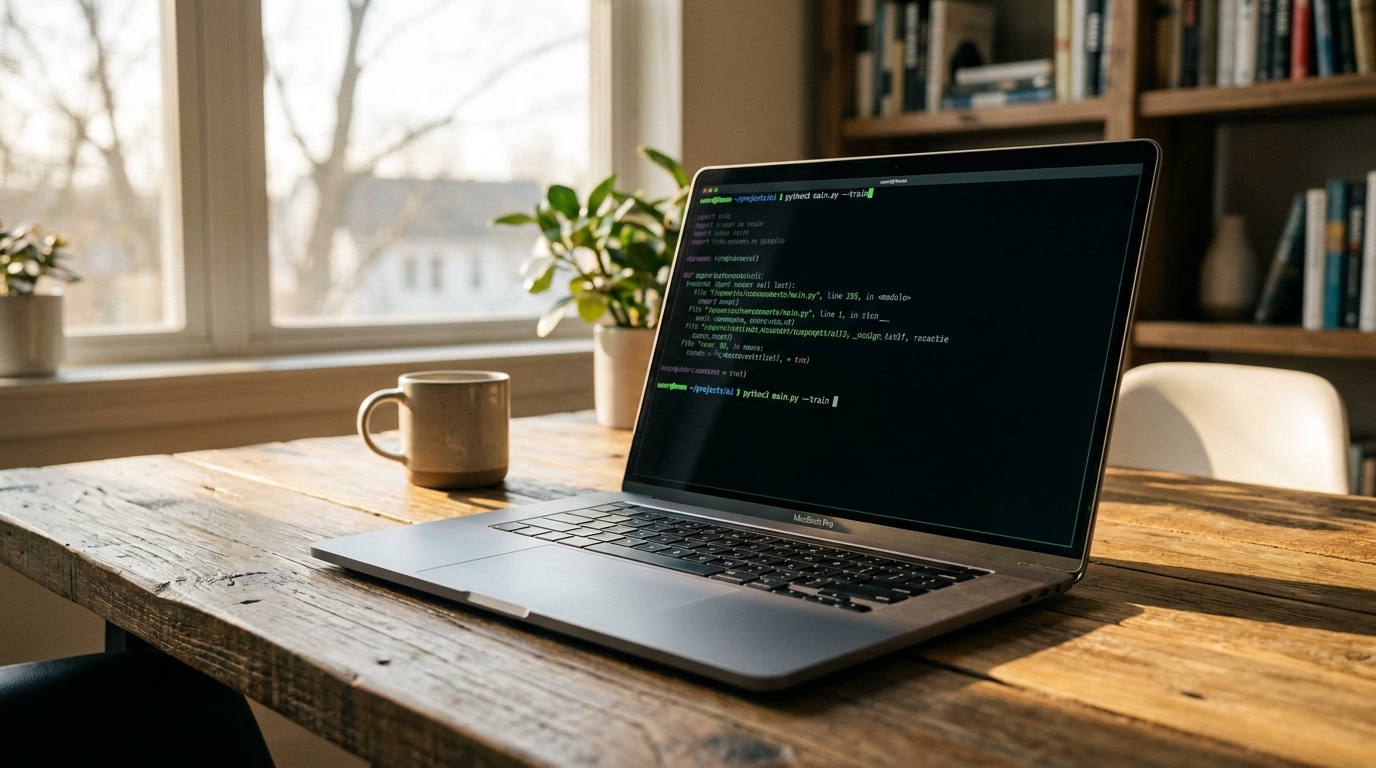
The software layer has also matured, eliminating the steep technical barriers that once defined local AI. The biggest hurdle used to be the installation process, which required navigating complex Python environments and terminal commands. [9][9]
Today, tools like Ollama and LM Studio have reduced the setup time to minutes. [1][9] Ollama has become the default infrastructure for developers, running as a lightweight background service that integrates seamlessly with coding environments and automation scripts. [8][9][1][8][9]
For non-technical users, LM Studio offers a polished, ChatGPT-like desktop interface. [9] Users simply browse a built-in library, click to download a model, and start chatting, requiring zero terminal knowledge to operate a private AI assistant. [8][9][8][9]

The local-first movement received its most significant industry validation at Apple's WWDC 2026. [5] The company unveiled its third-generation Apple Foundation Models (AFM 3 Core and Advanced), designed specifically to run on-device rather than in the cloud. [7][5][7]
By processing requests locally by default, Apple framed privacy as a "non-negotiable" product feature. [5][6] The system only routes the most complex queries to its Private Cloud Compute servers, signaling a broader industry pivot toward edge computing where the device is no longer just a glass terminal. [6][7][5][6][7]

Despite these advancements, local AI is not a complete replacement for the cloud. Massive, trillion-parameter models like GPT-5 or Claude Opus still hold a distinct advantage in complex, multi-step reasoning, agentic tasks, and broad multimodal generation. [1][3][1][3]
How we got here
2023
Cloud AI dominates the landscape following the launch of ChatGPT, requiring massive data centers.
2024–2025
Open-weight models like Llama 3 and Mistral prove that highly capable AI can be compressed to run on consumer hardware.
June 2026
Apple Intelligence and models like Gemma 4 cement on-device AI as a mainstream consumer expectation.
Viewpoints in depth
Privacy & Compliance Advocates
Argue that local AI is essential for data sovereignty and protecting sensitive information.
For legal professionals, healthcare workers, and enterprise developers, sending proprietary data to a cloud provider is often a non-starter due to compliance regulations like GDPR. Privacy advocates view local AI not just as a convenience, but as a mandatory architectural shift. By keeping the processing entirely on-device, organizations can leverage the power of large language models without exposing themselves to data breaches, vendor logging, or unauthorized model training.
Indie Developers & Makers
Value local AI for eliminating recurring API subscription costs and avoiding vendor lock-in.
Independent developers building AI-powered applications have historically been squeezed by per-token API costs that scale linearly with their user base. This camp champions local AI tools like Ollama because they replace variable cloud expenses with a fixed hardware cost. Furthermore, relying on open-weight models protects developers from sudden API deprecations or unannounced model changes by centralized providers, granting them total control over their infrastructure.
Enterprise Cloud Providers
Maintain that frontier-level reasoning still requires the massive compute of centralized data centers.
While acknowledging the utility of local models for basic tasks, cloud providers argue that the true frontier of artificial intelligence—complex agentic workflows, massive context windows, and deep reasoning—cannot fit on a laptop. They point out that models like GPT-5 and Claude Opus rely on thousands of interconnected GPUs to solve problems that a localized 12-billion parameter model simply cannot comprehend, ensuring that the most demanding enterprise workloads will remain in the cloud.
What we don't know
- Whether future regulatory frameworks will treat open-weight local models differently from hosted cloud models.
- How quickly battery technology and mobile thermal management can scale to support continuous on-device AI generation on smartphones.
Key terms
- Local LLM
- A large language model that runs entirely on a user's personal hardware rather than a remote server.
- Open-weight model
- An AI model whose underlying mathematical parameters are publicly available for anyone to download and run.
- Quantization
- A compression technique that reduces the memory footprint of an AI model with minimal loss in quality.
- Mixture-of-Experts (MoE)
- An AI architecture that only activates a small portion of its neural network for any given prompt, saving computing power.
- Unified Memory
- A hardware design where the CPU and GPU share the same pool of RAM, making it ideal for loading large AI models.
Frequently asked
Do I need an internet connection to use a local LLM?
No. Once the model is downloaded to your device, all processing happens offline, ensuring 100% availability and complete privacy.
What kind of computer do I need to run these models?
In 2026, a modern Mac with Apple Silicon (M-series) or a PC with at least 16GB of RAM and a dedicated Nvidia GPU is sufficient for highly capable models.
Are local models as smart as ChatGPT?
For everyday tasks like drafting emails, coding, and summarizing text, they are nearly indistinguishable. However, massive cloud models still lead in complex, multi-step reasoning.
How much does it cost to run AI locally?
The software tools and open-weight models are generally free. The only cost is the upfront purchase of your computer hardware and the electricity to run it.
Sources
Source coverage
9 outlets
4 viewpoints surfaced









[1]AtomicBotPrivacy & Compliance Advocates
How to run AI locally on your Mac
Read on AtomicBot →[2]AIML InsightsIndie Developers & Makers
Best Open Source LLMs for Local Use in 2026: Top Models Compared
Read on AIML Insights →[3]Hugging FaceEnterprise Cloud Providers
The Best Open Source LLM Models to Run Locally in 2026
Read on Hugging Face →[4]PinggyIndie Developers & Makers
Top 5 Local LLM Tools in 2026
Read on Pinggy →[5]DEV CommunityHardware Ecosystem Builders
Apple's on-device AI strategy is a privacy-first, performance-oriented architectural break
Read on DEV Community →[6]AppleMagazinePrivacy & Compliance Advocates
AI Privacy Gives Apple a Defining Edge in the Intelligence Era
Read on AppleMagazine →[7]Apple NewsroomHardware Ecosystem Builders
Apple introduces the next generation of Apple Intelligence
Read on Apple Newsroom →[8]MediumIndie Developers & Makers
Running Private AI Locally: Ollama vs LM Studio vs AnythingLLM 2026 Guide
Read on Medium →[9]ML JourneyIndie Developers & Makers
Ollama vs LM Studio in 2026: Which Should You Use?
Read on ML Journey →

More in ai
See all 5 stories →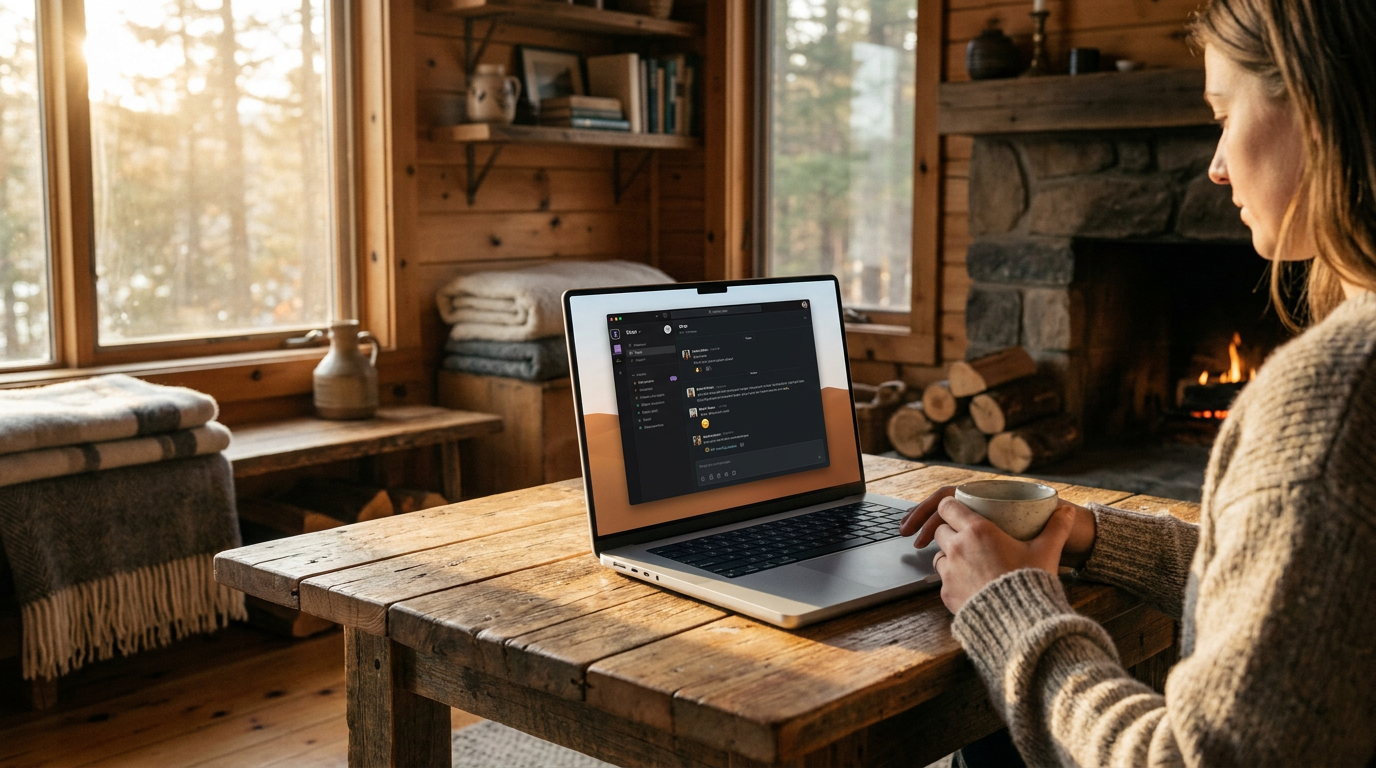

Every angle. Every day.
Get ai stories with full source coverage and perspective breakdowns delivered to your inbox.