
Supreme Court Upholds EPA's Strict 'Forever Chemical' Drinking Water Limits
The Supreme Court has ruled 6-3 to uphold the Environmental Protection Agency's stringent new limits on PFAS in public drinking water, rejecting challenges from chemical manufacturers and utility groups. The landmark decision clears the way for a nationwide overhaul of municipal water filtration systems.
By Hailey Scott

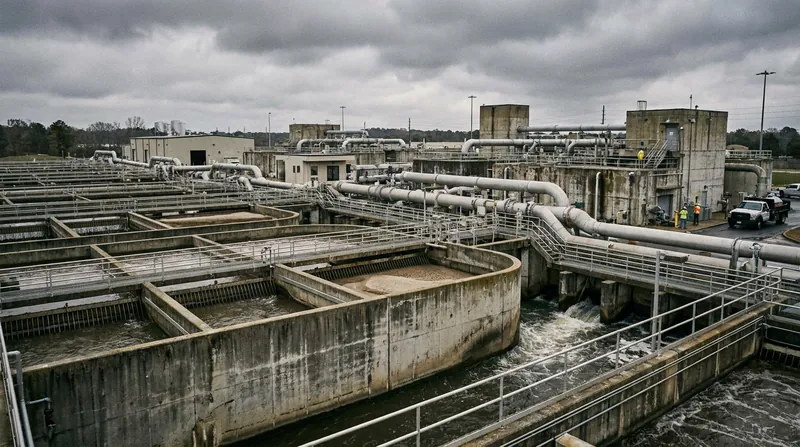
The Supreme Court has delivered a decisive victory for federal environmental regulators, ruling 6-3 to uphold the Environmental Protection Agency’s stringent national limits on PFAS "forever chemicals" in public drinking water. The landmark decision clears the final legal hurdle for the most significant upgrade to US water safety standards in decades, mandating that thousands of municipalities install advanced filtration systems.[1][3]
At the center of the dispute are per- and polyfluoroalkyl substances (PFAS), a class of synthetic chemicals used since the 1940s in everything from nonstick cookware to firefighting foam. Because their carbon-fluorine bonds do not break down naturally, they accumulate in the environment and the human body, with prolonged exposure linked to kidney cancer, thyroid disease, and developmental delays in children.[3][5]
The EPA's rule, originally finalized in 2024, caps the two most common types of PFAS—PFOA and PFOS—at just 4.0 parts per trillion, the lowest level that current testing can reliably detect. It also regulates four other variations of the chemicals. The agency estimates that enforcing these limits will prevent thousands of premature deaths and tens of thousands of serious illnesses over the coming decades.[1][5][6]
However, the ruling has sparked immediate alarm among local governments and utility providers. The American Water Works Association (AWWA) and a coalition of municipal utilities had sued to block the rule, arguing that the EPA drastically underestimated the financial burden of compliance. They contend that installing the necessary granular activated carbon or reverse osmosis systems will cost the sector billions of dollars annually.[2]
"While we share the goal of protecting public health, this ruling forces an unfunded mandate onto the backs of local ratepayers," the AWWA said in a statement following the decision. Utility advocates warn that households in affected districts could see their annual water bills increase by hundreds of dollars, a burden that will fall disproportionately on low-income families and small rural systems lacking economies of scale.[2][4]
Chemical manufacturers, led by industry trade groups, had also challenged the regulations, arguing that the EPA overstepped its authority under the Safe Drinking Water Act. They claimed the agency's cost-benefit analysis was fundamentally flawed and relied on overly conservative health risk assessments that exaggerated the danger of trace chemical exposure.
Writing for the majority, the Court rejected those arguments, finding that the EPA acted well within its congressional mandate to set maximum contaminant levels based on the best available peer-reviewed science. The ruling emphasized that the Safe Drinking Water Act explicitly empowers the agency to prioritize public health when regulating emerging contaminants, even when compliance costs are substantial.[3][6]
The decision has broader implications for federal regulatory power. Legal analysts note that the ruling signals the Court's willingness to defer to agency scientific expertise in matters of acute public health, a notable divergence from recent decisions that have sought to curtail the administrative state. Conservative critics, however, view the ruling as a green light for inflationary federal mandates.[1][4][6]
For environmental advocates, the decision marks the culmination of a decades-long fight. The Environmental Working Group, which has tracked PFAS contamination for years, called the ruling a "historic triumph for public health." The organization estimates that more than 100 million Americans are currently exposed to unsafe levels of PFAS in their tap water.[5]
Attention now turns to implementation and funding. While the Bipartisan Infrastructure Law allocated $9 billion specifically for PFAS remediation, utility groups argue that this covers only a fraction of the total capital required. Municipalities have a strict multi-year window to complete testing, design new treatment facilities, and bring them online before facing federal enforcement actions.[1][2]
Viewpoints in depth
Public Health Advocates
Focus on the severe health consequences of inaction and the necessity of strict federal standards.
Environmental and public health organizations argue that the EPA's strict limits are a long-overdue correction to decades of regulatory neglect. They point to an overwhelming body of peer-reviewed research linking even trace amounts of PFAS exposure to severe health outcomes, including kidney cancer, testicular cancer, and immune system suppression. For these advocates, the upfront financial cost of upgrading water infrastructure is dwarfed by the long-term societal savings from prevented illnesses and reduced healthcare burdens.
Municipal Water Utilities
Focus on the practical realities of funding multi-million dollar filtration upgrades without bankrupting local ratepayers.
Utility operators do not dispute the health risks of PFAS, but they argue the EPA's timeline and limits are practically and financially punishing. Installing granular activated carbon or reverse osmosis systems requires massive capital investment and ongoing maintenance costs. Utility coalitions warn that without significantly more federal funding, these costs will be passed directly to consumers, leading to severe rate shock. They are particularly concerned about small, rural water systems that lack the tax base to finance multi-million dollar plant overhauls.
Chemical Industry
Focus on the regulatory overreach and the economic impact of phasing out essential industrial compounds.
Chemical manufacturers argue that the EPA's 4.0 parts per trillion limit is unnecessarily draconian and pushes the boundaries of current detection technology. Industry groups contend that the agency relied on overly conservative risk models that exaggerate the danger of trace exposure. They also warn that aggressively targeting the entire class of PFAS chemicals could disrupt the manufacturing of essential modern technologies, including semiconductors, medical devices, and clean energy components, which rely on the unique properties of these compounds.
Key points
- The Supreme Court ruled 6-3 to uphold the EPA's strict new limits on PFAS in drinking water.
- The regulations cap the most common 'forever chemicals' at 4.0 parts per trillion.
- Municipal utility groups warn the required filtration upgrades will cost billions and raise consumer water bills.
- Environmental advocates celebrate the ruling as a historic victory that will prevent thousands of illnesses.
What we don’t know
- Exactly how much average household water bills will increase across different regions to fund the required upgrades.
- Whether Congress will appropriate additional grant funding to help small rural utilities meet the new standards.
How we got here
1940s
PFAS chemicals are first developed and widely used in consumer and industrial products.
1990s
Early studies begin linking PFAS exposure to adverse health effects in manufacturing communities.
April 2024
The EPA finalizes the first-ever national drinking water standards for six PFAS chemicals.
June 2026
The Supreme Court upholds the EPA's regulations, clearing the way for nationwide enforcement.
- Public Health & Environmental Advocates
- Argue that the strict limits are long overdue to protect communities from severe health risks including cancer.
- Municipal Water Utilities
- Warn that the unfunded mandate will force massive infrastructure costs onto local taxpayers and disproportionately hurt small towns.
- Chemical Manufacturers & Industry
- Contend the EPA overstepped its statutory authority and relied on flawed cost-benefit analyses.
- Legal & Administrative Observers
- Focus on the ruling's implications for federal agency regulatory power and statutory interpretation.
Perspectives this story doesn't cover
- Small Rural Taxpayers
- Filtration Technology Manufacturers
Sources
Source coverage
6 outlets
4 viewpoints surfaced






- [1]ReutersLegal & Administrative Observers
Supreme Court backs EPA's strict 'forever chemical' drinking water standards
Read on Reuters → - [2]The Wall Street JournalMunicipal Water Utilities
Water Utilities Warn of Rate Hikes After Supreme Court Upholds PFAS Rule
Read on The Wall Street Journal → - [3]The Washington PostPublic Health & Environmental Advocates
In 6-3 ruling, Supreme Court hands environmentalists a major victory on forever chemicals
Read on The Washington Post → - [4]Fox NewsLegal & Administrative Observers
NCAA president Charlie Baker reacts to Supreme Court ruling on transgender athletes
Read on Fox News → - [5]Environmental Working GroupPublic Health & Environmental Advocates
EWG Applauds Supreme Court Decision Protecting Millions from Toxic PFAS
Read on Environmental Working Group → - [6]SCOTUSblogLegal & Administrative Observers
Court upholds EPA authority in landmark drinking water case
Read on SCOTUSblog →

More in News & Politics
See all →Climate Law
UN General Assembly Adopts Landmark Resolution Operationalizing ICJ Opinion on State Climate Obligations
5 sources

Climate Litigation
New Zealand Parliament Advances Bill to Block All Corporate Climate Liability Lawsuits
6 sources

Corporate Liability
French Court Orders TotalEnergies to Revise Climate Plan in Landmark Corporate Liability Ruling
7 sources

Water Quality
EPA Proposes Repealing Drinking Water Limits for Four PFAS 'Forever Chemicals'
6 sources
Comments
Every angle. Every day.
Get News & Politics stories with full source coverage and perspective breakdowns, free every day.