
Africa's Great Green Wall Pivots From a Literal Barrier to a 'Mosaic' of Restoration
Halfway to its 2030 deadline, the pan-African effort to halt desertification has abandoned its original plan for a continuous wall of trees in favor of community-led agroforestry, restoring 18 million hectares of land.
By Factlen Editorial Team
- Ecological Restoration Advocates
- Focus on the environmental imperatives of carbon sequestration, halting desertification, and restoring biodiversity.
- Local Agrarian Communities
- Prioritize the socio-economic benefits of the initiative, such as food security, job creation, and sustainable agriculture.
- Pan-African Policymakers
- View the initiative as a strategic tool for regional stability, economic integration, and mitigating climate-driven migration.
What's not represented
- · Nomadic Pastoralists
- · Private Sector Agricultural Investors
Why this matters
The Great Green Wall is the world's most ambitious climate adaptation project. Its success or failure will determine the food security, economic stability, and migration patterns of millions of people across the Sahel, offering a blueprint for how humanity can survive in increasingly arid climates.
Key points
- The Great Green Wall aims to restore 100 million hectares of degraded land across Africa by 2030.
- The strategy has shifted from planting a literal wall of trees to creating a mosaic of sustainable agriculture.
- Approximately 18 million hectares have been restored regionally, with Ethiopia leading in sheer volume.
- The initiative provides crucial socio-economic benefits, creating jobs and reducing outward migration in the Sahel.
- A $19 billion funding accelerator is attempting to close the massive investment gap required to meet the 2030 goals.
When the African Union first conceived the Great Green Wall in 2007, the vision was almost mythological in its simplicity: a literal wall of trees, 15 kilometers wide and 8,000 kilometers long, stretching from Senegal in the west to Djibouti in the east. The goal was to plant a continuous barrier of foliage to hold back the encroaching sands of the Sahara Desert and protect the semi-arid Sahel region from total ecological collapse.[1][5]
But ecosystems are rarely so simple. In the early years of the initiative, well-intentioned governments and international donors poured resources into mass tree-planting campaigns in deeply degraded, arid landscapes. The results were often disappointing. Millions of saplings, planted in areas without adequate water infrastructure or long-term community stewardship, simply withered and died in the harsh climate.[3][4]
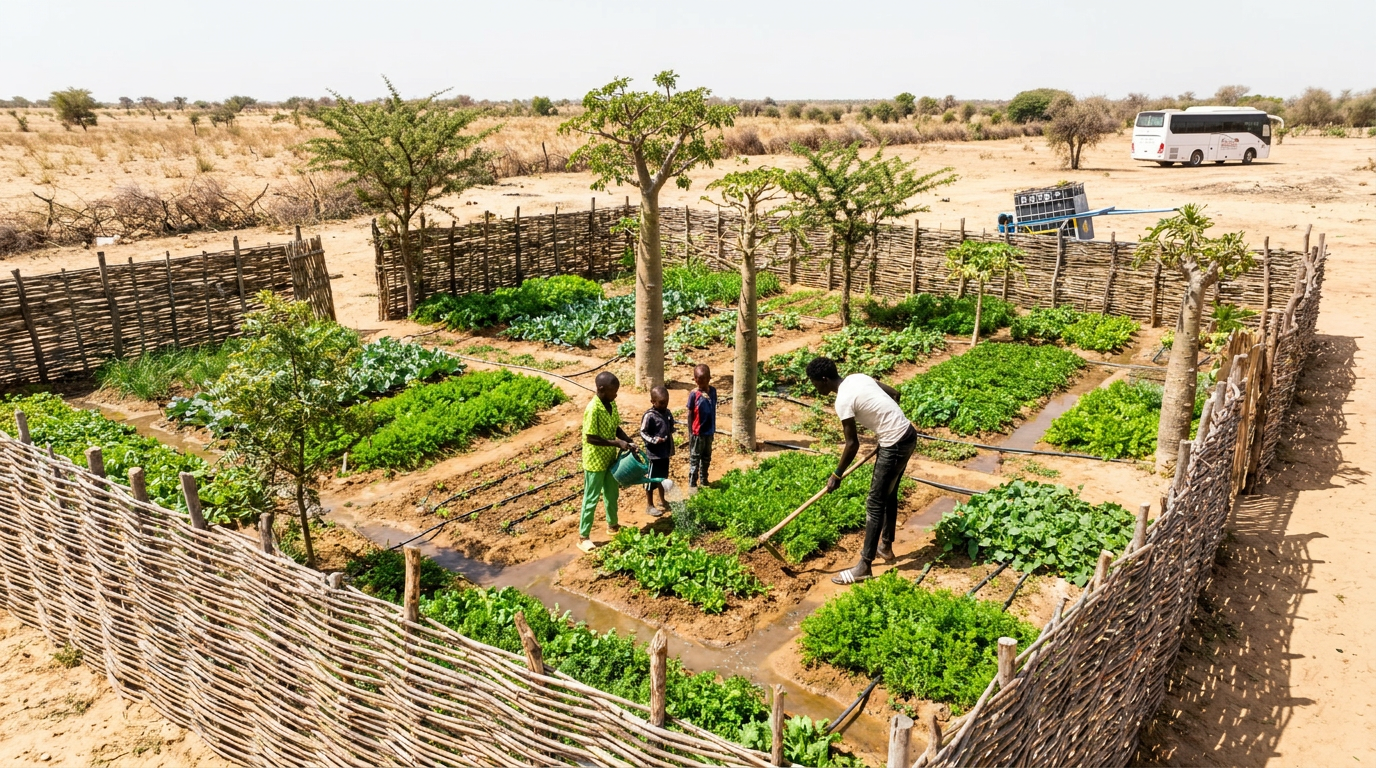
This initial failure forced a profound and ultimately successful pivot. Today, the Great Green Wall is no longer envisioned as a monolithic barrier of trees. Instead, it has evolved into a dynamic "mosaic" of sustainable land use practices, agroforestry, community gardens, and water harvesting techniques that adapt to local geographies.[3][6]
This shift from a top-down planting mandate to a bottom-up ecological restoration strategy is the defining mechanism of the project's current phase. Rather than importing foreign tree species, local communities are increasingly practicing "assisted natural regeneration." This involves protecting and nurturing the indigenous root systems that already exist dormant beneath the soil, allowing native, drought-resistant species like baobab and acacia to flourish naturally.[1][3]

The sheer scale of the ambition remains staggering. By 2030, the Great Green Wall initiative aims to restore 100 million hectares of degraded land, sequester 250 million metric tons of carbon dioxide, and create 10 million rural jobs. If completed, it will be the largest living structure on the planet, dwarfing the Great Barrier Reef.[1][4]
Tracking the progress of such a vast, decentralized effort is notoriously difficult, but recent data reveals a complex picture of success. According to the United Nations Convention to Combat Desertification (UNCCD), approximately 18 million hectares of land have been restored across the participating nations since the project's inception.[1][4]
However, only about 4 million of those hectares fall within the "strict intervention zones" originally mapped out for the wall. The remaining 14 million hectares represent broader regional restoration efforts that align with the Great Green Wall's goals, highlighting how the initiative has become a catalyst for a wider environmental awakening across the continent.[4][6]
However, only about 4 million of those hectares fall within the "strict intervention zones" originally mapped out for the wall.
Progress varies wildly by country. Ethiopia has emerged as the undisputed frontrunner in sheer volume. Leveraging a deep-rooted cultural reverence for trees and massive government mobilization, Ethiopia claims to have planted over 5.5 billion seedlings and restored upwards of 15 million hectares of land, putting the country well on its way to its individual 2030 targets.[3][4]

Senegal, often hailed as the pioneer and model for the initiative, presents a different kind of success story. A recent comprehensive study found that while Senegal's ecological gains have been slower than anticipated, the socio-economic impacts have been profoundly positive for the communities involved.[2]
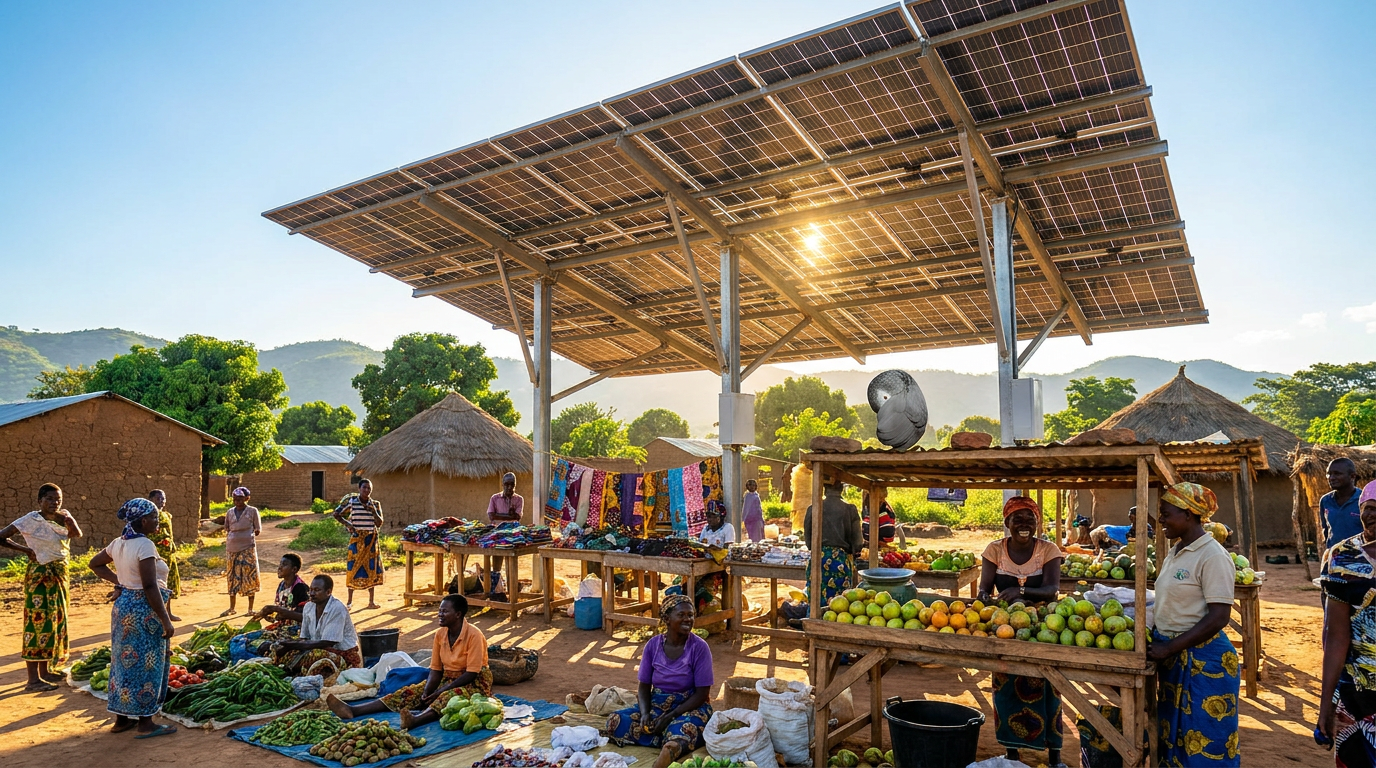
In Senegalese villages participating in the project, the establishment of multipurpose community gardens and nurseries has created thousands of direct and indirect jobs. These green oases provide sustainable income, improve local diets with fresh produce, and crucially, offer an economic alternative to the outward migration that has hollowed out many Sahelian communities.[2][6]
The primary bottleneck for the Great Green Wall has always been funding. The UNCCD estimates that reaching the 100-million-hectare goal by 2030 will require restoring an average of 8.2 million hectares annually, demanding an investment of roughly $4.3 billion per year. For much of the past decade, financial commitments from the international community fell drastically short of this need.[1][4]

A major turning point occurred with the launch of the Great Green Wall Accelerator. Spearheaded by international partners, the Accelerator initially pledged $14.3 billion to turbocharge the initiative, a figure that has since grown to $19 billion in commitments from global financial institutions and governments.[2][6]
This influx of capital is designed not just to plant trees, but to build the governance frameworks, monitoring systems, and local capacity required to sustain the restored landscapes. Organizations are utilizing these funds to combine conservation with sustainable development, ensuring that local populations have a direct financial stake in protecting the new greenery.[2]
Beyond ecology and economics, the Great Green Wall is increasingly recognized as a vital security intervention. The African Union views climate change and land degradation as "threat multipliers" in the Sahel, where shrinking arable land frequently sparks violent conflict between nomadic pastoralists and sedentary farmers.[5][6]

By restoring soil fertility and expanding access to water, the initiative directly addresses the root causes of resource scarcity. A greener Sahel is, fundamentally, a more peaceful Sahel. The project demonstrates that environmental restoration is not a luxury for developing nations, but a prerequisite for stability.[5]
The road to 2030 remains steep, and the Great Green Wall will likely miss its most optimistic deadlines. Yet, the initiative has already succeeded in transforming the narrative of the Sahel from one of inevitable desertification to one of active, community-led resilience. It stands as a powerful blueprint for how humanity can work with nature, rather than against it, to adapt to a warming world.[3][6]
How we got here
2007
The African Union officially launches the Great Green Wall initiative with the vision of a continuous barrier of trees.
2012
The strategy begins shifting from a literal wall of trees to a mosaic of sustainable land use and agroforestry.
2020
A UN status report reveals that while 18 million hectares have been restored regionally, only 4% of the strict intervention zone target has been met.
2021
The Great Green Wall Accelerator is launched, eventually securing $19 billion in pledges to fast-track the project.
Viewpoints in depth
Ecological Restoration Advocates
Focus on the environmental imperatives of carbon sequestration, halting desertification, and restoring biodiversity.
For environmental scientists and organizations like the UNCCD, the Great Green Wall is primarily a race against time to halt the Sahara's southward expansion. This camp emphasizes the hard metrics of ecological recovery: the need to sequester 250 million tons of carbon and restore 8.2 million hectares annually to meet the 2030 deadline. They argue that without massive, sustained investment in soil rehabilitation and biodiversity protection, the entire Sahel ecosystem risks irreversible collapse, rendering the region uninhabitable regardless of short-term economic interventions.
Local Agrarian Communities
Prioritize the socio-economic benefits of the initiative, such as food security, job creation, and sustainable agriculture.
From the perspective of the people living along the wall's path, the initiative is less about global carbon targets and more about daily survival. Local farmers and NGOs advocate for the 'mosaic' approach, emphasizing that trees will only survive if communities have an economic incentive to protect them. By focusing on multipurpose community gardens, water harvesting, and agroforestry, this camp argues that the Great Green Wall's true success lies in its ability to generate income, improve local diets, and keep families from being forced to migrate away from their ancestral lands.
Pan-African Policymakers
View the initiative as a strategic tool for regional stability, economic integration, and mitigating climate-driven migration.
For the African Union and regional governments, the Great Green Wall is a cornerstone of continental security. Policymakers view land degradation as a primary driver of instability, noting that shrinking resources frequently ignite violent conflicts between nomadic herders and sedentary farmers. By restoring the land, this camp believes the initiative can neutralize these 'threat multipliers,' foster cross-border cooperation, and build a more resilient, economically integrated Africa capable of withstanding the shocks of a changing global climate.
What we don't know
- Whether the $19 billion pledged by the Accelerator will be fully disbursed and effectively managed at the local level.
- If the current pace of restoration can be accelerated enough to come close to the 100-million-hectare target by 2030.
- How increasingly severe climate change and erratic rainfall patterns might undermine the newly restored landscapes in the coming decades.
Key terms
- Sahel
- The vast semi-arid region of Africa separating the Sahara Desert to the north and the tropical savannas to the south.
- Desertification
- The process by which fertile land becomes desert, typically as a result of drought, deforestation, or inappropriate agriculture.
- Assisted Natural Regeneration
- A restoration technique that protects and nurtures existing underground root systems to allow native trees to regrow naturally.
- Agroforestry
- An agricultural approach that integrates trees and shrubs into crop and animal farming systems to create environmental and economic benefits.
- Great Green Wall Accelerator
- A multi-billion dollar funding initiative launched to fast-track the implementation of the Great Green Wall by coordinating international investments.
Frequently asked
Is the Great Green Wall a literal wall of trees?
No. While originally conceived as a continuous line of trees, it has evolved into a 'mosaic' of sustainable land use, including community gardens, agroforestry, and water harvesting.
How much land has been restored so far?
Approximately 18 million hectares have been restored across the wider region, though only about 4 million hectares fall within the project's strict original intervention zones.
Who is funding the Great Green Wall?
Funding comes from a mix of African governments, international donors, and the Great Green Wall Accelerator, which has secured $19 billion in pledges from global financial institutions.
Why is the Sahel so vulnerable to desertification?
The Sahel is a semi-arid transition zone that suffers from erratic rainfall, climate change, and overgrazing, which strips the soil of vegetation and allows the Sahara Desert to expand southward.
Sources
Source coverage
6 outlets
3 viewpoints surfaced





[1]UNCCDEcological Restoration Advocates
The Great Green Wall Initiative
Read on UNCCD →[2]MongabayLocal Agrarian Communities
Progress is slow on Africa's Great Green Wall, but some bright spots bloom
Read on Mongabay →[3]American ScientistLocal Agrarian Communities
The Great Green Wall's New Vision
Read on American Scientist →[4]Earth.orgEcological Restoration Advocates
The Great Green Wall of Africa: Progress and Challenges
Read on Earth.org →[5]African UnionPan-African Policymakers
The Great Green Wall Initiative Strategy
Read on African Union →[6]Factlen Editorial TeamPan-African Policymakers
Synthesis by Factlen editorial team
Read on Factlen Editorial Team →
Every angle. Every day.
Get world stories with full source coverage and perspective breakdowns delivered to your inbox.