
Record-Breaking 2026 UEFA Women's Champions League Season Signals a New Era for Global Football
The 2025-26 UEFA Women's Champions League concluded with unprecedented viewership and attendance, driven by a revamped format and the launch of the Women's Europa Cup. As global audiences near the one-billion mark, the tournament's success highlights the explosive commercial and cultural growth of women's sports.
By Factlen Editorial Team
- European Governing Bodies
- Focused on expanding the sport's reach through structural reforms, new tournament tiers, and digital engagement strategies.
- Gender Equality Advocates
- Emphasize the sport's massive commercial potential while pushing for equal pay and investment commensurate with audience growth.
- Football Analysts
- Highlight the improved competitive balance, tactical evolution, and entertainment value brought about by the new formats.
What's not represented
- · Players from smaller domestic leagues struggling for funding
- · Grassroots academy directors
Why this matters
The explosive growth of European women's football proves that the sport is no longer a niche market but a multi-billion-dollar global entertainment pillar. This shift is forcing broadcasters, sponsors, and governing bodies to fundamentally rethink how they invest in and compensate female athletes.
Key points
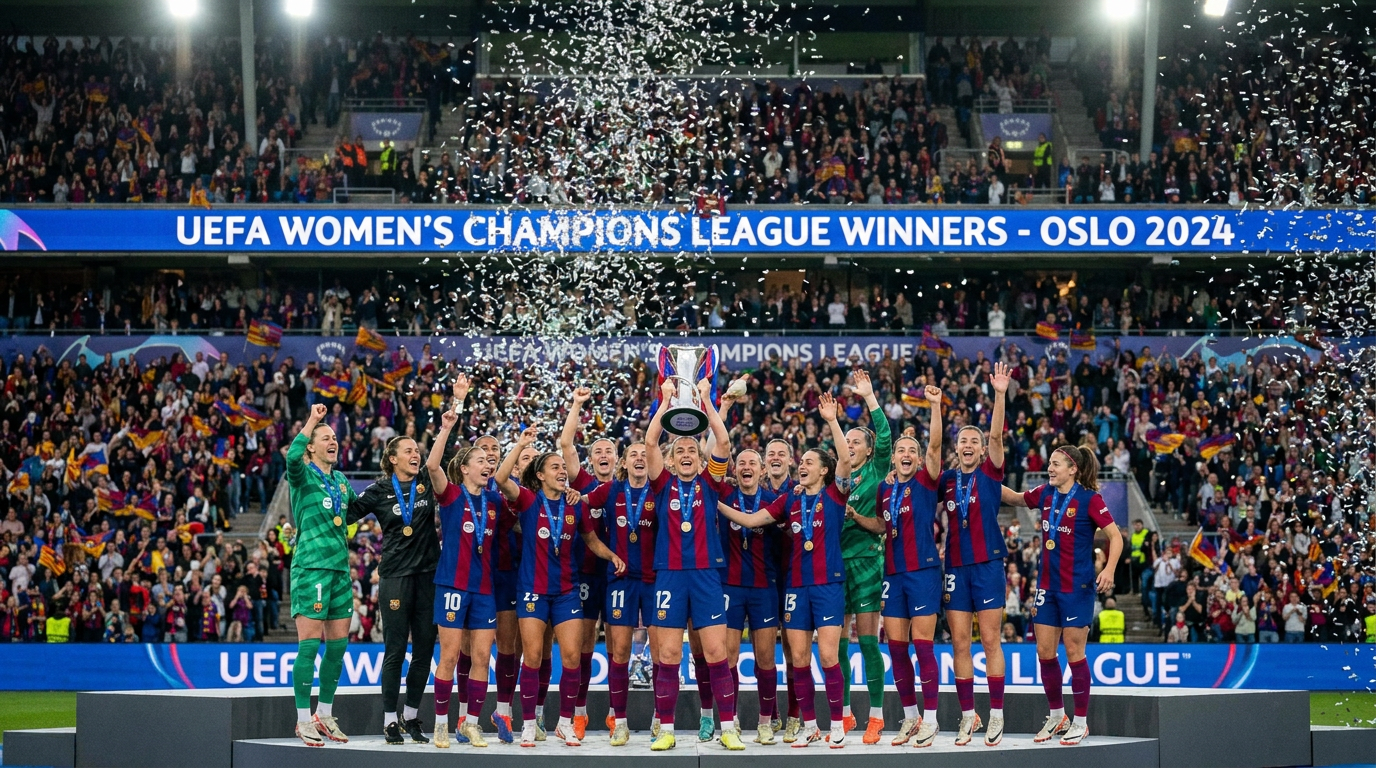
- The 2025-26 UEFA Women's Champions League concluded with record attendance in Oslo as Barcelona defeated Lyon.
- Tournament viewership more than doubled, reaching nearly 40 million fans before the final match.
- A revamped format generated 54 unique matchups, significantly improving the competition's competitive balance.
- The inaugural UEFA Women's Europa Cup successfully expanded continental access, with BK Hacken claiming the first title.
- Advocates project the sport will reach 800 million global fans by 2030, though a significant gender pay gap remains.
When the final whistle blew at the Ullevaal Stadion in Oslo on May 23, 2026, it marked the culmination of the most transformative season in the history of European women's club football. FC Barcelona secured the UEFA Women's Champions League title with a victory over their perennial rivals, OL Lyon, lifting the trophy in front of a sold-out crowd. The match itself was a showcase of elite technical skill, but the atmosphere in the Norwegian capital told a broader story about the sport's trajectory. The final set a new all-time attendance record for a women's football match in Norway, with nearly half of all television viewers in the host nation tuning in at kickoff. For the players on the pitch and the administrators watching from the stands, the evening was a validation of years of structural investment and a clear signal that the women's game has permanently entered the mainstream sporting consciousness.[1][4]
The staggering metrics from the 2025-26 campaign underscore a fundamental shift in global sports consumption. Even before the final viewing figures from Oslo were fully tabulated, UEFA reported that audiences had more than doubled compared to the previous season. Over 39.7 million viewers engaged with the competition throughout its earlier stages, a number projected to comfortably exceed 44.5 million once the championship match is factored in. This explosion in viewership was facilitated by a deliberate broadcasting strategy that prioritized accessibility alongside premium coverage. Matches were broadcast across 207 territories worldwide, and the final alone was carried by 28 free-to-air partners. By removing paywalls for the sport's biggest moments, organizers successfully converted casual observers into dedicated fans, ensuring that the most critical matches reached the widest possible audience.[1][2]
Digital engagement mirrored the television boom, revealing a highly active, younger demographic driving the sport's cultural relevance. Across official UEFA competition accounts, social media platforms generated a staggering 947 million video views over the course of the season—a 50 percent year-over-year increase. These videos were accompanied by 1.49 billion impressions and 52 million direct engagements, metrics that rival some of the most established men's sporting events in the world. This digital footprint is particularly crucial for the long-term commercial viability of the sport, as it demonstrates to sponsors and broadcasters that the audience is not only large but deeply invested. The ability to sustain fan interaction between matchdays has transformed the Women's Champions League from a niche tournament into a year-round digital powerhouse.[1]

Much of this season's success can be traced directly to UEFA's bold decision to overhaul the competition's format. In previous years, the tournament often suffered from predictability, with a handful of elite clubs dominating the early rounds and repeatedly facing the same opponents. The new structure introduced for the 2025-26 campaign was designed to inject variety and competitive balance into the league phase. According to sporting analysts, this format produced 54 unique matchups, more than doubling the variety seen in previous iterations. The results on the pitch immediately justified the administrative changes. Nearly half of all matches were decided by a single goal or ended in a draw, and the frequency of dramatic comebacks increased significantly. For supporters, this meant fewer lopsided scorelines and a much higher baseline of weekly entertainment.[2]
The structural reforms extended beyond the premier competition with the highly anticipated launch of the UEFA Women's Europa Cup. For decades, the gap between Europe's elite clubs and the rest of the continent's domestic leagues had been widening, leaving many teams without a meaningful pathway to continental experience. The Europa Cup was introduced specifically to address this disparity, offering a second-tier competition for clubs eliminated in the early stages of Champions League qualifying. In its inaugural season, the tournament welcomed 43 clubs from 28 different national associations, drastically expanding the geographic footprint of European women's football. This initiative provided crucial high-stakes minutes to developing squads, ensuring that a single early-season loss no longer meant the end of a club's continental ambitions for the entire year.[1][2]
The structural reforms extended beyond the premier competition with the highly anticipated launch of the UEFA Women's Europa Cup.
The inaugural Europa Cup proved to be a resounding success, culminating in a fiercely contested all-Swedish final that captured the imagination of Scandinavian football fans. BK Hacken ultimately defeated Hammarby to become the first-ever winners of the trophy, etching their names into the history books. Beyond the silverware, the tournament demonstrated that there is a robust appetite for women's football outside of the traditional super-clubs like Barcelona, Lyon, and Chelsea. By giving mid-tier clubs a platform to compete for European glory, UEFA has effectively incentivized domestic leagues across the continent to increase their investment in women's academies and first-team infrastructure. The Europa Cup has transformed the ecosystem from a top-heavy pyramid into a more sustainable, multi-tiered landscape.[2]
The surge in European club football aligns with a broader, global awakening to the commercial power of women's sports. Advocacy groups and international organizations have been closely monitoring this growth, viewing it as a critical vehicle for gender equality on the world stage. A recent report by UN Women highlighted that visibility for women's sports is currently at an all-time high, with global audiences consuming tens of billions of minutes of coverage annually. The report projects that women's football alone will surpass 800 million dedicated fans by the year 2030, firmly establishing it among the five most popular sports on the planet. This level of engagement proves that the demand for women's athletics is no longer a theoretical projection, but a tangible, monetizable reality that broadcasters and sponsors can no longer afford to ignore.[3]

Despite the undeniable momentum, advocates are quick to point out that the financial realities of the sport still lag behind its cultural impact. While elite women's sports revenues are projected to hit $3 billion globally in 2026—a remarkable 340 percent increase over just four years—the gender pay gap remains staggering when compared to the men's game. FIFA's projected revenues for the 2026 Men's World Cup cycle are expected to reach $13 billion, and the prize money distributed in men's club competitions still dwarfs the funds allocated to the women's equivalent. Organizations advocating for equality argue that the current viewership numbers strip away the historical excuse that 'women's sports don't sell.' The challenge now is compelling governing bodies and corporate partners to invest in the women's game at a scale commensurate with its proven audience delivery.[3]
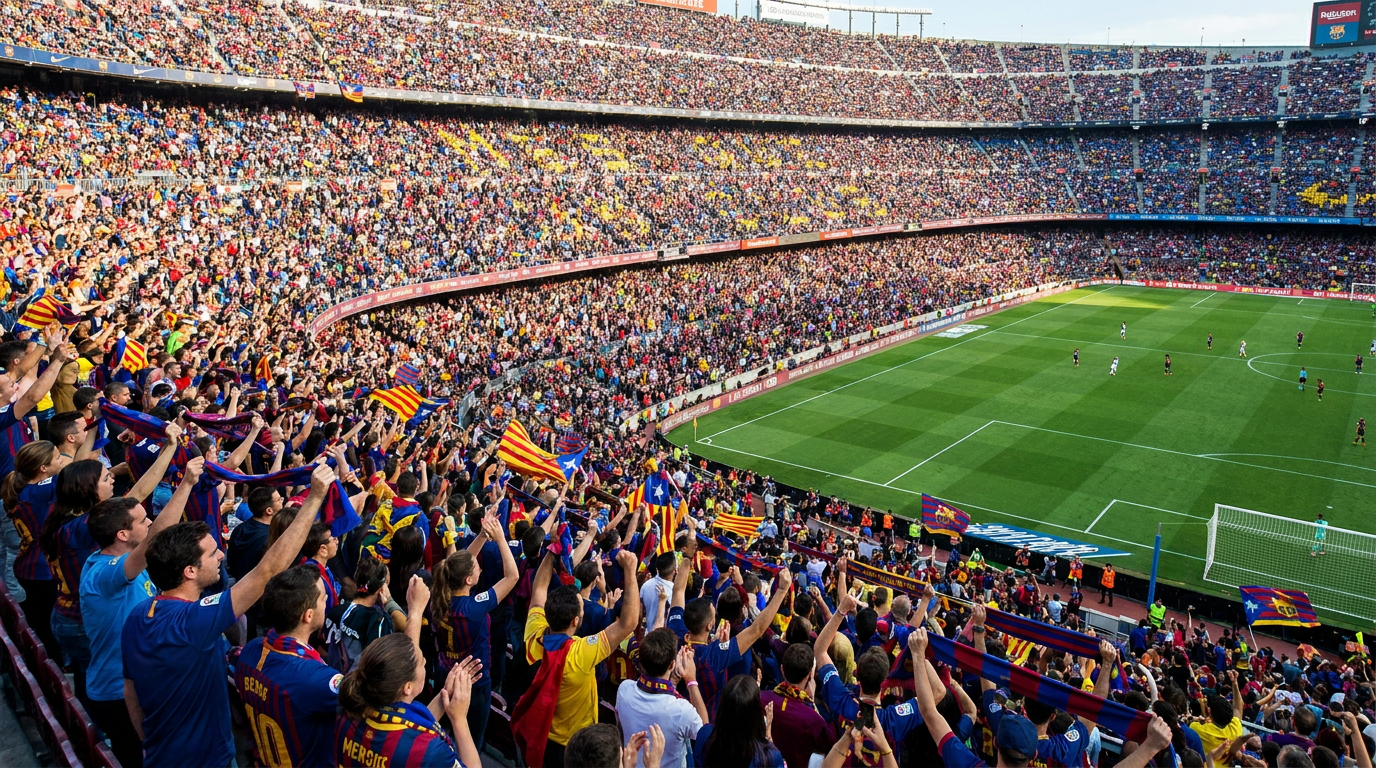
The physical infrastructure supporting the women's game has also undergone a radical transformation. Gone are the days when crucial knockout ties were relegated to secondary training grounds or suburban stadiums. Throughout the 2025-26 Champions League campaign, the latter stages of the tournament were hosted in some of Europe's most iconic sporting cathedrals. Semi-final matches were played at the Munich Football Arena, Arsenal Stadium, the OL Stadium in Lyon, and Camp Nou in Barcelona. Placing these athletes on the grandest possible stages not only elevates the broadcast product but also normalizes the presence of women in spaces historically reserved exclusively for men. When tens of thousands of fans pack into a landmark venue for a women's fixture, it sends a powerful message to the next generation of players about their rightful place in the sporting hierarchy.[1][2]
The ripple effects of this record-breaking season are already being felt at the grassroots level. Domestic leagues across Europe are reporting corresponding bumps in attendance and participation, fueled by the visibility of the Champions League. In Scotland, for example, the fourth tier of women's football recently broke its own attendance records, demonstrating that enthusiasm is trickling down the pyramid. Young girls watching Barcelona lift the trophy in Oslo or BK Hacken celebrate their Europa Cup victory are now entering a sporting ecosystem that offers viable, professional career paths. The investments made by UEFA and domestic associations are not just funding current operations; they are actively building the talent pipeline that will sustain the sport's growth through the next decade.[4]

As the dust settles on the 2025-26 campaign, the focus immediately shifts to how football's governing bodies will capitalize on this unprecedented momentum. The success of the new Champions League format and the introduction of the Europa Cup have proven that structural innovation can directly drive audience engagement. Broadcasters are already entering fierce bidding wars for the next cycle of media rights, recognizing that live women's sports represent one of the few remaining reliable avenues for capturing massive, concurrent television audiences. For the players, coaches, and executives who have championed the women's game through decades of underfunding and marginalization, this season stands as a definitive turning point. The question is no longer whether the world will watch women's football, but how high the ceiling can ultimately be pushed.[1][3][4]
Ultimately, the legacy of the 2026 season will be defined by the athletes who delivered on the pitch under the brightest lights the sport has ever seen. Players who once had to work second jobs to fund their athletic careers are now globally recognized icons, driving massive commercial campaigns and inspiring millions. The sheer quality of the football—characterized by tactical sophistication, elite athleticism, and relentless competitive drive—has silenced lingering skeptics and established a new standard of excellence. As European football looks toward the 2027 World Cup cycle, the foundation built by this year's club competitions ensures that the women's game will continue its ascent not as a secondary attraction, but as a primary pillar of the global sports entertainment industry.[2][3][4]
How we got here
Spring 2022
Record-breaking crowds of over 91,000 attend Barcelona matches at Camp Nou, signaling a massive shift in fan interest.
August 2025
UEFA introduces a revamped Champions League format and officially launches the inaugural Women's Europa Cup.
May 2026
BK Hacken defeats Hammarby in an all-Swedish final to win the first-ever UEFA Women's Europa Cup.
May 23, 2026
FC Barcelona defeats OL Lyon in front of a record-breaking Norwegian crowd to claim the Champions League title.
Viewpoints in depth
European Governing Bodies
UEFA and regional associations view the season as a triumph of structural reform and strategic investment.
For the administrators overseeing the European game, the 2025-26 season validates years of planning aimed at broadening the sport's footprint. By overhauling the Champions League format to guarantee more unique matchups and launching the Europa Cup, UEFA successfully addressed complaints about predictability and elite-club dominance. Their primary focus remains on scaling digital engagement and securing lucrative, wide-reaching broadcast deals that keep the sport accessible while driving commercial revenue.
Gender Equality Advocates
Advocacy groups celebrate the visibility milestones but demand that financial compensation catches up to the sport's cultural impact.
Organizations like UN Women point to the staggering viewership numbers—projecting 800 million global fans by 2030—as proof that the 'market demand' argument can no longer be used to justify the gender pay gap. While they applaud the record-breaking attendances and prime-time broadcast slots, these advocates argue that the multi-billion-dollar revenues generated by global football must be distributed more equitably. Their focus is on translating cultural momentum into hard financial parity, from prize money pools to individual player contracts.
Football Analysts
Sporting commentators focus on the on-pitch product, noting how deeper competition has elevated the entertainment value.
From a purely sporting perspective, analysts argue that the 2025-26 season was the most entertaining in history because the talent pool has finally deepened. The introduction of the Europa Cup provided crucial high-stakes minutes to mid-tier clubs, while the revamped Champions League league phase resulted in tighter matches and fewer blowouts. Commentators note that this competitive balance is essential for retaining the millions of new fans who tuned in, as unpredictable, high-quality football is the ultimate driver of long-term loyalty.
What we don't know
- Whether the massive increase in viewership will directly translate into proportionate increases in the next cycle of broadcasting rights fees.
- How quickly the gender pay gap in prize money can be closed by governing bodies.
- If the Europa Cup's success will prompt the creation of a third-tier European competition in the future.
Key terms
- UEFA Women's Champions League
- The premier continental club football competition for women in Europe, featuring the top teams from various national leagues.
- UEFA Women's Europa Cup
- A newly established second-tier European club competition designed to give more teams access to continental football.
- Free-to-air broadcast
- Television programming that is available to the public without a subscription, used strategically to maximize the audience for major sporting events.
- League phase
- The stage of the tournament where teams play a set number of matches against different opponents to accumulate points, replacing the traditional group stage.
Frequently asked
Who won the 2025-26 UEFA Women's Champions League?
FC Barcelona defeated OL Lyon in front of a sold-out crowd in Oslo, Norway, to claim the title.
What is the UEFA Women's Europa Cup?
Introduced in the 2025-26 season, it is a new second-tier continental competition that provides European experience to clubs eliminated early in Champions League qualifying. BK Hacken won the inaugural tournament.
How much did viewership grow this season?
Audiences more than doubled compared to the previous year, with nearly 40 million viewers tuning in before the final match was even played.
Why did UEFA change the tournament format?
The format was revamped to create more unique matchups and improve competitive balance, resulting in tighter games and fewer predictable blowouts.
Sources
Source coverage
4 outlets
3 viewpoints surfaced



[1]UEFAEuropean Governing Bodies
A new era peaks in Oslo: UEFA Women's Champions League and UEFA Women's Europa Cup reshape the landscape
Read on UEFA →[2]Striver FootballFootball Analysts
The 2025-26 season brought new competitions, record audiences and major UEFA reforms
Read on Striver Football →[3]UN WomenGender Equality Advocates
Visibility for women's sport is at a record high
Read on UN Women →[4]Factlen Editorial TeamFootball Analysts
Synthesis by Factlen editorial team
Read on Factlen Editorial Team →

More in sports
See all 8 stories →Women's Soccer
NWSL Shatters Attendance and Valuation Records as Women's Soccer Enters a New Commercial Era
0 sources

Brain Health Tech
How Smart Mouthguards and AI Are Rewriting MMA's Approach to Brain Health
0 sources

Longevity Science
Why Olympic Weightlifting Derivatives Are the New Frontier in Aging and Fall Prevention
0 sources

NWSL Expansion
NWSL Smashes Attendance Records as Expansion Team Denver Summit Draws 63,000 Fans
0 sources
Every angle. Every day.
Get sports stories with full source coverage and perspective breakdowns delivered to your inbox.