
The Science of Rucking: Why Weighted Walking is Transforming Outdoor Fitness
By combining cardiovascular endurance with resistance training, walking with a weighted backpack has evolved from a military staple into a mainstream longevity tool.
By Factlen Editorial Team
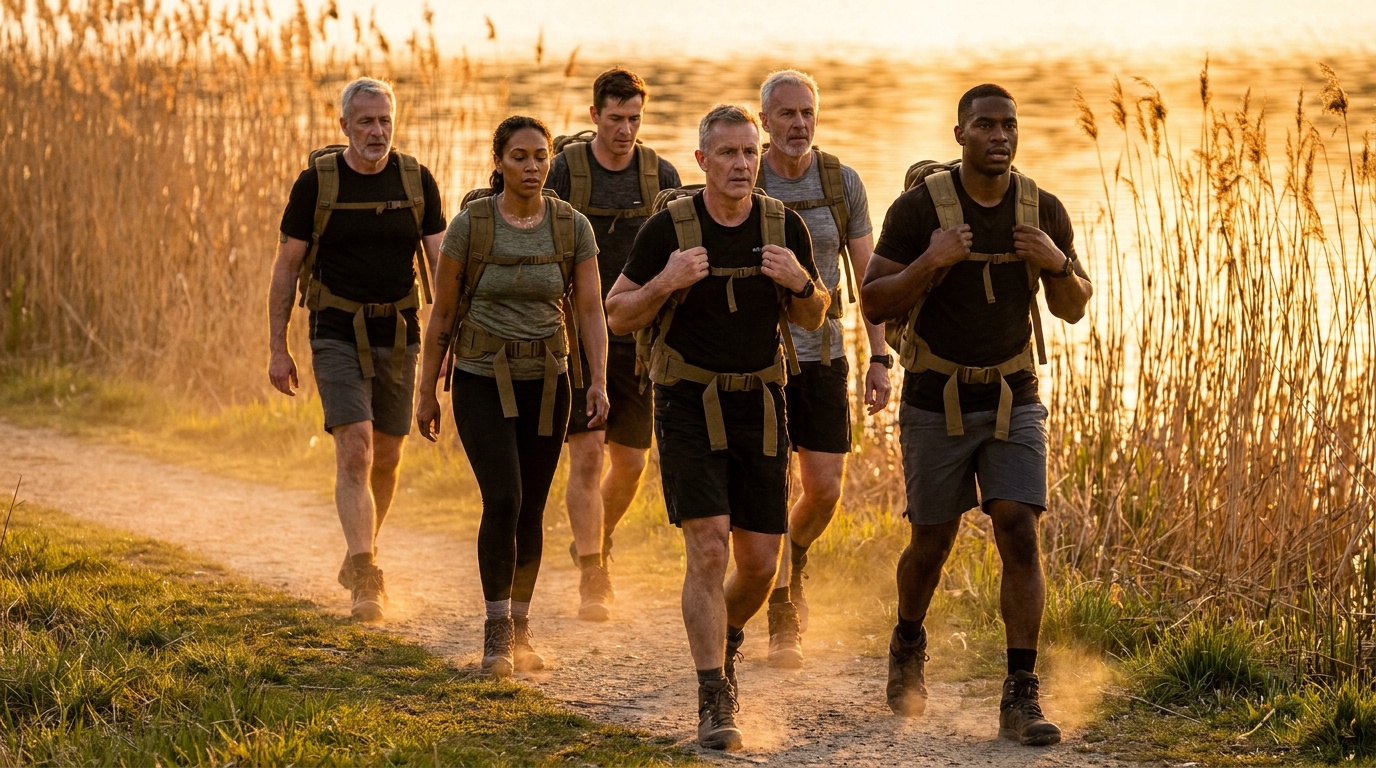
- Functional Fitness Advocates
- View rucking as a primal, highly efficient hybrid workout for strength and endurance.
- Clinical Practitioners
- Acknowledge the metabolic benefits but emphasize proper load management and injury prevention.
- Longevity & Wellness Analysts
- Focus on the Zone 2 cardio benefits and the psychological impact of outdoor exercise.
What's not represented
- · Urban Planners (on the need for accessible green spaces for outdoor fitness)
- · Footwear Manufacturers (designing specific shoes for load carriage)
Why this matters
Rucking offers a highly accessible way to combine cardiovascular health, strength training, and mental well-being into a single outdoor activity. For anyone struggling to find time for the gym or looking to protect their joints as they age, this simple practice provides a scientifically backed blueprint for long-term durability.
Key points
- Rucking combines cardiovascular endurance and resistance training into a single low-impact outdoor workout.
- Walking with a weighted pack can burn two to three times as many calories as unweighted walking.
- It is an ideal method for Zone 2 cardiovascular training, maximizing fat oxidation without the joint stress of running.
- The compressive force of carrying weight helps stimulate bone-building cells, supporting long-term skeletal health.
- Outdoor load carriage provides significant mental health benefits, including cortisol reduction and circadian rhythm regulation.
- Experts advise starting with a light load (around 10 pounds) to allow connective tissues to adapt safely.
In a fitness landscape increasingly dominated by smart tech, climate-controlled studios, and complex recovery protocols, a silent resurgence is pulling athletes back to the absolute basics. A growing cohort of everyday people and longevity seekers are trading their gym memberships for a pair of sturdy shoes and a heavy backpack. This practice, known as rucking, strips exercise down to its most primal elements: load, terrain, and time. By simply walking with added weight, practitioners are discovering a highly efficient hybrid workout that challenges the cardiovascular system while simultaneously building functional strength. It represents a broader cultural shift toward outdoor endurance, prioritizing durability and mental toughness over mirror muscles and isolated machine exercises.[10]
At its core, rucking is nothing more than loaded walking. The modality traces its origins directly to military load-carriage training, where soldiers have spent centuries marching over rugged terrain with heavy rucksacks to build operational readiness. In the civilian fitness world, the practice has been adapted into a scalable, accessible routine. A typical session involves carrying a load equivalent to 10 to 30 percent of one's body weight for 30 to 90 minutes at a brisk, sustained pace. Unlike standard hiking, which usually involves carrying only the minimal gear required for a day trip, rucking is a deliberate fitness intervention where the weight itself is the primary tool for physical adaptation.[7][8]
The rapid mainstream adoption of rucking stems from its ability to solve a persistent modern fitness dilemma: the lack of time to satisfy both cardiovascular and resistance training requirements. Public health guidelines consistently recommend a mix of aerobic activity and muscle-strengthening work, yet few modalities cover both in a single hour. Rucking bridges this gap perfectly. By adding external resistance to a fundamental human movement, it transforms a leisurely stroll into a full-body workout. The legs, glutes, and core must work significantly harder to propel the body forward, while the upper back and shoulders engage to stabilize the load, delivering a comprehensive stimulus without the need for complex equipment.[6][8]
The biomechanics of load carriage explain why this simple addition yields such profound physiological changes. When a person walks with a weighted pack, their center of gravity shifts, and the mechanical demand on the lower extremities increases exponentially. The military has studied this phenomenon extensively, most notably developing the Pandolf Equation in the 1970s to predict the precise energy expenditure of soldiers moving over various terrains with different loads. This foundational research proved that the metabolic cost of walking does not scale linearly with weight; rather, even modest additions to a backpack force the body to recruit entirely new muscle fibers to maintain stability and forward momentum.[1]

This increased metabolic demand translates directly into a massive caloric burn. Depending on the weight carried, the pace maintained, and the steepness of the terrain, rucking can burn two to three times as many calories as unweighted walking. For instance, a 150-pound individual carrying a 20-pound pack can expect to burn between 400 and 500 calories in a single hour. This efficiency makes it an incredibly potent tool for metabolic health and weight management. Because the effort feels less intense than a high-speed run, individuals can sustain the activity for much longer durations, ultimately achieving a higher total energy expenditure with a lower perceived rate of exertion.[1][2][7]
Beyond caloric burn, rucking is widely celebrated as a holy grail for Zone 2 cardiovascular training. Zone 2 refers to a steady, moderate-intensity aerobic state—typically around 60 to 70 percent of a person's maximum heart rate—where the body relies primarily on fat oxidation for fuel. Longevity experts emphasize that spending substantial time in this zone is critical for improving mitochondrial health, building endurance, and lowering the long-term risk of heart disease. While running often pushes the heart rate too high into anaerobic zones, and unweighted walking rarely elevates it enough, the added resistance of a rucksack perfectly dials the cardiovascular system into this optimal fat-burning and endurance-building sweet spot.[1][4][6]
Crucially, rucking delivers these elite cardiovascular benefits without the punishing impact forces associated with running. Biomechanical studies show that with every running stride, the body absorbs ground reaction forces equivalent to two to three times its own weight. Over time, this repetitive pounding can lead to joint degradation, shin splints, and chronic knee pain. Rucking, by contrast, is a low-impact movement. Because one foot remains in contact with the ground at all times, the sheer impact force is drastically reduced. This allows individuals to train their heart and lungs aggressively while sparing their joints, making it an ideal longevity practice for older adults or those recovering from impact-related injuries.[2][6][8]

Crucially, rucking delivers these elite cardiovascular benefits without the punishing impact forces associated with running.
The benefits extend deep into the musculoskeletal system through a process known as axial loading. Every step taken under the weight of a rucksack applies a gentle, compressive force down through the spine, hips, and legs. This mechanical stress signals osteoblasts—the specialized cells responsible for bone formation—to fortify the skeletal structure. As humans age, particularly after the age of 30, bone mineral density naturally declines, leading to conditions like osteopenia and osteoporosis. By regularly exposing the skeleton to controlled, weight-bearing stress, rucking helps combat this age-related decline, preserving bone strength and reducing the risk of debilitating fractures later in life.[3][9]
However, clinical analysts caution against viewing rucking as a standalone cure for severe bone density issues. While the osteogenic loading provided by a weighted backpack is undeniably beneficial, the scientific consensus indicates that the most dramatic improvements in bone density come from high-impact activities like jumping or heavy, progressive resistance training in a gym. Rucking serves as an excellent supplementary tool for skeletal health, particularly for those who cannot safely perform heavy squats or plyometrics, but medical professionals stress that it should be part of a broader, well-rounded approach to osteoporosis prevention rather than a singular solution.[7][9]
In addition to skeletal fortification, carrying a load on the back forces a profound postural correction. Modern lifestyles, characterized by hours hunched over keyboards and smartphones, naturally pull the shoulders forward and weaken the posterior chain. A properly fitted rucksack counteracts this by pulling the shoulders back and requiring the core, erector spinae, and upper back muscles to engage continuously to keep the torso upright. This sustained isometric contraction builds the specific functional strength needed to maintain proper alignment, alleviating the chronic neck and lower back pain that plagues so many office workers.[2][9]

The physiological adaptations are only half of the story; the psychological benefits of rucking are equally compelling. Because the activity inherently requires space and distance, it forces practitioners out of the gym and into the natural world. A robust body of scientific literature supports the concept of 'green exercise,' demonstrating that physical activity performed in natural environments yields significantly greater mental health benefits than indoor workouts. Exposure to fresh air, natural scenery, and sunlight has been shown to rapidly decrease cortisol levels, reduce symptoms of anxiety and depression, and alleviate mental fatigue.[4][5]
Many enthusiasts describe the practice as a form of moving meditation. The rhythmic, repetitive nature of walking, combined with the physical focus required to manage the load and navigate uneven terrain, naturally quiets the mind's internal chatter. Furthermore, when performed early in the morning, the outdoor exposure provides a critical dose of natural sunlight that helps regulate the body's circadian rhythm. This early light exposure suppresses melatonin production, boosts daytime alertness, and ultimately leads to deeper, more restorative sleep at night, creating a positive feedback loop of recovery and mental clarity.[3][6]
Rucking also fosters a unique sense of community, which is increasingly recognized as a vital pillar of human longevity. Unlike running, where differing paces quickly separate groups, the moderate speed of rucking allows people of varying fitness levels to stay together and converse. Shared physical struggle under a heavy load breaks down social barriers and builds camaraderie. Landmark public health studies have consistently shown that strong social connections can increase the likelihood of survival by up to 50 percent, making the fellowship forged on a group ruck just as important to long-term health as the physical exertion itself.[3][4]
Despite its accessibility, rucking is not entirely without risk, and proper load management is essential. Introducing too much weight too quickly can alter a person's natural gait, leading to an exaggerated forward torso lean and increased knee bend. This biomechanical compensation places undue stress on the lower back, hips, and ankles. Sports medicine professionals frequently treat overzealous beginners for shin splints, plantar fasciitis, and lower back strains. The key to avoiding these pitfalls is progressive overload: starting with a very light load—often just 10 pounds—and gradually increasing the weight and distance only as the body's connective tissues adapt.[5][9]

For individuals with pre-existing orthopedic conditions or a history of joint pain, clinical practitioners recommend specific modifications. Weighted vests are often suggested as a safer alternative to traditional backpacks, as they distribute the load more evenly across the front and back of the torso, reducing the sheer stress on the lumbar spine. Additionally, investing in supportive footwear designed for carrying weight is critical to prevent foot and ankle injuries. Anyone with diagnosed osteoarthritis or severe joint degradation is strongly advised to consult with a physical therapist before adding external load to their walking routine.[8][9]
As the fitness industry continues to evolve, rucking stands out not as a fleeting trend, but as a return to fundamental human movement. With the integration of adaptive training apps that monitor load and terrain, the practice is becoming more sophisticated, yet its core appeal remains its rugged simplicity. By offering a low-impact, highly effective blend of strength and cardiovascular conditioning, intertwined with the profound mental health benefits of outdoor exposure, rucking provides a sustainable blueprint for lifelong durability. It is a testament to the fact that sometimes, the most advanced longevity intervention is simply putting weight on your back and walking out the front door.[2][10]
How we got here
1970s
Military researchers develop the Pandolf Equation to measure the massive metabolic demand of soldiers carrying heavy rucksacks.
2010s
Brands like GORUCK and the rise of obstacle course racing begin popularizing military-style load carriage for civilian fitness.
2020
The global pandemic forces gym closures, driving a massive surge in outdoor, equipment-minimal fitness practices like rucking.
2025–2026
Longevity experts and mainstream health practitioners widely adopt rucking as an optimal, low-impact method for Zone 2 cardiovascular training.
Viewpoints in depth
Functional Fitness Advocates
View rucking as a primal, highly efficient hybrid workout for strength and endurance.
This camp, heavily influenced by military veterans and obstacle course racers, argues that modern fitness has become too sterile and isolated. They emphasize that humans evolved to carry heavy loads over long distances. To them, rucking is the ultimate functional movement—building 'real-world' durability, grip strength, and mental grit that translates directly to everyday tasks. They heavily promote the community aspect, arguing that shared physical adversity outdoors builds resilience far better than solitary gym sessions.
Clinical Practitioners
Acknowledge the metabolic benefits but emphasize proper load management and injury prevention.
Physical therapists and orthopedic surgeons view rucking as a net positive for public health, particularly for its cardiovascular and postural benefits. However, they caution against the 'more is better' mentality prevalent in fitness culture. They point out that adding external load alters gait mechanics, which can exacerbate underlying joint issues or cause lower back strain if the core is weak. This camp advocates for weighted vests over backpacks for better load distribution and insists that rucking should supplement, not replace, traditional heavy resistance training for bone density.
Longevity & Wellness Analysts
Focus on the Zone 2 cardio benefits and the psychological impact of outdoor exercise.
Researchers focused on lifespan and healthspan prize rucking primarily as an accessible vehicle for Zone 2 cardiovascular training. They highlight that maintaining a heart rate at 60 to 70 percent of its maximum is crucial for mitochondrial health and metabolic flexibility. Furthermore, this camp heavily weighs the psychological variables: the reduction in cortisol from 'green exercise' and the circadian rhythm benefits of morning sunlight exposure. For them, the physical load is almost secondary to the hormonal and mental health benefits of sustained outdoor movement.
What we don't know
- The exact long-term joint wear differences between decades of rucking versus decades of running in civilian populations.
- Whether the mental health benefits of rucking are primarily driven by the physical exertion, the outdoor environment, or the social community aspect.
Key terms
- Zone 2 Training
- A steady, moderate-intensity aerobic state (roughly 60-70% of maximum heart rate) where the body efficiently burns fat and builds cardiovascular endurance.
- Axial Loading
- The application of weight or force straight down the spine and through the skeleton, which helps stimulate bone density.
- Osteoblasts
- Specialized cells in the body responsible for synthesizing and mineralizing bone tissue in response to mechanical stress.
- Pandolf Equation
- A mathematical formula developed by the military in the 1970s to accurately predict the energy expenditure of walking with a loaded backpack.
- Green Exercise
- Physical activity performed in natural outdoor environments, which research shows provides additional mental health and stress-reduction benefits compared to indoor exercise.
Frequently asked
How much weight should I use when I start rucking?
Experts recommend starting very light, typically around 10 pounds or roughly 5 to 10 percent of your body weight. You should gradually increase the load only after your joints and connective tissues have adapted to the initial weight.
Do I need a special backpack for rucking?
While you can start with any sturdy backpack filled with books or water bottles, specialized rucksacks or weighted vests are recommended as you increase the weight. They feature reinforced stitching and wider straps to distribute the load safely across your shoulders and back.
Is rucking better than running?
It depends on your goals. Rucking provides similar cardiovascular benefits to running but with significantly less impact force on your joints (keeping one foot on the ground at all times). It also builds more upper body and core strength than running.
Can rucking help build bone density?
Yes, the compressive force of carrying weight (axial loading) stimulates bone-building cells. However, clinical experts note it should be part of a broader routine, as heavy weightlifting or jumping provides an even stronger stimulus for bone health.
Sources
Source coverage
10 outlets
3 viewpoints surfaced










[1]GORUCKFunctional Fitness Advocates
Physical Benefits of Rucking
Read on GORUCK →[2]Force FitFunctional Fitness Advocates
The Science Behind the Stride
Read on Force Fit →[3]Official Project GritFunctional Fitness Advocates
Weighted Walking: Strength and Endurance Together
Read on Official Project Grit →[4]Wild GymFunctional Fitness Advocates
Why Rucking Works for Longevity
Read on Wild Gym →[5]IFLScienceLongevity & Wellness Analysts
Rucking: The Science Backing Up This Stuff
Read on IFLScience →[6]DailyBurnLongevity & Wellness Analysts
The Benefits of Rucking
Read on DailyBurn →[7]SuperpowerClinical Practitioners
Loaded Walking, Defined
Read on Superpower →[8]Hinge HealthClinical Practitioners
Benefits of rucking
Read on Hinge Health →[9]RWJBarnabas HealthClinical Practitioners
Rucking: The Benefits and Potential Risks
Read on RWJBarnabas Health →[10]Factlen Editorial TeamLongevity & Wellness Analysts
Synthesis by Factlen editorial team
Read on Factlen Editorial Team →

Every angle. Every day.
Get fitness stories with full source coverage and perspective breakdowns delivered to your inbox.