
NWSL Shatters Attendance and Valuation Records as Women's Soccer Enters a New Commercial Era
The National Women's Soccer League is experiencing unprecedented growth in 2026, marked by a record $205 million expansion fee for a new Columbus franchise and historic stadium attendance.
By Factlen Editorial Team
- League Executives & Owners
- Focusing on the commercial viability and premium valuation of women's sports.
- Local Communities & Taxpayers
- Balancing excitement for the sport with concerns over public stadium subsidies.
- Independent Developers & Broadcasters
- Viewing the league's expansion as a prime real estate and media opportunity.
What's not represented
- · Players' Union (NWSLPA)
- · Legacy NWSL clubs facing rising operational costs
Why this matters
The skyrocketing valuations and broadcast deals prove that women's sports have permanently transitioned from a cause-driven initiative to a highly lucrative asset class, reshaping how cities, broadcasters, and billionaires invest in athletic infrastructure.
Key points
- The NWSL awarded its 18th franchise to Columbus, Ohio, for a record-breaking $205 million expansion fee.
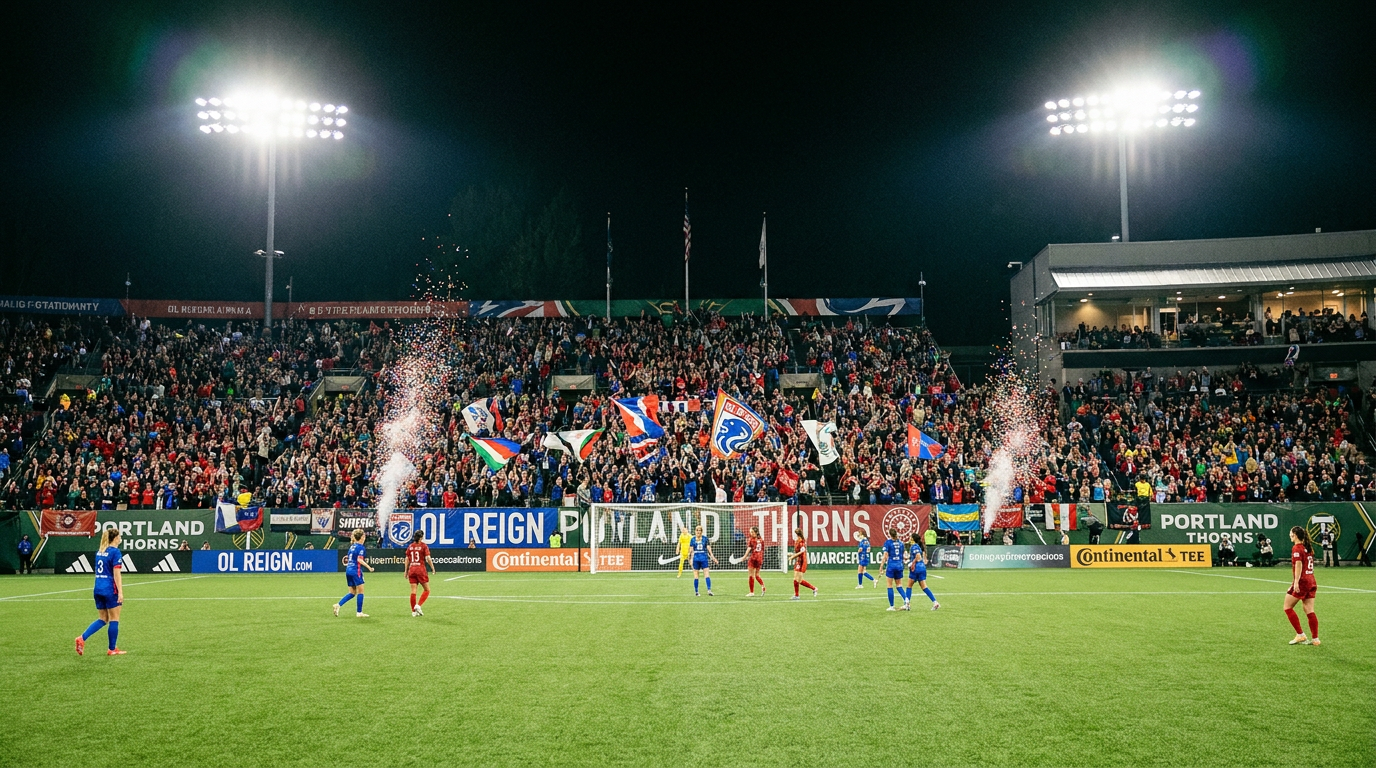
- The 2026 season opened with a record 129,202 fans across eight matches, averaging over 16,000 per game.
- Boston Legacy FC set a new single-game inaugural attendance record by drawing 30,207 fans.
- The massive influx of capital has sparked civic debates over public stadium subsidies in expansion cities.
- Broadcasters are heavily investing in the sport, with CBS securing long-term US rights for the Women's Super League.
The 2026 season has fundamentally rewritten the financial reality of the National Women's Soccer League (NWSL), transforming it from a growing venture into a premium global sports property. Across the United States, the league is shattering attendance records, securing landmark broadcast deals, and commanding expansion fees that rival legacy men's leagues. This unprecedented commercial boom proves that women's sports have permanently transitioned from a cause-driven investment into a highly lucrative asset class, reshaping how cities, billionaires, and broadcasters allocate their capital.
The most staggering metric of this new commercial era arrived in April, when the NWSL officially awarded its 18th franchise to Columbus, Ohio. The ownership consortium, led by the Haslam Sports Group and Nationwide, paid a record-breaking $205 million expansion fee to secure the team, which is slated to begin play in 2028. The Columbus bid beat out several other major markets, signaling a fiercely competitive landscape for the remaining expansion slots as the league marches toward a 20-team footprint.[1]
To truly understand the velocity of this financial explosion, one only needs to look back four years. Franchises that entered the league in 2022 paid expansion fees of just $2 million. The hundredfold increase in valuation over a single World Cup cycle underscores a massive shift in how institutional investors view women's soccer. It is no longer seen as a supplementary community project, but as a primary revenue driver capable of anchoring major real estate developments and regional sports networks.[3]

This soaring valuation is backed by undeniable, rapidly scaling consumer demand at the turnstiles. The 2026 season kicked off with a record-setting opening weekend, drawing a staggering 129,202 fans across eight matches. That figure represents an average of over 16,000 fans per game, establishing a new high-water mark for the league and proving that the traditional post-World Cup bump has successfully evolved into sustained, week-over-week local loyalty. Seven of the league's eight opening matches drew crowds of more than 10,000 fans, beating out the previous record set in 2025.[2]
The newly minted Boston Legacy FC provided the crown jewel of the opening weekend, drawing 30,207 fans for its inaugural match—the largest crowd ever recorded for a club's first game in NWSL history. Meanwhile, established clubs like the Washington Spirit and Kansas City Current opened their campaigns with sold-out stadiums. The Kansas City Current, playing in their groundbreaking purpose-built stadium, and the Spirit, playing at Audi Field, demonstrated that premium facilities directly translate to premium ticket sales and electric matchday atmospheres.[2]

Meanwhile, established clubs like the Washington Spirit and Kansas City Current opened their campaigns with sold-out stadiums.
The league's physical infrastructure is rapidly evolving to match this surging demand. In early June, the NWSL announced that the 2026 Championship will be hosted at Audi Field in Washington, D.C., a 20,000-seat venue that has become a fortress for the Washington Spirit and a premier destination for high-stakes soccer. The decision to return the title match to the East Coast highlights the league's confidence in filling major MLS-caliber stadiums for its marquee events, moving away from the smaller college venues of its early years.[4]
The boom is also inspiring independent developers to get in on the ground floor of the infrastructure rush. In Mesa, Arizona, businesswoman Vicki Mayo is spearheading a project to build a 25,000-seat, fully enclosed natural-grass stadium, explicitly designed to court an NWSL expansion team. Mayo's pitch represents a shift toward what she calls 'stadium 3.0' designs, which prioritize premium experiences, climate control, and high-end amenities for female athletes and fans alike, proving that the private sector is eager to build specifically for the women's game.[5]

However, the influx of billionaire owners and massive valuations has inevitably introduced new civic tensions. In Columbus, the excitement of securing the 18th franchise has been tempered by the ownership group's request for $50 million in public funding from the city and county. The funds are intended to build a new training facility and upgrade the shared ScottsMiracle-Gro Field, but the request has sparked debate among local taxpayers and grassroots supporters who are wary of subsidizing billionaire-backed sports ventures.[3]
Grassroots supporters, many of whom fought tirelessly to save the local men's team from relocation years ago, have expressed mixed feelings about the public-private partnership demands. The friction highlights a complex growing pain for the NWSL: as the league enters the realm of big business, it is adopting the controversial stadium-subsidy playbooks long utilized by the NFL and Major League Baseball. For fans, reconciling their love for the team with the harsh realities of sports capitalism is becoming a necessary part of the modern NWSL experience.[3]
Beyond domestic borders, the commercial appetite for women's soccer is rising globally, creating a rising tide that lifts all leagues. In May, CBS Sports struck a record US broadcast deal for England's Women's Super League (WSL), committing to stream 183 matches live on Paramount+ through 2030. This aggressive acquisition of international rights by American broadcasters demonstrates that the US market's appetite for women's soccer extends far beyond the NWSL, creating a truly year-round, global viewing habit for fans.[6]
The convergence of the NWSL's domestic dominance and the growing international broadcast market points to a permanently altered sports landscape. While the 2026 FIFA Men's World Cup currently dominates North American sports media, the NWSL has successfully carved out its own massive, unshakeable footprint. With valuations soaring, stadiums packing out, and broadcasters writing record checks, women's soccer has definitively proven that it is no longer an alternative programming choice, but a main event capable of anchoring the future of the sports entertainment industry.
How we got here
2022
New NWSL expansion franchises enter the league paying a $2 million entry fee.
March 2026
The NWSL opening weekend sets an all-time attendance record with 129,202 fans across eight matches.
April 2026
Columbus is awarded the league's 18th franchise for a record-shattering $205 million expansion fee.
June 2026
The league announces Audi Field in Washington, D.C., will host the 2026 NWSL Championship.
Viewpoints in depth
League Executives & Owners
Focusing on the commercial viability and premium valuation of women's sports.
For the ownership class and league executives, the $205 million expansion fee is a long-overdue market correction. They argue that women's soccer has been artificially undervalued for decades, and the current boom reflects the true commercial power of the sport. By securing massive broadcast deals and building premium 'stadium 3.0' infrastructure, owners believe they are future-proofing the league and establishing it as a top-tier global sports property that can compete with legacy men's leagues for institutional investment.
Local Communities & Taxpayers
Balancing excitement for the sport with concerns over public stadium subsidies.
While grassroots supporters are thrilled by the arrival of new teams and the elevation of the women's game, there is growing unease over the financial playbooks being used. In markets like Columbus, requests for tens of millions in public funding for training facilities and stadium upgrades have sparked debate. Taxpayer advocates and some fan groups argue that billionaire ownership consortiums should privately finance their own infrastructure, rather than relying on civic subsidies that divert funds from community parks and local services.
Independent Developers
Viewing the league's expansion as a prime real estate and infrastructure opportunity.
Outside of the traditional ownership circles, independent real estate developers see the NWSL's growth as a massive opportunity. Figures like Vicki Mayo in Arizona are proactively designing and pitching fully enclosed, natural-grass stadiums specifically tailored to the women's game. These developers argue that building bespoke, high-end facilities is the key to winning future expansion bids, shifting the focus from retrofitting old men's stadiums to creating purpose-built environments that maximize the fan experience and generate year-round revenue.
What we don't know
- Whether the NWSL will eventually adopt a European-style fall-to-spring calendar to align with the global transfer market.
- How legacy NWSL clubs that paid early, low expansion fees will compete financially with the massive capital reserves of new billionaire ownership groups.
Key terms
- NWSL
- The National Women's Soccer League, the top-tier professional women's soccer league in the United States.
- Expansion Fee
- The price an ownership group pays to a sports league to establish a brand new franchise.
- Public-Private Partnership
- A collaboration between a government agency and a private-sector company, often used to fund the construction or renovation of sports stadiums.
Frequently asked
When will the new Columbus NWSL team begin playing?
The newly awarded Columbus franchise is scheduled to begin play in the 2028 season.
Where is the 2026 NWSL Championship being held?
The 2026 NWSL Championship will be hosted at Audi Field in Washington, D.C., a 20,000-seat soccer-specific stadium.
How much did the Columbus expansion fee cost?
The ownership group paid a record-breaking $205 million expansion fee, a massive increase from the $2 million fees paid by teams entering the league in 2022.
Sources
Source coverage
6 outlets
3 viewpoints surfaced




[1]SportsPro MediaLeague Executives & Owners
NWSL awards 18th franchise to Columbus for 'record' US$205 million
Read on SportsPro Media →[2]NWSL OfficialLeague Executives & Owners
NWSL SETS OPENING WEEKEND ATTENDANCE RECORD TO KICK OFF 2026 SEASON
Read on NWSL Official →[3]The GuardianLocal Communities & Taxpayers
'It leaves a bad taste in my mouth': Columbus embraces NWSL while questioning the cost
Read on The Guardian →[4]The Washington TimesLeague Executives & Owners
NWSL to host 2026 league championship at Audi Field in the District
Read on The Washington Times →With NWSL expanding and MLS rescheduling, an Arizona businesswoman is making a pitch
Read on The Guardian US →Women's Super League strikes 'record' CBS US rights deal until 2030
Read on SportsPro →
More in sports
See all 10 stories →Boxing Rules
The Fight for Three Minutes: Why Women's Boxing is Divided Over Round Lengths
0 sources

Standings
WNBA Standings: Lynx Dominate as Expansion Teams Upend the Playoff Race
0 sources
Storyline
Messi's Final Bow, USMNT's Statement, and Yamal's Rise: The Storylines Defining the Expanded 2026 World Cup
0 sources
Tactics
System Over Stars: Inside Thomas Tuchel's Tactical Masterplan for England at the 2026 World Cup
0 sources

Every angle. Every day.
Get sports stories with full source coverage and perspective breakdowns delivered to your inbox.