
System Over Stars: Inside Thomas Tuchel's Tactical Masterplan for England at the 2026 World Cup
England manager Thomas Tuchel has ruthlessly overhauled the national team's tactical identity ahead of the 2026 World Cup, dropping high-profile stars to build an aggressive, high-pressing 'attacking engine.'
By Factlen Editorial Team
- Tactical Purists
- Analysts who believe international football requires strict club-style systems.
- The Manager's Camp
- Those who prioritize squad chemistry, durability, and collective buy-in.
- Traditionalists
- Observers concerned by the omission of generational creative talents.
What's not represented
- · Players left out of the squad
- · Opposing managers in Group L
Why this matters
After decades of falling short with 'golden generations' of individual talent, England is finally adopting the ruthless, system-first approach that defines modern elite club football. For fans and analysts, Tuchel's bold squad omissions signal a definitive shift from accommodating superstars to building a cohesive, tactically rigid tournament machine.
Key points
- Thomas Tuchel has overhauled England's tactical identity, implementing a club-style 'attacking engine' system.
- High-profile stars like Phil Foden, Cole Palmer, and Trent Alexander-Arnold were omitted to maintain tactical balance.
- Declan Rice has been pushed into a more advanced attacking role, supported by Elliot Anderson as a deep-lying anchor.
- England enters the tournament with flawless momentum after an 8-0-0 qualifying campaign and a 3-0 warm-up win over Costa Rica.
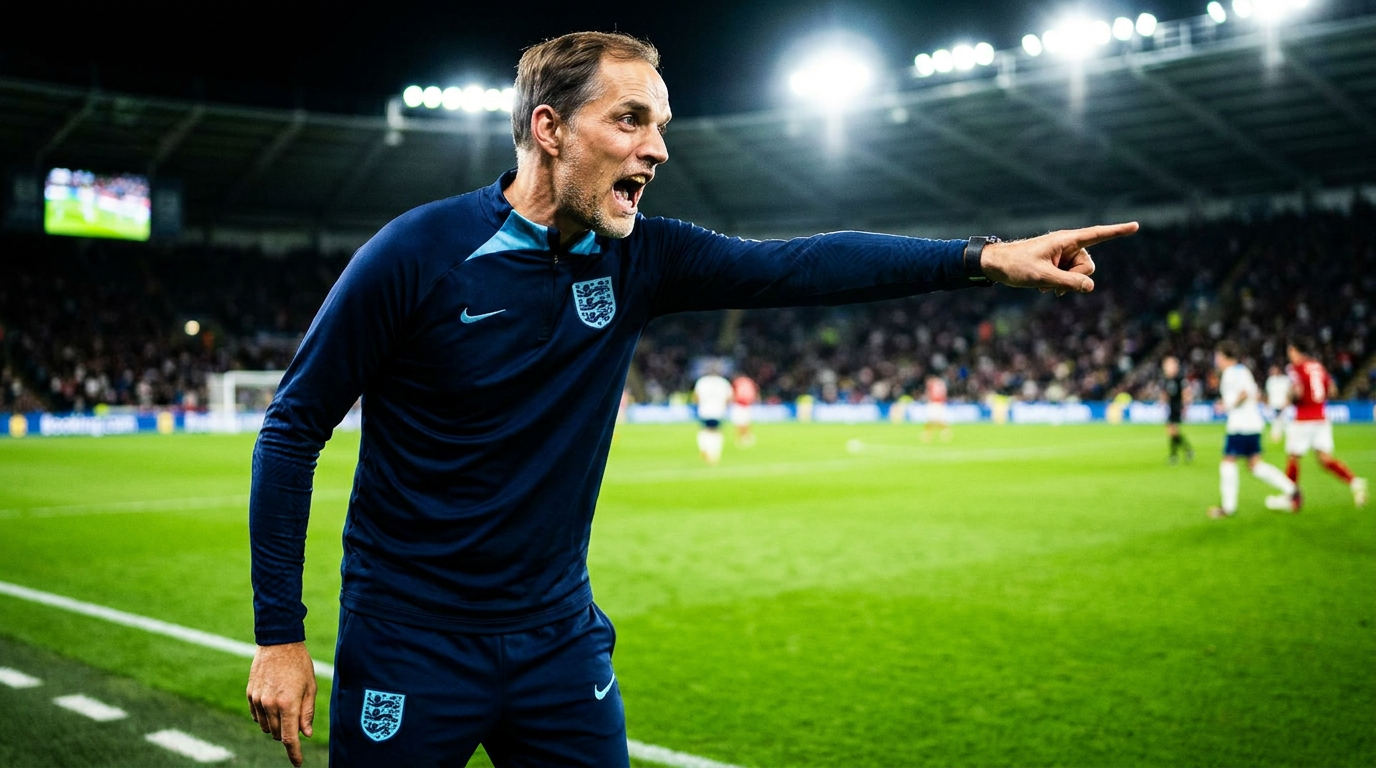
As the 2026 FIFA World Cup kicks off across North America, the England national team looks fundamentally unrecognisable from the iterations of the past decade. Gone is the era of accommodating as many superstar names as possible into a single starting XI. Under the meticulous direction of Thomas Tuchel, the Three Lions have embraced a ruthless, system-first philosophy that mirrors the tactical rigidity of elite club football. Tuchel was brought in by the Football Association with a singular mandate: to put a second star on the England shirt and end 60 years of tournament heartbreak. To achieve that, the German tactician has completely overhauled the squad's identity, discarding the celebrity trap that has historically led to disjointed, incoherent performances on the international stage. Instead, he has built a highly specific tactical machine designed to suffocate opponents and dominate transitions.[2]
The defining moment of Tuchel's tenure arrived in late May, when he sent shockwaves through the global footballing landscape by omitting Phil Foden, Cole Palmer, and Trent Alexander-Arnold from his final 26-man World Cup squad. The decision to leave behind some of the Premier League's most technically gifted and celebrated creators was met with initial disbelief. Harry Maguire and AC Milan's Fikayo Tomori were also high-profile casualties of a sweeping defensive overhaul. Yet, for Tuchel, these omissions were not a reflection of the players' individual brilliance, but rather a cold, calculated assessment of their fit within his non-negotiable game model. The manager made it explicitly clear that he had no interest in forcing players out of their natural positions simply to appease public demand or fit big names onto the pitch.[2][3]
This system-over-stars approach is the bedrock of England's 2026 campaign. Data models have classified Tuchel's tactical blueprint as an 'attacking engine,' placing the Three Lions in the same stylistic category as possession-heavy, high-pressing club juggernauts like Arsenal and Manchester City. Across his title-winning spells at Chelsea, Bayern Munich, and Paris Saint-Germain, Tuchel's teams have consistently averaged around 15 shots per 90 minutes. He has imported that exact philosophy to the international stage, demanding aggressive counter-pressing, rapid vertical ball progression, and neat triangular passing combinations. Rather than relying on moments of individual magic to break down stubborn low blocks, England now relies on rehearsed attacking automatisms designed to consistently generate high-quality chances.[1]

At the heart of this tactical revolution is a completely reimagined midfield structure. In possession, England frequently transitions from a base 4-2-3-1 formation into an aggressive 3-2-5 shape. To facilitate this, Elliot Anderson has been deployed as the deep-lying anchor. Anderson's primary responsibility is to sit alongside the centre-backs, break up opposition counterattacks, and recycle possession with line-breaking passes. This structural security liberates Declan Rice from his traditional screening duties. Under Tuchel, Rice operates much higher up the pitch, frequently pushing into the left half-space to act almost as a second No. 10. The Arsenal midfielder is now tasked with making late, driving runs to the back post and suffocating the opposition in the final third, a role that perfectly leverages his immense physical engine.[1][6]
At the heart of this tactical revolution is a completely reimagined midfield structure.
Off the ball, England's approach is equally aggressive. Tuchel views the high press not just as a defensive mechanism, but as a primary creative force. When possession is lost, the team is instructed to compress the pitch instantly rather than retreating into a defensive block. Jude Bellingham frequently pushes up to join captain Harry Kane in the first line of defence, while the wingers pinch inside to cut off central passing lanes. Analytical breakdowns of England's recent fixtures reveal a dramatic spike in shot-ending high turnovers and direct attacks compared to previous managerial regimes. The goal is to force errors deep in the opponent's half and strike before the opposition can reorganise their defensive shape.[6]

Recognising that international tournaments are notoriously tight and often decided by the finest of margins, Tuchel has also placed a massive emphasis on set-piece dominance. Sides that control possession and territory naturally accumulate more corners and free-kicks, and England has tailored its personnel to capitalise on these situations. The surprise inclusion of 6'7" defender Dan Burn provides a terrifying aerial target, perfectly complementing the elite dead-ball delivery of Bukayo Saka and Declan Rice. Furthermore, the shock recall of Ivan Toney—who had played mere minutes of international football under Tuchel prior to the squad announcement—gives England a physical, box-crashing presence to deploy when chasing a late goal against a compact defence.[1][3][5]
Beyond the tactical chalkboard, Tuchel has heavily prioritised the psychological and environmental demands of a month-long tournament spread across the United States, Canada, and Mexico. He has spoken extensively about the need for chemistry and a brotherhood mentality, arguing that the best tournament squad is rarely just a collection of the 26 most talented individuals. By selecting a core group of 14 to 15 highly trusted, durable players who perfectly understand their specific roles, Tuchel has fostered a unified camp free from the distraction of competing superstar egos. The manager believes that this collective buy-in is the ultimate differentiator when navigating the intense pressure and inevitable adversity of the World Cup knockout stages.[5]

The early returns on this uncompromising philosophy have been nothing short of spectacular. England navigated their World Cup qualification campaign with flawless precision, winning all eight of their matches without conceding a single goal. That momentum has carried seamlessly into their pre-tournament preparations. In their final warm-up fixture in Orlando, the Three Lions dismantled Costa Rica 3-0, showcasing a fluid, high-octane performance that perfectly executed Tuchel's demands for intensity and cohesion. Goals from Rice, Anthony Gordon, and Ollie Watkins underscored the team's diversified attacking threats, proving that they are no longer solely reliant on Harry Kane to produce moments of salvation.[2][7]
Despite the flawless preparation and the elite tactical framework, Tuchel has deliberately attempted to temper public expectations. He has publicly rejected the notion that England are heavy favourites to lift the trophy, pointing out that the nation's lack of recent silverware places them behind proven tournament winners like Spain and France in the global pecking order. Yet, by betting his entire reputation on a strict tactical system over mainstream star power, Tuchel has drawn a definitive line in the sand. If his meticulously engineered machine triumphs in North America, his ruthless pragmatism will be immortalised as the masterstroke that finally ended England's 60 years of hurt.[4]

How we got here
October 2024
Thomas Tuchel is appointed as England manager, tasked with ending a 60-year trophy drought.
November 2025
England completes a flawless World Cup qualifying campaign with an 8-0-0 record and zero goals conceded.
May 22, 2026
Tuchel announces his 26-man World Cup squad, controversially omitting stars like Phil Foden and Cole Palmer.
June 10, 2026
England dismantles Costa Rica 3-0 in their final pre-tournament warm-up match in Orlando.
Viewpoints in depth
Tactical Purists
Analysts who believe international football requires strict club-style systems.
This camp argues that England's historical failures stem from trying to cram the most talented individuals onto the pitch without a coherent structure. They view Tuchel's decision to drop redundant No. 10s like Phil Foden and Cole Palmer as a necessary evolution. By prioritizing players who fit specific roles—like Elliot Anderson as a deep-lying anchor—they believe England finally has a balanced 'attacking engine' capable of dominating transitions and suffocating elite opposition.
Traditionalists and Skeptics
Observers concerned by the omission of generational creative talents.
Skeptics worry that leaving behind players capable of producing moments of individual magic is a massive gamble. In tight tournament matches where tactical systems cancel each other out, this camp argues that game-breakers like Foden, Palmer, or Trent Alexander-Arnold are exactly what a team needs to unlock a stubborn defense. They fear that if England struggles to score in a low-block scenario, Tuchel's rigid adherence to his system will be heavily scrutinized.
The Manager's Camp
Those who prioritize squad chemistry, durability, and collective buy-in.
Tuchel and his supporters emphasize that winning a month-long tournament is as much about 'soft factors' as it is about tactics. This perspective values a unified 'brotherhood' over a collection of superstar egos. By selecting a core group of 14 to 15 trusted players and filling the rest of the squad with specific tactical tools—like 6'7" Dan Burn for set pieces—they argue the team is perfectly insulated against the distractions and pressures of the World Cup.
What we don't know
- Whether England's rigid system can break down elite, deep-defending opponents without individual game-breakers like Foden or Palmer.
- How the squad will react to adversity if they go behind early in a high-stakes knockout match.
Key terms
- Attacking Engine
- A tactical classification for teams that prioritize high possession, aggressive pressing, and rapid chance creation.
- Double Pivot
- Two central midfielders who sit in front of the defense to provide structural stability and initiate attacks.
- Half-Space
- The vertical channels on the pitch between the wing and the center, often exploited by attacking midfielders.
- High Press
- A defensive strategy where a team aggressively pressures the opponent deep in their own half to force turnovers.
Frequently asked
Why did Thomas Tuchel leave Phil Foden and Cole Palmer out of the squad?
Tuchel prioritized tactical fit over individual stardom, opting not to take redundant No. 10s who didn't naturally fit his rigid 4-2-3-1 system.
What formation does England play under Tuchel?
England primarily sets up in a 4-2-3-1, which fluidly transitions into an aggressive 3-2-5 shape when they have possession of the ball.
Who is England playing in the 2026 World Cup group stage?
England has been drawn into Group L, where they will face Croatia, Ghana, and Panama.
Why was Dan Burn included in the squad?
The 6'7" defender was selected specifically to give England a massive aerial advantage on set pieces, a crucial element of Tuchel's tournament strategy.
Sources
Source coverage
7 outlets
3 viewpoints surfaced






[1]The MirrorTactical Purists
You only need these 4 charts to understand Thomas Tuchel's World Cup masterplan
Read on The Mirror →[2]The GuardianThe Manager's Camp
Thomas Tuchel hones an England squad to suit his tactical vision
Read on The Guardian →[3]GoalTraditionalists
Cole Palmer & Phil Foden set to miss out on England World Cup spots
Read on Goal →[4]Sky SportsTraditionalists
World Cup 2026: England boss Thomas Tuchel says Three Lions 'not favourites' for tournament
Read on Sky Sports →[5]FIFAThe Manager's Camp
Toney and Watkins named in England squad
Read on FIFA →[6]The OverlapTactical Purists
Why This England Team CAN Win The World Cup | The Overlap Breakdown
Read on The Overlap →'I wished for that': Tuchel insists England are ready for World Cup after warm-up stroll
Read on The Guardian →
More in sports
See all 9 stories →Standings
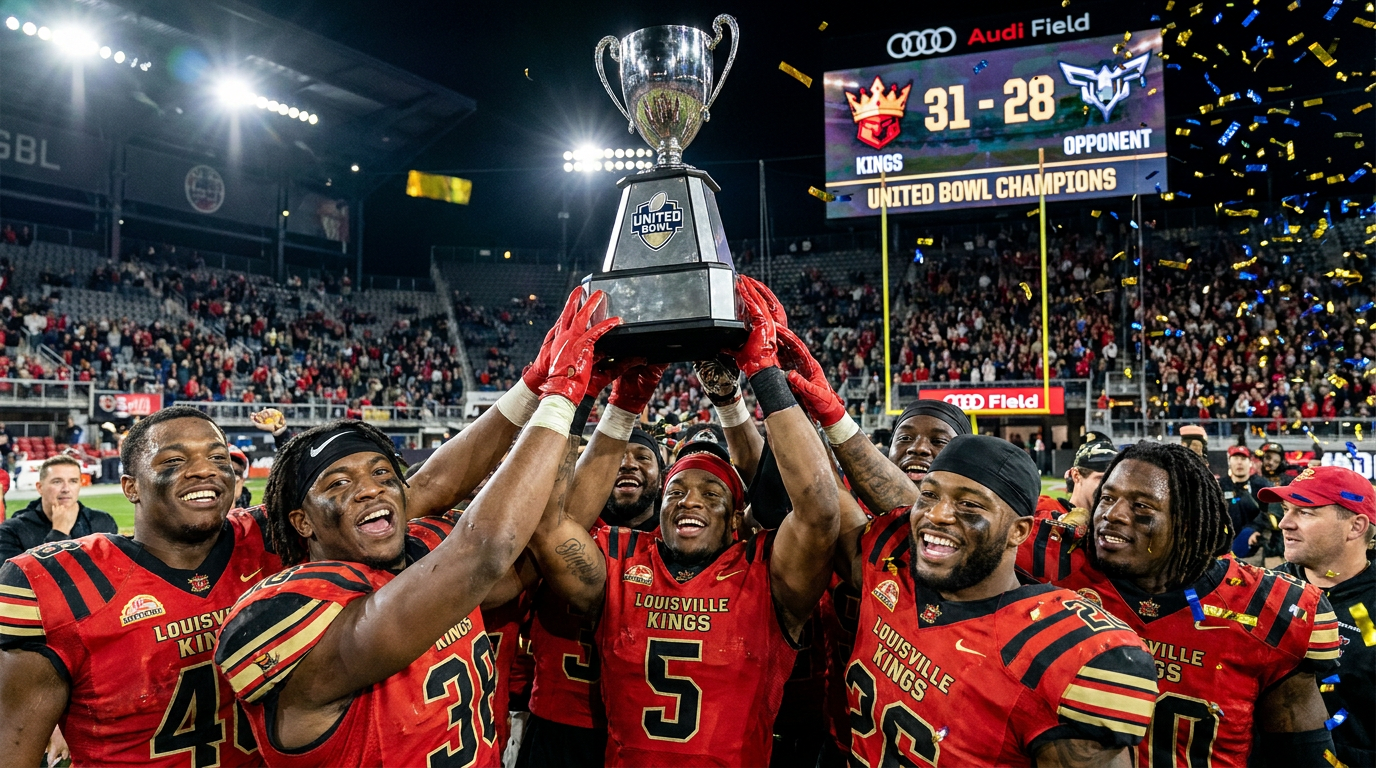
Expansion Louisville Kings Defeat DC Defenders to Win 2026 UFL Championship
0 sources
NBA Finals
New York Knicks Win 2026 NBA Championship, Ending 53-Year Title Drought
0 sources

Injury
Golden Knights Lose William Karlsson to Injury Ahead of Must-Win Game 6
0 sources

Standings
Carolina Hurricanes One Win Away From 2026 Stanley Cup as Vegas Golden Knights Vow to Force Game 7
0 sources

Every angle. Every day.
Get sports stories with full source coverage and perspective breakdowns delivered to your inbox.