
The Two Strongest Predictors of a Long Life: Why VO2 Max and Muscle Strength Outperform Biohacking
While extreme longevity trends capture headlines, decades of clinical evidence reveal that cardiorespiratory fitness and muscle preservation remain the most powerful, proven tools for extending human healthspan.
By Factlen Editorial Team
- Clinical Gerontologists
- Focus on functional independence, fall prevention, and maintaining the ability to perform activities of daily living.
- Exercise Physiologists
- Emphasize the specific training protocols, such as Zone 2 and high-intensity intervals, required to push physiological adaptations.
- Pharmacological Researchers
- Investigate cellular mechanisms of aging and search for compounds that might eventually mimic the systemic effects of exercise.
What's not represented
- · Public health policymakers designing urban environments for active aging
- · Socioeconomic analysts studying the accessibility of fitness resources
Why this matters
Understanding the outsized impact of VO2 max and grip strength shifts the focus of aging from expensive, unproven supplements to accessible, highly effective physical interventions that anyone can start today.
Key points
- Cardiorespiratory fitness (VO2 max) is inversely associated with long-term mortality, with no upper limit of benefit.
- Poor fitness carries a mortality risk comparable to or greater than smoking, diabetes, and cardiovascular disease.
- Age-related muscle loss (sarcopenia) is a primary driver of frailty, falls, and metabolic dysfunction.
- Muscle acts as a metabolic sink, regulating glucose and reducing the risk of type 2 diabetes.
- Grip strength serves as a highly accurate biomarker for overall vitality and central nervous system health.
- No current pharmacological intervention can replicate the systemic longevity benefits of consistent exercise.
The modern pursuit of longevity is often characterized by a dizzying array of pharmacological interventions, cold plunges, and experimental supplements. Yet, when stripping away the commercial noise to examine the bedrock of clinical evidence, the most potent tools for extending human healthspan are remarkably foundational. Decades of peer-reviewed data converge on two primary physiological metrics that dictate how long, and how well, a human being will live: cardiorespiratory fitness and muscular strength.[6]
To understand why these metrics matter, it is crucial to distinguish between lifespan—the chronological years a person is alive—and healthspan, the period of life spent in good health, free from chronic disease and disability. The medical community has grown increasingly adept at extending lifespan through pharmaceutical management of disease, but extending healthspan requires a proactive defense against the physiological decline that begins in our thirties.[4]
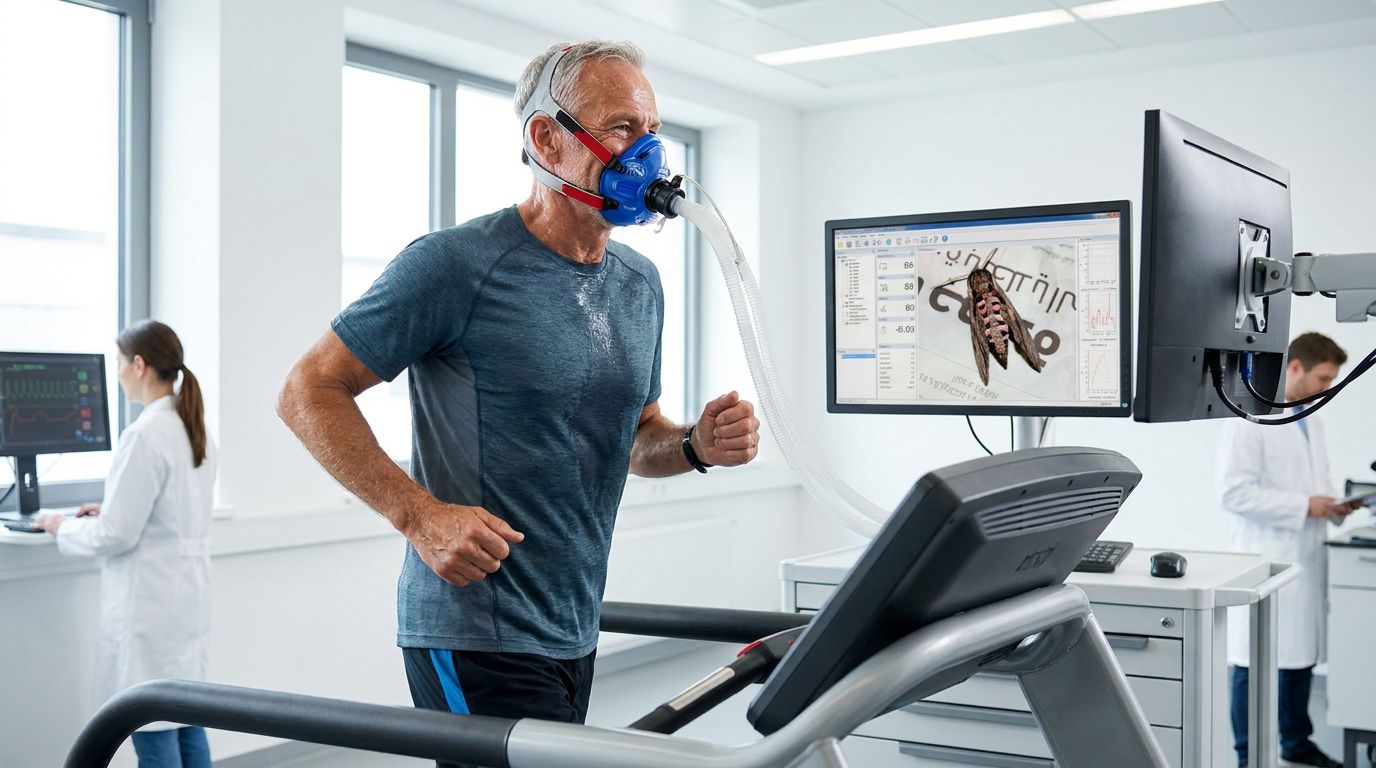
At the apex of this defensive strategy sits VO2 max, the maximum rate at which the heart, lungs, and muscles can effectively use oxygen during exercise. It is the ultimate measure of cardiorespiratory fitness. According to comprehensive data published in JAMA Network Open, which tracked over 120,000 patients, cardiorespiratory fitness is inversely associated with long-term mortality with no observed upper limit of benefit.[1]

The magnitude of this effect is staggering when compared to traditional risk factors. The JAMA study revealed that the risk of death associated with poor cardiorespiratory fitness was comparable to, or even greater than, traditional clinical risk factors such as cardiovascular disease, diabetes, and smoking. Moving from the lowest quartile of VO2 max to the highest quartile can reduce all-cause mortality risk by nearly 500 percent, a risk reduction that no known drug can replicate.[1][6]
VO2 max acts as a physiological ceiling for daily activities. As humans age, this ceiling naturally lowers by roughly 10 percent per decade after the age of 30, and up to 15 percent per decade after 50. If a person's VO2 max drops below the threshold required for basic activities—such as climbing a flight of stairs or carrying groceries—they lose their functional independence.[3]
However, this decline is highly modifiable. The American Heart Association emphasizes that structured aerobic exercise, particularly a combination of steady-state "Zone 2" training and high-intensity interval training, can significantly blunt this age-related decline. By artificially raising the VO2 max ceiling in middle age, individuals create a functional reserve that protects their independence deep into their eighties and nineties.[3][6]

By artificially raising the VO2 max ceiling in middle age, individuals create a functional reserve that protects their independence deep into their eighties and nineties.
While the heart and lungs provide the engine for longevity, the musculoskeletal system serves as the chassis. The second undeniable pillar of healthspan is muscle mass and, more specifically, muscular strength. The Lancet Healthy Longevity highlights that age-related loss of muscle mass and function, known as sarcopenia, is a primary driver of frailty, falls, and metabolic dysfunction in older adults.[2]
Muscle is not merely a mechanical tissue; it is the largest endocrine organ in the human body. It serves as a vital metabolic sink, absorbing glucose from the bloodstream and regulating insulin sensitivity. As muscle mass diminishes—a process that accelerates after age 60—the body's ability to manage glucose degrades, dramatically increasing the risk of type 2 diabetes and systemic inflammation.[2][4]
Within the realm of strength, grip strength has emerged as a surprisingly accurate proxy for overall vitality and biological aging. Extensive epidemiological studies utilize grip strength as a biomarker because it reflects not just muscle mass, but the integrity of the central nervous system's ability to recruit motor units. A weak grip is consistently correlated with higher risks of cardiovascular disease, cognitive decline, and all-cause mortality.[2][5]

The World Health Organization's guidelines for healthy aging explicitly call for muscle-strengthening activities involving major muscle groups on two or more days a week. Yet, resistance training remains vastly underutilized in older populations. The clinical consensus is shifting to view heavy resistance training not as a pursuit of aesthetics, but as a mandatory medical intervention for preserving bone density and metabolic health.[4][5]
The synergy between high VO2 max and high muscular strength creates a compounding effect on longevity. While aerobic fitness ensures the cardiovascular system can deliver oxygen and nutrients, muscular strength ensures the body can physically navigate the world without injury. A fall for an elderly individual with low muscle mass and brittle bones is often a terminal event, initiating a cascade of hospitalizations and rapid decline.[2][6]
In contrast to the robust, human-trial-backed evidence supporting exercise, pharmacological longevity interventions remain largely theoretical or confined to animal models. While compounds like rapamycin and metformin show promise in cellular pathways related to aging, the National Institute on Aging notes that no pill currently exists that can replicate the systemic, multi-organ benefits of physical exertion.[4][6]

The actionable takeaway from this evidence pack is a paradigm shift in how we approach aging. Rather than viewing physical decline as an inevitable consequence of time, the data frames it as a highly manageable condition. By treating VO2 max and strength training with the same clinical seriousness as blood pressure or cholesterol management, individuals can exert profound control over the trajectory of their later years.[1][3][6]
Ultimately, the science of longevity is demystifying what it takes to live well. The "magic pill" for extending healthspan has already been discovered, and its mechanisms are thoroughly documented across thousands of peer-reviewed papers. It requires no proprietary technology, only the deliberate, consistent application of physical effort to build an engine and a chassis capable of going the distance.[6]
How we got here
1920s
British physiologist A.V. Hill introduces the concept of maximal oxygen uptake (VO2 max).
1989
The Cooper Center publishes landmark epidemiological data linking aerobic fitness to reduced mortality.
2018
JAMA Network Open publishes a massive retrospective study confirming fitness is inversely associated with mortality with no upper limit.
2020
The World Health Organization updates global guidelines to explicitly emphasize resistance training for older adults.
Viewpoints in depth
Clinical Gerontologists
Focus on functional independence, fall prevention, and maintaining the ability to perform activities of daily living.
From a gerontological perspective, the primary goal of longevity interventions is not simply adding years to life, but preventing the catastrophic events that end independence. A fall resulting in a hip fracture is often a terminal cascade for an elderly patient with low muscle mass. Therefore, gerontologists prioritize interventions that maintain balance, bone density, and the muscular strength required to stand up from a chair or navigate stairs. They view resistance training as a non-negotiable medical prescription for preventing frailty.
Exercise Physiologists
Emphasize the specific training protocols required to push physiological adaptations.
Exercise physiologists focus on the mechanics of adaptation. They argue that simply 'moving more' is insufficient for optimal longevity; rather, the body requires specific, dosed stressors. This camp advocates for polarized training models—spending significant time in low-intensity 'Zone 2' to build mitochondrial efficiency, combined with brief, intense sessions to push the absolute ceiling of VO2 max. They view the cardiovascular system as highly malleable, capable of significant improvement even late in life if the correct stimulus is applied.
Pharmacological Researchers
Investigate cellular mechanisms of aging and search for compounds that mimic exercise.
While acknowledging the undisputed benefits of exercise, pharmacological researchers focus on the cellular pathways activated by physical stress, such as AMPK and mTOR. Their long-term objective is to develop 'exercise mimetics'—drugs that can trigger these same metabolic benefits for individuals who are physically unable to exercise due to severe disability or advanced disease. However, they concede that current compounds like metformin or rapamycin capture only a fraction of the systemic benefits generated by actual physical exertion.
What we don't know
- The exact biological mechanisms by which extreme endurance exercise might yield diminishing returns or cardiac stress in a small subset of individuals.
- Whether emerging pharmacological compounds can eventually replicate the mechanical loading benefits of resistance training on bone density.
- The precise optimal ratio of aerobic to resistance training for maximizing lifespan versus healthspan.
Key terms
- VO2 Max
- The maximum amount of oxygen the body can utilize during intense exercise, serving as the ultimate measure of aerobic endurance.
- Healthspan
- The portion of a person's life during which they are generally in good health, free from serious chronic diseases or disabilities.
- Sarcopenia
- The age-related, involuntary loss of skeletal muscle mass and strength, which accelerates significantly after age 60.
- Zone 2 Training
- Steady-state aerobic exercise performed at a moderate intensity where the body primarily burns fat for fuel, crucial for building an aerobic base.
- All-cause mortality
- The death rate from all causes of death for a population in a given time period, often used as a baseline metric in longevity studies.
Frequently asked
What is a good VO2 max score?
A 'good' score is highly dependent on age and sex. For a 40-year-old man, a score above 45 mL/kg/min is generally considered excellent, while for a 40-year-old woman, a score above 38 is excellent.
Is it too late to start strength training in my 60s?
No. Clinical studies consistently show that older adults can significantly increase muscle mass and strength, improving bone density and metabolic health regardless of when they begin.
Why is grip strength measured so often?
Grip strength is a simple, non-invasive test that accurately proxies overall muscle mass and central nervous system integrity, making it a reliable biomarker for biological aging.
Can longevity drugs replace exercise?
Currently, no drug or supplement can replicate the systemic, multi-organ benefits of physical exercise, which remains the most evidence-backed intervention for extending healthspan.
Sources
Source coverage
6 outlets
3 viewpoints surfaced




[1]JAMA Network OpenExercise Physiologists
Association of Cardiorespiratory Fitness With Long-term Mortality Among Adults Undergoing Exercise Treadmill Testing
Read on JAMA Network Open →[2]The Lancet Healthy LongevityClinical Gerontologists
Muscle mass, strength, and longevity: a clinical perspective
Read on The Lancet Healthy Longevity →[3]American Heart AssociationExercise Physiologists
Importance of Assessing Cardiorespiratory Fitness in Clinical Practice: A Case for Fitness as a Clinical Vital Sign
Read on American Heart Association →[4]National Institute on AgingClinical Gerontologists
Exercise and Physical Activity for Older Adults
Read on National Institute on Aging →[5]World Health OrganizationClinical Gerontologists
Physical activity guidelines and health outcomes
Read on World Health Organization →[6]Factlen Editorial TeamPharmacological Researchers
Synthesis by Factlen editorial team
Read on Factlen Editorial Team →

More in health
See all 5 stories →Metabolic Health
The Science of Zone 2 Cardio: How 'Conversational' Exercise Rewires Metabolism
0 sources

Longevity Science
First Human Trial for Cellular Age Reversal Begins with Epigenetic Reprogramming
0 sources

Digital Therapeutics
Digital CBT for Insomnia and Anxiety: The 2026 Clinical Evidence Pack
0 sources

Every angle. Every day.
Get health stories with full source coverage and perspective breakdowns delivered to your inbox.