
World Cup 2026 Preview: Uruguay's High-Stakes Gamble Under Marcelo Bielsa
Led by the eccentric Marcelo Bielsa and a new generation of stars, Uruguay enters the 2026 World Cup as the tournament's most unpredictable and tactically fascinating contender.
By Factlen Editorial Team
- Tactical Analysts
- Praise Bielsa's high-intensity pressing and verticality as the perfect modern evolution for Uruguay.
- Cautious Supporters
- Worry about the team's inconsistency and internal dressing-room frictions during the qualifying campaign.
- National Federation
- Expects a minimum of a quarter-final appearance, believing the squad belongs in the global top ten.
What's not represented
- · Rival CONMEBOL Managers
- · Grassroots Uruguayan Coaches
Why this matters
Uruguay's tactical reinvention represents a massive shift in international football. By abandoning their traditional defensive identity for an ultra-aggressive pressing system, they are poised to be the ultimate wildcard in North America.
Key points
- Marcelo Bielsa has completely overhauled Uruguay's tactical identity, implementing a high-pressing 4-3-3 system.
- The team led CONMEBOL qualifying with 147 high turnovers, showcasing their aggressive new approach.
- Federico Valverde and Darwin Núñez have stepped up as the new leaders following the retirement of Luis Suárez and Edinson Cavani.
- Despite a turbulent stretch of goalless draws in 2024, Uruguay secured qualification and is targeting a quarter-final run.
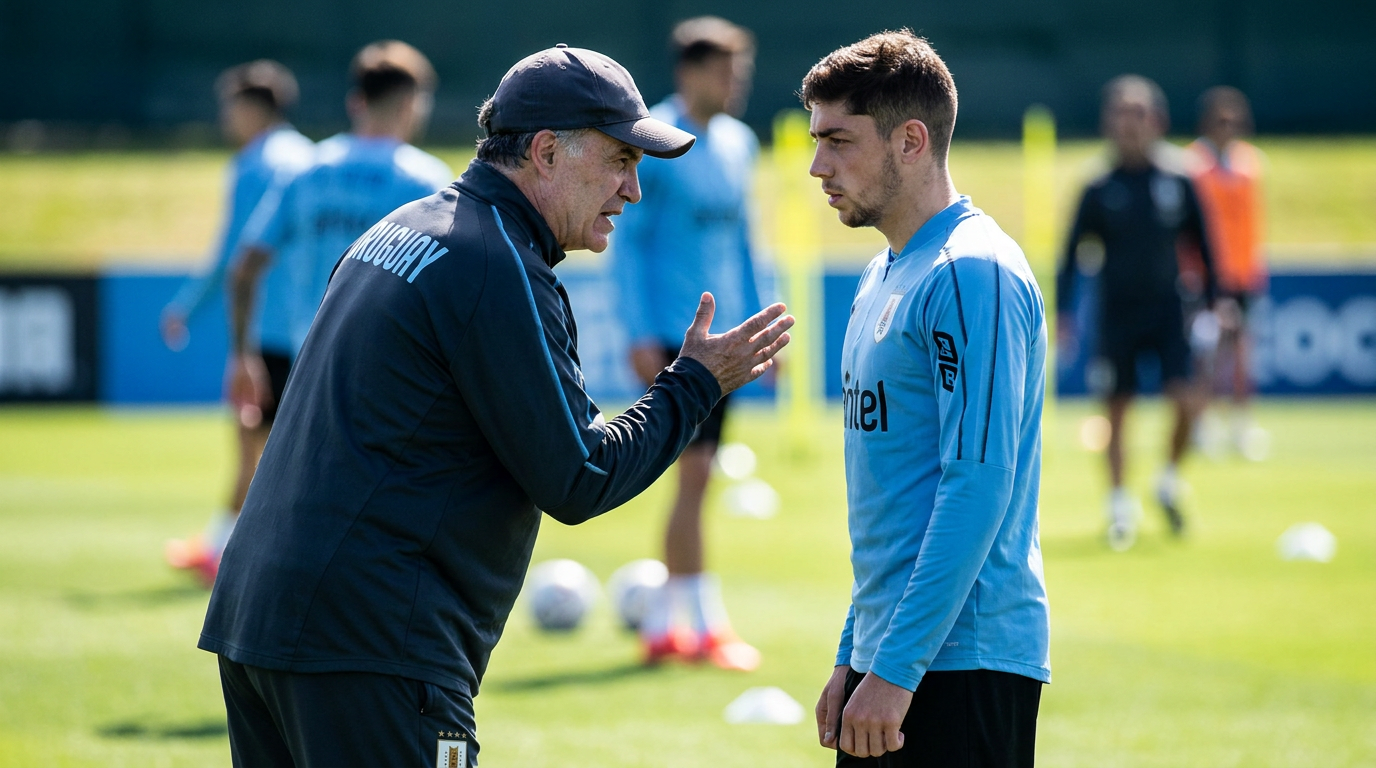
The 2026 FIFA World Cup is officially underway, and as the group stages heat up, few teams carry as much intrigue as Uruguay. For the first time in over a decade, La Celeste arrives at a major global tournament without the legendary striking duo of Luis Suárez and Edinson Cavani. Instead, they are spearheaded by a new generation of elite talent and guided by one of the most obsessive, polarizing minds in modern football history.[1][5]
At 70 years old, Marcelo Bielsa is managing his third South American nation at a World Cup, 24 years after his ill-fated campaign with Argentina. Affectionately known as "El Loco," Bielsa has completely rewired Uruguay's footballing DNA since taking charge in May 2023. He has traded the nation's traditional Garra Charrúa—a deep-defending, fiercely physical style of play—for a high-octane, relentless 4-3-3 system built on verticality and suffocation.[1][2]
The tactical shift has been staggering. During the grueling CONMEBOL qualifying campaign, Uruguay recorded 147 high turnovers, winning the ball back in the attacking third 26 more times than the next-best team, reigning world champions Argentina. Bielsa demands that his players chase the ball at all times, utilizing central overloads and short passing triangles to break through opposition mid-blocks.[3][5]

The undisputed engine of this new system is Federico Valverde. The 27-year-old Real Madrid star arrives in North America at the absolute peak of his powers. Operating as a dynamic box-to-box presence, Valverde's tactical versatility and limitless stamina make him indispensable. He is the leader Uruguayans hope can inspire their country to the latter stages of the tournament, shouldering the responsibility of dictating the tempo against elite midfields.[1][3]
Up front, the burden of replacing the nation's greatest-ever goalscorers has fallen squarely on the shoulders of Darwin Núñez. The Liverpool striker netted five goals during the qualifiers, serving as the focal point of Bielsa's aggressive transitions. While his finishing can occasionally run hot and cold, his sheer pace and physicality perfectly complement a system designed to overwhelm retreating defenses.[3][5]
Beyond the established stars, Bielsa has unearthed new weapons tailored to his philosophy. Sporting CP midfielder Rodrigo Zalazar has emerged as a breakout candidate. Coming off a sensational 23-goal club season, the 26-year-old's exceptional ability to time late runs into the penalty area makes him the ideal, unpredictable asset to unsettle opposition backlines.[2]

Beyond the established stars, Bielsa has unearthed new weapons tailored to his philosophy.
Yet, the road to North America was anything but smooth. Uruguay finished fourth in the South American standings with 28 points, but the campaign was a dramatic rollercoaster. The early days of the Bielsa era were euphoric, highlighted by a stunning autumn 2023 window where they secured dominant 2-0 victories over both Brazil and Argentina. It was their first win over the Seleção since 2001, and it signaled that Bielsa's high-risk gamble could yield spectacular rewards.[4][5]
However, the momentum violently stalled in late 2024. A brutal stretch of fixtures saw Uruguay fail to score in eight of twelve matches, enduring a spell of five consecutive 0-0 draws. The on-pitch stagnation was mirrored by off-pitch turmoil. Dressing room unrest spilled into the public eye, with a departing Suárez criticizing Bielsa's man-management style—a controversy that culminated in the manager famously labeling himself "toxic" during a press conference.[4][5]
Despite the intense pressure and growing chorus of critics back in Montevideo, Bielsa weathered the storm. The team eventually regained its footing, mathematically securing their ticket to the 2026 finals with a commanding 3-0 home victory over Peru. The late-campaign recovery proved that the squad had not abandoned their manager's demanding methods.[2][4]

Now, the Uruguayan Football Association has set clear expectations. Federation president Ignacio Alonso recently stated that the team must aspire to be in the world's top ten, setting a minimum target of reaching the quarter-finals. Alonso emphasized that Bielsa is entirely focused on the preparations, viewing this tournament as the ultimate culmination of his exhaustive research and tactical planning.[1][6]
The group stage draw offers Uruguay a favorable runway to build momentum. Opening fixtures against Saudi Arabia and Cape Verde provide an opportunity for the team to fine-tune their pressing triggers and offensive combinations before facing stiffer opposition. If they can secure early points, Bielsa will have the luxury of rotating his high-energy squad to keep legs fresh for the knockout rounds.[2][5]
For Bielsa, this tournament likely represents the final chapter of a legendary, eccentric coaching career. For Uruguay, it is a definitive test of whether their golden generation's successors can replicate the deep, magical runs of 2010 and 2014. The stakes are immense, and the margin for error in a Bielsa system is notoriously slim.[2][4]
With an estimated 10,000 passionate Uruguayan fans expected to travel across North America, La Celeste will be pure box office. Whether they systematically dismantle the tournament favorites or spectacularly burn out in the group stage, one thing is certain: under Marcelo Bielsa, Uruguay will not go quietly.[1][6]

How we got here
May 2023
Marcelo Bielsa appointed as Uruguay head coach.
Autumn 2023
Uruguay secures statement 2-0 victories over both Brazil and Argentina in qualifying.
July 2024
Reaches the semi-finals of the Copa America before falling to Colombia.
Late 2024
A turbulent spell of goalless draws and dressing room unrest threatens their campaign.
Sept 2025
Mathematical qualification secured with a 3-0 home win over Peru.
Viewpoints in depth
Tactical Analysts
Praise Bielsa's high-intensity pressing and verticality as the perfect modern evolution for Uruguay.
Analysts point to the underlying metrics as proof of Bielsa's genius. By leading CONMEBOL in high turnovers and non-penalty expected goals during their peak stretches, Uruguay demonstrated a modern, suffocating style that elite European nations fear. They argue that moving away from the reactive 'Garra Charrúa' was necessary to maximize the talents of dynamic, modern midfielders like Federico Valverde and Manuel Ugarte.
Cautious Supporters
Worry about the team's inconsistency and internal dressing-room frictions during the qualifying campaign.
For many fans and domestic observers, the scars of late 2024 remain fresh. The string of five consecutive goalless draws highlighted a dangerous lack of a Plan B when the high press fails to break down stubborn defenses. Furthermore, the public fallout with veterans like Luis Suárez raised lingering concerns about whether Bielsa's notoriously demanding man-management style will burn the squad out during a grueling month-long tournament.
National Federation
Expects a minimum of a quarter-final appearance, believing the squad belongs in the global top ten.
The Uruguayan Football Association (AUF) views the Bielsa project as a resounding success that is right on schedule. Leadership emphasizes the statement victories over Brazil and Argentina as proof of concept. For the federation, the investment in a world-class, high-profile manager was made specifically to shed the 'underdog' label and compete toe-to-toe with the world's heavyweights in the latter stages of the World Cup.
What we don't know
- Whether Bielsa's physically demanding system will lead to squad burnout in the intense summer heat of North America.
- How the team will react if they fall behind early, given their struggles to break down deep defensive blocks in late 2024.
- If breakout star Rodrigo Zalazar can translate his phenomenal club form to the immense pressure of the World Cup stage.
Key terms
- High Turnovers
- Winning the ball back from the opponent close to their own goal, a hallmark of Bielsa's pressing system.
- Verticality
- A tactical approach focused on moving the ball forward quickly to exploit spaces, rather than maintaining slow possession.
- Garra Charrúa
- Uruguay's traditional footballing identity, characterized by deep defending, tenacity, and fierce physical play.
- El Loco
- The affectionate nickname for Marcelo Bielsa, translating to 'The Madman', referencing his obsessive and eccentric coaching style.
Frequently asked
Who are Uruguay's key players at the 2026 World Cup?
Real Madrid's Federico Valverde is the midfield engine, while Liverpool's Darwin Núñez leads the attack. Sporting CP's Rodrigo Zalazar is also tipped as a breakout star.
Did Luis Suárez and Edinson Cavani make the squad?
No, the legendary striking duo have retired from international football, marking a definitive generational shift for La Celeste.
Who is in Uruguay's World Cup group?
Uruguay's opening matches include highly favorable fixtures against Saudi Arabia and Cape Verde.
Sources
Source coverage
6 outlets
3 viewpoints surfaced






[1]The GuardianNational Federation
Uruguay World Cup 2026 team guide
Read on The Guardian →[2]GoalTactical Analysts
World Cup 2026 Ultimate Guide: Uruguay
Read on Goal →[3]Tactical Football AnalysisTactical Analysts
Marcelo Bielsa Tactics At Uruguay 2026
Read on Tactical Football Analysis →[4]The Copa ClubCautious Supporters
World Cup Preview: Uruguay Edition
Read on The Copa Club →[5]Fantasy Football ScoutCautious Supporters
Fantasy FIFA World Cup 2026 team previews: Uruguay
Read on Fantasy Football Scout →[6]ReutersNational Federation
Uruguay aim for deep World Cup run under Bielsa
Read on Reuters →
More in sports
See all 11 stories →Injury
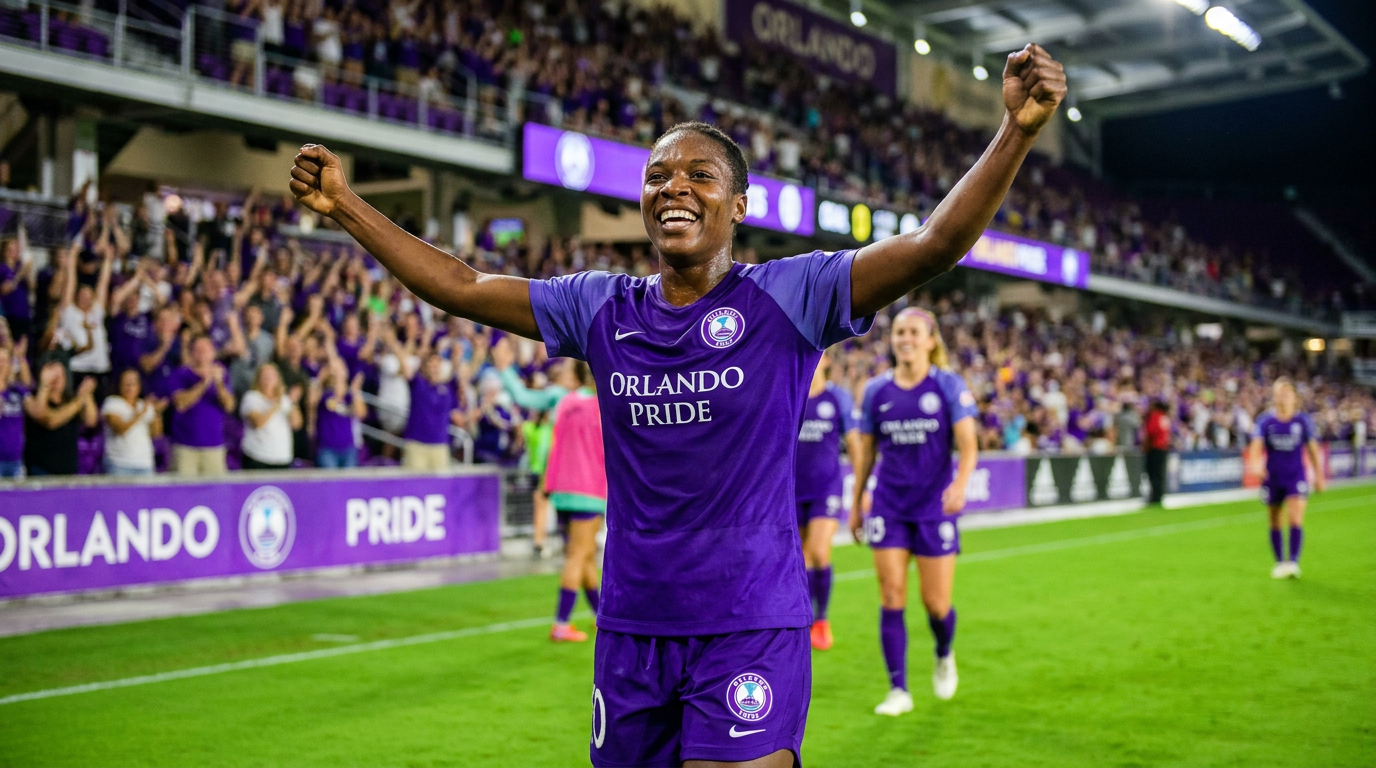
Orlando Pride and Zambia Receive Major Boost as Barbra Banda's Injury Deemed Minor
0 sources
Hockey Strategy
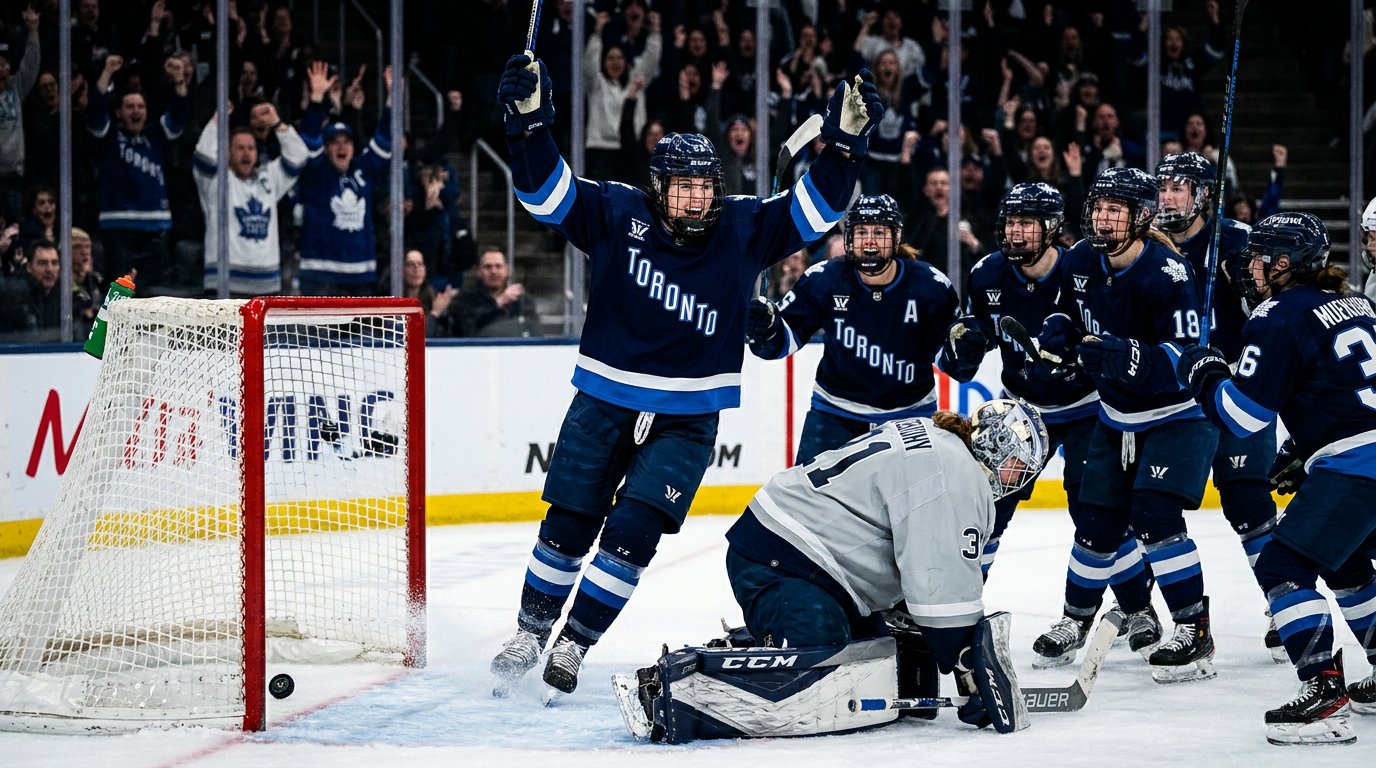
How the PWHL's Innovative Rules Are Revolutionizing Hockey Strategy
0 sources
Youth Sports
Global 'Silent Sidelines' Movement Transforms Youth Soccer, Drastically Reducing Referee Abuse
0 sources
Standings
NWSL Mid-Season Standings: San Diego Wave Cling to Top Spot in League's Tightest Race Yet
0 sources
Every angle. Every day.
Get sports stories with full source coverage and perspective breakdowns delivered to your inbox.