
Mid-Drive vs. Hub Motor E-Bikes: Which Should You Choose in 2026?
As e-bike adoption surges, choosing between a mid-drive and a hub motor is the most critical decision for buyers. We break down the trade-offs in performance, maintenance, and cost to help you find the right fit.
By Factlen Editorial Team
- Performance Off-Roaders
- Value torque, balance, and the ability to leverage the bike's gears for steep climbs.
- Urban Commuters & Casual Riders
- Value simplicity, low cost, and throttle-driven ease for flat city riding.
- Industry Mechanics
- Focus on long-term reliability, drivetrain wear, and ease of service.
What's not represented
- · Cargo bike couriers
- · Adaptive cycling users
Why this matters
The motor dictates an e-bike's price, lifespan, and capability. Choosing the wrong system can leave riders stranded on steep hills or burdened with unexpected maintenance bills.
Key points
- Mid-drive motors leverage the bike's gears, making them highly efficient for steep hills and technical trails.
- Hub motors operate independently of the chain, offering a simpler, lower-maintenance ride ideal for flat city commuting.
- Mid-drives typically cost $300 to $500 more due to complex frame integration.
- Hub motors add unsprung weight to the rear wheel, which can negatively impact suspension performance off-road.
- Mid-drives accelerate wear on chains and cassettes, requiring more frequent drivetrain replacements.
The electric bicycle market in 2026 has matured far beyond early novelty, and buyers are increasingly looking past superficial specifications to focus on the heart of the machine.[6]
For anyone shopping for an e-bike today, the choice between a mid-drive motor and a hub motor is the single most consequential decision they will make.[6]
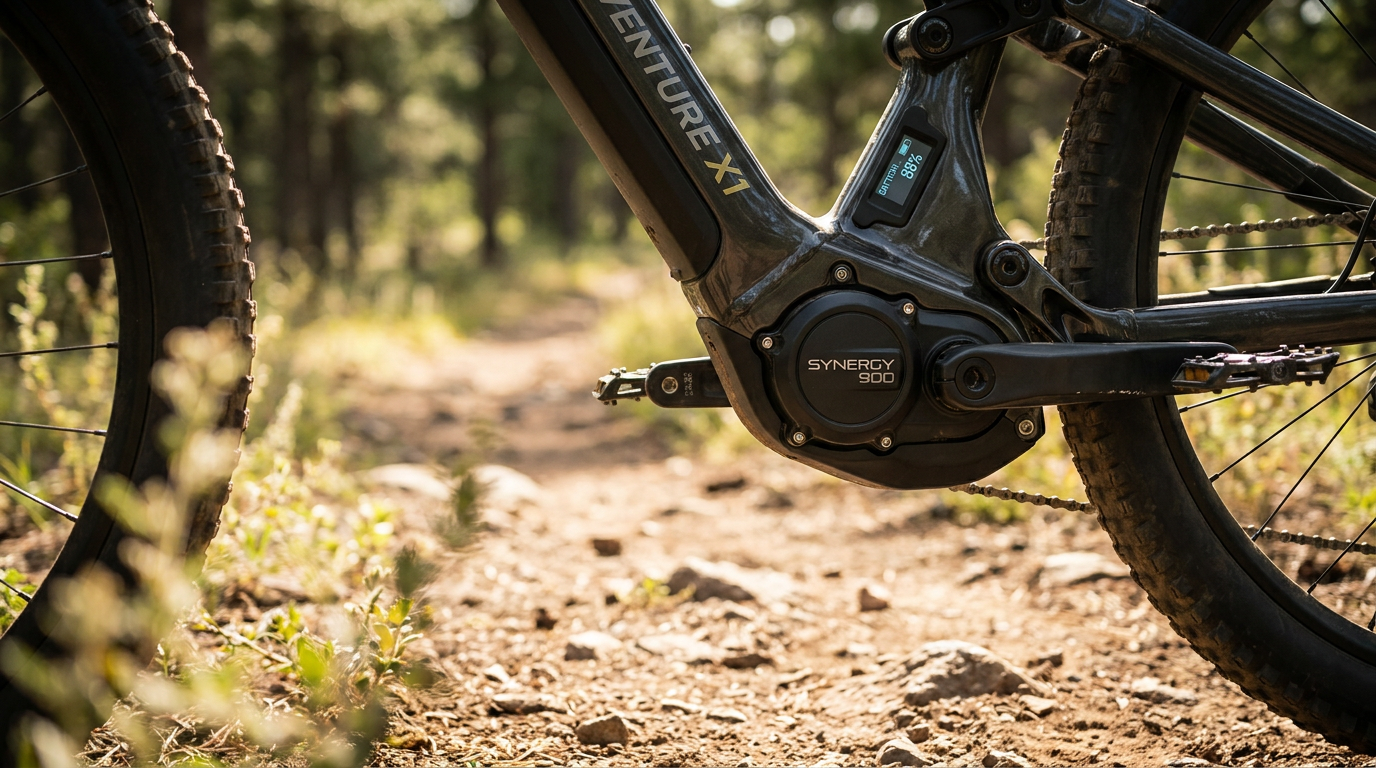
The fundamental difference between the two systems lies in their geography and mechanical integration. A mid-drive motor is mounted at the bike's bottom bracket, positioned directly between the rider's pedals.[1]
By sitting centrally at the crankset, a mid-drive motor channels its power directly into the bicycle's chain, meaning its output is driven through the existing cassette and derailleur.[5]
Conversely, a hub motor is encased entirely within the center of the front or rear wheel, operating completely independently of the bicycle's traditional drivetrain.[4]

This architectural divergence creates drastically different riding experiences, starting with how the bicycles tackle elevation and steep terrain.[2]
Because mid-drives utilize the bike's mechanical gears, they can multiply their torque in low gears, allowing riders to spin easily up steep, technical inclines just as they would on a non-electric mountain bike.[2]
Industry testing demonstrates that this gear-leveraged efficiency gives mid-drive systems a 15 to 20 percent advantage in hill-climbing performance compared to hub motors of similar wattage.[3]
Hub motors, lacking access to the bike's mechanical gearing, must rely entirely on brute electrical force to conquer hills, which draws massive amounts of current from the battery.[5]
This heavy current draw on sustained climbs can lead to overheating and significantly reduced battery range for hub-driven bicycles in mountainous environments.[3]
In fact, the optimized power output of a mid-drive system often translates to an additional 10 to 15 miles of range per charge under varied riding conditions.[3]

In fact, the optimized power output of a mid-drive system often translates to an additional 10 to 15 miles of range per charge under varied riding conditions.
Beyond raw efficiency, the placement of the motor dramatically alters the bicycle's center of gravity and overall handling characteristics.[1]
Mid-drives concentrate their weight low and dead-center in the frame, preserving the balanced, nimble feel of a traditional acoustic bicycle and making it easier to maneuver over obstacles.[4]
Hub motors place a heavy mass at the extreme rear or front of the bike, creating what engineers call "unsprung weight," which can make the bicycle feel sluggish and compromise rear suspension performance on rough trails.[5]
However, the hub motor's independence from the chain is also its greatest superpower when it comes to long-term reliability and ease of ownership.[2]
Mid-drive motors channel hundreds of watts of power directly through a standard bicycle chain, accelerating wear and tear on the cassette, chainrings, and derailleur.[2]
Riders who push mid-drives hard often find themselves replacing snapped chains and worn gears far more frequently than they would on a standard bicycle.[4]
Hub motors bypass the drivetrain entirely; if a chain snaps on a hub-driven bike, the rider can simply use the throttle to get home without pedaling.[5]

This mechanical simplicity makes hub motors the undisputed champions of low-maintenance, high-mileage urban commuting where reliability is paramount.[2]
The simplicity of the hub motor also translates directly to the price tag. Because mid-drives require custom-engineered frames to house the motor at the bottom bracket, they typically carry a $300 to $500 premium over equivalent hub models.[3]
Flat tire repairs present another stark contrast in the ownership experience. Removing a rear wheel with a hub motor involves wrestling with heavy magnets, unplugging wiring harnesses, and realigning torque washers.[5]
Mid-drive bicycles use standard quick-release or thru-axle wheels, making trailside flat tire repairs identical to those on a conventional bicycle.[4]

The ride feel itself caters to entirely different audiences. Mid-drives typically use sophisticated torque sensors that amplify the rider's exact effort, creating a bionic, natural cycling sensation that rewards active pedaling.[1]
Hub motors often rely on simpler cadence sensors and throttles, providing a distinct sensation of being pushed along that resembles an electric moped more than a traditional bicycle.[4]
Ultimately, the decision hinges on the terrain and the rider's mechanical appetite. Technical trail riders and mountain climbers will find the mid-drive's balanced, gear-leveraged performance indispensable.[2]
Meanwhile, urban commuters seeking a sweat-free, budget-friendly, and maintenance-light workhorse will find the hub motor to be the perfect tool for the daily journey.[6]
Viewpoints in depth
Trail and Mountain Bikers
Prioritize mid-drives for weight distribution, natural pedal feel, and gear-leveraged torque on steep climbs.
For off-road enthusiasts, the mid-drive motor is considered non-negotiable. By placing the heaviest component low and in the center of the frame, mid-drives preserve the bike's natural center of gravity, allowing riders to hop over logs and navigate tight switchbacks without fighting a heavy rear wheel. Furthermore, the ability to drop into a low gear and let the motor multiply its torque makes climbing steep, loose dirt trails possible without overheating the system.
Urban Commuters
Favor hub motors for their low maintenance, throttle capabilities, and lower upfront cost.
City riders treat their e-bikes as reliable transportation appliances, making the hub motor the ideal choice. Because the motor spins the wheel directly, it bypasses the chain entirely. This means commuters don't have to worry about snapping a chain under heavy load or constantly replacing worn cassettes. The inclusion of a throttle allows riders to accelerate from stoplights without pedaling, ensuring they arrive at the office sweat-free.
E-Bike Mechanics
Highlight the trade-off between the complex drivetrain wear of mid-drives and the cumbersome rear-wheel flat repairs associated with hub motors.
From a maintenance perspective, mechanics see clear trade-offs with both systems. Mid-drives generate immense torque that stretches chains and grinds down gear teeth, leading to frequent and sometimes costly drivetrain overhauls. Conversely, while hub motors preserve the chain, they turn a simple rear flat tire into a major chore. Removing a hub-driven rear wheel requires disconnecting wiring harnesses and wrestling with heavy magnetic resistance, a task many riders struggle to perform on the side of the road.
What we don't know
- Whether future advancements in internal gearboxes will eventually eliminate the drivetrain wear issues associated with mid-drive motors.
- How long it will take for the manufacturing costs of mid-drive frames to drop enough to reach price parity with hub motor designs.
Key terms
- Mid-Drive Motor
- A motor located at the bike's bottom bracket that powers the chain and utilizes the bike's mechanical gears.
- Hub Motor
- A motor built directly into the center of the front or rear wheel, spinning it independently of the bike's gears.
- Torque Sensor
- A device that measures how hard the rider is pedaling and adjusts the motor's power output to match, creating a natural cycling feel.
- Unsprung Mass
- The weight of the bike components not supported by the suspension, such as a heavy rear hub motor, which can negatively affect handling.
- Drivetrain
- The system of mechanical components—including the chain, cassette, and derailleur—that transmits power from the pedals to the rear wheel.
Frequently asked
Can I climb steep hills with a hub motor?
Yes, but it is less efficient than a mid-drive. Hub motors rely on raw electrical wattage rather than gear multiplication, which drains the battery much faster on steep inclines.
Why are mid-drive e-bikes more expensive?
Mid-drives require custom-designed frames to house the motor at the bottom bracket, and the motors themselves are mechanically more complex to manufacture.
Which motor requires more maintenance?
Mid-drives put significant stress on the bike's chain and gears, requiring more frequent drivetrain replacements. Hub motors are largely maintenance-free as they bypass the chain.
Do both types of motors have a throttle?
Hub motors almost always include a throttle. Mid-drives are typically pedal-assist only to protect the drivetrain, though a few aftermarket kits offer throttle options.
Sources
Source coverage
6 outlets
3 viewpoints surfaced





[1]TenwaysUrban Commuters & Casual Riders
Mid-drive vs Hub Motor: Which E-bike Motor is Right for You?
Read on Tenways →[2]HPC BikesPerformance Off-Roaders
Mid-Drive vs. Hub Motor: The Ultimate 2026 E-Bike Motor Guide
Read on HPC Bikes →[3]Yozma SportPerformance Off-Roaders
Mid-Drive vs. Hub Motor: 2025 Performance Guide
Read on Yozma Sport →[4]EcorideUrban Commuters & Casual Riders
Hub Motor vs. Mid-Drive Motor: What's the Difference?
Read on Ecoride →[5]Riding TimesUrban Commuters & Casual Riders
Mid-Drive vs Hub Motor E-Bikes: Detailed Performance Comparison
Read on Riding Times →[6]Factlen Editorial TeamIndustry Mechanics
Synthesis by Factlen editorial team
Read on Factlen Editorial Team →

Every angle. Every day.
Get shopping stories with full source coverage and perspective breakdowns delivered to your inbox.