
Mid-Drive vs. Hub Motor: The Definitive 2026 E-Bike Comparison
The e-bike market is divided by a critical engineering choice: mid-drive motors that leverage the bike's gears, and hub motors that drive the wheel directly. Here is the definitive guide to the trade-offs in cost, maintenance, and performance.
By Factlen Editorial Team
- Urban Commuters
- Prioritizes reliability, low maintenance, and the ability to use a throttle for sweat-free riding.
- Performance Cyclists
- Prioritizes natural ride feel, center of gravity, and maximum torque for challenging terrain.
- Budget-Conscious Buyers
- Focuses on upfront affordability and minimizing long-term replacement parts.
What's not represented
- · DIY E-Bike Builders
- · Cargo Bike Delivery Couriers
Why this matters
Choosing the wrong e-bike motor can lead to frustrating maintenance bills, poor hill-climbing performance, or an unnatural ride feel. Understanding this single engineering difference ensures you buy a bike that actually fits your daily commute or weekend trails.
Key points
- Mid-drive motors are positioned at the pedals and leverage the bicycle's mechanical gears for superior hill-climbing torque.
- Hub motors are built directly into the wheel, offering a simpler, lower-maintenance design that bypasses the chain entirely.
- Mid-drives provide a more natural cycling feel but accelerate wear on drivetrain components and cost significantly more upfront.
- Hub motors are ideal for flat urban commuting and often feature throttles, but struggle with weight distribution and steep inclines.
As millions of riders replace car trips with electric bicycles in 2026, the e-bike market has matured into a highly specialized industry. However, beneath the varied frame styles and battery capacities, the market remains split by one fundamental engineering choice: where to put the motor. The decision between a mid-drive motor and a hub motor is not merely a matter of aesthetics. It is the single most consequential choice a buyer will make, dictating the upfront price, the long-term maintenance schedule, the handling dynamics, and how the bicycle actually feels to ride.[1][5]
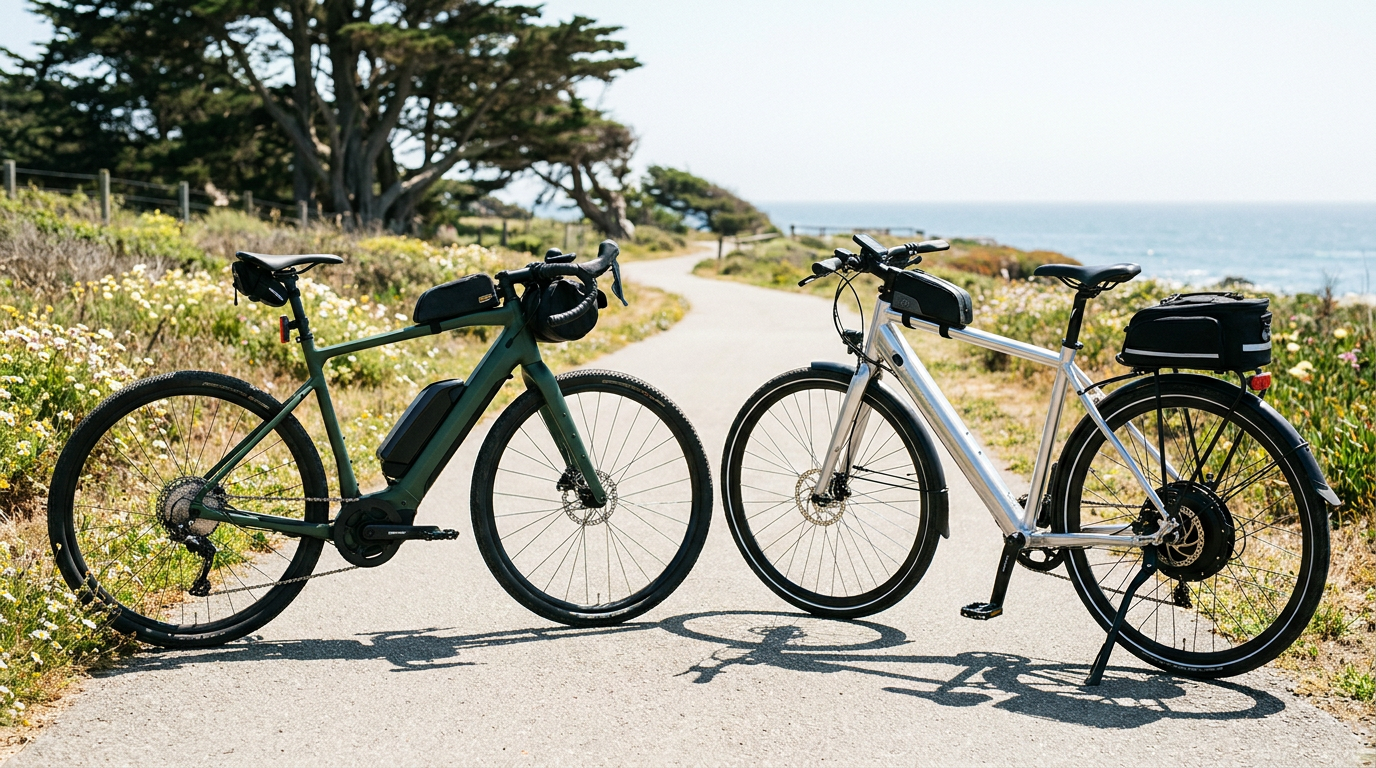
To understand the trade-offs, one must first look at the mechanics of both systems. A mid-drive motor is positioned at the exact center of the bicycle, integrated directly into the bottom bracket between the pedals. By sitting at the crankset, a mid-drive motor powers the front chainring, which in turn pulls the chain. This means the motor’s electrical output runs entirely through the bicycle’s existing rear gears. Just as a human rider shifts into a lower gear to make pedaling up a hill easier, the mid-drive motor leverages that same mechanical advantage to maximize its efficiency.[2][4]
In stark contrast, a hub motor is built directly into the center of the wheel—most commonly the rear wheel, though front-hub configurations exist for specific use cases. A hub motor operates entirely independently of the bicycle’s chain, cassette, and derailleurs. When the system activates, electromagnets inside the hub simply spin the wheel casing around the stationary axle. There is no mechanical advantage gained from the rider shifting gears; the motor relies entirely on its own raw electrical torque to push the bike forward, operating at a fixed speed ratio regardless of the terrain.[2][6]
For the mid-drive motor, the strongest argument is unparalleled hill-climbing performance and efficiency. Because it utilizes the bike’s cassette, a rider can shift into a low gear on a steep incline, allowing the motor to spin at a high, highly efficient RPM while the bike climbs slowly. Evidence from industry testing shows that mid-drives deliver up to 15 to 20 percent better efficiency on steep hills compared to hub motors of the same wattage. Hub motors, forced to operate at their fixed ratio, can bog down, overheat, and rapidly drain the battery on long, demanding ascents.[5][8]

Against the mid-drive, critics and mechanics point to accelerated wear and tear on the bicycle's components. Because the motor’s substantial torque is channeled directly through a standard bicycle chain and cassette, these parts degrade much faster than they would on a traditional analog bike. A rider who commutes daily on a powerful mid-drive may find themselves replacing stretched chains and worn gear teeth every thousand miles. Furthermore, the complex frame integration required to house a mid-drive motor means these bikes typically carry a $300 to $500 premium over identically specced hub-motor alternatives.[2][5]
Against the mid-drive, critics and mechanics point to accelerated wear and tear on the bicycle's components.
The case for the hub motor centers entirely on simplicity, durability, and cost-effectiveness. Because it bypasses the drivetrain entirely, a hub motor puts zero additional stress on the chain or gears, drastically reducing routine maintenance costs. Sealed from the elements in a self-contained unit, a quality hub motor can easily last 10,000 to 30,000 miles with virtually no internal servicing required. Furthermore, hub motors frequently feature a throttle. If a rider snaps their chain miles from home, a hub motor can still power the bike back, acting as a reliable fail-safe for urban commuters.[6][7]
Against the hub motor is the persistent issue of weight distribution and handling dynamics. Placing a heavy electric motor inside the rear wheel creates a severe rear-heavy imbalance. This increases the bike's unsprung weight—the mass not supported by the suspension—making the bicycle feel sluggish and harsh when rolling over potholes or loose gravel. Additionally, while hub motors save money on chain maintenance, they introduce a different mechanical nightmare: changing a flat rear tire requires disconnecting power cables and wrestling with a massive, heavy wheel, turning a basic roadside repair into a frustrating chore.[2][7]
Ride feel also sharply divides the two systems, driven largely by how they measure rider input. Mid-drives almost universally utilize advanced torque sensors, which measure exactly how hard the rider is pushing on the pedals and amplify that specific effort in real-time. The result is a natural, bionic-leg sensation that cycling purists prefer. Conversely, hub motors frequently rely on simpler cadence sensors, which only detect whether the pedals are turning. This often results in a sudden, delayed "push" sensation—like being pulled along by a scooter—rather than a seamless extension of the rider's own physical effort.[2][4]
Beyond raw torque, the gearing advantage of a mid-drive motor translates directly into superior battery efficiency and extended range. Because the motor can operate at its optimal RPM regardless of the bike's actual speed, it wastes significantly less energy as heat. In real-world testing, a mid-drive e-bike will often yield 10 to 15 miles of additional range compared to a hub-motor bike utilizing the exact same battery capacity. For long-distance touring cyclists or those who suffer from range anxiety, this efficiency gain makes the mid-drive an invaluable asset.[3][8]

Another critical consideration is what happens when the battery inevitably dies. Riding a heavy e-bike without electric assist is never ideal, but the two motor types handle it differently. Most direct-drive hub motors introduce a slight electromagnetic drag when unpowered, making the bike feel sluggish. Geared hub motors and mid-drives use internal freewheels to eliminate this drag, but mid-drives still force the rider to pedal through the motor's internal reduction gears. While premium mid-drives have minimized this resistance by 2026, budget models can still feel like pedaling through molasses when the power is cut.[3]
Ultimately, the mid-drive motor fits well when the rider faces steep hills on their daily route, values a natural and balanced cycling feel, rides off-road on technical mountain bike trails, and is willing to perform regular drivetrain maintenance. The mid-drive does not fit well when the buyer's budget is strictly capped, when the local terrain is entirely flat, or when the rider wants a zero-maintenance utility vehicle that can be ridden purely on a throttle without pedaling.[1][5]

Conversely, the hub motor fits well when the primary use case is urban commuting on relatively flat ground, when the rider wants the sweat-free option of a throttle, and when minimizing upfront costs and routine chain maintenance is a top priority. The hub motor does not fit well when the daily route involves long, steep mountain gradients, when the rider is tackling technical single-track trails where center-of-gravity is paramount, or when the rider demands the authentic, responsive feel of a traditional acoustic bicycle.[1][6]
How we got here
1993
Yamaha introduces the first commercially successful mid-drive e-bike system.
Early 2000s
Direct-drive hub motors become the standard for early DIY e-bike conversion kits.
2014
Bosch enters the e-bike market, standardizing high-performance mid-drives for premium brands.
2020
The pandemic e-bike boom sees a massive influx of affordable, throttle-equipped rear hub motors.
2026
Advanced torque sensors and lighter materials blur the performance gap, making both motor types highly refined.
Viewpoints in depth
The Performance Cyclist's View
Prioritizes natural ride feel and maximum torque for challenging terrain.
For mountain bikers, gravel riders, and cycling purists, the mid-drive is the only viable option. This camp argues that a bicycle's center of gravity must remain low and centered to handle corners safely. Furthermore, they emphasize that torque sensors—which multiply the rider's exact physical effort—are essential for maintaining the authentic feeling of cycling, rather than feeling like a passenger on a moped.
The Daily Commuter's View
Prioritizes reliability, low maintenance, and the ability to use a throttle.
Riders who use their e-bikes as car replacements for daily city commuting heavily favor hub motors. This camp values the independence of the motor from the drivetrain; if a chain snaps on the way to work, a hub motor's throttle ensures the rider still arrives on time. They also point out that replacing a worn chain and cassette every 1,000 miles on a mid-drive is an unacceptable maintenance burden for a daily utility vehicle.
The E-Bike Mechanic's View
Focuses on the long-term serviceability and wear-and-tear of both systems.
Mechanics see the distinct trade-offs of both systems in the repair stand. They note that mid-drives generate a steady stream of drivetrain replacements, as the immense torque stretches chains and grinds down cassette teeth. Conversely, while hub motors preserve the chain, mechanics dread them for a different reason: changing a flat rear tire on a heavy hub-motor wheel requires disconnecting power cables and wrestling with massive unsprung weight, turning a five-minute job into a frustrating chore.
What we don't know
- Whether emerging lightweight mid-drive systems will eventually become cheap enough to completely phase out premium hub motors.
- How upcoming solid-state battery integrations might alter the weight distribution math for both motor types in the late 2020s.
Key terms
- Torque Sensor
- A sensor that measures exactly how hard you are pushing on the pedals, allowing the motor to amplify your effort smoothly and naturally.
- Cadence Sensor
- A basic sensor that only detects whether the pedals are turning, often resulting in a sudden, fixed amount of motor assistance.
- Unsprung Weight
- The mass of the bicycle's components (like a heavy hub motor) that is not supported by the suspension, which can make the bike feel sluggish over bumps.
- Drivetrain
- The mechanical system—including the chain, gears, and derailleurs—that transmits power from the pedals to the rear wheel.
Frequently asked
Can I ride a hub motor e-bike if the chain breaks?
Yes. Because the hub motor drives the wheel directly and independently of the pedals, you can use the throttle to get home even if your chain is broken.
Which motor is better for steep hills?
Mid-drive motors are significantly better for hills. They connect to the bike's gears, allowing the motor to spin efficiently in a low gear while climbing steep gradients.
Are mid-drive motors completely silent?
Not entirely. While modern 2026 models are very quiet, the internal reduction gears in a mid-drive motor produce a slight, high-pitched hum under heavy load.
Is it hard to change a flat tire on an e-bike?
It is much harder on a rear hub motor. You must disconnect the motor's power cable and handle a very heavy wheel. Mid-drive bikes have standard wheels, making flats as easy to fix as on a regular bicycle.
Sources
Source coverage
8 outlets
3 viewpoints surfaced






[1]Factlen Editorial Team
Synthesis by Factlen editorial team
Read on Factlen Editorial Team →[2]UpwayPerformance Cyclists
Hub or Mid-Drive? The E-Bike Motor Debate
Read on Upway →[3]EBikes.orgBudget-Conscious Buyers
Mid-Drive vs. Hub-Drive Electric Bike Motors
Read on EBikes.org →[4]Gazelle BikesPerformance Cyclists
Mid Drive vs Hub Motor E-bikes
Read on Gazelle Bikes →[5]Bike-EVBudget-Conscious Buyers
Honest 2026 comparison of mid-drive vs hub motor e-bikes
Read on Bike-EV →[6]KingbullUrban Commuters
Mid-Drive vs. Hub Motor E-Bikes: Which is Right for You?
Read on Kingbull →[7]EngweUrban Commuters
Pros and Cons of an Ebike Hub Motor
Read on Engwe →[8]Yozma SportPerformance Cyclists
Mid-Drive vs Hub Motor E-Bikes: Detailed Performance Comparison
Read on Yozma Sport →



Every angle. Every day.
Get shopping stories with full source coverage and perspective breakdowns delivered to your inbox.