
How Political Bias is Quietly Draining Retail Investment Portfolios
Behavioral finance data reveals that investors who align their portfolios with their political beliefs consistently underperform the broader market, but simple de-biasing strategies can protect your returns.
By Factlen Editorial Team
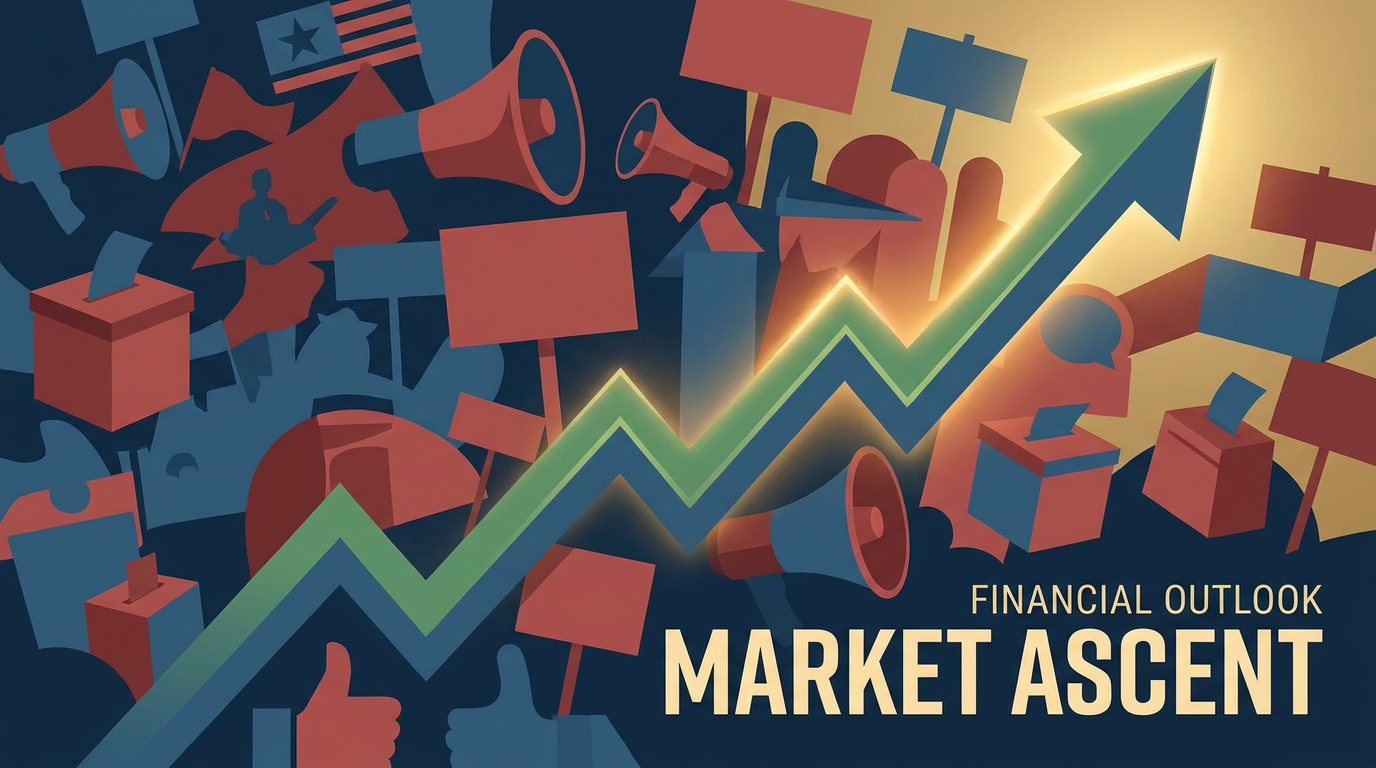
- Behavioral Economists
- Focus on the cognitive biases, such as the optimism heuristic, that cause investors to misjudge economic reality based on their political affiliations.
- Financial Planners
- Emphasize practical mitigation strategies, urging clients to ignore daily political headlines and stick to automated, diversified index funds.
- Retail Investors
- Often struggle to separate their deeply held civic values and fears from their financial decision-making, leading to emotional trading.
What's not represented
- · Values-based (ESG) fund managers who argue that political alignment in investing is a moral imperative, regardless of slight return drags.
Why this matters
Your brain's natural instinct to trust leaders you agree with and distrust those you don't is actively sabotaging your retirement savings. Learning to decouple your political identity from your financial strategy is one of the highest-ROI skills an investor can develop.
Key points
- Investors frequently let political preferences dictate their financial decisions, a phenomenon known as partisan portfolio bias.
- This bias leads to poor market timing and lack of diversification, dragging down long-term returns.
- The stock market historically trends upward regardless of which political party controls Washington.
- Automating investments and using index funds can protect your portfolio from emotional, headline-driven trading.
- Engaging with opposing political viewpoints can help investors break out of financial echo chambers.
The human brain is a remarkably sophisticated pattern-recognition engine, but it possesses a glaring blind spot when it comes to money and politics. For millions of retail investors, the lines between civic identity and financial strategy have blurred, creating a hidden drag on their long-term wealth.[1][6]
Financial advisors and behavioral economists are increasingly sounding the alarm on "partisan portfolio bias"—the subconscious tendency to make investment decisions based on which political party holds power rather than underlying corporate fundamentals. This bias tricks investors into feeling a false sense of security or an unearned sense of panic.[2][5]
The phenomenon is not limited to one side of the aisle; it is a universal cognitive trap. When an investor's preferred political party is in office, they tend to view the economy through rose-colored glasses, taking on more risk and assuming smooth sailing. Conversely, when the opposing party takes control, those same investors often retreat to cash, convinced a recession is imminent.[3]
This emotional whiplash carries a steep, quantifiable price tag. Academic research into retail trading behaviors reveals that highly partisan investors consistently underperform the broader market, effectively paying a "polarization tax" on their own life savings.[4]

The mechanism behind this underperformance is twofold: sector concentration and market timing. An investor deeply entrenched in a specific political ideology might refuse to invest in traditional energy companies, or conversely, shun renewable energy stocks, artificially limiting their diversification and exposing themselves to unnecessary sector-specific volatility.[1][5]
More damaging, however, is the instinct to flee the market entirely based on election results or legislative battles. Missing just a handful of the market's best days—which often occur during periods of high political or economic uncertainty—can permanently stunt a portfolio's compound growth over a multi-decade horizon.[2][5]
Researchers at the National Bureau of Economic Research have documented what they call the "optimism heuristic." This cognitive shortcut leads individuals to conflate their approval of the government with the objective health of the corporate sector, blinding them to actual economic data that contradicts their political narrative.[3]
In reality, the stock market is remarkably agnostic to Washington's partisan tug-of-war. Historical data demonstrates that the S&P 500 has trended upward under nearly every combination of unified and divided government over the last century, driven by innovation rather than legislation.[2][6]

In reality, the stock market is remarkably agnostic to Washington's partisan tug-of-war.
In fact, market strategists note that there is a roughly 68% chance the stock market will end any given year higher, completely independent of the daily political headlines that dominate cable news and social media feeds.[1]
The disconnect between political anxiety and corporate earnings is profound. While lawmakers debate policy, publicly traded companies are primarily focused on optimizing supply chains, developing new technologies, and expanding profit margins—activities that persist regardless of who occupies the Oval Office.[6]
So, how can an individual investor inoculate their life savings against their own political beliefs? The first step is recognizing the bias. Financial psychologists suggest a counterintuitive exercise: actively seeking out and listening to the economic perspectives of political opponents to break the echo chamber.[1]
By engaging with opposing viewpoints, investors can temper their financial anxieties. If you only consume media that insists the economy is on the brink of collapse due to current policies, your portfolio will likely reflect that fear, causing you to miss out on broader market rallies.[1][5]

Another structural defense is the adoption of broad-market index funds. By owning a microscopic slice of every publicly traded company, an investor effectively neutralizes the urge to pick winners and losers based on regulatory assumptions or partisan preferences.[2]
Automation also serves as a powerful behavioral shield. Setting up automatic, recurring contributions to a retirement account—regardless of the current political climate—removes the emotional friction of deciding when to invest, completely bypassing the brain's partisan alarm system.[5][6]

Viewpoints in depth
Behavioral Economists' view
Focuses on the measurable cognitive errors that occur when politics and money mix.
Researchers in behavioral finance view partisan bias as a predictable glitch in human cognition. They point to the 'optimism heuristic,' where the brain uses political satisfaction as a proxy for economic health. Because humans are tribal by nature, it is incredibly difficult for the brain to accept that a political leader they despise might preside over a booming corporate sector, leading to irrational financial pessimism and missed market rallies.
Financial Planners' view
Focuses on building structural defenses against emotional trading.
For wealth managers and financial planners, the goal is not to change a client's political beliefs, but to build a firewall between those beliefs and their brokerage account. They advocate for 'boring' investing: broad-market index funds and automated dollar-cost averaging. By removing the need to make active choices about when and what to buy, planners help clients bypass their own partisan alarm systems, ensuring their money grows even when they are anxious about the news cycle.
Values-Based Investors' view
Argues that where you put your money is inherently political and should reflect your worldview.
While academic data shows that partisan trading hurts returns, a growing segment of retail investors argues that maximizing profit isn't the only goal. Proponents of values-based investing believe that capital allocation is a form of voting. They are often willing to accept the potential 'polarization tax' of sector concentration if it means their retirement savings aren't funding industries or corporate practices they find politically or morally objectionable.
What we don't know
- Whether the rise of hyper-partisan financial media will permanently increase the 'polarization tax' paid by retail investors.
- How younger generations, who have unprecedented access to zero-commission trading apps, will balance their political activism with long-term wealth building.
Key terms
- Partisan Portfolio Bias
- The tendency for investors to alter their financial strategies based on their political beliefs rather than objective economic data.
- Optimism Heuristic
- A cognitive shortcut where people conflate their approval of the current government with the actual health of the economy.
- Sector Concentration
- The risky practice of investing heavily in only one or two industries, often driven by a belief that specific government policies will favor those sectors.
- Index Fund
- A type of mutual fund or ETF designed to follow certain preset rules so that it tracks a specified basket of underlying investments, providing broad market exposure.
Frequently asked
Does the stock market perform better under one specific political party?
Historical data shows that the stock market has trended upward under both unified and divided governments of both parties. Corporate innovation and earnings drive long-term growth far more than political control.
What is the 'optimism heuristic'?
It is a cognitive bias where individuals believe the economy is objectively healthier when their preferred political party is in power, leading them to take on more financial risk.
How can I stop political bias from hurting my investments?
Financial experts recommend automating your investments, utilizing broad-market index funds to ensure diversification, and actively seeking out opposing economic viewpoints to break your media echo chamber.
Sources
Source coverage
6 outlets
3 viewpoints surfaced






[1]MarketWatchFinancial Planners
This hidden investing flaw is costing you money. Talking to political opponents fixes it.
Read on MarketWatch →[2]CNBCFinancial Planners
Why leaving politics out of your portfolio is the best financial move you can make
Read on CNBC →[3]National Bureau of Economic ResearchBehavioral Economists
Partisan Bias in Economic Expectations and Investment
Read on National Bureau of Economic Research →[4]Journal of FinanceBehavioral Economists
Political Polarization and Retail Trading Behavior
Read on Journal of Finance →[5]Vanguard ResearchBehavioral Economists
How Cognitive Biases Impact Investor Returns
Read on Vanguard Research →[6]Factlen Editorial TeamRetail Investors
Synthesis by Factlen editorial team
Read on Factlen Editorial Team →

More in finance
See all 5 stories →


Every angle. Every day.
Get finance stories with full source coverage and perspective breakdowns delivered to your inbox.