
FIFA Proposes Symbolic Israel-Palestine Match to Open New Under-15 Global Tournament
FIFA President Gianni Infantino is pushing to schedule a youth match between Israel and Palestine to kick off a new global under-15 football festival in the United States this September.

Share this story
In an ambitious bid to use sports as a diplomatic bridge, FIFA is actively working to schedule a symbolic football match between the under-15 national teams of Israel and Palestine. The proposed fixture would serve as the opening game for a brand-new, global youth tournament set to take place in the United States this September.
The initiative, spearheaded by FIFA President Gianni Infantino, represents a concerted effort to foster unity and shared humanity among the next generation of athletes. By focusing on teenagers rather than senior professionals, the governing body hopes to bypass the entrenched political gridlock that often complicates international sporting events, offering a rare moment of hopeful coexistence on the world stage.[1][2]
The upcoming competition marks a significant departure from FIFA's traditional World Cup structures, prioritizing participation over ruthless elimination. Described as a "festival-style" tournament, the event will feature shorter matches played on smaller pitches, with teams fielding between seven and nine players. This format is specifically designed to maximize touches on the ball and encourage creative play among developing athletes.
Unlike senior-level competitions that require rigorous qualification campaigns, this youth festival will extend open invitations to all 211 FIFA member associations. This radically inclusive approach notably extends to nations currently facing bans at the senior international level, emphasizing the governing body's desire to keep youth sports insulated from the geopolitical conflicts of adults.[1]
Infantino's push for the Israel-Palestine opening match stems from a deeply held belief that football can succeed where traditional diplomacy often stalls. By bringing together teenagers from regions entrenched in conflict, the organization hopes to project a powerful image of coexistence and mutual respect.
The focus on the under-15 demographic is highly intentional; sports psychologists and diplomats alike note that it offers a vital platform to build connections before political and social divisions fully harden into adulthood. For the young players involved, sharing a pitch, exchanging pennants, and competing under the same rules can serve as a profound, lived experience of equality that transcends the headlines.[2]
The youth initiative follows a much more complicated diplomatic effort at the senior level earlier this year, which highlighted the limitations of top-down peacemaking. During the 76th FIFA Congress held in Vancouver in April, Infantino attempted to orchestrate a highly public handshake between Jibril Rajoub, president of the Palestinian Football Association, and Basim Sheikh Suliman, vice-president of the Israel Football Association.
The gesture ultimately backfired in front of the global football community when Rajoub declined to stand alongside Suliman, underscoring the deep-seated tensions and domestic political pressures that persist among senior officials. The awkward standoff served as a stark reminder of the boundaries of sports diplomacy when dealing with established leaders.[1]
Rather than retreating after the Vancouver incident, Infantino pivoted his peacemaking efforts toward the grassroots level, where the stakes are different and the participants are more malleable. Addressing the congress shortly after the awkward exchange, he explicitly referenced the upcoming youth tournament as a beacon of optimism for the sport.
"Let's work together to give hope to the children," Infantino urged the delegates, asking for the room's support in using the under-15 festival to invite all the children of the world to participate on equal footing. His remarks signaled a strategic shift: if the current generation of leaders cannot find common ground, FIFA will invest its diplomatic capital in the generation that follows them.[1]
Logistical planning for the September tournament is already well underway, though a final venue has not been officially confirmed by the organizing committee. Miami has emerged as the clear frontrunner and most likely host city, largely due to FIFA's extensive operational footprint and newly expanded corporate offices in the area.
The vibrant, international backdrop of South Florida is viewed as an ideal setting for a festival designed to celebrate global diversity and youth development. Hosting the event in the United States also provides a neutral, highly secure environment capable of managing the complex logistics required to welcome over 200 youth delegations from around the globe.[1]
The September event is just the first phase of a much broader expansion into youth development by international football's governing body. The inaugural 2026 festival will focus exclusively on boys' teams, allowing organizers to test the new festival format and logistical frameworks, but FIFA has already outlined a comprehensive roadmap for the future.
A corresponding girls' edition is slated to launch exactly 12 months later in 2027. By 2028, the organization plans to scale the operation to host two separate youth festivals annually, cementing the under-15 category as a permanent, celebrated fixture on the global sports calendar.[1]
Despite the optimism radiating from FIFA's headquarters, the realization of the Israel-Palestine opening match remains a highly delicate undertaking. As of mid-June, neither the Israeli nor the Palestinian football federations have issued an official public response accepting or declining the proposal. Navigating the complex domestic politics, public opinion, and stringent security concerns for both associations will require careful, quiet mediation in the coming months. Organizers are acutely aware that any misstep could result in a withdrawal, turning a symbol of unity into another flashpoint of division.[2]
If successful, the match would join a long, albeit complicated, history of sports diplomacy that has occasionally managed to transcend borders. From the famous ping-pong diplomacy that helped thaw US-China relations in the 1970s to joint Korean teams marching under a unified flag at the Olympics, athletic arenas have historically provided safe, neutral ground for divided populations to interact. A shared pitch for Israeli and Palestinian teenagers would offer a similarly resonant visual of peaceful competition, reminding global audiences of the shared humanity that persists beneath geopolitical conflicts.
Ultimately, the proposed fixture represents a fascinating test of football's soft power in the modern era. While a single under-15 match cannot resolve decades of entrenched geopolitical conflict, it offers a rare, uplifting narrative centered entirely on the potential of the next generation. For FIFA, the upcoming festival is an opportunity to prove that the universal language of sports can still bring people together in meaningful ways, starting with the young players who will eventually inherit both the game and the world.[1]
Key points
- FIFA is planning a new global under-15 football festival in the US this September.
- President Gianni Infantino has proposed an opening match between Israel and Palestine.
- The tournament will feature shorter matches, smaller pitches, and 7-to-9 players per side.
- All 211 FIFA member nations are invited to participate in the inclusive event.
- The initiative follows a failed attempt to orchestrate a handshake between senior FA officials in April.
- A girls' edition of the youth festival is scheduled to launch in 2027.
How we got here
December 2025
FIFA officially announces plans for a new global under-15 youth football festival.
April 2026
An attempted handshake between senior Israeli and Palestinian FA officials falls through at the FIFA Congress in Vancouver.
June 2026
Reports emerge that FIFA is pushing for an Israel-Palestine youth match to open the upcoming tournament.
September 2026
The inaugural boys' under-15 festival is scheduled to take place in the United States.
2027
The first girls' edition of the under-15 festival is slated to launch.
- FIFA Leadership
- Advocates for using youth football as a diplomatic tool to foster global unity and peace.
- Sports Diplomats
- Highlights the historical power of sports to bridge divides while acknowledging the complex political hurdles.
- Grassroots Advocates
- Focuses on the developmental benefits of the inclusive, smaller-sided tournament format for young players.
Perspectives this story doesn't cover
- The families and youth players from Israel and Palestine who would actually participate in the match.
- Local organizers and security officials in the potential host city of Miami.
Sources
Source coverage
2 outlets
3 viewpoints surfaced


- [1]The GuardianFIFA Leadership
Fifa plans symbolic Israel v Palestine fixture as opening game of new under-15s tournament
Read on The Guardian → - [2]DailysportsGrassroots Advocates
Breaking! FIFA planning football match between Palestine and Israel in the US
Read on Dailysports →

More in Sports
See all →Football Governance
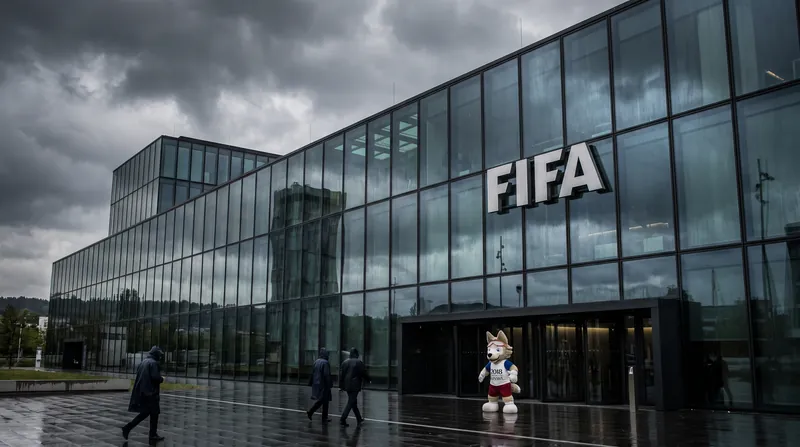
UEFA Issues November 2 Ultimatum to FIFA Over Secret World Cup Documents
5 sources
Executive Compensation
US Filings Reveal Undisclosed $1.76 Million World Cup Payment to FIFA President
4 sources

Pitch Geometry
Enforcing Law 14's 9.15-Metre Buffer: Why Soccer's Penalty Arc Extends Four Yards Beyond the Box
4 sources

Nations League
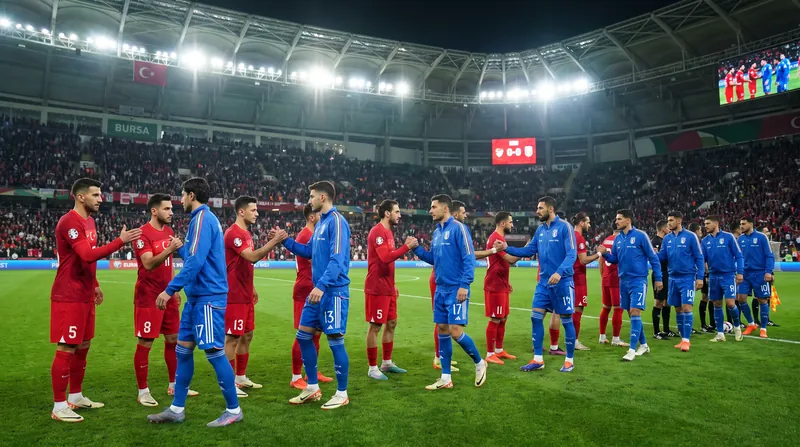
Can Turkey Finally Break Their Winless Curse Against Italy in Nations League Clash?
6 sources
Comments
Every angle. Every day.
Get Sports stories with full source coverage and perspective breakdowns, free every day.