
Deep Energy Retrofits: How Older Homes Are Achieving 'Passive' Efficiency
A new wave of comprehensive home renovations is cutting energy use by up to 90%, transforming drafty, aging houses into ultra-efficient, resilient homes. By prioritizing the building envelope and utilizing advanced standards like EnerPHit, the construction industry is proving that older homes can perform just as well as modern green builds.
By Factlen Editorial Team
- Building Science Experts
- Focus on the physics of the building envelope and the necessity of rigorous standards.
- Homeowners & Financial Advisors
- Focus on the economic realities, upfront sticker shock, and long-term value.
- Policy & Industry Leaders
- Focus on scaling the technology to meet national and global climate targets.
What's not represented
- · Traditional Home Appraisers
- · Low-Income Housing Advocates
Why this matters
With energy prices fluctuating and extreme weather becoming more common, upgrading an older home's efficiency is no longer just an environmental choice—it is a financial and safety imperative. Understanding how deep energy retrofits work allows homeowners to make long-term investments that permanently eliminate high utility bills and drastically improve daily comfort.
Key points
- Deep energy retrofits aim to reduce a home's energy consumption by 50% to over 80%.
- The 'fabric first' approach prioritizes continuous exterior insulation and extreme airtightness over mechanical upgrades.
- The EnerPHit standard provides a rigorous, scientifically backed certification specifically for retrofitting older buildings.
- While upfront costs are high, government incentives and long-term utility savings make retrofits financially viable over time.
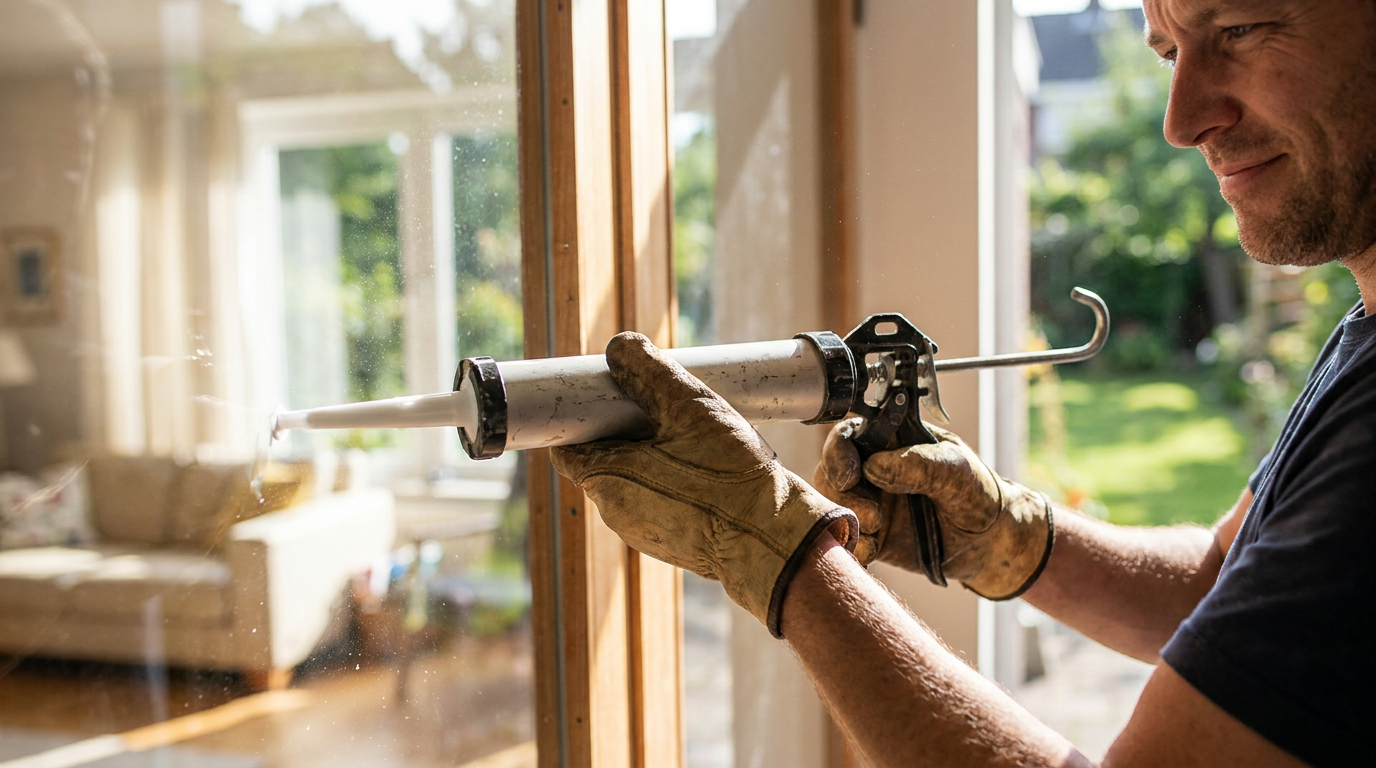
The United States alone is home to more than 130 million aging residential units, many of which were built long before modern energy codes existed. For decades, the standard advice for improving these drafty houses was simple weatherization: caulking windows, swapping out lightbulbs, and blowing a few inches of fiberglass insulation into the attic. While these low-cost measures typically yield a 10 to 20 percent reduction in energy use, building scientists have realized that piecemeal upgrades are insufficient to meet modern climate goals or truly insulate homeowners from volatile energy prices.[1][6]
Enter the Deep Energy Retrofit (DER). Unlike traditional remodeling, which often focuses on aesthetics like granite countertops or new flooring, a DER is a comprehensive, whole-building overhaul. The primary objective is to reduce a home's on-site energy consumption by 50 percent to over 80 percent, fundamentally transforming how the structure interacts with the environment.[1][5]
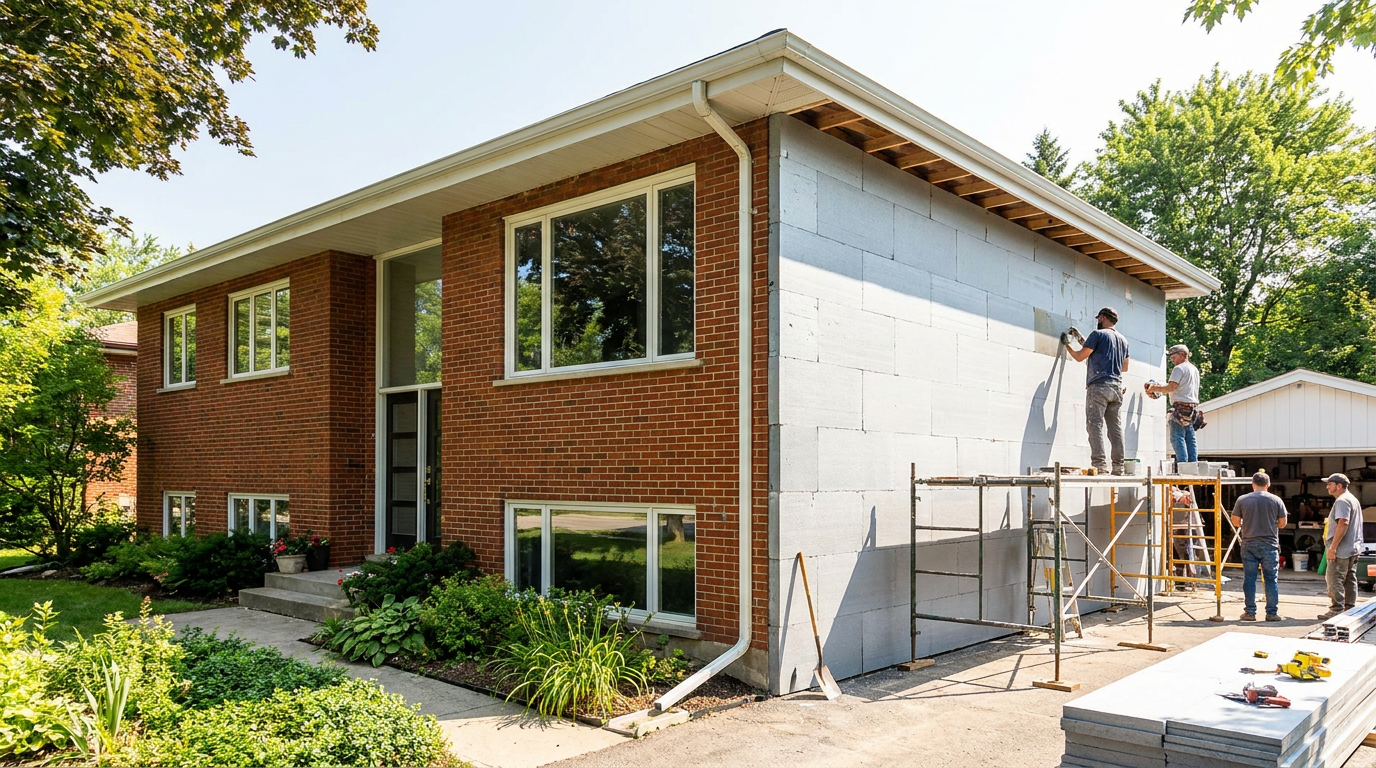
The foundation of a successful deep energy retrofit is the "fabric first" approach. Before any mechanical systems are upgraded, contractors focus entirely on the building envelope. They wrap the home in a continuous thermal blanket—often applied directly to the exterior—to eliminate "thermal bridges." These bridges are areas where wood or steel framing conducts heat out of the house, bypassing traditional insulation placed between the studs.[2][6]

To make this exterior wrapping process faster and less intrusive, the construction industry is increasingly turning to prefabricated wall panels. These offsite-manufactured assemblies come with insulation, weather barriers, and even exterior cladding already attached. They can be craned into place over a home's existing siding in a matter of weeks, rapidly sealing the building while minimizing disruption to the occupants living inside.[4]
Alongside thick continuous insulation, a deep energy retrofit demands extreme airtightness. Drafty gaps around foundations and rooflines are meticulously sealed using specialized tapes and membranes. Standard double-hung windows are swapped out for high-performance, triple-pane units that lock shut like a bank vault, ensuring that conditioned air stays inside.[2][5]
Because a deeply retrofitted home is virtually airtight, it requires a mechanical "lung" to maintain healthy indoor air quality and prevent moisture buildup. Heat Recovery Ventilators (HRVs) or Energy Recovery Ventilators (ERVs) are installed to continuously exhaust stale indoor air while drawing in fresh outdoor air. Crucially, these systems transfer the heat from the outgoing air to the incoming stream, ensuring that fresh air is provided without losing the home's thermal energy.[2][6]
Because a deeply retrofitted home is virtually airtight, it requires a mechanical "lung" to maintain healthy indoor air quality and prevent moisture buildup.
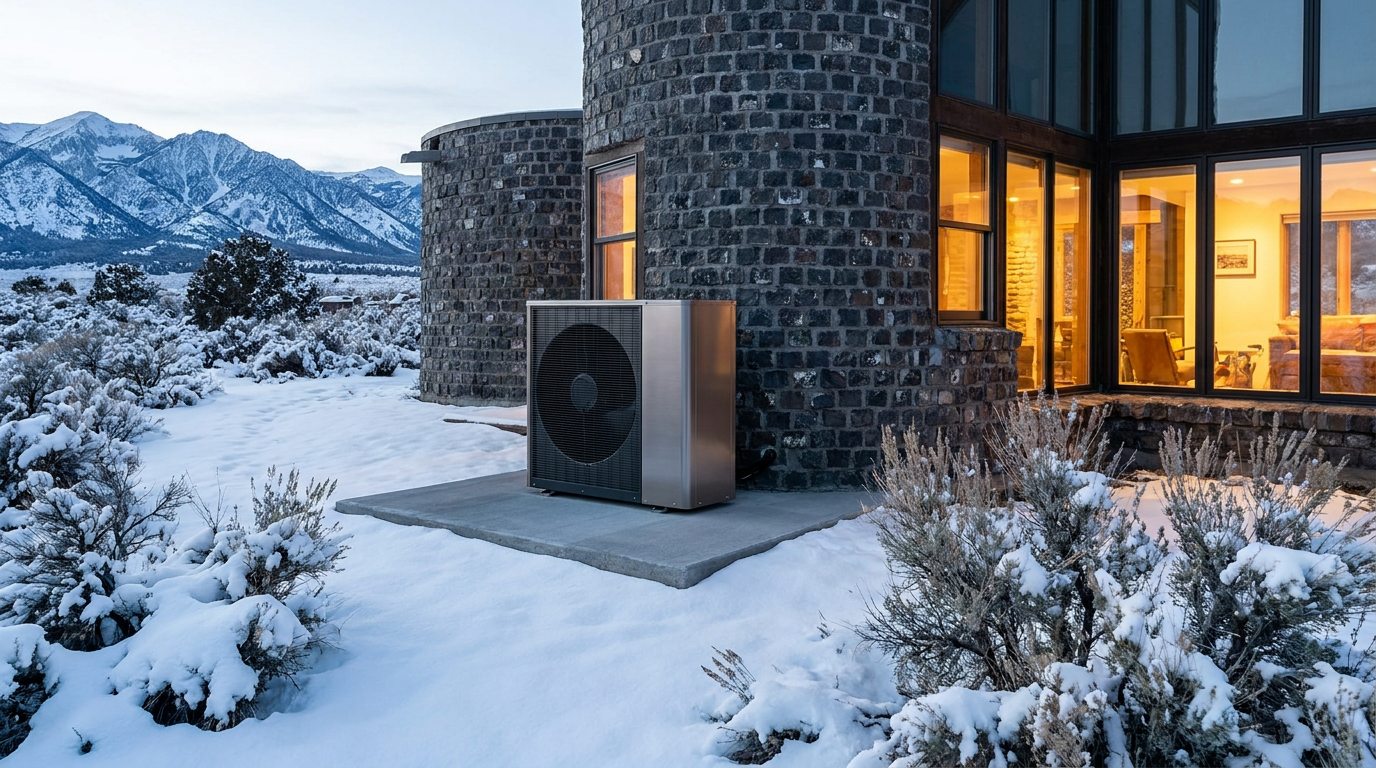
Once the building envelope is optimized and the home is no longer leaking heat, the overall heating and cooling loads drop dramatically. This allows contractors to replace massive, fossil-fuel-burning furnaces with smaller, highly efficient electric heat pumps for both climate control and water heating. When paired with a modest rooftop solar array, these drastically reduced energy requirements can push an older home all the way to "net-zero" status.[1][5]

For homeowners and architects seeking a definitive, scientifically backed benchmark for these projects, the gold standard is "EnerPHit." Developed by the internationally recognized Passive House Institute, EnerPHit is a rigorous energy performance certification specifically tailored for the realities of retrofitting existing buildings.[2]
The EnerPHit standard acknowledges that older homes have unavoidable structural limitations—such as fixed solar orientations, unchangeable foundation depths, or historic facades—that make hitting the strict new-build Passive House criteria nearly impossible. EnerPHit provides a slightly more forgiving, yet still highly ambitious, framework that guarantees superior comfort, zero mold growth, and massive energy savings.[2]
The primary barrier to widespread adoption of deep energy retrofits is the upfront cost. Comprehensive, all-at-once retrofits that strip a house down and rebuild its energy profile can range from $50,000 to well over $150,000, depending heavily on the home's size, architectural complexity, and baseline condition.[1][5]

However, building scientists and financial advisors urge homeowners to look beyond the initial sticker shock and calculate the "Total Cost of Ownership." Over a 15- to 20-year horizon, a deep energy retrofit drastically slashes monthly utility bills, eliminates the need for piecemeal HVAC maintenance, and protects the homeowner against future energy price spikes. Furthermore, the upgrades significantly increase the property's long-term resale value.[5][6]
To help bridge the financial gap, governments worldwide are heavily subsidizing these upgrades to meet national decarbonization targets. In the United States, the Inflation Reduction Act provides substantial tax credits and state-level rebates for heat pumps, insulation, and electrical upgrades. Meanwhile, European directives are mandating strict renovation targets, driving massive investment into the retrofit market.[3][4]

Beyond the financial calculus, the most immediate return on a deep energy retrofit is the profound transformation of the living environment. Residents consistently report a massive increase in daily comfort: no cold drafts near windows, perfectly consistent temperatures in every room, near-total silence from outside street noise, and significantly healthier indoor air.[1][5]
As the construction industry develops more standardized, scalable retrofit packages, the process is expected to become cheaper and more accessible to the average homeowner. For millions of aging, inefficient houses, the deep energy retrofit offers a proven blueprint for a second, highly resilient life in the 21st century.[1][3][6]
How we got here
1990
The first Passive House is built in Darmstadt, Germany, proving ultra-low energy buildings are possible.
2010
The Passive House Institute introduces the EnerPHit standard specifically for retrofitting existing buildings.
2022
The U.S. passes the Inflation Reduction Act, unlocking billions in tax credits and rebates for home energy efficiency upgrades.
2026
Prefabricated exterior panel systems gain mainstream traction, significantly reducing the time and disruption of deep energy retrofits.
Viewpoints in depth
Building Science Experts
Focus on the physics of the building envelope and the necessity of rigorous standards.
Building scientists argue that piecemeal upgrades—like installing a high-efficiency heat pump in a drafty house—are fundamentally flawed. They advocate for a 'fabric first' approach, prioritizing continuous insulation and extreme airtightness to permanently reduce the building's energy demand. Organizations like the Passive House Institute emphasize that adhering to strict, verifiable standards like EnerPHit is the only way to guarantee that a retrofit will actually perform as modeled, preventing issues like trapped moisture and ensuring superior indoor air quality.
Homeowners & Financial Advisors
Focus on the economic realities, upfront sticker shock, and long-term value.
For the residential market, the primary hurdle is the sheer cost of a comprehensive retrofit, which can easily exceed $100,000. However, financial advisors and green-building advocates encourage homeowners to shift their perspective from simple 'payback periods' to the 'Total Cost of Ownership.' When factoring in the elimination of utility bills, reduced maintenance, protection against future energy price spikes, and the increased resale value of a resilient, net-zero-ready home, the economics of a deep energy retrofit become highly compelling over a 15- to 20-year horizon.
Policy & Industry Leaders
Focus on scaling the technology to meet national and global climate targets.
Policymakers view existing buildings—which account for a massive share of global carbon emissions—as a critical frontier in the fight against climate change. To scale deep energy retrofits beyond niche luxury projects, industry leaders are investing heavily in prefabricated, offsite construction methods that can be deployed rapidly and cheaply. Supported by billions in government incentives, such as the U.S. Inflation Reduction Act and European Union renovation directives, the industry is working to build a standardized supply chain that can mass-retrofit entire neighborhoods at once.
What we don't know
- How quickly the construction industry can train a workforce capable of executing the precise airtightness required for these retrofits.
- Whether prefabricated exterior wall panels will drop in price enough to make deep retrofits accessible to low-income households without heavy subsidies.
- How the resale market and traditional home appraisers will accurately value the invisible infrastructure of a deeply retrofitted home.
Key terms
- Deep Energy Retrofit (DER)
- A whole-building analysis and construction process that achieves significantly larger energy savings (typically 50% or more) than conventional energy retrofits.
- EnerPHit
- The established standard for the energy-efficient refurbishment of existing buildings, developed by the Passive House Institute.
- Thermal Bridge
- An area of a building's envelope that has significantly higher heat transfer than the surrounding materials, leading to energy loss and potential condensation.
- Heat Recovery Ventilator (HRV)
- A mechanical ventilation system that continuously replaces stale indoor air with fresh outdoor air while capturing the heat from the exhausted air to warm the incoming stream.
- Building Envelope
- The physical separator between the conditioned and unconditioned environment of a building, including the roof, walls, windows, and foundation.
- Total Cost of Ownership (TCO)
- A financial estimate intended to help buyers and owners determine the direct and indirect costs of a property over its entire lifecycle, rather than just the upfront purchase or renovation price.
Frequently asked
What is the difference between weatherization and a deep energy retrofit?
Weatherization involves simple, low-cost upgrades like caulking and adding attic insulation to save 10-20% on energy. A deep energy retrofit is a comprehensive, whole-building overhaul designed to cut energy use by 50% or more.
Can I do a deep energy retrofit in stages?
Yes. Many homeowners opt for a step-by-step approach, starting with the building envelope (insulation and windows) before upgrading mechanical systems, though careful long-term planning is required to ensure the systems work together.
What is the EnerPHit standard?
EnerPHit is a rigorous energy performance certification developed by the Passive House Institute specifically for retrofitting existing buildings, ensuring maximum efficiency and comfort.
Do I have to tear down my interior walls for a deep retrofit?
Not necessarily. A growing trend involves applying prefabricated insulation panels directly to the exterior of the home, which minimizes disruption to the interior living space.
Sources
Source coverage
6 outlets
3 viewpoints surfaced






[1]Lawrence Berkeley National LaboratoryBuilding Science Experts
Deep Energy Retrofits for Homes
Read on Lawrence Berkeley National Laboratory →[2]Passive House InstituteBuilding Science Experts
EnerPHit – The Passive House standard for retrofits
Read on Passive House Institute →[3]Fortune Business InsightsPolicy & Industry Leaders
Net Zero Energy Buildings Market Trends
Read on Fortune Business Insights →[4]Construction SpecifierPolicy & Industry Leaders
A deep energy retrofit transforms an aging multifamily housing complex
Read on Construction Specifier →[5]Retrofit CanadaHomeowners & Financial Advisors
How much does a deep retrofit that makes a home net-zero ready cost?
Read on Retrofit Canada →[6]Factlen Editorial TeamPolicy & Industry Leaders
Synthesis by Factlen editorial team
Read on Factlen Editorial Team →
Every angle. Every day.
Get home stories with full source coverage and perspective breakdowns delivered to your inbox.