
U.S. and Iran Reach Framework Deal to End War, Lifting Naval Blockade as Israeli Strikes in Lebanon Complicate Truce
A tentative agreement to end the 15-week U.S.-Iran conflict has reopened the Strait of Hormuz and allowed Iranian oil tankers to bypass the naval blockade. However, ongoing Israeli military operations in Lebanon threaten to unravel the fragile diplomatic breakthrough.
By Factlen Editorial Team
- U.S. Administration
- The deal is a historic victory that secures global commerce and prevents a nuclear Iran.
- Iranian Government
- The agreement is a necessary step to lift crushing sanctions, but must include a full regional ceasefire.
- Israeli Leadership
- The U.S.-Iran bilateral agreement does not constrain Israel's security operations against Hezbollah.
- European Allies
- The de-escalation is welcome, but the framework leaves dangerous loopholes unaddressed.
- Global Energy Markets
- The lifting of the blockade is a massive relief for global oil supply chains.
What's not represented
- · Lebanese Civilians
- · Hezbollah Leadership
- · Gulf Arab States
Why this matters
The end of the 15-week conflict immediately stabilizes global energy markets by reopening one of the world's most critical shipping choke points. However, the deal's success hinges on resolving the parallel conflict in Lebanon, which could easily drag the U.S. and its allies back into a regional war if the truce collapses.
Key points
- The U.S. and Iran have agreed to a framework deal ending their 15-week military conflict.
- The agreement lifts the U.S. naval blockade, allowing Iranian oil tankers to resume exports.
- A proposed $300 billion reconstruction fund and sanctions relief are contingent on a final nuclear agreement.
- President Trump championed the deal at the G7 summit, noting the immediate drop in global oil prices.
- Israel continues to strike targets in southern Lebanon, stating it is not bound by the U.S.-Iran agreement.
- Iran warns that the truce will collapse if Israel does not withdraw its forces from Lebanese territory.
The United States and Iran have reached a tentative framework agreement to end their 15-week military conflict, setting the stage for a formal signing ceremony in Switzerland that promises to reshape the geopolitical landscape of the Middle East. The memorandum of understanding, brokered after weeks of intensive negotiations mediated by Pakistan and Qatar, outlines an immediate cessation of hostilities and a mutual de-escalation. For the global economy, the most immediate consequence is the lifting of the U.S. naval blockade on Iranian ports, allowing Tehran to resume unrestricted oil exports, in exchange for Iran reopening the strategic Strait of Hormuz to international shipping. The breakthrough aims to cap a volatile period that saw direct military engagements, drone strikes, and a severe disruption to global energy markets.[1][4][5]
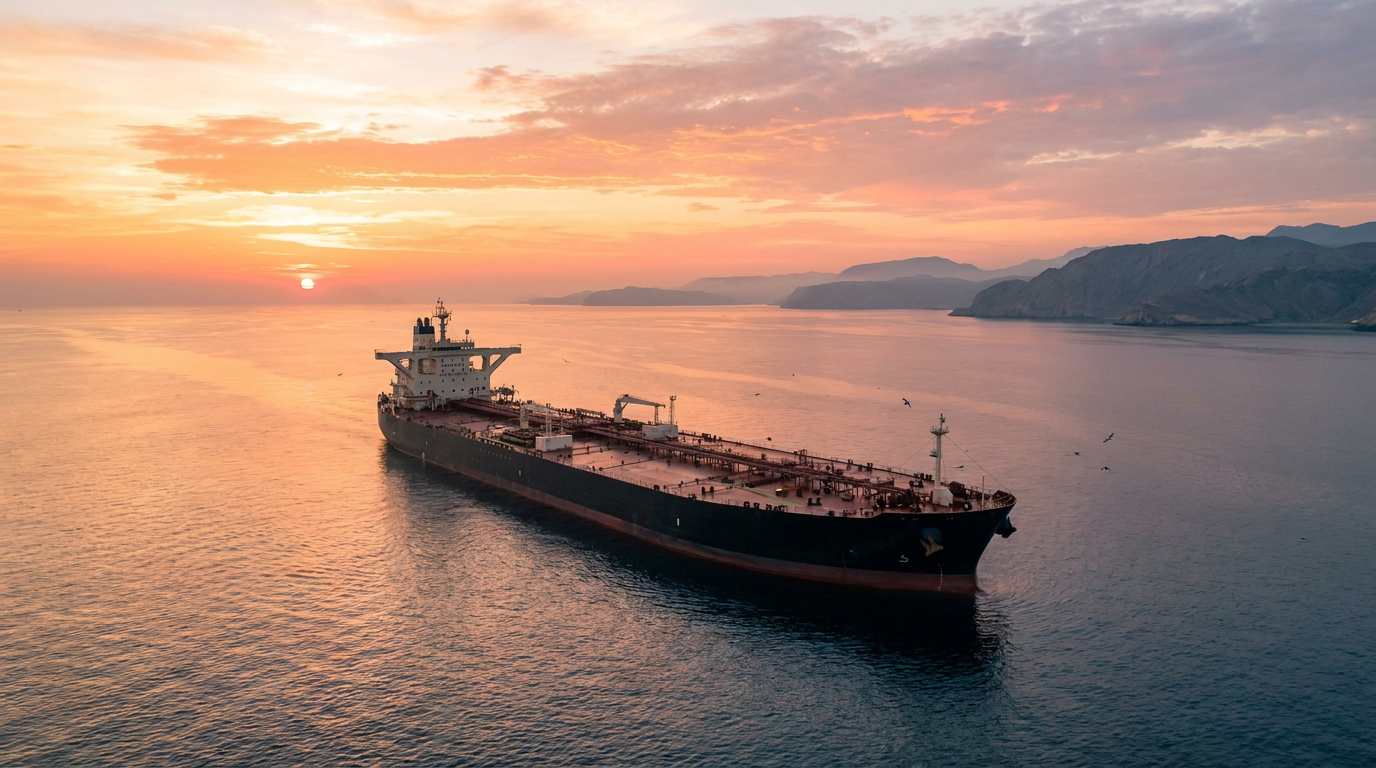
The tangible effects of the truce materialized almost instantly on the water. By Wednesday morning, at least three massive Iranian oil tankers—carrying a combined total of nearly four million barrels of crude—successfully navigated past the U.S. blockade line in the Gulf of Oman without incident. Ship-tracking data confirmed that the vessels, which had been trapped in port for weeks, were moving freely toward international markets. The immediate resumption of Iranian oil shipments sent a powerful signal to global energy markets, easing fears of a prolonged supply shock and contributing to a sharp drop in global crude prices.[2][8]

Arriving at the G7 summit in Evian-les-Bains, France, President Donald Trump championed the agreement as a historic victory for global security and American diplomacy. Addressing reporters alongside French President Emmanuel Macron, Trump declared that the Strait of Hormuz was already "partially opened" and celebrated the resulting plunge in oil prices. He fiercely defended the terms of the new memorandum, arguing that it imposes "strong policing powers" to guarantee Iran will never acquire a nuclear weapon. In doing so, Trump repeatedly belittled the 2015 nuclear accord signed by his predecessor, Barack Obama, framing his own negotiated settlement as vastly superior and more comprehensive.[1][4][5]
While the full text of the agreement remains unpublished, leaked details suggest a massive economic restructuring for Tehran. The framework reportedly includes the unfreezing of Iranian assets, sweeping sanctions relief, and the creation of a $300 billion international reconstruction fund to rebuild Iranian infrastructure damaged during the conflict. In return, the official signing on Friday will trigger a 60-day negotiation window to finalize the critical details of Iran's nuclear program, specifically the fate of its highly enriched uranium stockpile. U.S. Vice President JD Vance emphasized that Iran would only reap these "real benefits" if it strictly complies with the terms and ceases funding regional proxy groups.[1][4][5]

While the full text of the agreement remains unpublished, leaked details suggest a massive economic restructuring for Tehran.
However, the fragility of the nascent truce is already being severely tested by parallel conflicts, most notably the ongoing Israeli military operations in southern Lebanon. Despite the U.S.-Iran understanding, which Tehran insists covers all regional fronts, Israeli warplanes and drones have continued to strike targets in Lebanon's Nabatieh governorate and coastal towns. Israeli officials, including far-right National Security Minister Itamar Ben-Gvir, have explicitly stated that the U.S.-brokered agreement "does not bind us," and Prime Minister Benjamin Netanyahu has vowed to keep troops in Lebanon as long as necessary to neutralize the threat from Hezbollah.[3][6][7]
The continued Israeli strikes have infuriated Tehran and threatened to unravel the entire diplomatic effort before the ink is even dry. Iranian Foreign Minister Abbas Araghchi issued a stark warning that any final agreement with Washington is absolutely contingent on Israel withdrawing its forces from Lebanese territory. Araghchi framed the continued Israeli occupation of southern Lebanon as a direct violation of the truce, warning of a "harsh response" if the attacks persist. The standoff highlights the deep interconnectedness of the region's conflicts, where a bilateral deal between Washington and Tehran cannot easily be isolated from the broader web of proxy warfare.[3][6]

The friction over Lebanon has also exposed a rare and public rift between the United States and Israel. President Trump openly criticized Netanyahu's handling of the parallel war against Hezbollah, urging the Israeli leader to be "more responsible" and expressing frustration that the continued strikes were complicating his efforts to finalize the historic peace deal with Iran. The diplomatic pressure puts Israel in a complex position, balancing its immediate tactical objectives in Lebanon against the strategic desires of its most important ally, which is eager to pivot away from a costly Middle Eastern conflict.[3][6]
Meanwhile, European leaders at the G7 summit offered a cautious welcome to the de-escalation, relieved by the prospect of a reopened Strait of Hormuz and stabilized energy markets. However, they remain wary of the agreement's loose ends and the unilateral nature of the U.S. negotiations. French President Emmanuel Macron and other G7 leaders have stressed the need for a follow-on agreement that explicitly addresses Iran's ballistic missile program—an issue notably absent from the current memorandum. As the 60-day negotiation window approaches, the international community faces the daunting task of translating a fragile ceasefire into a durable, comprehensive treaty that can withstand the region's deep-seated animosities.[4][5]
How we got here
February 2026
The United States and Israel launch coordinated military strikes against Iran, initiating a 15-week conflict.
April 2026
The U.S. imposes a strict naval blockade in the Gulf of Oman, severely restricting Iranian oil exports.
June 15, 2026
Following mediation by Pakistan and Qatar, the U.S. and Iran reach a tentative framework agreement to end the war.
June 17, 2026
Iranian oil tankers successfully pass the lifted U.S. blockade line; President Trump defends the deal at the G7 summit.
June 19, 2026
The formal memorandum of understanding is scheduled to be signed by U.S. and Iranian officials in Switzerland.
Viewpoints in depth
U.S. Administration's view
The deal is a historic victory that secures global commerce and prevents a nuclear Iran.
President Trump and his deputies argue that the 15-week military campaign successfully forced Iran to the negotiating table on American terms. By securing the reopening of the Strait of Hormuz and imposing strict policing on Iran's nuclear ambitions, the administration claims it has achieved what previous diplomatic efforts failed to do. They view the $300 billion reconstruction fund not as a concession, but as a conditional incentive that guarantees Iranian compliance.
Iranian Government's view
The agreement is a necessary step to lift crushing sanctions, but must include a full regional ceasefire.
Tehran frames the lifting of the U.S. naval blockade and the unfreezing of assets as a victory for Iranian resilience. However, Iranian officials are adamant that the bilateral deal cannot be decoupled from the broader regional conflict. Foreign Minister Abbas Araghchi insists that without a complete withdrawal of Israeli forces from southern Lebanon, the truce is void, positioning Iran as the defender of its regional allies against Israeli aggression.
Israeli Leadership's view
The U.S.-Iran bilateral agreement does not constrain Israel's security operations against Hezbollah.
Prime Minister Benjamin Netanyahu and his cabinet view the U.S.-Iran truce with deep skepticism, arguing that it fails to address the immediate security threats on Israel's northern border. Israeli officials maintain that their military campaign in southern Lebanon is an independent necessity to dismantle Hezbollah's infrastructure. They reject the notion that a deal signed in Switzerland dictates Israel's rules of engagement, even at the cost of frustrating Washington.
European Allies' view
The de-escalation is welcome, but the framework leaves dangerous loopholes unaddressed.
G7 leaders are breathing a sigh of relief over the stabilization of global energy markets and the reopening of vital shipping lanes. Yet, there is lingering resentment over the unilateral nature of the U.S. war and the subsequent peace deal. European diplomats are pushing hard for the upcoming 60-day negotiation window to expand beyond uranium enrichment, demanding binding constraints on Iran's ballistic missile program to ensure long-term regional stability.
What we don't know
- Whether Israel will ultimately agree to withdraw its forces from southern Lebanon to preserve the U.S.-Iran deal.
- How the 60-day negotiation window will address Iran's stockpile of highly enriched uranium.
- Whether the proposed $300 billion reconstruction fund will pass scrutiny in the U.S. Congress.
Key terms
- Memorandum of Understanding (MOU)
- A formal agreement between two or more parties that establishes a framework for cooperation, often serving as the foundation for a final, binding treaty.
- Strait of Hormuz
- A narrow, strategically vital waterway between the Persian Gulf and the Gulf of Oman through which roughly a fifth of the world's oil consumption passes.
- Naval Blockade
- A military operation in which ships are used to prevent vessels from entering or leaving a specific port or region, effectively cutting off maritime trade.
- Highly Enriched Uranium
- Uranium that has been processed to contain a high percentage of the isotope U-235, making it capable of being used in nuclear weapons.
- G7 Summit
- An annual meeting of the leaders of seven of the world's largest advanced economies to discuss global issues.
Frequently asked
What does the U.S.-Iran framework agreement actually do?
The tentative deal ends the 15-week military conflict, lifts the U.S. naval blockade on Iranian ports, and reopens the Strait of Hormuz to global shipping. It also establishes a 60-day window to negotiate final details regarding Iran's nuclear program and a proposed $300 billion reconstruction fund.
Why are Israeli strikes in Lebanon threatening the deal?
Iran insists that the ceasefire applies to all regional fronts, including Lebanon, and demands that Israel withdraw its troops. Israel, however, states it is not bound by the U.S.-Iran agreement and continues to strike Hezbollah targets, prompting Iran to warn of a "harsh response" if the attacks do not stop.
Has the naval blockade officially ended?
Yes, the U.S. has lifted its naval blockade in the Gulf of Oman. As of Wednesday, at least three large Iranian oil tankers carrying millions of barrels of crude successfully passed through the area without being intercepted by U.S. forces.
What happens during the 60-day negotiation window?
Following the formal signing of the memorandum, U.S. and Iranian diplomats will have 60 days to hammer out the binding specifics of the treaty. This includes establishing verification mechanisms for Iran's nuclear facilities and finalizing the terms of the sanctions relief and reconstruction funding.
Sources
Source coverage
8 outlets
5 viewpoints surfaced








[1]The New York TimesU.S. Administration
Trump Angrily Defends Iran Deal, Belittling the One Obama Signed
Read on The New York Times →[2]BBCGlobal Energy Markets
Iran sends tankers loaded with oil past US military blockade
Read on BBC →[3]Al JazeeraIsraeli Leadership
Israeli air strikes on Lebanon continue despite US-Iran deal
Read on Al Jazeera →[4]The GuardianEuropean Allies
US president says strait of Hormuz will be open from Friday but questions remain
Read on The Guardian →[5]CBS NewsU.S. Administration
Trump says Iran deal will lead to 'a lot of success' for the world as he opens talks at G7 summit
Read on CBS News →[6]PBS NewsHourIranian Government
Iran says the deal to end the war with the U.S. requires Israel to withdraw from Lebanon
Read on PBS NewsHour →[7]Anadolu AgencyIsraeli Leadership
Several wounded in Israeli strikes on southern Lebanon despite US-Iran agreement
Read on Anadolu Agency →[8]The StarIranian Government
Iranian ships pass US blockade zone in Gulf or Oman without incident, says Tehran
Read on The Star →
More in news politics
See all 5 stories →Information Integrity
AI and Crowdsourced Fact-Checking: What the Latest Evidence Shows
7 sources

Open-Source Moderation
Fact-Checking the Crowd: Does Open-Source Misinformation Correction Actually Work?
8 sources

US-Iran Deal
U.S. and Iran Reach Framework Peace Deal to Reopen Strait of Hormuz Amid $300 Billion Fund Controversy
8 sources
Every angle. Every day.
Get news politics stories with full source coverage and perspective breakdowns delivered to your inbox.