
Buying New Construction vs. Existing Homes: The 2026 Market Trade-Offs
With builder incentives narrowing the historical price gap, the decision between a new build and a resale home now hinges on long-term carrying costs and lifestyle priorities.
By Factlen Editorial Team
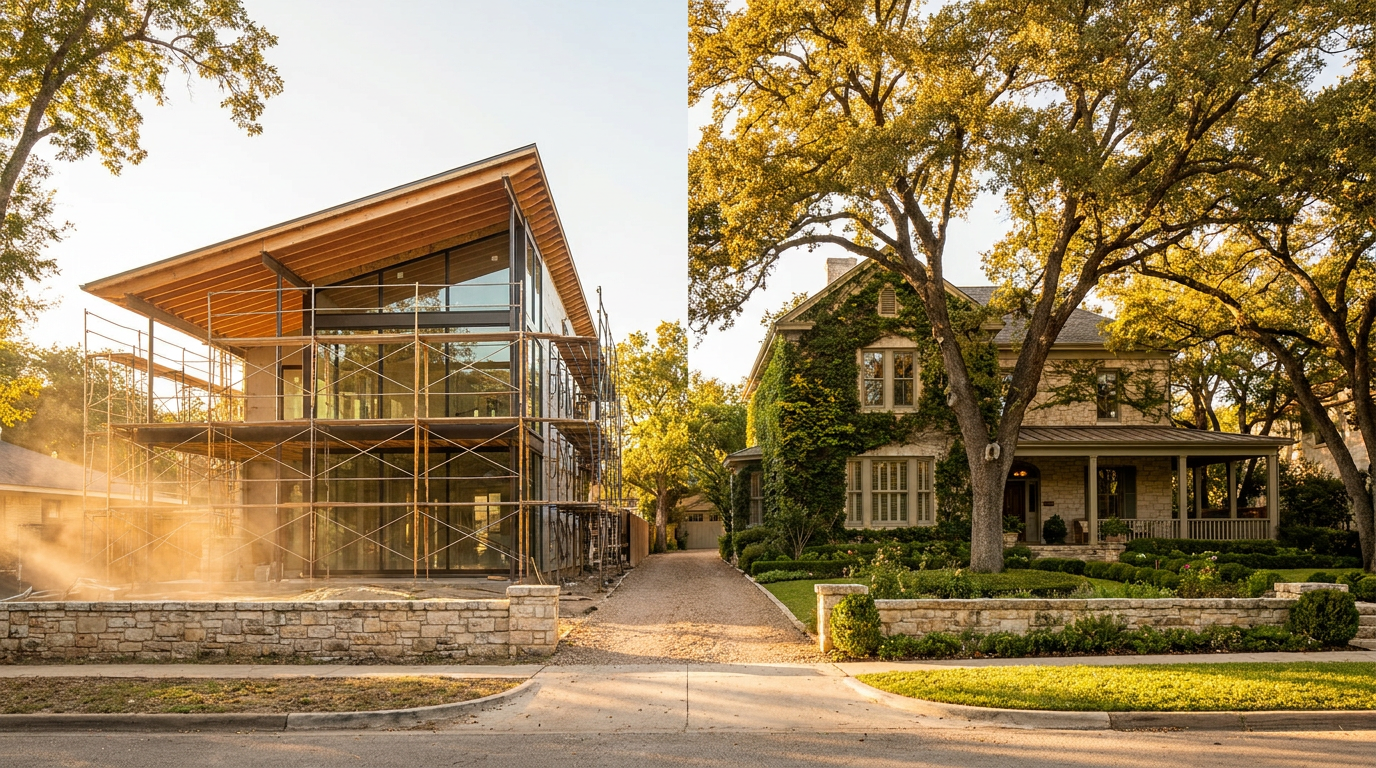
- Total-Cost Analysts
- Financial experts focused on long-term operating expenses and maintenance predictability.
- Neighborhood Preservationists
- Advocates who prioritize established community context, mature infrastructure, and location.
- Market Pragmatists
- Real estate professionals focused on transaction leverage, contract flexibility, and immediate market conditions.
What's not represented
- · Local Municipal Planners managing the infrastructure strain of new suburban developments.
- · First-time buyers priced out of both markets entirely.
Why this matters
For decades, buyers assumed new homes were inherently more expensive than older ones. In 2026, aggressive builder incentives and shifting market dynamics have erased that premium in many regions, meaning buyers who fail to compare both options might leave tens of thousands of dollars on the table.
Key points
- The median price of an existing home briefly surpassed that of a new build in early 2026.
- Builders are using aggressive mortgage rate buydowns to attract buyers facing high borrowing costs.
- New construction offers 1-2-10 warranties and energy efficiency, lowering early maintenance costs.
- Existing homes provide established neighborhoods, mature landscaping, and predictable property taxes.
- Hidden costs in new builds include lot premiums, design center markups, and second-year tax reassessments.
- The choice ultimately depends on a buyer's timeline, risk tolerance, and location preferences.
For decades, the golden rule of real estate was simple: brand-new homes cost significantly more than older ones. But in the 2026 housing market, that conventional wisdom has fractured. A combination of lean inventory, high borrowing costs, and aggressive builder strategies has created a historical anomaly where the price gap between new construction and resale properties has nearly vanished. For prospective buyers navigating this landscape, the decision between building fresh and buying used is no longer just a matter of preference; it is a complex financial calculation. Understanding the trade-offs requires looking past the sticker price and evaluating the total cost of ownership over the first decade of residence.[1][4]
The primary argument for new construction in the current market revolves around financial engineering. Corporate homebuilders possess a tool that individual sellers simply cannot match: the ability to buy down mortgage rates. With borrowing costs remaining a primary hurdle for buyers, builders are utilizing their capital to offer temporary or permanent rate reductions, sometimes bringing a buyer's interest rate down into the 4 percent range for the first few years of the loan. This incentive structure fundamentally alters the monthly affordability math, allowing buyers to stretch their purchasing power further than they could in the resale market.[3][5]
Beyond the mortgage rate, the case for new builds is anchored in predictability and energy efficiency. Modern construction adheres to stringent energy codes, incorporating high-efficiency HVAC systems, superior insulation, and tight building envelopes. These advancements translate directly into utility bills that can run 15 to 30 percent lower than those of a comparable home built before 2010. Furthermore, new homes typically come with a 1-2-10 warranty structure—covering workmanship for one year, mechanical systems for two, and structural integrity for ten. For buyers, this means a near-guarantee of zero deferred maintenance or catastrophic repair bills during the critical early years of homeownership.[6][7]

Against these advantages, the argument for existing homes rests heavily on location, context, and immediate community. Resale homes are typically situated in established neighborhoods where the character of the street is already defined. Buyers can evaluate mature trees, observe actual traffic patterns, and walk to existing local amenities. When purchasing in a new development, buyers are often buying into a promise rather than a reality; the community pool, the landscaping, and the neighborhood culture may take years to fully materialize. For those who place a premium on walkability or historic architectural charm, the resale market is often the only viable avenue.[1][5]
The case against new construction also highlights the hidden costs that can rapidly inflate the final purchase price. The base price advertised on a builder's sign rarely reflects the actual cost of the finished home. Buyers must navigate lot premiums for better placements within the neighborhood and design center markups for finishes that elevate the home beyond basic builder-grade materials. Additionally, buyers of new construction often face a significant property tax surprise in their second year of ownership. Initial tax estimates are frequently based on the value of the unimproved land; once the local municipality reassesses the parcel to include the completed structure, the resulting payment shock can strain a household's monthly budget.[5][8]
The case against new construction also highlights the hidden costs that can rapidly inflate the final purchase price.
Conversely, existing homes offer a highly transparent cost history. Buyers can review years of property tax records and utility bills to accurately forecast their carrying costs. However, the trade-off for this predictability is the looming threat of deferred maintenance. A resale home priced attractively might harbor an aging roof, an HVAC system nearing the end of its lifespan, or outdated plumbing that will require substantial capital to replace. The evidence suggests that while an existing home might have a lower initial price per square foot, the required renovations and immediate repairs can quickly erase those upfront savings.[1][6]

The evidence in the 2026 data underscores just how competitive these two paths have become. According to first-quarter data from the U.S. Census Bureau and the National Association of Home Builders, the median price for a new single-family home sat at $403,200, which was actually slightly lower than the $404,600 median price of an existing home. This marks a stark reversal from historical norms, driven by builders constructing slightly smaller footprints and offering aggressive price cuts to move inventory. In many regional markets, the premium for a brand-new home has effectively been subsidized by the builder's desire to maintain sales volume.[2][3]
The negotiation dynamics also differ wildly between the two options. When dealing with a corporate builder, the base price of the home is rarely negotiable. Builders protect their comparable sales data fiercely, preferring to offer closing cost assistance or design credits rather than dropping the top-line price. In contrast, the resale market involves individual sellers who may be motivated by personal timelines, job relocations, or the need to liquidate an asset. This human element often allows for more creative negotiations, including price reductions, repair credits following an inspection, or flexible closing dates that corporate entities simply will not entertain.[1][5]
Timeline and risk tolerance represent another major dividing line. Existing homes offer immediate gratification; a standard closing takes 30 to 45 days, after which the buyer takes possession of a known entity. New construction, particularly if purchased before the foundation is poured, requires a high tolerance for uncertainty. Supply chain hiccups, labor shortages, and permitting delays can push move-in dates back by months. Furthermore, early buyers in a new phase of a subdivision must be prepared to live in an active construction zone, dealing with heavy machinery, dust, and noise for several years until the community is fully built out.[5][7]

Ultimately, choosing between these two paths requires matching the asset to the buyer's specific lifestyle and financial constraints. A new build fits well when buyers are highly sensitive to monthly payment amounts and can benefit from builder rate buydowns. It is also the ideal choice for those who lack the cash reserves or the appetite for immediate home repairs, as the comprehensive warranties provide a financial safety net. Buyers with flexible moving timelines who prioritize modern, open-concept layouts and energy efficiency will find the new construction market particularly accommodating in 2026.[3][8]
Conversely, a new build does not fit well when a buyer's primary goal is living in a highly walkable, urban, or historically significant neighborhood. It is also a poor fit for buyers who need absolute certainty on their move-in date or those who want to maximize their lot size, as modern developments tend to feature higher density and smaller yards. For buyers who value mature landscaping, established school attendance zones, and the ability to negotiate directly on the purchase price, the existing home market remains the superior choice, provided they budget appropriately for future maintenance.[1][5]
How we got here
Pre-2020
New construction consistently carried a 10% to 20% price premium over comparable existing homes.
2023–2024
High interest rates locked existing homeowners in place, severely constraining resale inventory and driving up prices.
2025
Builders aggressively expanded mortgage rate buydown programs to maintain sales volume amid affordability challenges.
Q1 2026
The median price of an existing U.S. home ($404,600) officially exceeded the median price of a new build ($403,200).
Viewpoints in depth
Total-Cost Analysts
Financial experts who argue that the true cost of a home is measured in monthly operating expenses, not just the purchase price.
This camp emphasizes that a cheaper resale home can quickly become a financial burden if it requires a new roof, updated plumbing, or an HVAC replacement within the first five years. They point to the energy efficiency of modern building codes and the protection of builder warranties as tangible financial assets that offset any initial price premiums. For these analysts, the predictability of new construction makes it the safer long-term investment.
Neighborhood Preservationists
Advocates for existing communities who prioritize location, mature infrastructure, and architectural character.
This perspective argues that new construction often forces buyers into the distant suburbs, trading commute times and community culture for modern floor plans. They highlight the value of mature trees, established school districts, and the unique architectural details found in older homes. From this viewpoint, the 'context' of a home is something that cannot be manufactured by a builder and is worth the trade-off of occasional maintenance.
Market Pragmatists
Real estate professionals focused on negotiation leverage and immediate market conditions.
Pragmatists focus on the mechanics of the transaction. They note that while builders offer attractive rate buydowns, their contracts heavily favor the developer and base prices are rarely negotiable. Conversely, individual sellers of existing homes offer more flexibility on price, repair credits, and closing timelines. This camp advises buyers to follow the leverage, choosing whichever option provides the most favorable contract terms in their specific local market.
What we don't know
- How long corporate builders will continue to offer deep mortgage rate buydowns if federal interest rates stabilize.
- Whether the property tax reassessments on 2025 and 2026 new builds will outpace local wage growth in the coming years.
- How the long-term resale value of pandemic-era and post-pandemic new builds will compare to historic homes once they age.
Key terms
- Rate Buydown
- A financing technique where a builder or seller pays an upfront fee to lower the buyer's mortgage interest rate for the first few years, or permanently.
- 1-2-10 Warranty
- A standard new-home warranty covering workmanship for one year, mechanical systems for two years, and structural defects for ten years.
- Lot Premium
- An additional fee charged by a builder for a more desirable piece of land within a subdivision, such as a corner lot or one backing up to woods.
- Deferred Maintenance
- Home repairs or replacements that previous owners postponed, which the new buyer will eventually have to pay for.
Frequently asked
Are new construction homes cheaper than existing homes?
In some 2026 markets, yes. While new homes historically carried a premium, builder price cuts and smaller floor plans have pushed the median new home price slightly below the median existing home price nationally.
What is the biggest hidden cost of a new build?
Property taxes. The initial tax bill is often based only on the value of the empty lot. Once the completed home is reassessed in the second year, the tax bill can jump significantly.
Can I negotiate the price of a new construction home?
It is difficult. Builders prefer to protect their neighborhood's comparable sales data, so they are more likely to offer closing cost assistance or free upgrades rather than lowering the base price.
Why are builder incentives so high right now?
Builders need to move inventory to satisfy their construction loans. Offering mortgage rate buydowns is a highly effective way to make the monthly payments affordable for buyers without slashing the home's official price.
Sources
Source coverage
8 outlets
3 viewpoints surfaced








[1]ZillowTotal-Cost Analysts
New Construction vs Existing Homes: The Pros and Cons of Both
Read on Zillow →[2]Eye On HousingMarket Pragmatists
Existing Home Prices Exceed New Home Prices in Q1 2026
Read on Eye On Housing →[3]National Association of RealtorsMarket Pragmatists
A Q&A on construction trends, builder incentives and affordability
Read on National Association of Realtors →[4]Realtor.comNeighborhood Preservationists
2026 National Housing Forecast: Home Sales To Remain in Low Gear
Read on Realtor.com →[5]Foxes Sell FasterTotal-Cost Analysts
New Construction vs Existing Homes in 2026: Which One Actually Saves You More Money
Read on Foxes Sell Faster →[6]Shea HomesNeighborhood Preservationists
New Construction vs Existing Homes: What You Need to Know
Read on Shea Homes →[7]JP Brooks BuildersMarket Pragmatists
New Build vs Existing Home Real Estate Market 2026
Read on JP Brooks Builders →[8]Factlen Editorial TeamTotal-Cost Analysts
Synthesis by Factlen editorial team
Read on Factlen Editorial Team →
Every angle. Every day.
Get real estate stories with full source coverage and perspective breakdowns delivered to your inbox.