
How AI is Slashing Indie Film Budgets and Democratizing Hollywood-Grade VFX
Production-ready AI tools are allowing independent filmmakers to cut post-production costs by up to 50%, turning weeks of manual visual effects labor into hours of automated rendering.
By Factlen Editorial Team
- Independent Filmmakers
- View AI as a liberating tool that removes financial barriers to creative expression.
- Studio Executives
- Focus on the massive workflow efficiencies and cost reductions across the production pipeline.
- Traditional VFX Artists
- Cautiously optimistic about the reduction of tedious labor, but concerned about the devaluation of entry-level skills.
What's not represented
- · Actors' Unions
- · Traditional Prop Makers
Why this matters
By removing the multi-million-dollar barrier to entry for high-end visual effects, AI is allowing a new generation of diverse, independent creators to tell visually expansive stories that were previously locked behind studio gatekeepers.
Key points
- AI tools are allowing independent filmmakers to cut post-production budgets by up to 50%.
- Tasks like rotoscoping and storyboarding that once took weeks can now be completed in hours.
- Neural rendering allows creators to shoot on simple green screens instead of expensive LED volumes.
- The role of VFX artists is shifting from manual labor to AI curation and technical direction.
For decades, the ultimate gatekeeper in the film industry was not imagination, but capital. Independent filmmakers could write sprawling science fiction epics or intricate historical dramas, but executing them required a Hollywood-sized checkbook. Visual effects, flawless color grading, and immersive sound design were luxuries reserved for studio tentpoles. But in 2026, the brutal reality of the budget is being rewritten. Generative AI and automated post-production suites have matured from experimental gimmicks into essential, production-ready tools, fundamentally democratizing cinematic storytelling.[1][3]
The shift is not merely about generating synthetic video from text prompts; it is about integrating artificial intelligence into the mechanical workflows of filmmaking. By automating the most tedious and labor-intensive bottlenecks, independent creators are slashing their production and post-production budgets by up to 50 percent. This technological leap allows small teams to punch significantly above their weight class, achieving visual fidelity that previously required armies of technicians.[1][5]
The cost-saving mechanism begins long before a camera rolls. Traditionally, hiring concept artists and storyboard illustrators to visualize a feature film could consume thousands of dollars during early development. Today, directors are utilizing advanced multimodal AI platforms to generate hyper-accurate, continuity-matched storyboards directly from their screenplays.[1][3]

These tools ingest a script page and output a sequence of frames that maintain exact character likenesses, camera angles, and lighting setups across multiple shots. Weeks of back-and-forth revisions are compressed into a matter of hours. For a micro-budget production, eliminating this bottleneck saves an estimated $3,000 to $10,000 before the crew even steps on set, freeing up capital for better talent or locations.[1]
Once production begins, the financial drain of location scouting and physical set construction is similarly mitigated by neural rendering. While massive, multi-million-dollar LED "Volume" walls revolutionized studio filmmaking earlier in the decade, they remained prohibitively expensive for indie creators.[1][6]
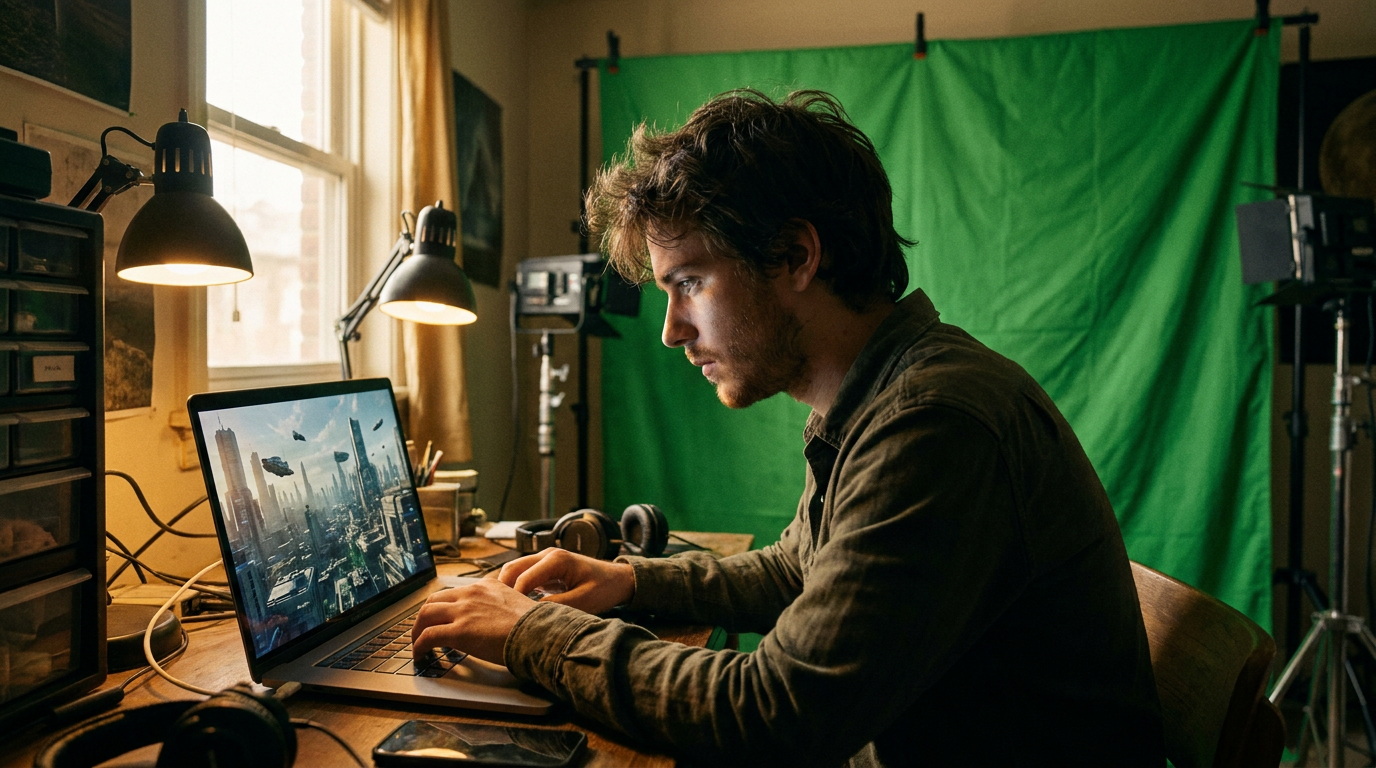
Now, sophisticated AI tools allow filmmakers to embrace virtual production without the LED wall. Directors can shoot actors against standard green screens or clean backdrops, using AI to generate photorealistic, 3D-mapped environments that dynamically match the camera's focal length and movement. A sci-fi epic or a period piece can be shot entirely within a local, affordable studio space, eliminating the need for expensive crew travel and location permits.[1][2]
However, the most dramatic financial impact occurs in post-production. Historically, visual effects required legions of rotoscope artists manually tracing frames to separate subjects from their backgrounds. In 2026, AI-driven rotoscoping, object removal, and motion tracking are nearly instantaneous.[1][5]

However, the most dramatic financial impact occurs in post-production.
Software suites now feature AI-powered tools that automatically mask characters, isolate voices from noisy backgrounds, and match color grades across disparate cameras. If a stray modern car or a boom microphone accidentally appears in a period drama, automated inpainting algorithms can remove the anomaly in seconds per shot, rather than hours.[3]
The acceleration of these workflows is staggering. Speaking at India's AI Impact Summit in February 2026, actor and producer Rana Daggubati noted that complex VFX shots that previously required five days of processing are now completed in two to three hours. This compressed feedback loop allows filmmakers to visualize and iterate on their entire movie during the pre-visualization stage, a luxury once reserved exclusively for blockbusters.[4]
The economic implications extend beyond independent cinema. Morgan Stanley Research estimates that major media companies could reduce overall programming expenses by approximately 10 percent, with television and film production companies potentially seeing cost reductions of up to 30 percent. These savings span the entire production pipeline, driven by the reduced need for specialized manual labor in animation and post-production.[6]

Yet, this rapid automation raises inevitable questions about the future of traditional VFX jobs. The industry is witnessing a profound evolution in job roles rather than outright replacement. The position of a junior modeler or rotoscope artist is shifting toward titles like "AI Technical Director" or "Asset Curator."[5]
Instead of spending days pushing vertices or manually painting out wires, artists are directing AI tools, refining the generated outputs, and focusing on the final aesthetic polish. The AI acts as an ultra-efficient digital assistant, handling the bulk generation of 3D assets so that a team of five can output the environmental scale that previously required a team of fifty.[5]
Despite the immense capabilities of these tools, technical hurdles remain. One of the most persistent challenges in AI video generation is "identity drift"—a phenomenon where a character's appearance or the geometry of a prop subtly changes across different shots or long takes. While open-source frameworks are actively addressing these memory and consistency issues, filmmakers must still carefully curate and stitch together AI outputs to maintain narrative cohesion.[4][7]
Furthermore, the democratization of execution does not guarantee a successful film. As the technical barriers to entry collapse, the sheer volume of high-quality content is expected to skyrocket. When anyone can generate a visually stunning cinematic sequence from their laptop, the spectacle itself loses its premium value.[1][6]

Consequently, the smartest independent producers in 2026 are not simply pocketing their production savings. They are reinvesting those funds into the elements that AI cannot synthesize: paying their cast and crew better rates, securing top-tier acting talent, and doubling down on festival marketing and distribution.[1]
Ultimately, artificial intelligence is not replacing the filmmaker's vision; it is merely leveling the playing field. With the mechanical and financial bottlenecks removed, the industry is returning to its foundational roots. In an era where Hollywood-grade visuals are accessible to everyone, the only true differentiator left is the quality of the script and the emotional resonance of the story.[1][6]
How we got here
2023–2024
Early generative AI models introduce text-to-video concepts, but output is plagued by inconsistency and 'identity drift'.
Late 2025
AI video tools mature into production-ready software suites, offering consistent character models and automated rotoscoping.
February 2026
India hosts the global AI Impact Summit, where industry leaders confirm AI is already slashing VFX processing times from days to hours.
Mid 2026
Independent filmmakers begin releasing feature films utilizing AI for up to 50% of their post-production workflows.
Viewpoints in depth
Independent Filmmakers
View AI as a liberating tool that removes financial barriers to creative expression.
For independent directors and producers, AI is the ultimate equalizer. They argue that the technology allows them to execute ambitious, world-building scripts that would have previously been rejected by financiers due to budget constraints. By saving up to 50% on post-production, they can redirect funds toward hiring better actors and securing distribution, ensuring their stories actually reach audiences.
Studio Executives
Focus on the massive workflow efficiencies and cost reductions across the production pipeline.
Major studios and production companies view AI primarily through the lens of operational efficiency. With estimates suggesting a 30% reduction in overall production costs, executives are eager to integrate AI into their pipelines to mitigate the financial risks of blockbuster filmmaking. They emphasize that faster turnaround times for VFX shots allow for more iterative, flexible production schedules.
Traditional VFX Artists
Cautiously optimistic about the reduction of tedious labor, but concerned about the devaluation of entry-level skills.
Veteran visual effects artists acknowledge that AI eliminates the grueling, repetitive tasks like manual rotoscoping and wire removal. However, they express concern that the automation of these entry-level tasks removes the traditional training ground for junior artists. They advocate for a transition period where artists are retrained as 'AI Technical Directors,' ensuring human curation remains central to the final image.
What we don't know
- How quickly traditional film festivals will adapt their submission guidelines to account for heavily AI-generated content.
- Whether the influx of AI-assisted indie films will oversaturate the market and drive down distribution acquisition prices.
- The long-term legal implications regarding the copyrightability of AI-generated assets used in commercial films.
Key terms
- Neural Rendering
- The use of artificial intelligence to generate photorealistic 2D images or video from 3D scene data, often replacing the need for physical sets.
- Rotoscoping
- The process of manually tracing over live-action footage frame by frame to separate a subject from its background, a task now heavily automated by AI.
- Previsualization (Previs)
- Creating rough digital storyboards or 3D animations to plan complex camera movements and lighting before actual filming begins.
- Identity Drift
- A common flaw in early AI video generation where a character's facial features or clothing subtly change across different shots.
Frequently asked
Will AI completely replace human VFX artists?
No. While AI automates tedious tasks like masking and background removal, human artists are still required to direct the AI, curate the generated assets, and provide the final aesthetic polish.
Do indie filmmakers need expensive computers to use these tools?
Not necessarily. Many of the most powerful AI video and rendering tools are cloud-based, allowing filmmakers to process complex visual effects on standard laptops with a strong internet connection.
Can AI generate an entire movie from a script?
While AI can generate short clips and storyboards from text, creating a cohesive, feature-length film still requires human directors to stitch scenes together, ensure narrative consistency, and direct live actors.
How much money does AI actually save on an indie film?
Industry estimates suggest that integrating AI into pre-production and post-production workflows can reduce an independent film's overall budget by up to 50 percent.
Sources
Source coverage
7 outlets
3 viewpoints surfaced







[1]The Table Read MagazineIndependent Filmmakers
How AI Tools Are Slashing Indie Film Budgets by 50% in 2026
Read on The Table Read Magazine →[2]MaveristicTraditional VFX Artists
Redefining Visual Effects with AI: The 2026 Landscape
Read on Maveristic →[3]TOI EntertainmentIndependent Filmmakers
Best AI Tools for Independent Filmmakers 2026
Read on TOI Entertainment →[4]AI FilmsStudio Executives
Rana Daggubati on AI's Impact at India's 2026 AI Summit
Read on AI Films →[5]Hi3DTraditional VFX Artists
Embracing the AI VFX Revolution: Democratization for Indie Studios
Read on Hi3D →[6]UnhydStudio Executives
AI's Hollywood Takeover: Reshaping Screenwriting, VFX, and Filmmaking's Future
Read on Unhyd →[7]LTXTraditional VFX Artists
Best Filmmaking Software of 2026: Top AI Tools & Models
Read on LTX →

Every angle. Every day.
Get entertainment stories with full source coverage and perspective breakdowns delivered to your inbox.