
The 2026 E-Bike Buying Guide: How to Choose the Right Electric Bicycle
As electric bikes become mainstream transportation, navigating the technical specifications can be overwhelming. This comprehensive guide breaks down motors, batteries, and sensors to help you find the perfect ride.
By Factlen Editorial Team
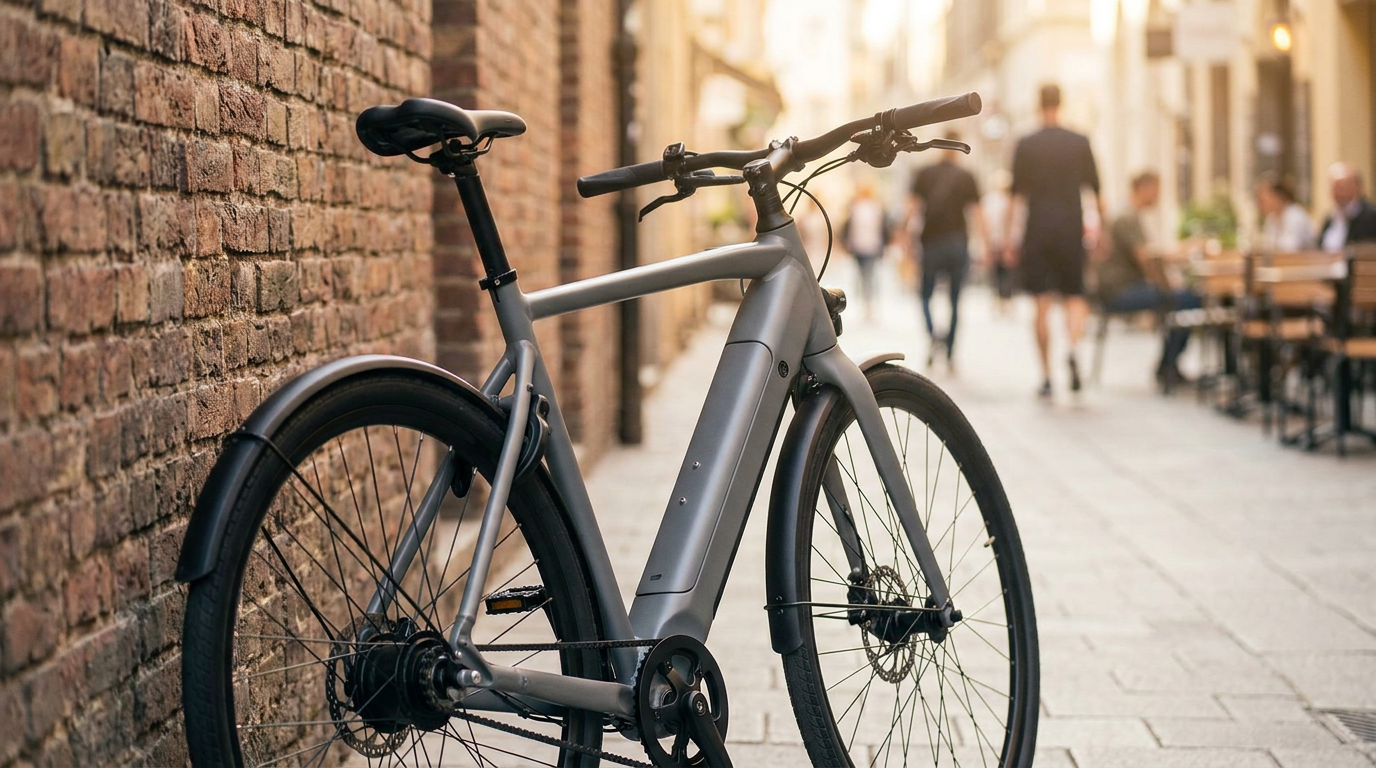
- Urban Commuters
- Prioritize reliability, low maintenance, and seamless integration into city life.
- Off-Road Enthusiasts
- Focus on torque, balance, and high-performance components for rugged terrain.
- Budget-Conscious Buyers
- Seek the best value and lowest barrier to entry for electric mobility.
What's not represented
- · Traditional acoustic bicycle purists
- · City planners managing e-bike infrastructure
Why this matters
Purchasing an e-bike is a significant investment that can replace car trips, improve cardiovascular health, and reduce carbon emissions. Understanding the technical specifications ensures you buy a machine that fits your daily life rather than an expensive garage ornament.
Key points
- Mid-drive motors offer superior balance and hill-climbing ability by utilizing the bike's gears.
- Hub motors are more affordable and require less maintenance, making them ideal for flat city commutes.
- Watt-hours (Wh) is the only accurate metric for comparing the true energy capacity of different batteries.
- Torque sensors provide a smoother, more natural riding experience compared to basic cadence sensors.
- Factoring in a 30% range buffer is crucial to account for hills, wind, and battery degradation over time.
Introduction to the 2026 e-bike market. The technology has matured significantly from the bulky, awkward retrofits of the past decade into sleek, fully integrated machines that seamlessly blend into urban environments. But with this rapid technological maturity comes a dizzying array of technical specifications—watt-hours, torque sensors, mid-drive motors, and amp-hours—that can easily overwhelm first-time buyers. Navigating this landscape requires looking past the flashy marketing claims and understanding the core components that actually dictate how a bike will perform on your daily commute.[6][9]
The beating heart of any electric bicycle is its motor, and the very first major decision a prospective buyer faces is choosing between a hub-drive and a mid-drive system. This fundamental choice dictates not just the overall price tag of the machine, but how the bike fundamentally handles, accelerates, and climbs. Understanding the mechanical differences between these two motor placements is crucial for matching the bike to your specific local terrain, your physical capabilities, and your personal riding style.[1][2]
Hub motors represent the older, simpler, and more ubiquitous technology, housed directly in the center of either the front or rear wheel. They provide forward propulsion by spinning the wheel entirely independently of the bicycle's traditional gears. Because they are mechanically isolated from the rest of the drivetrain, they are incredibly low-maintenance, highly cost-effective to manufacture, and simple to operate, making them the dominant choice for budget-friendly commuter models and entry-level electric bikes designed for flat city streets.[2][3]
However, hub motors come with distinct performance limitations that become apparent outside of flat urban environments. Because they do not leverage the bicycle's gearing system, they can easily struggle, bog down, and even overheat on steep, sustained climbs. Furthermore, a heavy rear hub motor shifts the bike's center of gravity significantly backward. This uneven weight distribution can make handling feel less natural and more cumbersome, often described by riders as the distinct sensation of being "pushed" along the road rather than pedaling.[1][2]

Mid-drive motors, by stark contrast, are positioned directly at the bicycle's bottom bracket, nestled right between the pedals. This central placement centralizes the weight of the motor, providing a remarkably low center of gravity that closely mimics the balanced, agile feel of a traditional acoustic bicycle. Riders often report that they barely notice the additional weight of a mid-drive motor because of this optimal positioning, which grants the e-bike solid directional tracking and superior stability at both high and low speeds.[2][3]
The true, game-changing advantage of a mid-drive system lies in its mechanical synergy with the bicycle's drivetrain. By transferring electric power directly through the chain and the rear cassette, the motor operates efficiently across a much wider range of speeds and inclines. This mechanical advantage makes mid-drives the undisputed champion for hilly terrain, heavy cargo hauling, or off-road mountain biking. The trade-off, however, is that this setup puts significantly more wear and tear on the chain and gears, requiring more frequent maintenance.[1][3][7]
Beyond the physical location of the motor, how that motor actually delivers its power to the rider is governed by internal sensors. Budget-friendly electric bikes typically utilize basic cadence sensors, which effectively act like a simple on/off switch. Once the sensor detects that your pedals are turning, the motor abruptly kicks in at a predetermined speed level. While functional, this can feel jerky and unpredictable, especially when navigating tight corners or riding at very low speeds in crowded pedestrian areas.[9]
Beyond the physical location of the motor, how that motor actually delivers its power to the rider is governed by internal sensors.
Premium electric bike models in 2026 increasingly feature highly sophisticated torque sensors. Instead of merely detecting if you are pedaling, a torque sensor precisely measures how hard you are pushing down on the pedals. It then instantly amplifies your physical effort proportionally, resulting in a buttery-smooth, bionic feel that keeps the rider in complete, intuitive control. This nuanced power delivery is especially critical when navigating tight city traffic, starting on steep inclines, or maintaining traction on slippery technical trails.[1][9]
The next critical component to evaluate is the battery, which is almost always the single most expensive part of the entire electric bicycle. Shoppers browsing spec sheets are frequently bombarded with confusing voltage (V) and amp-hour (Ah) ratings, which manufacturers often use to obscure true performance. However, industry experts stress that the only metric that truly matters for calculating your potential riding range is watt-hours (Wh), which represents the actual volume of energy the battery can hold.[3][5]
Watt-hours represent the total, absolute energy capacity of the battery pack, and it is easily calculated by multiplying the voltage by the amp-hours. For example, a 48-volt battery rated at 15 amp-hours holds exactly 720 watt-hours of usable energy. Comparing the watt-hour rating is the only mathematically accurate way to evaluate different battery packs against each other, allowing buyers to cut through marketing jargon and understand exactly how much "fuel" they are actually purchasing for their daily commute or weekend adventures.[5][8]

Translating those watt-hours into a realistic, real-world riding range requires looking closely at the bike's energy consumption. A typical commuter electric bike ridden on flat pavement uses roughly 15 to 20 watt-hours per mile when set to a moderate pedal assist level. Therefore, a standard 500Wh battery will reliably deliver about 25 to 30 miles of actual range. High-performance off-road riding or hauling heavy cargo can easily double that consumption rate, draining the battery much faster than advertised.[4][5]
E-bike manufacturers are notorious for advertising highly optimistic maximum ranges based on lightweight riders pedaling on perfectly flat terrain while using the absolute lowest assist setting. Industry experts strongly recommend that buyers calculate their daily round-trip commute and intentionally build in a 30% to 40% range buffer. This generous buffer accounts for strong headwinds, unexpected detours, steep hills, heavy cargo, and the inevitable, natural degradation of the lithium-ion cells that occurs over several years of ownership.[7][8]
Speaking of longevity, modern lithium-ion e-bike batteries are generally rated to endure between 500 and 1,000 full charge cycles before their maximum capacity permanently drops to 80% of its original state. For the average commuter riding a few days a week, this translates to roughly three to five years of highly reliable daily use before a replacement battery becomes necessary. Proper charging habits, such as avoiding extreme temperatures and not leaving the battery fully depleted, can significantly extend this lifespan.[8]

Frame geometry also plays a pivotal role in long-term rider satisfaction and daily usability. While traditional step-over frames offer excellent rigidity for aggressive mountain biking, step-through frames have completely shed their outdated "ladies' bike" stigma. In 2026, step-through designs are heavily favored for urban commuting, allowing riders of all ages to easily mount and dismount. This accessibility is particularly crucial when the bike is heavily loaded with rear panniers, groceries, or a child seat, preventing awkward and dangerous tipping.[1][9]
Finally, prospective buyers must carefully consider the total, long-term cost of ownership rather than just the initial sticker price. While budget e-bikes priced under $1,000 are incredibly tempting, they frequently utilize proprietary, low-quality electronic components that are nearly impossible to replace when they inevitably fail. Investing slightly more upfront in a bicycle built with standardized, serviceable parts from reputable dealers ensures that a minor electrical fault doesn't prematurely turn the entire machine into unrecyclable electronic landfill.[7][9]
Ultimately, the absolute best electric bike on the market isn't necessarily the one boasting the highest top speed, the most powerful motor, or the largest battery pack. It is the thoughtfully chosen machine that seamlessly integrates into your specific daily routine. The right e-bike turns a sweaty, stressful, traffic-filled commute into the absolute best part of your day, empowering you to ride further, explore more frequently, and leave the car parked in the driveway for good, fundamentally transforming your relationship with local transportation.[6][7]
How we got here
Early 2010s
E-bikes are primarily heavy, DIY retrofits with bulky external batteries and rudimentary hub motors.
2018–2020
Lithium-ion battery costs drop, leading to a surge in affordable, direct-to-consumer e-bike brands.
2022–2024
Mid-drive motors and integrated frame batteries become the standard for premium commuter and mountain bikes.
2026
The market reaches maturity, with advanced torque sensors and high-capacity batteries becoming widely accessible.
Viewpoints in depth
Urban Commuters
Prioritize reliability, low maintenance, and seamless integration into city life.
For daily city riders, the e-bike is a car replacement. This camp favors step-through frames for easy mounting in work clothes, integrated lighting, and fenders. They often prefer the simplicity and lower cost of hub-drive motors, as flat city streets don't require the extreme hill-climbing torque of a mid-drive system. Range anxiety is mitigated by predictable, paved routes and the ability to charge at the office.
Off-Road & Mountain Bikers
Focus on torque, balance, and high-performance components for rugged terrain.
Riders tackling steep trails and loose gravel demand mid-drive motors. By leveraging the bike's gearing, mid-drives prevent overheating on long climbs and keep the bike's center of gravity low and balanced. This camp also prioritizes high-capacity batteries (700Wh+) and advanced torque sensors for precise power control on technical ascents, accepting higher maintenance costs for peak performance.
Budget-Conscious Buyers
Seek the best value and lowest barrier to entry for electric mobility.
This perspective focuses on maximizing range and speed per dollar. They often lean toward direct-to-consumer brands offering rear hub motors and cadence sensors. While these bikes may lack the refined, natural feel of premium models, they successfully democratize e-bike access, allowing more people to experience electric mobility without a multi-thousand-dollar investment.
What we don't know
- How rapidly solid-state battery technology will become affordable enough to replace current lithium-ion standards in consumer e-bikes.
- Whether local municipalities will implement stricter regulations or subsidies for high-speed Class 3 e-bikes in the coming years.
Key terms
- Watt-Hour (Wh)
- A measure of total energy capacity in a battery, calculated by multiplying voltage by amp-hours.
- Mid-Drive Motor
- An electric motor positioned at the bike's pedals (bottom bracket) that transfers power through the chain and gears.
- Hub Motor
- An electric motor housed directly in the center of the front or rear wheel, operating independently of the bike's gears.
- Torque Sensor
- A sensor that measures how hard the rider is pedaling and delivers proportional electric assistance for a natural feel.
- Cadence Sensor
- A basic sensor that detects whether the pedals are turning, acting like an on/off switch for the motor.
Frequently asked
How long do e-bike batteries last?
Most lithium-ion e-bike batteries are rated for 500 to 1,000 full charge cycles. For the average rider, this translates to three to five years of regular use before the battery's capacity drops to 80% of its original state.
Is a mid-drive motor better than a hub motor?
Mid-drives are superior for steep hills and off-road riding because they leverage the bike's gears for better efficiency and balance. However, hub motors are cheaper, require less maintenance, and are perfectly adequate for flat city commuting.
How do I calculate an e-bike's true range?
Divide the battery's watt-hours (Wh) by your estimated consumption, which is usually 15 to 20 Wh per mile. Always build in a 30% buffer to account for hills, wind, cargo, and natural battery degradation.
Sources
Source coverage
10 outlets
3 viewpoints surfaced







[1]EVELOOff-Road Enthusiasts
How to Choose the Best Electric Bike for Your Riding Style (2026 Complete Guide)
Read on EVELO →[2]Bosch eBike SystemsOff-Road Enthusiasts
Hub-Drive vs. Mid-Drive eBikes: What to Know Before Buying
Read on Bosch eBike Systems →[3]GYROORBudget-Conscious Buyers
Ebike Battery Chart: The Complete Guide to Voltage, Amp-Hours, and Range
Read on GYROOR →[4]Ampler BikesUrban Commuters
Understanding Electric Bike Battery Capacity and Types
Read on Ampler Bikes →[5]KirbEbikeBudget-Conscious Buyers
How to Choose Battery Capacity (Ah & Wh) for Your E‑Bike
Read on KirbEbike →[6]Emoko ScooterUrban Commuters
2026 E-Bike Buying Guide: Moped, Commuter, and Affordable Models
Read on Emoko Scooter →[7]Lyric CyclesBudget-Conscious Buyers
10 Things to Know Before Buying an E-bike (2026 Buyer's Checklist)
Read on Lyric Cycles →[8]UpwayUrban Commuters
Electric Bike Batteries: Comprehensive Guide
Read on Upway →[9]Bikeline ToowoombaUrban Commuters
The Ultimate E-Bike Buying Guide for Beginners: 2026 Edition
Read on Bikeline Toowoomba →[10]Factlen Editorial TeamUrban Commuters
Synthesis by Factlen editorial team
Read on Factlen Editorial Team →


Every angle. Every day.
Get shopping stories with full source coverage and perspective breakdowns delivered to your inbox.