
U.S. and Iran Release Draft Memorandum of Understanding to End Regional Conflict
The White House has released the text of a proposed U.S.-Iran agreement aimed at halting the ongoing war, though the final signing remains contingent on last-minute diplomatic maneuvering.
By Factlen Editorial Team
- U.S. Administration
- Views the MOU as a definitive, strict framework to end the war and correct the flaws of previous nuclear deals.
- Iranian Leadership
- Insists that any cessation of hostilities must be met with immediate and tangible relief from wartime economic sanctions.
- Israeli Security Establishment
- Demands zero-tolerance verification mechanisms to ensure hostile forces cannot use the ceasefire to regroup and rearm.
- Global Markets
- Prioritizes the stabilization of energy prices and the reopening of secure maritime trade routes.
What's not represented
- · Civilian populations in the conflict zones
- · European allied defense ministries
Why this matters
The ongoing conflict has severely disrupted global energy markets and pushed U.S. inflation to a three-year high. A finalized agreement would stabilize oil prices, ease shipping constraints through the Middle East, and avert a broader regional war.
Key points
- The U.S. and Iran have released the text of a draft MOU to immediately end ongoing regional hostilities.
- The agreement requires U.S., Iranian, and allied forces to stand down upon signing.
- President Trump has warned that failure to sign the deal by Friday will result in severe military escalation.
- The conflict has pushed U.S. inflation to a three-year high, prompting the Federal Reserve to hold interest rates.
- Israel is reviewing the draft, demanding strict verification mechanisms to prevent hostile forces from rearming.
- Iran insists that the ceasefire must be accompanied by immediate relief from wartime economic sanctions.
The United States and the Islamic Republic of Iran have reached a critical juncture in their ongoing conflict, with the release of a comprehensive Memorandum of Understanding (MOU) designed to halt regional hostilities. According to a transcript of the document delivered by a senior administration official, the agreement explicitly declares the immediate implementation of a ceasefire between the two nations and their respective allies. The release of this text marks the most significant diplomatic breakthrough since the outbreak of the current war, outlining a framework to de-escalate a crisis that has drawn in multiple Middle Eastern powers and severely disrupted global trade.[1]
The core mechanism of the proposed MOU centers on an immediate cessation of military operations. The text stipulates that the United States, Iran, and their allied factions in the current war will stand down their forces upon the formal signing of the document. This includes a halt to direct strikes, proxy engagements, and maritime interdictions that have characterized the conflict over the past several months. By establishing a mutual freeze on combat operations, the agreement aims to create the necessary diplomatic space for broader negotiations regarding regional security architecture and long-term stability in the Persian Gulf.[1]
The economic stakes of this diplomatic effort are immense, as the war has sent shockwaves through global energy markets and domestic economies. The conflict, heavily involving U.S. and Israeli forces against Iranian assets, has severely constrained oil supplies and shipping routes. This disruption has pushed U.S. inflation to a three-year high, driven primarily by elevated energy prices. The macroeconomic fallout was underscored this week when the U.S. Federal Reserve, operating under its newly appointed chair Kevin Warsh, opted to hold interest rates steady for the fourth time this year, citing the heightened uncertainty stemming from the Middle East conflict.[4]

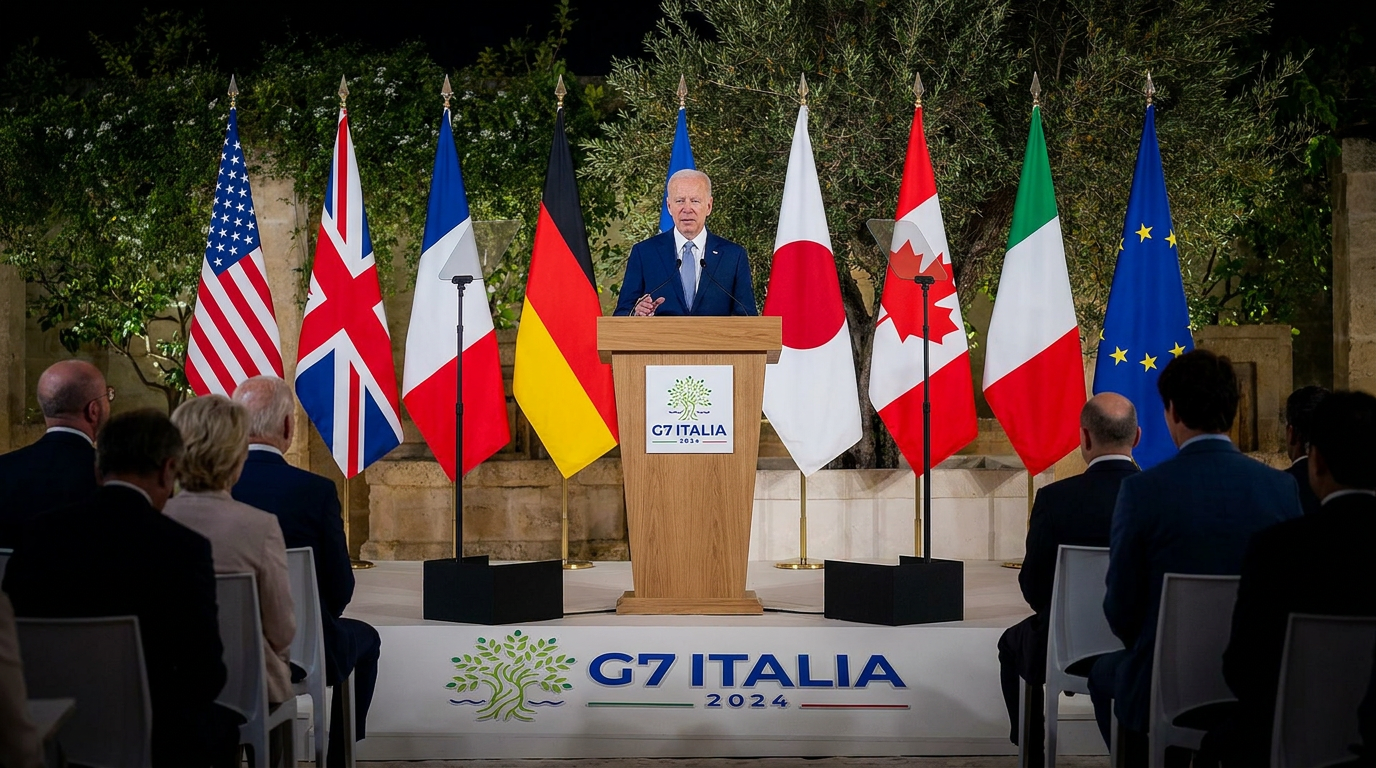
President Donald Trump, speaking at the G7 summit, framed the new MOU as a definitive resolution to the structural flaws he identified in previous diplomatic efforts with Tehran. He specifically contrasted the current agreement with the 2015 Joint Comprehensive Plan of Action (JCPOA), brokered during the Obama administration. Trump characterized the Obama-era deal as a "catastrophe" and asserted that the new framework achieves what previous administrations and allied leaders, including Israeli Prime Minister Benjamin Netanyahu, had failed to secure. The administration's messaging emphasizes that this MOU imposes stricter immediate conditions on Iranian military behavior than prior nuclear-focused agreements.[2]
Despite the release of the text, the finalization of the agreement remains highly precarious. The MOU has not yet been formally signed, and the White House has publicly acknowledged that the diplomatic process could still collapse. In remarks to the press, President Trump suggested that the world will "find out pretty soon" whether the scheduled Friday signing ceremony will actually take place. This uncertainty reflects the complex domestic politics in both Washington and Tehran, where hardline factions remain deeply skeptical of any mutual concessions and are scrutinizing the specific enforcement mechanisms outlined in the draft.[3]
The fragility of the impending deal was further underscored by explicit warnings from the U.S. administration regarding the consequences of a diplomatic failure. President Trump accompanied his announcement of the MOU with a stark ultimatum, vowing to initiate severe bombing campaigns against Iranian targets if Tehran does not "behave" and follow through on the commitments detailed in the text. This dual-track approach—offering a formalized off-ramp while simultaneously threatening overwhelming military escalation—highlights the volatile nature of the current ceasefire negotiations and the lack of underlying trust between the two adversaries.[3]
In global financial centers, the mere publication of the MOU text triggered an immediate, albeit cautious, recalibration of risk. Global markets rallied on the news, with benchmark crude oil prices stabilizing after months of war-driven volatility. Energy analysts note that a formalized end to hostilities would significantly reduce the risk premium currently priced into global energy commodities. However, traders remain wary of the Friday deadline, recognizing that any last-minute breakdown in talks or sudden military provocation could instantly reverse these gains and send energy costs spiraling upward once again.[5]

In global financial centers, the mere publication of the MOU text triggered an immediate, albeit cautious, recalibration of risk.
A critical component of the ongoing negotiations involves the posture of the Israeli government, which has been a central participant in the recent military confrontations with Iran. While the U.S. has taken the lead in brokering the MOU, Israeli security officials in Jerusalem are meticulously reviewing the draft text. Their primary concern centers on the verification mechanisms required to ensure that Iran and its regional proxies genuinely dismantle their forward-deployed offensive capabilities. Israel has historically demanded strict, zero-tolerance enforcement protocols, arguing that ambiguous ceasefire terms allow hostile forces to regroup and rearm.[2][6]
Conversely, leadership in Tehran is navigating its own complex domestic landscape as it prepares to potentially sign the agreement. Iranian state media has confirmed that the government is reviewing the draft, but officials continue to insist that any cessation of hostilities must be accompanied by immediate and tangible relief from the wartime sanctions imposed by the United States. For the Iranian government, the domestic legitimacy of the MOU hinges on its ability to deliver economic stabilization to a population that has endured severe financial strain throughout the duration of the conflict.[7]
The structure of the MOU represents a shift from traditional treaty-making, functioning instead as an executive-level political commitment. Because it is a memorandum of understanding rather than a formal treaty ratified by the U.S. Senate, its long-term durability is inherently tied to the political will of the current administrations in both countries. Legal and diplomatic experts point out that while an MOU can effectively halt immediate wartime operations, it lacks the binding international legal force of a ratified treaty, making it vulnerable to unilateral withdrawal in the future if either side perceives a breach of terms.[1]

One of the most significant operational challenges detailed in the explainer surrounding the MOU is the management of allied and proxy forces. The text explicitly includes the "allies in the current war," a broad categorization that encompasses various non-state actors and regional militias aligned with Tehran, as well as U.S. coalition partners. Ensuring that these decentralized groups adhere to a ceasefire negotiated by state capitals requires robust command-and-control mechanisms. Analysts warn that a rogue strike by a localized militia could easily be interpreted as a violation of the MOU, potentially reigniting the broader conflict.[1]
The broader geopolitical implications of the MOU extend far beyond the immediate Middle Eastern theater. The conflict has forced the United States to divert significant military and diplomatic resources away from other strategic priorities, including the Indo-Pacific and Eastern Europe. A stabilized Persian Gulf would allow the U.S. defense establishment to realign its global posture. Consequently, allied nations in Europe and Asia are closely monitoring the Friday signing deadline, viewing the successful implementation of the MOU as a necessary precondition for a more balanced and predictable global security environment.[1][5]
As the Friday deadline approaches, diplomatic backchannels remain highly active. Negotiators are working to clarify the specific sequencing of the ceasefire implementation—determining exactly which forces will stand down first and how those movements will be independently verified. This granular level of detail is often where high-level political agreements face their greatest hurdles. The U.S. administration's insistence on immediate compliance, coupled with Iran's demands for simultaneous economic concessions, creates a narrow window for successful execution that leaves little room for miscalculation.[3][7]

Ultimately, the U.S.-Iran Memorandum of Understanding represents a high-stakes gamble to cap a devastating regional war before it spirals into an uncontainable global crisis. By publishing the text before the formal signing, the White House has effectively locked both sides into a public framework, increasing the political cost of walking away. Whether this transparency strategy will compel a final agreement or simply set the stage for a more intense phase of military confrontation will be determined in the critical hours leading up to the scheduled ceremony.[1][3]
If the MOU is successfully signed and implemented, it will mark a profound shift in Middle Eastern geopolitics, establishing a new baseline for U.S.-Iranian relations. However, if the talks collapse and the Friday deadline passes without an agreement, the region faces the immediate prospect of the severe military escalation promised by the U.S. administration. The coming days will test the limits of executive diplomacy, the resilience of global markets, and the ability of two long-standing adversaries to step back from the brink of total war.[3][5]
How we got here
Early 2026
Escalation of direct military conflict between U.S., Israeli, and Iranian forces disrupts global energy markets.
June 16, 2026
The U.S. Federal Reserve holds interest rates steady, citing economic uncertainty stemming from the Middle East conflict.
June 17, 2026
The White House releases the full text of the proposed U.S.-Iran Memorandum of Understanding.
June 19, 2026
The scheduled deadline for the formal signing of the MOU by involved parties.
Viewpoints in depth
U.S. Administration's View
The White House frames the MOU as a strict, necessary measure to end the war and correct past diplomatic failures.
The U.S. administration argues that the new Memorandum of Understanding succeeds where previous agreements, such as the 2015 JCPOA, failed. By focusing on an immediate cessation of kinetic military operations and imposing strict behavioral conditions on Tehran, officials believe they have crafted a more robust framework for regional stability. The administration's dual-track approach—offering the MOU while threatening severe bombing campaigns if it is rejected—is designed to force compliance through maximum pressure.
Iranian Leadership's View
Tehran views the agreement as a necessary step to secure economic survival, contingent on immediate sanctions relief.
For the Iranian government, the primary utility of the MOU is the potential alleviation of crippling wartime economic sanctions. Domestic messaging emphasizes that any halt to military operations must be met with reciprocal economic concessions from the United States. Hardline factions within the country remain deeply suspicious of U.S. commitments, viewing the executive nature of the MOU as inherently unreliable, but the severe financial strain of the ongoing conflict has necessitated diplomatic engagement.
Israeli Security Establishment's View
Israel approaches the ceasefire with deep skepticism, prioritizing strict enforcement and verification.
Israeli defense officials are meticulously scrutinizing the MOU's text, concerned that a pause in fighting will simply allow Iranian proxy forces to regroup, rearm, and prepare for future offensives. Jerusalem has historically demanded zero-tolerance enforcement mechanisms, arguing that ambiguous diplomatic language provides cover for hostile military build-ups. Their support for the U.S.-brokered deal is contingent on ironclad guarantees that forward-deployed offensive capabilities will be genuinely dismantled.
Global Energy Importers' View
International markets and energy-dependent nations desperately want the deal signed to stabilize the global economy.
For nations reliant on Middle Eastern oil and secure maritime trade routes, the U.S.-Iran conflict has been an economic disaster. The resulting spike in energy prices has driven inflation to multi-year highs across Western economies, forcing central banks like the U.S. Federal Reserve to maintain restrictive monetary policies. From this perspective, the specific political concessions of the MOU are secondary to the urgent need to reopen the Strait of Hormuz and stabilize benchmark crude prices.
What we don't know
- Whether Iran will officially sign the document by the Friday deadline.
- How strictly the verification mechanisms will be enforced on decentralized proxy forces.
- Whether the agreement will lead to long-term diplomatic normalization or merely a temporary pause in fighting.
Key terms
- Memorandum of Understanding (MOU)
- A formal agreement between two or more parties that outlines terms and details of an understanding, though it generally lacks the binding international legal power of a ratified treaty.
- JCPOA
- The Joint Comprehensive Plan of Action, a 2015 agreement regarding Iran's nuclear program that the current U.S. administration has heavily criticized and contrasted with the new MOU.
- Proxy Forces
- Armed groups or militias that act on behalf of, or are supported by, a larger state power without direct official involvement from that state's conventional military.
Frequently asked
What is the U.S.-Iran MOU?
It is a proposed diplomatic agreement aimed at immediately ending the ongoing war between the U.S., Israel, and Iran.
Has the agreement been signed yet?
Not yet. The text has been released, but the formal signing is scheduled for Friday and could still fall through.
How does this conflict affect the U.S. economy?
The war has driven up global energy prices, pushing U.S. inflation to a three-year high and causing the Federal Reserve to hold interest rates steady.
Sources
Source coverage
7 outlets
4 viewpoints surfaced







[1]AxiosU.S. Administration
READ: Full U.S.-Iran memorandum of understanding
Read on Axios →[2]Fox NewsU.S. Administration
Trump recalls Netanyahu's failed push to kill Obama Iran deal, says he finished the job
Read on Fox News →[3]Al JazeeraGlobal Markets
Trump: World will ‘find out pretty soon’ if Iran MOU signing will happen
Read on Al Jazeera →[4]The GuardianGlobal Markets
Federal Reserve holds interest rates steady for fourth time this year
Read on The Guardian →[5]ReutersGlobal Markets
Global markets rally as US-Iran ceasefire text signals end to hostilities
Read on Reuters →[6]The Times of IsraelIsraeli Security Establishment
Jerusalem reviews US-Iran MOU draft, demands strict verification mechanisms
Read on The Times of Israel →[7]IRNAIranian Leadership
Tehran confirms draft MOU review, insists on immediate sanctions relief
Read on IRNA →

More in news politics
See all 5 stories →


Every angle. Every day.
Get news politics stories with full source coverage and perspective breakdowns delivered to your inbox.