
The End of Fast Furniture: How PFAS Bans and Biomaterials Are Reshaping the Living Room
Strict new regulations on toxic 'forever chemicals' are forcing the furniture industry to abandon synthetic foams and performance fabrics in favor of compostable biomaterials and modular design.
By Factlen Editorial Team
- Regulatory & Health Advocates
- Focus on eliminating toxic exposure pathways like indoor dust and VOCs to protect public health.
- Biomaterial Innovators
- View furniture as a biological, regenerative system rather than a static petrochemical product.
- Circular Economy Proponents
- Argue for modularity, repairability, and service-based models to end the landfill waste of fast furniture.
What's not represented
- · Traditional polyurethane foam manufacturers facing massive supply chain disruptions.
- · Budget-conscious consumers who may be priced out of early-stage biomaterial furniture.
Why this matters
For decades, household furniture has been a hidden source of toxic chemical exposure and massive landfill waste. The shift toward organic, repairable materials means consumers can finally buy healthier, longer-lasting products that actively reduce indoor air pollution.
Key points
- Strict 2026 state laws are banning the sale of upholstered furniture containing toxic PFAS chemicals.
- PFAS chemicals in traditional performance fabrics break down into household dust, posing chronic health risks.
- Manufacturers are replacing synthetic foams with mycelium, a fire-resistant and compostable fungal biomaterial.
- Circular design principles are replacing 'fast furniture' with modular systems that can be easily repaired.
- Furniture as a Service (FaaS) models allow consumers to rent and return high-quality pieces to prevent landfill waste.
The era of fast furniture is quietly coming to an end. For decades, the industry relied on a simple but ecologically destructive formula: cheap particleboard, polyurethane foams, and synthetic fabrics heavily coated in "performance" chemicals. These materials made sofas affordable and stain-resistant, but they also guaranteed a short lifespan and a toxic afterlife.[8]
But in 2026, a wave of strict environmental regulations and material breakthroughs is forcing a total reinvention of the living room. The primary catalyst is a sweeping legislative crackdown on per- and polyfluoroalkyl substances (PFAS), the "forever chemicals" long used to make upholstery water-repellent and stain-proof.[1][2]
State-level bans are now taking full effect across the United States. Maine's LD 1537 and Minnesota's Amara's Law have officially prohibited the sale of upholstered furniture containing intentionally added PFAS, while the European Union continues to advance its comprehensive REACH 2.0 restrictions to eliminate the chemicals from consumer goods entirely.[2]

For years, consumers were enthusiastically sold on the convenience of "life-proof" fabrics. However, researchers have increasingly linked these persistent chemical treatments to endocrine disruption, immune system suppression, and widespread environmental contamination.[3]
The primary exposure pathway in the home isn't just direct skin contact; it is the microscopic dust that settles as treated fabrics wear down over time. This chemical-laden dust is easily inhaled or ingested—particularly by crawling infants and toddlers—making the transition to untreated, natural fibers a critical public health priority.[3]
Faced with these hard regulatory deadlines, manufacturers are not just swapping one synthetic chemical for another. Instead, the industry is rethinking the entire material stack, moving away from fossil-fuel-based synthetics toward bio-engineered alternatives that fundamentally change how furniture is made.[7][8]
The most promising breakthrough in this space is mycelium—the vegetative root structure of fungi. Composed of a dense, microscopic network of fine white filaments called hyphae, mycelium acts as nature's ultimate binding agent.[4][5]
To create mycelium furniture, designers introduce fungal spores to a mold filled with agricultural waste, such as hemp fibers, sawdust, or coffee husks. Over a period of one to two weeks in a climate-controlled environment, the hyphae grow rapidly, invading and fusing the loose organic matter into a solid, structural composite.[5]

To create mycelium furniture, designers introduce fungal spores to a mold filled with agricultural waste, such as hemp fibers, sawdust, or coffee husks.
The resulting biomaterial is remarkably versatile. Depending on the substrate used and the specific growth conditions, mycelium can mimic the lightweight, shock-absorbing density of polystyrene foam or achieve the rigid, load-bearing strength of medium-density fiberboard.[4][5]
Beyond its structural capabilities, mycelium solves several of the most persistent problems in traditional furniture manufacturing. It is naturally fire-resistant, eliminating the need for toxic chemical flame retardants, and it binds itself without the formaldehyde-based glues that constantly off-gas volatile organic compounds (VOCs) into indoor air.[4]
It also offers unique sensory benefits for the home. Mycelium acts as a "sonic sponge," dampening ambient noise to reduce cognitive fatigue, and it maintains a neutral thermal temperature that feels highly natural and comfortable against human skin.[4]
Crucially, when a mycelium-based chair or acoustic panel reaches the end of its useful life, it does not sit in a landfill for centuries. Because it is entirely plastic-free and organic, the material can be broken down and fully composted, returning its nutrients directly to the soil.[5]
But fixing the materials is only half the battle; the industry is also redesigning how furniture is owned and maintained. The traditional "produce, sell, discard" model is rapidly being replaced by circular design principles aimed at keeping products in active use for decades.[6]

Modularity has evolved from a marketing buzzword into a core strategy for product longevity. Modern adaptive systems use precision interlocking joints and magnetic connectors, allowing a single piece of furniture to expand, contract, or change functions without the need for specialized tools.[6][7]
This loose-fit construction means that if a single armrest gets damaged or a cushion wears out, the consumer can order and replace just that specific part, rather than throwing away the entire sofa and starting over.[6][7]

This shift in design architecture is also giving rise to "Furniture as a Service" (FaaS) business models. Companies are increasingly allowing consumers to rent high-quality, modular pieces. When a customer moves or their lifestyle changes, the manufacturer takes the piece back, refurbishes the components, and deploys them to a new home.[6]
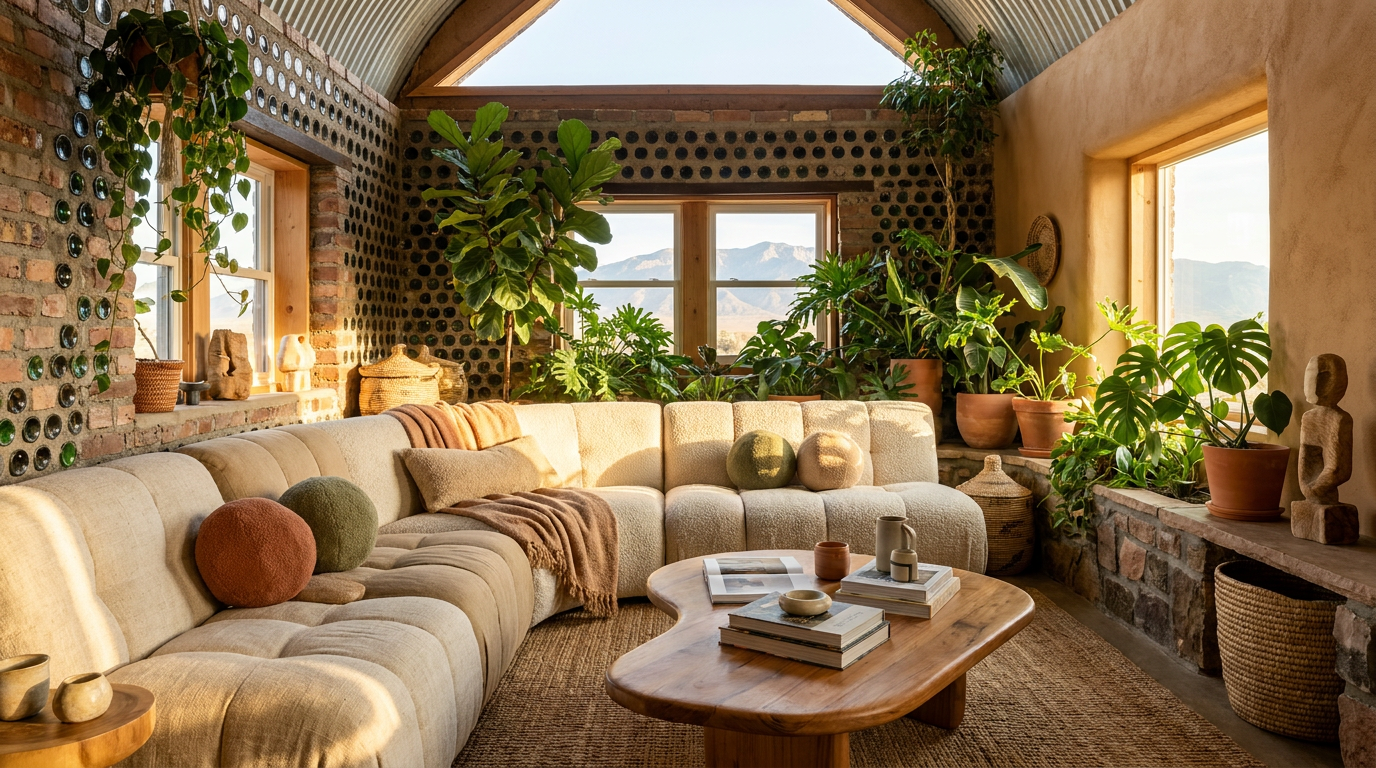
Aesthetically, this sustainable revolution is softening the modern interior. The sharp, rigid lines of the past decade are giving way to curved silhouettes, organic forms, and biophilic designs that promote visual calm and better spatial flow.[7]
How we got here
Jan 2024
Early state-level PFAS bans begin targeting carpets, rugs, and juvenile products.
Jan 2025
Minnesota's Amara's Law enacts initial prohibitions on intentionally added PFAS in 11 product categories.
Jan 2026
Maine's LD 1537 takes full effect, strictly prohibiting the sale of PFAS-treated upholstered furniture.
Viewpoints in depth
Regulatory & Health Advocates
Focus on the urgent need to eliminate toxic exposure pathways in the home.
Public health experts argue that voluntary phase-outs of toxic chemicals were moving far too slowly. They point out that the accumulation of 'forever chemicals' in household dust poses an unacceptable chronic risk, especially to children who spend significant time on the floor. For these advocates, the 2026 bans represent a necessary market intervention to force the industry to prioritize human health over cheap stain resistance.
Biomaterial Innovators
Detail the vision of 'grown' architecture and regenerative materials.
Material scientists and bio-designers argue that relying on fossil-fuel derivatives for furniture foam is an obsolete practice. They envision a future where interior spaces are grown rather than manufactured. By utilizing fungal networks to upcycle agricultural waste into superior, fire-resistant, and compostable materials, they believe the furniture industry can become a carbon-negative force that actively heals the environment.
Circular Economy Proponents
Focus on the economic and behavioral shift away from disposable goods.
Circular economy advocates argue that the 'produce-sell-discard' model of fast furniture is a fundamental market failure that has overwhelmed global landfills. They assert that true sustainability requires more than just better materials; it requires modular systems where parts are easily swapped. By treating furniture as a lifelong service rather than a disposable good, they aim to permanently end the cycle of furniture fatigue.
What we don't know
- How quickly major fast-furniture retailers will be able to scale mycelium production to match the volume of traditional polyurethane foam.
- Whether the patchwork of state-level PFAS regulations will eventually be unified under a single, comprehensive federal standard in the US.
Key terms
- PFAS
- A class of synthetic 'forever chemicals' historically used to make fabrics resistant to water, stains, and grease.
- Mycelium
- The vegetative root structure of fungi, consisting of a dense network of fibers that can bind organic waste into solid materials.
- Circular Design
- An economic and design model focused on eliminating waste by ensuring products can be easily repaired, reused, or fully recycled.
- Volatile Organic Compounds (VOCs)
- Harmful gases emitted by certain solid or liquid chemicals, commonly found in traditional furniture glues and synthetic foams.
- Biophilic Design
- An architectural approach that connects building occupants more closely to nature through organic shapes, natural lighting, and biomaterials.
Frequently asked
What makes a sofa 'PFAS-free'?
It means the upholstery and internal foams were manufactured without per- and polyfluoroalkyl substances, relying instead on natural fibers or alternative, non-toxic moisture barriers.
Is mycelium furniture durable enough for daily use?
Yes. When properly dried and cured, mycelium composites can achieve the structural density of MDF wood while remaining lightweight and highly resistant to fire and impact.
Can I compost biomaterial furniture in my backyard?
Pure mycelium-and-hemp composites are 100% biodegradable and can be broken down in standard composting environments at the end of their useful life.
What is 'Furniture as a Service' (FaaS)?
It is a subscription-based model where consumers rent high-quality, modular furniture. When their needs change, the company retrieves, refurbishes, and reuses the pieces, eliminating landfill waste.
Sources
Source coverage
8 outlets
3 viewpoints surfaced








[1]CertivoRegulatory & Health Advocates
PFAS Compliance and the 2026 Regulatory Landscape
Read on Certivo →[2]Source IntelligenceRegulatory & Health Advocates
Navigating State and EU PFAS Bans in Consumer Goods
Read on Source Intelligence →[3]Embr SleepRegulatory & Health Advocates
The Hidden Chemistry of Bedroom and Living Room Furniture
Read on Embr Sleep →[4]Nuvira SpaceBiomaterial Innovators
The Molecular Logic of Fungal Design in Architecture
Read on Nuvira Space →[5]Materials AssembleBiomaterial Innovators
Growing Furniture: The Craft of Mycelium Interiors
Read on Materials Assemble →[6]Grain of DesignCircular Economy Proponents
Circular Furniture 2026: Modularity as a Lifestyle
Read on Grain of Design →[7]Yanko DesignCircular Economy Proponents
Adaptive Modular Furniture and Bio-Smart Materials
Read on Yanko Design →[8]Factlen Editorial Team
Synthesis by Factlen editorial team
Read on Factlen Editorial Team →

Every angle. Every day.
Get shopping stories with full source coverage and perspective breakdowns delivered to your inbox.