
The Rise of Regenerative Gastronomy: How Food Tourism is Healing Destinations
Travelers are increasingly abandoning generic hotel buffets for 'regenerative food tourism'—a movement that uses culinary experiences to actively restore local ecosystems and preserve indigenous heritage.
By Factlen Editorial Team
- Agritourism Advocates
- Focus on decolonizing food systems and empowering indigenous communities.
- Tourism Economists
- Focus on capturing ancillary spend and building economic resilience.
- Sustainability Researchers
- Focus on circular economy metrics and the limits of scale.
What's not represented
- · Mass-Market Hospitality Chains
- · Industrial Agriculture Producers
Why this matters
The way we eat on vacation is shifting from a passive, extractive activity into a tool for environmental and cultural restoration. For travelers, understanding this shift unlocks deeper, more authentic experiences, while for local economies, it provides a blueprint to retain tourism revenue and protect fragile ecosystems.
Key points
- The global culinary tourism market is projected to reach $4.25 trillion by 2034, with travelers prioritizing hyper-local food.
- Regenerative gastronomy moves beyond sustainability by using food tourism to actively restore local ecosystems and cultures.
- Initiatives like Vanuatu's 'Regenerative Vanua' monetize indigenous farming knowledge, providing income that incentivizes ecological stewardship.
- European models, such as Spain's furanchos and the Baltic's blue food project, demonstrate how short supply chains build economic resilience.
- The movement faces a scaling paradox, as true regenerative experiences require capping visitor numbers to protect local resources.
The global culinary tourism market is undergoing a seismic shift, projected to balloon into a $4.25 trillion industry by 2034. For decades, the pinnacle of vacation dining was the sprawling, imported hotel buffet or the familiar comfort of a global restaurant chain. Today, nearly 80% of travelers cite food as a primary motivator for choosing a destination, and they are increasingly allocating up to a quarter of their total travel budgets to eating and drinking. But what they want to eat has fundamentally changed.[1]
Travelers are abandoning generic, location-agnostic menus in favor of hyper-local authenticity. This demand is driving the rapid rise of "regenerative gastronomy"—a movement that asks a profound question: Can the simple act of eating on vacation actively heal a destination?[8]
To understand regenerative food tourism, one must look past the buzzword of "sustainability." Sustainable tourism focuses on doing less harm—reducing plastic, minimizing carbon footprints, and maintaining the status quo. Regenerative tourism, by contrast, operates on the principle of net-positive impact. It aims to leave a place ecologically, socially, and economically better than it was found.[7]

In the context of gastronomy, this means designing culinary experiences that act as engines for environmental restoration and cultural preservation. It involves closed-loop circular economies where food waste is transformed into compost or animal feed, and menus are dictated not by global supply chains, but by the micro-seasons of local agriculture.[6]
A core tenet of regenerative gastronomy is "decolonizing" food systems. In industrial tourism, destinations are often heavily modified to serve the expectations of foreign visitors, leading to the importation of luxury ingredients like out-of-season berries or farmed salmon to tropical islands. Regenerative models flip this dynamic, honoring indigenous knowledge and heirloom crops that are naturally adapted to the local climate.[2]
The Pacific island nation of Vanuatu offers a compelling blueprint. Prior to the pandemic, tourism accounted for roughly 50% of Vanuatu's GDP, but much of the food consumed by tourists was imported. In response, local leaders and agricultural experts formed the Regenerative Vanua collective, an initiative supported by the Australian Centre for International Agricultural Research.[3]
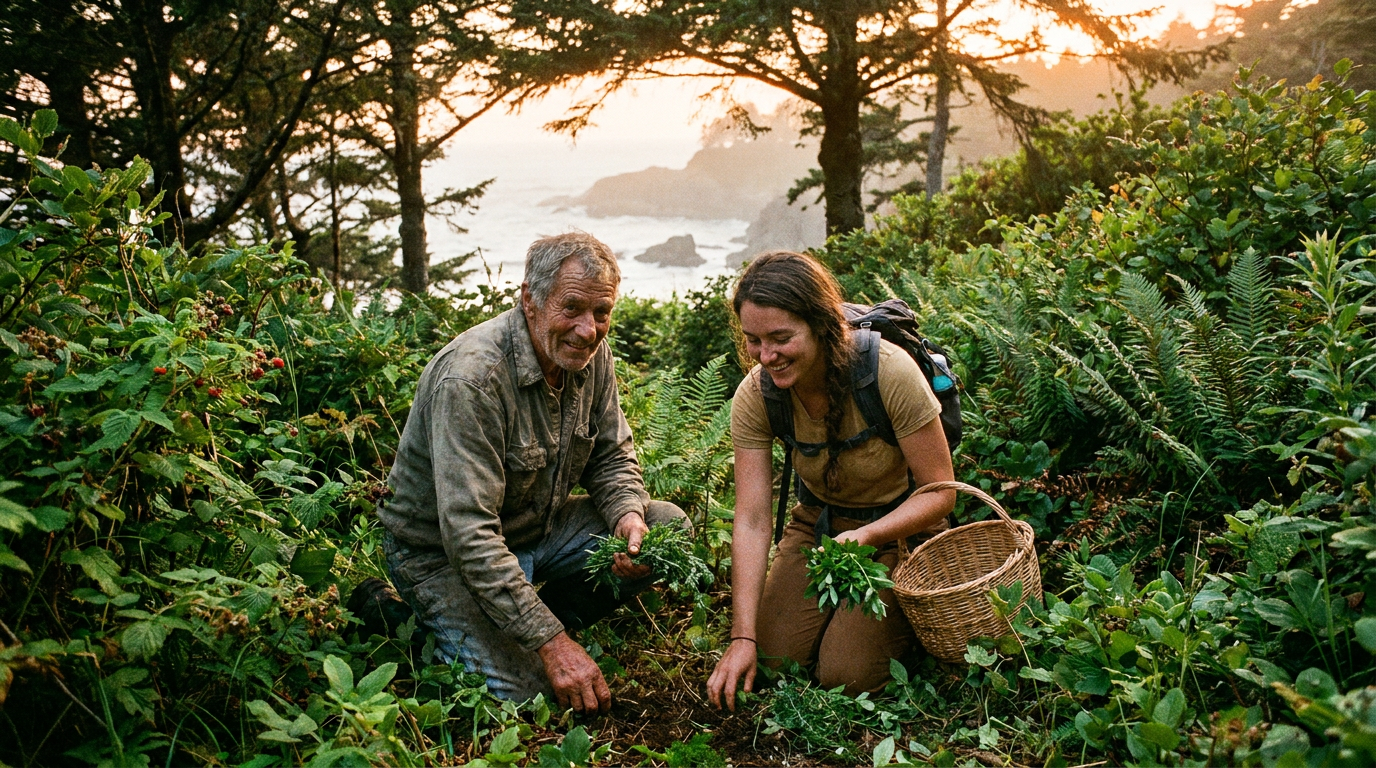
Regenerative Vanua established a third-party certification program to verify agritourism experiences that actively improve soil, water, and biodiversity. Instead of passive dining, visitors engage in intercultural experiences—walking through edible food forests, learning traditional farming techniques, or participating in tribal shrimp hunting.[2][3]
These experiences do more than entertain; they add vital economic value to non-commodity outputs. By monetizing the sharing of indigenous agricultural systems and spiritual connections to the land, the program provides local farmers with a diversified income stream that incentivizes ecological stewardship over intensive, extractive farming.[3]

These experiences do more than entertain; they add vital economic value to non-commodity outputs.
In Europe, regenerative gastronomy often takes the form of preserving hyper-local historical wisdom. In the rural region of Galicia, Spain, the tradition of the furancho represents a naturally regenerative model of hospitality that predates modern sustainability frameworks.[4]
A furancho is a private home that is legally permitted to operate as a temporary food establishment. Winemakers use these intimate, shared spaces to sell their surplus artisanal wine alongside a strictly regulated menu of handmade, traditional dishes.[4]
Because furanchos are legally restricted in what they can serve and how long they can operate, they are inherently protected from scaling into mass-market enterprises. They rely entirely on local resources, fostering short supply chains that directly support regional growers and fishermen while offering travelers a deeply authentic, co-created cultural experience.[4][7]
The concept is also being applied to marine environments. The "RegenerativeBlueFoodTourism" project, a transnational initiative spanning Denmark, Estonia, and Lithuania from 2025 to 2027, focuses on the Baltic Sea region. The project aims to build economic resilience by developing off-season culinary tourism centered around sustainable aquaculture and traditional fishing.[5]
By mobilizing small communities of chefs, guides, and fishers, the Baltic initiative seeks to revitalize local cultural heritage while addressing the socio-economic vulnerabilities of highly seasonal tourism. It demonstrates how "blue food"—aquatic ingredients—can be harvested and celebrated in ways that support coastal ecosystems rather than depleting them.[5]

The regenerative food movement also intersects heavily with the booming wellness travel sector, particularly in the world's "Blue Zones"—regions like Sardinia, Italy, and the Nicoya Peninsula in Costa Rica, where populations boast unusually high concentrations of centenarians.[8]
In these regions, the local diet is not just a menu; it is a lifestyle. Culinary tourism in Blue Zones focuses on plant-based, nutrient-dense foods, such as Costa Rica's gallo pinto or Sardinia's grass-fed pecorino cheese. Travelers visit these areas not just to consume, but to learn the holistic principles of longevity, which include deep community ties, natural physical movement, and profound respect for the land.[8]
For Destination Management Organizations (DMOs), the pivot toward regenerative gastronomy is highly strategic. When restaurants and hotels are integrated directly with local producers, the economic leakage typical of mass tourism is drastically reduced. The money spent by tourists circulates within the community, building a resilient local economy that can withstand global supply chain shocks.[7]
However, the regenerative model faces a fundamental paradox: the tension between authenticity and volume. True regenerative experiences are inherently small-scale. A family-run furancho or a delicate edible food forest cannot accommodate busloads of daily tourists without degrading the very ecosystem and intimacy that make them valuable.[6][8]
As the travel industry looks toward the 2030s, destinations will have to make difficult choices about capacity and growth. Regenerative gastronomy proves that food tourism can be a powerful force for ecological and cultural healing, provided the industry is willing to prioritize the health of the destination over the sheer volume of its visitors.[8]
How we got here
Pre-2020
Culinary tourism is largely dominated by globalized hotel buffets and imported luxury ingredients.
2020-2022
The pandemic disrupts global supply chains, forcing destinations to re-evaluate their reliance on imported food for tourists.
2023-2024
Initiatives like Regenerative Vanua launch formal certification programs for agritourism that actively restores ecosystems.
Nov 2025
The Baltic Sea Region launches a transnational project to develop off-season regenerative blue food tourism.
2034
The global culinary tourism market is projected to surpass $4.25 trillion, driven by demand for hyper-local authenticity.
Viewpoints in depth
Agritourism Advocates
Focus on decolonizing food systems and empowering indigenous communities.
This camp argues that industrial tourism has historically extracted value from local communities while forcing them to adapt to foreign tastes. By centering indigenous knowledge, traditional farming, and hyper-local ingredients, regenerative agritourism allows communities to monetize their heritage without compromising their ecosystems. They view the traveler as a guest who must actively participate in the stewardship of the land.
Tourism Economists
Focus on capturing ancillary spend and building economic resilience.
Economic analysts emphasize the financial mechanics of regenerative gastronomy. When travelers spend 25% of their budget on food, keeping that money within short, local supply chains prevents massive economic leakage. This camp highlights that destinations heavily reliant on imported food are vulnerable to global shocks, whereas regions that integrate local agriculture with hospitality build robust, self-reliant economies.
Sustainability Researchers
Focus on circular economy metrics and the limits of scale.
Academic researchers study the measurable impacts of these initiatives, such as waste reduction through composting and the carbon savings of hyper-local sourcing. However, they frequently point out the paradox of scale: true regenerative practices are inherently small and intimate. This camp warns that attempting to scale these experiences for mass tourism risks degrading the very environments and cultural authenticity they aim to protect.
What we don't know
- How major multinational hotel brands will adapt to the demand for hyper-local sourcing without greenwashing their supply chains.
- Whether destination management organizations will be willing to cap tourist numbers to protect fragile regenerative food ecosystems.
Key terms
- Regenerative Tourism
- An approach to travel that aims to leave a destination ecologically and socially better than it was found, moving beyond merely minimizing harm.
- Circular Economy
- An economic system aimed at eliminating waste and the continual use of resources, applied in gastronomy through composting and zero-waste cooking.
- Agritourism
- An agriculturally based activity that brings visitors to a farm or food forest, bridging the gap between food producers and consumers.
- Blue Food
- Aquatic foods captured or cultivated in marine and freshwater environments, including fish, shellfish, and seaweed.
- Furancho
- A traditional private home in Galicia, Spain, legally permitted to operate temporarily to sell surplus artisanal wine and specific local dishes.
Frequently asked
What is the difference between sustainable and regenerative tourism?
Sustainable tourism aims to minimize negative impacts and maintain the status quo. Regenerative tourism goes further by actively restoring local ecosystems and revitalizing indigenous cultures.
How does regenerative gastronomy help local economies?
By sourcing ingredients directly from local farmers and fishers, it shortens supply chains and ensures tourist spending stays within the community rather than leaking to multinational corporations.
Can regenerative food tourism handle mass travel?
True regenerative experiences rely on small-scale, hyper-local production, which naturally limits visitor capacity to prevent the over-extraction of local resources.
Sources
Source coverage
8 outlets
3 viewpoints surfaced








[1]Hospitality Marketing InsightTourism Economists
Culinary Tourism Opportunities and Trends 2026
Read on Hospitality Marketing Insight →[2]IGCATAgritourism Advocates
Building Regenerative Gastronomy through Verified Food Systems
Read on IGCAT →[3]Australian Centre for International Agricultural ResearchAgritourism Advocates
Creating Regenerative Vanua
Read on Australian Centre for International Agricultural Research →[4]Emerald InsightSustainability Researchers
Transformative tourism futures through food experiences
Read on Emerald Insight →[5]Swedish InstituteTourism Economists
RegenerativeBlueFoodTourism in the Baltic Sea Region
Read on Swedish Institute →[6]MDPISustainability Researchers
Circular Economy Approaches in Gastronomic Tourism
Read on MDPI →[7]Galen CentreTourism Economists
Regenerative tourism is the next step in sustainable travel
Read on Galen Centre →[8]Factlen Editorial TeamSustainability Researchers
Synthesis by Factlen editorial team
Read on Factlen Editorial Team →
Every angle. Every day.
Get travel stories with full source coverage and perspective breakdowns delivered to your inbox.