
The Centaur Era: How AI and Neural Networks Made Chess More Human
Far from "solving" the game, modern neural network engines have forced grandmasters to abandon rote memorization in favor of unpredictable, creative play.
By Factlen Editorial Team
- AI Innovators
- Embrace neural networks as tools that have expanded human understanding and creativity.
- Freestyle Advocates
- Push for randomized starting positions to eliminate engine memorization entirely.
- Classical Purists
- Value traditional chess but worry that engine preparation has turned the game into a memory contest.
What's not represented
- · Amateur club players who use AI tools for casual learning rather than elite tournament preparation.
- · AI developers focused on creating engines that mimic specific human playstyles rather than seeking perfect play.
Why this matters
The intersection of AI and chess offers a hopeful blueprint for the future of human-machine collaboration. Instead of replacing human ingenuity, artificial intelligence has stripped away rote memorization and forced humans to become more creative, adaptable, and psychologically resilient.
Key points
- Neural network engines like AlphaZero evaluate positions using pattern recognition rather than brute-force calculation.
- AI has taught human players to prioritize long-term positional advantages over short-term material gain.
- Widespread access to perfect engine analysis has led to high draw rates in classical chess openings.
- Grandmasters now deliberately play sub-optimal moves to force opponents out of their memorized preparation.
- Freestyle Chess (Chess960) has surged in popularity as a way to completely eliminate opening theory.
- FIDE officially launched the first Freestyle Chess World Championship at Weissenhaus in 2026.
When IBM’s Deep Blue defeated Garry Kasparov in 1997, many feared the soul of chess had been permanently extinguished. If a machine could out-calculate the greatest human mind in history, the logic went, the game would soon be "solved" and reduced to a sterile mathematical exercise. For two decades, that prophecy seemed to be slowly coming true as engines grew exponentially stronger, turning elite chess preparation into a grueling test of rote memorization.[1][7]
But a funny thing happened on the way to the singularity. Artificial intelligence did not kill human creativity in chess; it turbocharged it. The turning point arrived in late 2017 with DeepMind's AlphaZero, a neural network that learned the game entirely through self-play. Unlike traditional engines, which relied on human-programmed heuristics and brute-force calculation, AlphaZero developed its own "alien" understanding of the board.[1][4][7]
The mechanical difference between the two approaches is staggering. Traditional engines like early versions of Stockfish evaluate roughly 70 million positions per second, relying on sheer computational volume to see further down the decision tree than any human could. AlphaZero, by contrast, evaluates only about 80,000 positions per second. It compensates for this lower volume by using its deep neural network to selectively focus on the most promising variations, mimicking human intuition.[4][7]

This architectural shift produced a radically different style of play. Where brute-force engines were materialistic and defensive, neural networks proved to be aggressive, dynamic, and willing to sacrifice pawns or pieces for long-term positional advantages. Demis Hassabis, an artificial intelligence researcher and chess player, described AlphaZero's style as "chess from another dimension." It broke established rules, ignored centuries of human dogma, and won decisively.[1][7]
The human response to this AI breakthrough was not despair, but inspiration. Open-source communities quickly built Leela Chess Zero (Lc0), a neural network engine available to the public. Soon, top grandmasters were training with these tools, absorbing their unconventional strategies. Former World Champion Magnus Carlsen noted that studying AlphaZero's games fundamentally changed his approach, making him more willing to embrace "ugly" or unaesthetic moves if they served a deeper purpose.[3][7]
However, the democratization of superhuman AI brought a new structural problem to classical chess: the opening phase became perfectly mapped. Today, any club player can run a position through a hybrid engine—which now combines neural network evaluation with brute-force calculation—and receive the exact same numerical verdict as a World Champion. At the elite level, this means the first 15 to 25 moves of a game are often played entirely from memory.[1][2]
When both players execute perfect, computer-approved opening lines, the result is almost inevitably a draw. This dynamic peaked during the 2018 World Championship, where all twelve classical games ended in draws for the first time in the event's 138-year history. The perfection of silicon had created a paradox: the better the players prepared, the less actual chess they played at the board.[2][8]

When both players execute perfect, computer-approved opening lines, the result is almost inevitably a draw.
To break this deadlock, a new generation of grandmasters developed a brilliant counter-strategy: deliberate imperfection. Rather than playing the absolute "best" move recommended by the engine, top players began intentionally choosing sub-optimal, unstudied lines. The goal is no longer to win the opening, but to drag the opponent out of their memorized preparation and into a "deep dark forest" where both players must think for themselves.[1][2][8]
This psychological warfare exploits the fundamental difference between humans and machines. An engine assumes perfect play from both sides and does not care if a position is terrifying or complex. A human, however, feels the pressure of the clock and the fear of the unknown. By playing a move that the computer labels an inaccuracy, a grandmaster forces their opponent to solve a novel problem over the board, dramatically increasing the chances of a human error.[2][8]
Carlsen himself has embraced this philosophy, frequently noting that the hardest part of chess is making good decisions on incomplete data in a limited amount of time. He has expressed disdain for "artificial" puzzles that have a guaranteed solution, preferring the messy, chaotic reality of a position where the "right" move is a matter of intuition and nerve.[3]
While psychological subterfuge has kept classical chess alive, the broader chess community has increasingly turned to a structural solution: Freestyle Chess, also known as Chess960 or Fischer Random. In this format, the starting position of the pieces on the back rank is randomized just minutes before the game begins. With 960 possible starting configurations, opening preparation is rendered mathematically impossible.[1][5][6]

Freestyle Chess strips away the safety net of engine memorization, forcing players to rely entirely on their raw understanding of chess principles from move one. It is the ultimate test of the "Centaur" era—players must apply the deep, intuitive lessons they learned from neural networks to completely alien starting positions that no computer has ever analyzed for them.[1][5]
The format's momentum culminated in early 2026, when the International Chess Federation (FIDE) officially partnered with private organizers to launch the FIDE Freestyle Chess World Championship. Held at the Weissenhaus resort in Germany, the inaugural event featured a $300,000 prize fund and established a formal qualification pathway, cementing Freestyle's status alongside classical chess.[5][6]

The Weissenhaus championship represents a profound full-circle moment for the game. Three decades after computers first surpassed human calculation, the chess world has engineered a format where human adaptability reigns supreme. The engines taught us how to see the board differently, but the players have reclaimed the board itself.[1][6]
Ultimately, the story of AI in chess is not a tragedy of human obsolescence, but a triumph of human-machine synthesis. By pushing the boundaries of what is possible on the 64 squares, neural networks have freed players from the dogma of the past, proving that even in a world of perfect calculation, there is still room for art, psychology, and the thrill of the unknown.[1][3][4]
How we got here
May 1997
IBM's Deep Blue defeats World Champion Garry Kasparov, proving computers can out-calculate humans.
Dec 2017
DeepMind introduces AlphaZero, a neural network that teaches itself chess and defeats the top brute-force engine.
Nov 2018
The World Chess Championship features 12 consecutive draws, highlighting the "preparation problem" caused by engines.
2019-2023
Open-source neural networks like Leela Chess Zero become standard training tools for elite grandmasters.
Feb 2026
FIDE hosts the inaugural Freestyle Chess World Championship at Weissenhaus, cementing the format's elite status.
Viewpoints in depth
AI Innovators
Players and researchers who view neural networks as the ultimate tool for expanding human understanding of chess.
This camp argues that AI has liberated chess from centuries of human dogma. By studying engines like Leela Chess Zero, players have discovered that many traditional rules—such as strictly guarding pawn structures or avoiding early king movement—are actually flexible. They view the "Centaur" era as a golden age where human intuition is augmented by machine precision, leading to the highest quality of chess ever played.
Classical Purists
Traditionalists concerned that engine preparation has turned the opening phase into a memory contest.
Purists argue that the democratization of perfect AI analysis has damaged the competitive integrity of classical time controls. Because players can memorize 20 to 30 moves of computer-approved theory, the early game often lacks original thought. This camp points to the high draw rates in World Championship matches as evidence that classical chess is suffering under the weight of silicon perfection, forcing players to rely on psychological tricks rather than pure over-the-board skill.
Freestyle Advocates
Supporters of Chess960 who believe randomizing the board is the only way to save human creativity.
Led by top grandmasters and organizers like those behind the Weissenhaus championship, this group believes the solution to the AI problem is structural. By randomizing the starting position, Freestyle Chess completely nullifies engine preparation. Advocates argue this format returns the game to its roots: pure, unassisted human calculation and creativity from the very first move, ensuring that the better player—not the better memorizer—wins the match.
What we don't know
- Whether classical chess will eventually be phased out at the World Championship level in favor of faster time controls or Freestyle formats.
- How much further neural network engines can push the theoretical ceiling of chess before reaching absolute mathematical perfection.
Key terms
- Neural Network Engine
- An AI system that evaluates chess positions based on pattern recognition and self-taught intuition rather than calculating every possible move.
- Brute-force Calculation
- The traditional computing method of analyzing millions of potential future moves per second to find the mathematically safest path.
- Freestyle Chess (Chess960)
- A chess variant where the pieces on the back row are randomized before the game, creating 960 possible starting positions.
- Opening Theory
- The established, deeply analyzed sequences of initial moves that grandmasters memorize before a tournament.
- Centaur Chess
- A concept describing the modern era where human players combine their own intuition with the analytical power of AI engines.
Frequently asked
Did AI ruin the game of chess?
No. While AI has made opening preparation heavily reliant on memorization, it has also taught humans new, creative ways to play and sparked the rise of unpredictable formats like Freestyle Chess.
What is the difference between Stockfish and AlphaZero?
Early Stockfish relied on brute-force calculation, analyzing 70 million positions per second. AlphaZero uses a neural network to evaluate only 80,000 positions per second, relying on pattern recognition that mimics human intuition.
Why do grandmasters play 'bad' moves on purpose?
To drag their opponents out of memorized computer preparation. A slightly sub-optimal move forces the opponent to think for themselves at the board, increasing the chance of a human error.
What is Freestyle Chess?
Also known as Chess960, it is a variant where the back-rank pieces are randomized before the game. This makes it impossible to use AI to memorize opening moves in advance.
Sources
Source coverage
8 outlets
3 viewpoints surfaced








[1]Factlen Editorial Team
Synthesis by Factlen editorial team
Read on Factlen Editorial Team →[2]TechSpotAI Innovators
How AI changed chess preparation for grandmasters
Read on TechSpot →[3]Chess.comClassical Purists
Magnus Carlsen on Intuition, Computers, and Creativity
Read on Chess.com →[4]arXivAI Innovators
Bridging the Gap Between Human and Artificial Intelligence in Chess
Read on arXiv →[5]World ChessFreestyle Advocates
FIDE Freestyle Chess World Championship 2026: Dates, Venue & Format
Read on World Chess →[6]FIDEFreestyle Advocates
FIDE Freestyle Chess World Championship 2026 officially launched at Weissenhaus
Read on FIDE →[7]MediumAI Innovators
Neural Nets and the Future of Chess
Read on Medium →[8]Hacker NewsClassical Purists
Chess engines have redefined creativity in chess
Read on Hacker News →
More in sports
See all 12 stories →Standings
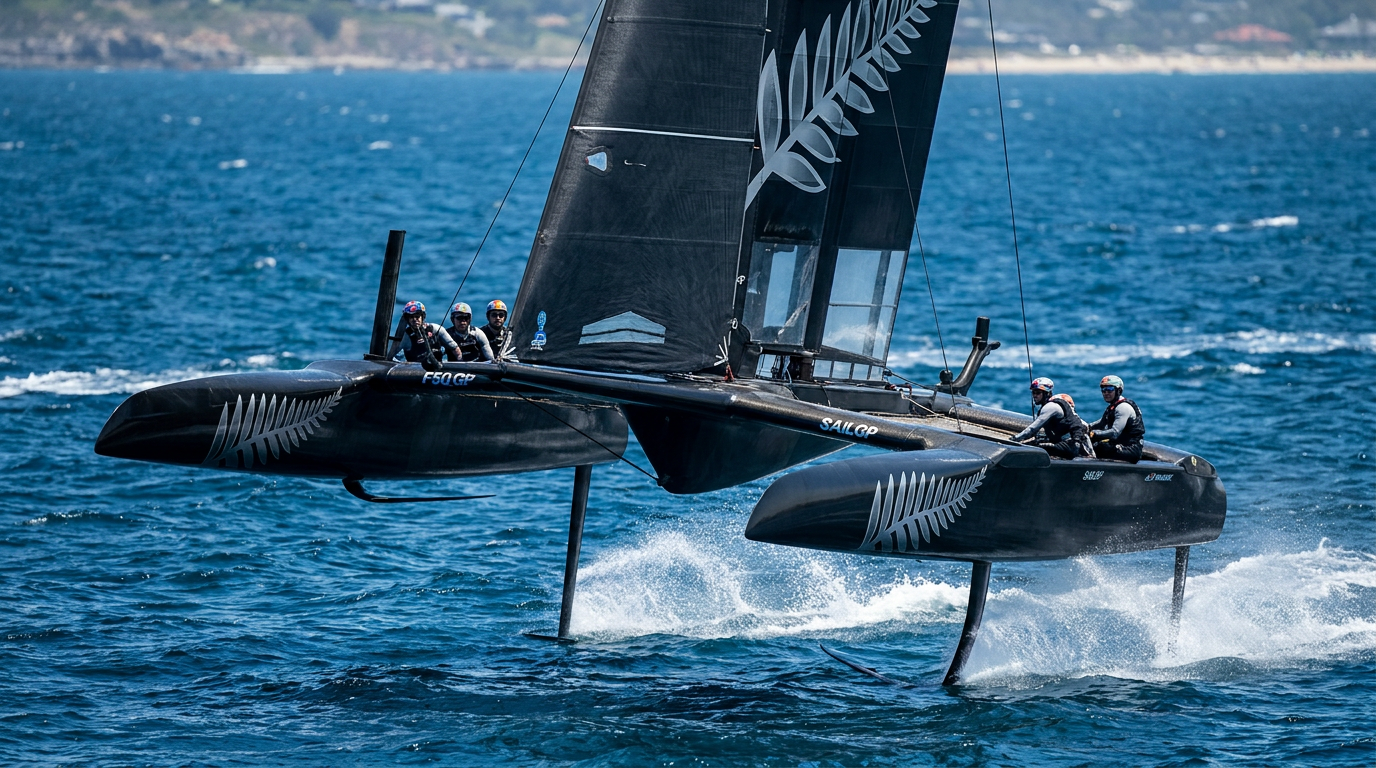
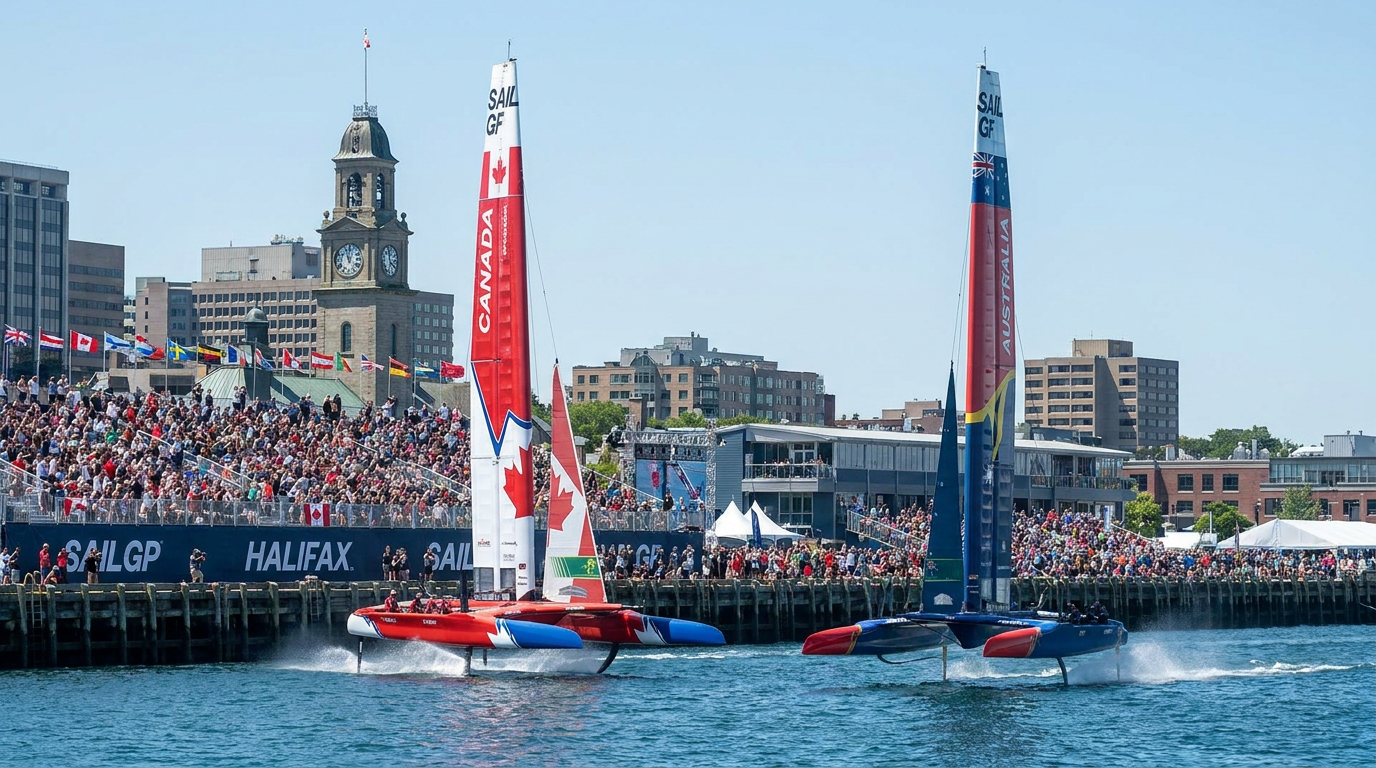
Australia Leads SailGP Standings as Massive Repair Effort and Black Foils' Return Define Halifax Grand Prix
8 sources
NWSL Transfers
Angel City FC Signs USWNT Forward Ally Sentnor in $850,000 Transfer
6 sources

Sports Marketing
The Economics and Engineering Behind Caitlin Clark's First Signature Shoe
7 sources
NWSL Transfers
Angel City's $850,000 Signing of Ally Sentnor Highlights Explosive NWSL Transfer Boom
6 sources

Every angle. Every day.
Get sports stories with full source coverage and perspective breakdowns delivered to your inbox.