
How Electric Air Taxis Are Finally Entering Commercial Service in 2026
After years of prototypes and regulatory hurdles, electric vertical take-off and landing (eVTOL) aircraft are launching their first commercial flights in 2026.
By Factlen Editorial Team
- eVTOL Manufacturers
- Argue that the technology is ready for prime time and that scaling production will solve urban congestion while reducing emissions.
- Financial Analysts
- Acknowledge the technological milestones but remain cautious about the massive cash burn rates and the long timeline to profitability.
- Aviation Regulators & Planners
- Focus entirely on safety, infrastructure integration, and the methodical certification of the new powered-lift aircraft category.
- General Aviation Press
- Highlight the competitive race between manufacturers and the broader implications for the future of transportation.
What's not represented
- · Urban residents living near proposed vertiports
- · Traditional helicopter operators
Why this matters
The launch of commercial eVTOLs marks the biggest shift in civil aviation since the helicopter, introducing an entirely new mode of urban transit. For commuters, this means the eventual ability to bypass gridlocked highways and turn hour-long drives into ten-minute, zero-emission flights.
Key points
- The eVTOL industry is shifting from the certification phase to active commercial operations in 2026.
- Joby and Archer are launching their first commercial air taxi services in the UAE this year.
- The US FAA has launched a pilot program allowing pre-certification demonstration flights across 26 states.
- Current battery technology limits flights to 100-150 miles, restricting them to urban and short-regional routes.
The hype cycle is officially over. For more than a decade, electric air taxis were relegated to glossy concept renders, venture capital pitch decks, and promises of a frictionless future. In 2026, the industry is finally crossing the threshold from experimental prototypes to active commercial service.[3]
The shift to revenue-generating operations is happening globally. Joby Aviation is slated to launch its first commercial air taxi service in Dubai in the second quarter of 2026, while its primary competitor, Archer Aviation, follows with a launch in Abu Dhabi in the third quarter. In China, manufacturer EHang has already transitioned from internal trials to ticketed sightseeing flights.[2][5][6]
In the United States, the timeline for full commercial service stretches into 2027, but the groundwork is accelerating rapidly. In March 2026, the White House and the Federal Aviation Administration (FAA) formally initiated the eVTOL Integration Pilot Program (eIPP).[1][2]
This federal initiative allows pre-certification demonstration flights across 26 states starting in the summer of 2026. The program is specifically designed to get city, state, and federal regulators comfortable with managing real, US-built electric aircraft in active airspace before final commercial approvals are granted.[1][2][5]

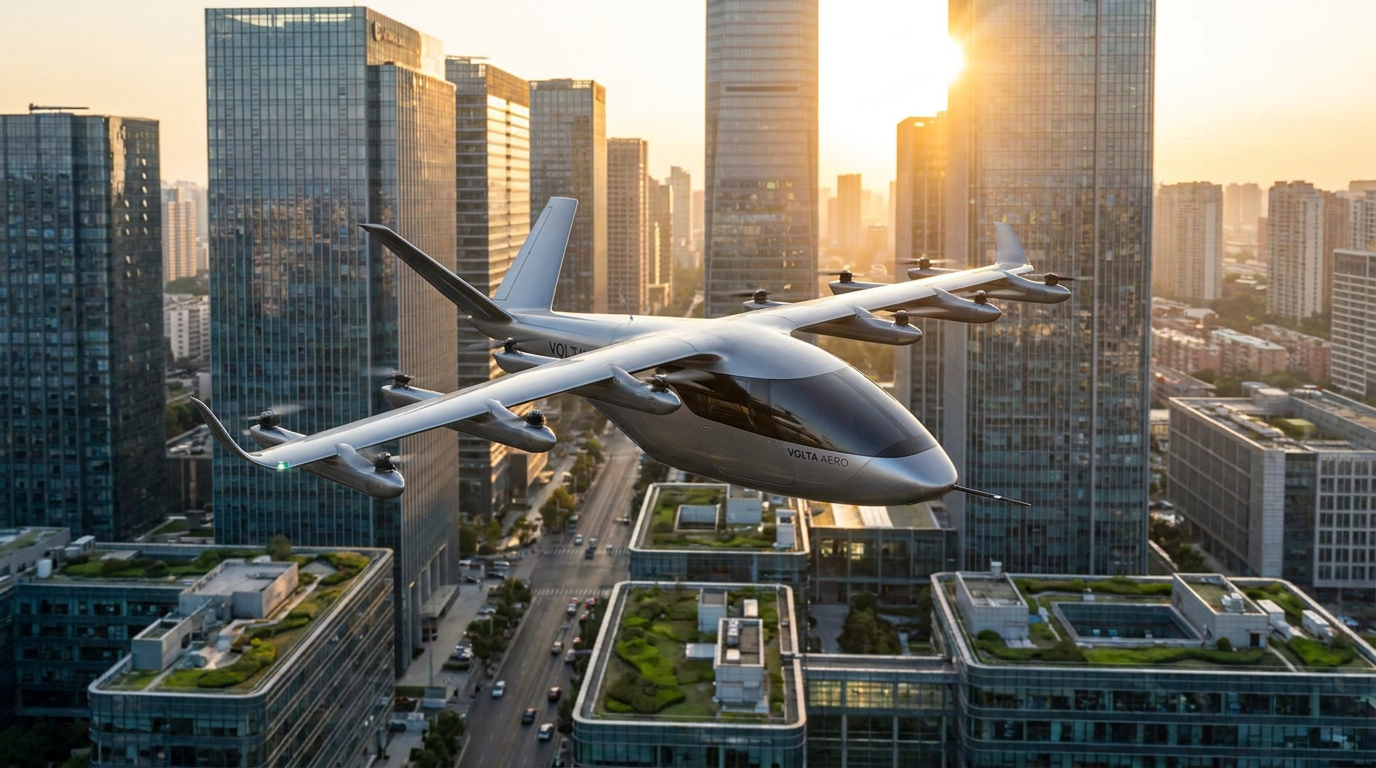
How do these machines actually work? Unlike traditional helicopters, which rely on a single massive combustion engine and a complex mechanical drivetrain, eVTOLs (electric Vertical Take-Off and Landing) utilize a concept called distributed electric propulsion.[4]
Aircraft like the Joby S4 and the Archer Midnight feature multiple smaller electric rotors—six for Joby, twelve for Archer. During takeoff, these rotors point upward, lifting the aircraft vertically off the pad much like a consumer drone.[4]
Once airborne, the mechanics shift. The thrusters tilt forward, and the aircraft transitions to horizontal flight, relying on traditional fixed wings to generate lift. This dual-mode design allows them to cut through the air like an airplane, drastically reducing energy consumption and increasing speed compared to a helicopter.[4]

The electric motors also solve one of the most stubborn hurdles for urban aviation: noise. Because they lack a combustion engine and use smaller, slower-spinning blades, eVTOLs are virtually silent from the ground when cruising, a critical factor for gaining community acceptance in densely populated cities.[4][8]
The electric motors also solve one of the most stubborn hurdles for urban aviation: noise.
However, the physics of electric flight present a severe bottleneck in the form of battery density. Current lithium-ion technology limits most eVTOL aircraft to a functional range of roughly 100 to 150 miles per charge.[3][4]
While this capacity is sufficient for short urban hops—such as flying passengers from a downtown hub to a major international airport—it falls short of the regional connectivity that would unlock the sector's full economic potential. Manufacturers are heavily investing in semi-solid-state batteries as a near-term upgrade to extend this range.[3]
The regulatory path is equally grueling. To accommodate these unique vehicles, the FAA has created a brand-new classification dubbed "powered-lift" aircraft—the first entirely new civil aircraft category introduced since helicopters in the 1940s.[3]
Both Joby and Archer are currently navigating the FAA's rigorous four-phase Type Certification process. Archer recently became the first manufacturer to close Phase 3, while Joby is advancing through Phase 4, which requires demonstrating strict compliance through formal, piloted flight testing.[1][2][4]
Physical infrastructure is the next major hurdle. Companies are partnering with real estate firms and local governments to develop "vertiports." Rather than building entirely new facilities, developers are frequently retrofitting the top levels of existing urban parking garages to serve as landing pads and high-speed charging stations.[3][8]

The user experience is designed to be entirely seamless. Through deep partnerships with ride-share giants like Uber, passengers will eventually book a multi-modal trip in a single app: a car to the vertiport, an eVTOL flight over the gridlock, and another car to their final destination.[5][8]
Despite the technological triumphs, the financial reality remains daunting for investors. Developing aerospace hardware is notoriously capital-intensive, and the leading firms are burning through hundreds of millions of dollars annually in research, development, and testing.[5]
Fortunately, the top players are heavily capitalized. Joby holds roughly $2.5 billion in cash and short-term investments, while Archer maintains $1.8 billion, backed by industrial heavyweights like Toyota, Stellantis, and United Airlines.[5][7]

The ultimate test will not be whether these aircraft can fly, but whether manufacturers can achieve the massive production scale and unit economics necessary to lower ticket prices from a luxury novelty to an everyday utility.[3]
How we got here
2009
Joby Aviation is founded, beginning early conceptual work on electric vertical flight.
2016
The concept gains mainstream traction following the publication of the Uber Elevate whitepaper.
Late 2025
EHang begins the world's first ticketed commercial eVTOL sightseeing flights in China.
March 2026
The US launches the eVTOL Integration Pilot Program (eIPP) to test aircraft in active airspace.
Q2 2026
Joby Aviation targets its first commercial air taxi operations in Dubai.
Q3 2026
Archer Aviation plans to launch its commercial service in Abu Dhabi.
Viewpoints in depth
eVTOL Manufacturers
Argue that the technology is ready and that scaling production will solve urban congestion.
Manufacturers like Joby and Archer emphasize that the engineering hurdles of electric flight have largely been solved. They point to their massive cash reserves, successful transition flights, and partnerships with legacy airlines as proof of viability. Their primary focus has shifted from proving the physics to scaling the manufacturing lines, arguing that once unit volume increases, the cost of an air taxi ride will drop to match the price of a standard Uber.
Financial Analysts
Acknowledge the technological milestones but remain highly cautious about the economics.
Wall Street analysts recognize that eVTOLs are no longer vaporware, but they remain deeply skeptical of the business models. They point out that developing aerospace hardware is inherently cash-intensive, and companies are burning through hundreds of millions of dollars annually. Analysts question how long it will take to achieve profitability once commercial flights begin, noting that battery replacement costs and infrastructure build-outs could keep margins razor-thin for years.
Aviation Regulators
Focus entirely on safety and methodical integration into existing airspace.
Agencies like the FAA and the UAE's GCAA are taking a measured approach. They emphasize that the new "powered-lift" category requires entirely new training protocols for pilots and air traffic controllers. Regulators are using pilot programs like the eIPP to ensure these aircraft can safely share the sky with traditional planes and helicopters, prioritizing public safety over the aggressive timelines pushed by Silicon Valley.
What we don't know
- Exactly when the FAA will issue final Type Certifications allowing full passenger revenue service in the US.
- How quickly manufacturers can scale production to lower ticket prices to standard ride-share levels.
- How urban communities will react to the visual and physical presence of low-flying aircraft networks.
Key terms
- eVTOL
- Electric Vertical Take-Off and Landing aircraft, which use electric power to hover, take off, and land vertically without a runway.
- Distributed Electric Propulsion
- A design using multiple small electric motors and rotors spread across the aircraft, rather than a single large engine, improving safety and reducing noise.
- Type Certification
- The rigorous regulatory approval process by the FAA confirming that a new aircraft design meets all safety and airworthiness standards.
- Vertiport
- A dedicated landing pad and charging station designed specifically for eVTOL aircraft, often built on top of existing infrastructure like parking garages.
- Powered-lift
- A new FAA aircraft classification—the first since helicopters—for vehicles that take off vertically but fly horizontally like airplanes.
Frequently asked
When will electric air taxis be available in the US?
Pre-certification demonstration flights begin in summer 2026 under the FAA's eIPP program, with full commercial passenger service expected to launch in 2027.
How far can an eVTOL fly on a single charge?
Current lithium-ion battery technology limits most eVTOLs to a range of 100 to 150 miles, making them suitable for urban hops but not long-distance travel.
Are electric air taxis as loud as helicopters?
No. Because they use distributed electric motors and smaller rotors, eVTOLs are virtually silent from the ground during cruising flight.
How much will a flight cost?
Initially, prices will be comparable to premium ride-share services like Uber Black, but manufacturers aim to lower costs to standard ride-share levels as production scales.
Sources
Source coverage
8 outlets
4 viewpoints surfaced








[1]NewsweekGeneral Aviation Press
Archer Says Its Electric Air Taxi 'Waymo Moment' Is Coming in 2026
Read on Newsweek →[2]eVTOL.travelAviation Regulators & Planners
eVTOL Timeline: From concept to commercial reality
Read on eVTOL.travel →[3]SeraphFinancial Analysts
The eVTOL market is shifting from certification to commercial operations
Read on Seraph →[4]EcoMotorsNewsGeneral Aviation Press
The 8 most advanced eVTOLs in 2026
Read on EcoMotorsNews →[5]Seeking AlphaFinancial Analysts
Joby Aviation: The Clear Frontrunner Nearing Commercial Launch
Read on Seeking Alpha →[6]Unmanned AirspaceAviation Regulators & Planners
The global launch timetable for commercial AAM services
Read on Unmanned Airspace →[7]Archer AviationeVTOL Manufacturers
Archer Announces Q1 2026 Results and Record FAA Certification Progress
Read on Archer Aviation →[8]Joby AviationeVTOL Manufacturers
Integrating eVTOLs at Commercial Airports
Read on Joby Aviation →
Every angle. Every day.
Get automotive stories with full source coverage and perspective breakdowns delivered to your inbox.