
Intermittent Fasting vs. Caloric Restriction: What the Latest Science Says About Weight Loss
Recent comprehensive clinical trials reveal that intermittent fasting and continuous caloric restriction are equally effective for weight loss, allowing individuals to choose the strategy that best fits their psychological preferences and lifestyle.
By Factlen Editorial Team
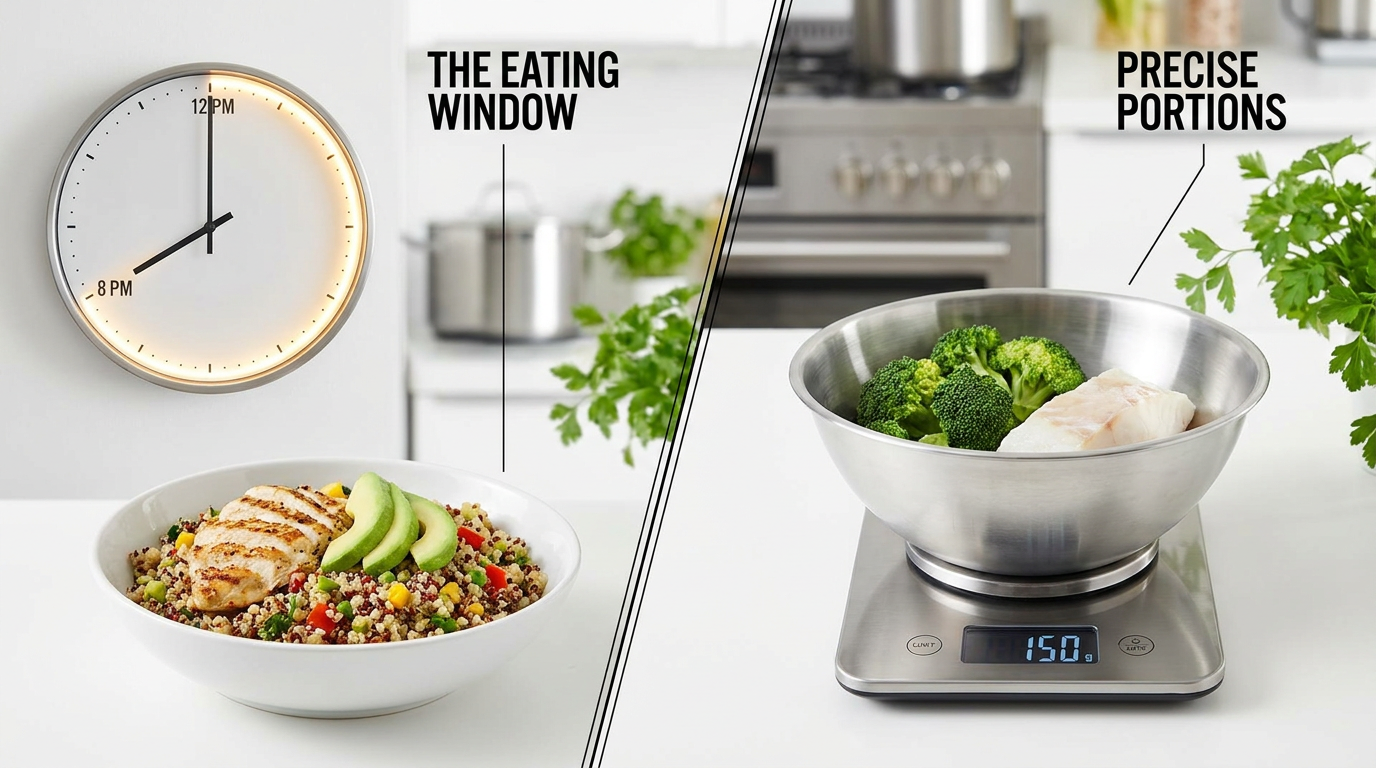
- Time-Restricted Adherents
- Advocates who prioritize the psychological relief of fasting windows over daily calorie counting.
- Clinical Consensus
- Medical professionals and researchers who emphasize that adherence to an energy deficit is the only metric that matters.
- Data-Driven Trackers
- Proponents of continuous caloric restriction who value precision, flexibility, and nutritional education.
What's not represented
- · Registered Dietitians specializing in eating disorder recovery
- · Elite endurance athletes requiring specialized fueling strategies
Why this matters
Choosing the wrong weight loss strategy often leads to burnout, frustration, and weight regain. By understanding the specific trade-offs and lifestyle conditions where intermittent fasting or continuous restriction thrives, you can select a sustainable approach that fits your daily life and ends the cycle of chronic dieting.
Key points
- Recent 2025 and 2026 clinical data confirms that intermittent fasting and continuous caloric restriction are equally effective for long-term weight loss.
- The fundamental driver of success for both methods is a sustained energy deficit, not a unique metabolic pathway.
- Intermittent fasting often boasts higher adherence rates because it eliminates the daily mental fatigue of tracking calories and weighing food.
- Continuous restriction offers superior flexibility for social events and unpredictable schedules, as it does not dictate specific meal times.
- Both dietary strategies provide similar improvements in cardiometabolic health markers, including blood pressure and cholesterol.
- The optimal choice depends entirely on an individual's psychological preferences, daily routine, and relationship with food tracking.
For decades, the fitness industry has debated the optimal strategy for weight loss, often pitting intermittent fasting against traditional daily caloric restriction. As millions of people seek sustainable ways to improve their metabolic health, the conversation has shifted from anecdotal success stories to rigorous clinical data. A wave of comprehensive research published throughout 2025 and 2026 has finally provided a clear, evidence-based comparison of these two dominant approaches. The consensus is overwhelmingly positive: both methods are highly effective, giving individuals the freedom to choose a strategy based entirely on their psychological preferences and lifestyle constraints rather than rigid physiological rules.[7]
At the core of this debate is the undisputed biological requirement for weight loss: an energy deficit. Continuous caloric restriction achieves this by requiring an individual to consume fewer calories than they burn every single day, typically tracked through food scales and digital applications. Intermittent fasting, conversely, achieves this deficit by restricting the time window in which food is consumed—either by fasting for specific hours each day or by severely restricting calories on certain days of the week. By compressing the eating window, individuals naturally consume less food without the need to meticulously log every morsel.[2][4]
The case for intermittent fasting is heavily supported by its psychological simplicity and surprisingly robust adherence rates. A landmark randomized clinical trial published in the Annals of Internal Medicine in April 2025 followed 165 adults over twelve months. The researchers found that participants utilizing a 4:3 intermittent fasting protocol—eating normally for four days and restricting calories by eighty percent on three non-consecutive days—lost an average of 7.6 percent of their body weight. In contrast, the group practicing daily caloric restriction lost 5.0 percent of their body weight over the same period.[1][5][8]

The evidence driving these results points directly to behavioral sustainability. The researchers noted that the superior weight loss in the fasting group was not due to a magical metabolic pathway, but rather because participants found it easier to adhere to the protocol. For many, the mental relief of having "off days" where they did not have to calculate portions or scan barcodes provided a necessary psychological break. This intermittent approach prevents the chronic tracking fatigue that often derails long-term weight management efforts.[1][8]
However, the argument against intermittent fasting centers on its potential to trigger disordered eating patterns and disrupt social schedules. Fasting days can lead to intense hunger, irritability, and a subsequent urge to binge eat during the feeding windows. Furthermore, skipping meals or fasting for entire days can make social gatherings, family dinners, and spontaneous events difficult to navigate. A January 2025 meta-analysis published in Nutrients also noted that while fasting provided a slight edge in short-term body fat loss—an additional 1.1 kilograms—and minor improvements in fasting insulin, these metabolic differences are often too small to be clinically significant for the average person.[3][6]
The case for continuous caloric restriction is built on its unparalleled flexibility and educational value. A massive systematic review of 99 randomized clinical trials published in The BMJ in June 2025 concluded that, overall, different intermittent fasting strategies are essentially equally as effective as traditional calorie restriction for long-term weight loss and cardiometabolic health. Because continuous restriction does not dictate when you eat, it allows individuals to enjoy meals at any time of day, making it highly adaptable to shifting work schedules, family life, and social obligations.[2][4]

The case for continuous caloric restriction is built on its unparalleled flexibility and educational value.
The evidence supporting continuous restriction highlights its role in building lifelong nutritional awareness. By tracking daily intake, individuals learn the actual caloric density of different foods, proper portion sizes, and macronutrient balancing. This educational component is crucial for long-term weight maintenance. Once the target weight is achieved, the individual already possesses the knowledge required to transition into a sustainable maintenance phase, whereas someone who only relied on a fasting clock may struggle to understand portion control when they expand their eating window.[7]
The primary argument against continuous caloric restriction is the sheer mental burden of data entry. Logging every ingredient, weighing proteins, and constantly calculating daily totals can quickly transform eating from a natural human behavior into a tedious mathematical chore. This tracking fatigue is the leading cause of dietary abandonment. When individuals miss a day of tracking or overeat slightly, the rigid nature of daily restriction can foster feelings of failure, leading to a complete abandonment of the dietary intervention.[7]
When comparing the cardiometabolic trade-offs, the data shows a virtual tie. Both approaches successfully lower blood pressure, reduce waist circumference, and improve cholesterol profiles, provided that weight is actually lost. The BMJ review emphasized that the health benefits are primarily driven by the reduction in adipose tissue rather than the specific timing of the meals. Therefore, the decision between the two strategies should be dictated entirely by an individual's behavioral tendencies and daily routine.[2][4]
Intermittent fasting fits well when an individual has a busy, structured schedule that naturally accommodates skipped meals, such as a professional who prefers to work through the morning without breakfast. It is highly effective for people who despise tracking applications, weighing food, or performing daily dietary math. Additionally, it is an excellent fit for those who prefer to consume fewer, larger meals that leave them feeling completely satiated, rather than grazing on small, meticulously measured portions throughout the day.[7]
Conversely, intermittent fasting does not fit well when an individual is a highly active endurance athlete who requires a steady stream of glycogen to fuel prolonged training sessions. It is also contraindicated for individuals with a history of eating disorders, as the restrict-and-feast cycle can trigger unhealthy psychological relationships with food. Furthermore, those who experience severe mood drops, dizziness, or debilitating hunger during fasting windows will likely find the approach unsustainable and counterproductive.[7]

Continuous caloric restriction fits well when an individual is highly data-driven and finds comfort in the predictability of tracking metrics. It is ideal for people who prefer to eat multiple small meals or snacks throughout the day to maintain steady energy levels. This approach also fits perfectly for individuals with unpredictable social calendars, as it allows them to budget their calories to accommodate a late-night dinner, a spontaneous lunch with colleagues, or a weekend celebration without breaking any fasting rules.[7]
Continuous caloric restriction does not fit well when an individual is prone to obsessive-compulsive tendencies regarding numbers or experiences significant anxiety when they cannot precisely measure a meal. It is a poor choice for those who suffer from tracking burnout or who find that the constant focus on food logging dominates their mental space. For these individuals, the daily requirement to hit a specific numerical target often becomes a barrier rather than a helpful tool.[7]
Ultimately, the 2025 and 2026 clinical data delivers an empowering message: there is no single superior diet for weight loss. The choice between intermittent fasting and continuous caloric restriction is a lifestyle decision, not a biological mandate. By understanding the specific trade-offs, evidence, and conditions where each approach thrives, individuals can confidently select the strategy that seamlessly integrates into their lives, ensuring long-term adherence, improved metabolic health, and sustainable success.[2][4][7]
How we got here
Early 2010s
Intermittent fasting surges in mainstream popularity, often promoted with claims of unique metabolic advantages over traditional dieting.
2019–2021
Initial long-term randomized trials begin to show that fasting and continuous restriction yield similar weight loss, sparking debate over adherence.
January 2025
A meta-analysis in Nutrients confirms that while fasting offers minor short-term edges in fat loss, the long-term metabolic outcomes are largely equivalent to daily restriction.
April 2025
The Annals of Internal Medicine publishes a landmark trial showing a 4:3 fasting protocol achieved superior weight loss (7.6% vs 5%) due to better patient adherence.
June 2025
The BMJ releases a massive review of 99 trials, cementing the clinical consensus that both methods are equally viable and should be chosen based on lifestyle fit.
Viewpoints in depth
Time-Restricted Adherents
Advocates who prioritize the psychological relief of fasting windows over daily calorie counting.
This camp argues that the modern food environment makes continuous calorie counting mentally exhausting and ultimately unsustainable for the average person. By simply watching the clock instead of the scale, individuals can achieve a spontaneous caloric deficit while enjoying larger, more satisfying meals during their feeding window. They often point to the superior adherence rates seen in long-term trials as proof that behavioral simplicity trumps metabolic micromanagement.
Data-Driven Trackers
Proponents of continuous caloric restriction who value precision, flexibility, and nutritional education.
For this group, weight loss is a mathematical certainty that requires precise daily data. They argue that intermittent fasting fails to teach individuals about macronutrients, portion sizes, or the caloric density of different foods—skills that are essential for lifelong weight maintenance. By tracking daily intake, they maintain the flexibility to eat at any time of day and participate in any social event, provided the daily energy budget is respected.
Clinical Consensus
Medical professionals and researchers who emphasize that adherence to an energy deficit is the only metric that matters.
The prevailing medical view, supported by massive systematic reviews in 2025 and 2026, is that neither diet possesses a magical metabolic advantage. Clinicians argue that the physiological benefits—such as lowered blood pressure and improved insulin sensitivity—are downstream effects of weight loss itself, regardless of how that loss is achieved. Their primary recommendation is for patients to select the dietary pattern that causes the least amount of psychological friction in their daily lives.
What we don't know
- Whether specific genetic profiles or microbiomes make certain individuals naturally more responsive to fasting versus continuous restriction.
- The ultra-long-term (5 to 10 years) adherence rates of time-restricted eating compared to traditional portion control.
- How different macronutrient compositions interact with fasting windows to optimize muscle retention during severe weight loss.
Key terms
- Continuous Caloric Restriction (CR)
- A dietary strategy that involves reducing daily energy intake by a specific percentage below maintenance levels, typically requiring the tracking of all food consumed.
- Intermittent Fasting (IF)
- An eating pattern that cycles between periods of fasting and eating, focusing on when to eat rather than explicitly what to eat.
- Time-Restricted Eating (TRE)
- A specific form of intermittent fasting where all daily calories are consumed within a set window of time, such as eight hours, followed by a sixteen-hour fast.
- Alternate-Day Fasting (ADF)
- A fasting protocol that involves alternating between days of normal eating and days of severe caloric restriction or complete fasting.
- Cardiometabolic Risk Factors
- A group of health indicators, including blood pressure, blood sugar, and cholesterol levels, that predict the likelihood of developing heart disease or diabetes.
- Energy Deficit
- A state in which the body expends more calories than it consumes, which is the fundamental biological requirement for weight loss.
Frequently asked
Does intermittent fasting burn more fat than calorie counting?
No. Recent massive systematic reviews show that both methods result in equivalent fat loss when the overall caloric deficit is the same. The primary driver of fat loss is the energy deficit, not the timing of the meals.
Will intermittent fasting slow down my metabolism?
There is no evidence that intermittent fasting slows down your metabolism any more than traditional caloric restriction. Both methods cause a slight metabolic adaptation as body mass decreases, which is a normal physiological response to weight loss.
Can I build muscle while doing intermittent fasting?
Yes, provided you consume adequate total daily protein and engage in resistance training. However, highly active athletes may find it easier to fuel their workouts and recover optimally by spreading their protein intake throughout the day.
Do I still need to count calories if I do intermittent fasting?
Not necessarily. Many people naturally eat less when their feeding window is restricted, creating a spontaneous caloric deficit. However, if you overeat during your feeding window, you will not lose weight, regardless of how long you fasted.
Sources
Source coverage
8 outlets
3 viewpoints surfaced








[1]Annals of Internal MedicineClinical Consensus
The effect of 4:3 intermittent fasting on weight loss at 12 months: a randomized clinical trial
Read on Annals of Internal Medicine →[2]The BMJClinical Consensus
Intermittent fasting versus continuous energy restriction for weight loss and cardiometabolic risk: a systematic review
Read on The BMJ →[3]NutrientsClinical Consensus
Is Fasting Superior to Continuous Caloric Restriction for Weight Loss and Metabolic Outcomes in Obese Adults?
Read on Nutrients →[4]HealthlineClinical Consensus
Intermittent Fasting May Be as Effective as Calorie Restriction for Weight Loss
Read on Healthline →[5]Medical News TodayTime-Restricted Adherents
Intermittent fasting vs daily calorie restriction for weight loss
Read on Medical News Today →[6]ExamineData-Driven Trackers
Is Fasting Superior to Continuous Caloric Restriction for Weight Loss and Metabolic Outcomes in Obese Adults?
Read on Examine →[7]Factlen Editorial TeamClinical Consensus
Synthesis by Factlen editorial team
Read on Factlen Editorial Team →[8]Advisory BoardTime-Restricted Adherents
Intermittent fasting vs. calorie counting: Which is more effective?
Read on Advisory Board →

Every angle. Every day.
Get fitness stories with full source coverage and perspective breakdowns delivered to your inbox.