
U.S. and Iran Sign 14-Point Memorandum of Understanding to End War and Reopen Strait of Hormuz
Following three and a half months of conflict, the U.S. and Iran have signed a preliminary agreement to terminate military operations, lift naval blockades, and stabilize global energy markets. The deal triggers a 60-day window to negotiate a permanent resolution regarding sanctions and Tehran's nuclear program.
By Factlen Editorial Team
- U.S. Administration
- Argues the deal is a historic victory that averts global economic disaster and secures vital waterways.
- Iranian Leadership
- Frames the agreement as a failure of the U.S. blockade and a validation of Iran's resistance strategy.
- Global Energy Markets
- Focuses on the immediate relief in oil prices while warning of structural damage and long-term supply uncertainty.
- Skeptics & Regional Allies
- Warns that the financial and nuclear concessions made to Tehran endanger long-term regional security.
What's not represented
- · Lebanese civilians affected by the conflict
- · Oman and littoral states managing the Strait
Why this matters
The reopening of the Strait of Hormuz immediately relieves a historic energy supply crisis that had threatened to trigger a global economic depression. However, the temporary nature of the 60-day agreement means long-term stability in the Middle East and global inflation rates remain highly uncertain.
Key points
- The U.S. and Iran signed a 14-point MoU to end a 3.5-month conflict and reopen the Strait of Hormuz.
- The agreement triggers a 60-day window to negotiate a final deal on sanctions and Iran's nuclear program.
- Global oil prices tumbled to a three-month low of $83 per barrel following the announcement.
- The U.S. will lift its naval blockade, while Iran agrees to remove military obstacles in the waterway.
- Critics warn the deal offers Iran significant financial concessions, including a potential $300 billion reconstruction fund.
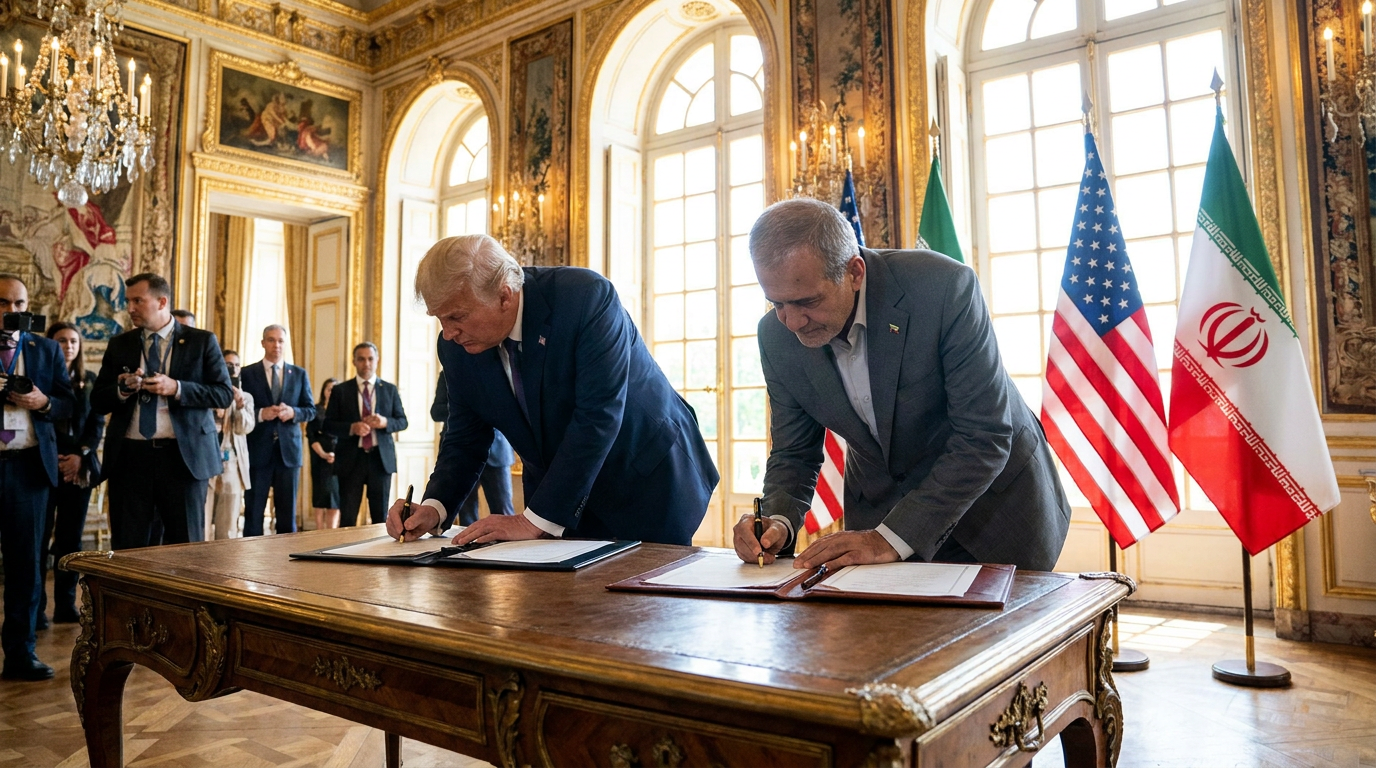
After three and a half months of a conflict that severely disrupted global energy markets, the United States and Iran have officially signed a 14-point Memorandum of Understanding (MoU) to end military operations. The preliminary agreement, mediated primarily by Pakistan, marks a sudden de-escalation in a war that began in late February 2026. U.S. President Donald Trump and Iranian President Masoud Pezeshkian authorized the electronic signing of the document, setting the stage for a formal ceremony in Switzerland. The pact mandates an "immediate and permanent termination of military operations on all fronts," bringing a halt to direct hostilities that had threatened to engulf the broader Middle East.[1][5][6]
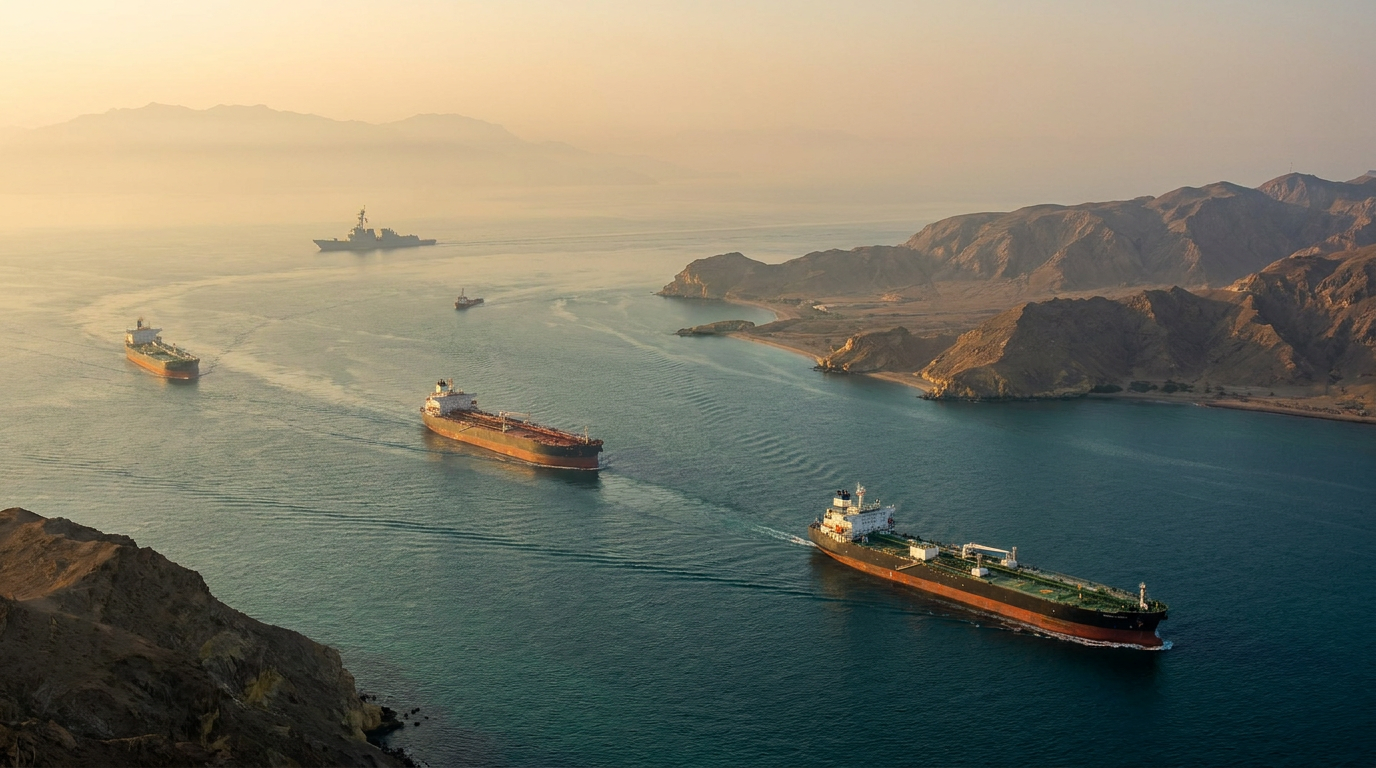
The most immediate global consequence of the agreement is the reopening of the Strait of Hormuz. For months, the crucial maritime choke point—through which nearly one-fifth of the world's oil and natural gas supply passes—has been effectively closed due to the conflict and a subsequent U.S. naval blockade. Under the terms of the MoU, the United States will immediately lift its blockade on Iranian ports, while Tehran has agreed to remove technical and military obstacles, including suspected undersea mines, to allow commercial shipping to resume.[4][6][7]
The economic relief was instantaneous. Global oil prices, which had surged by more than 50 percent during the height of the war, tumbled to a three-month low following the announcement. Brent crude dropped to approximately $83 per barrel, while wholesale gas prices in Europe fell by 6 percent. Stock markets on Wall Street rallied to record highs, driven by investor optimism that the resumption of Gulf oil exports would avert a catastrophic energy supply crisis and ease persistent inflationary pressures.[8]

However, energy analysts caution that the market's structural damage cannot be undone overnight. According to industry data, more than 14 million barrels per day of supply had been shut in since February, with cumulative losses from Gulf producers exceeding one billion barrels. While the MoU provides a framework for resuming traffic, the physical restoration of damaged regional ports and production facilities will take time. Furthermore, shipping carriers are expected to remain cautious, gradually returning to the Strait of Hormuz only as security guarantees are tested in practice.[8]
The mechanics of the 14-point draft deal rely heavily on a 60-day transitional window. Upon the formal signing of the document, a countdown begins during which both nations must negotiate a final, binding agreement regarding international sanctions and Iran's nuclear program. During this two-month period, Iran has committed to providing safe, toll-free passage for international vessels through the Strait of Hormuz. If both sides mutually agree, this negotiating window can be extended, but the short timeframe places immense pressure on diplomats to resolve decades of deeply entrenched geopolitical disputes.[6]
The mechanics of the 14-point draft deal rely heavily on a 60-day transitional window.
The U.S. administration has aggressively framed the MoU as a historic victory that saved the global economy. President Trump declared that the deal prevents a "worldwide depression" and secures the waterways without requiring a prolonged U.S. military occupation. Administration officials emphasized that the agreement includes provisions for Iran to restrain its foreign allies, including Hezbollah in Lebanon, and reaffirms Tehran's commitment not to procure or develop nuclear weapons. By leveraging the economic pain of the blockade, the White House argues it forced Iran to the negotiating table on favorable terms.[4][5]
Yet, the agreement includes significant financial and political concessions that have drawn intense scrutiny. Leaked details of the draft indicate that the U.S. will issue waivers for Iranian crude oil to be shipped abroad and will unfreeze billions of dollars in Iranian assets. Most controversially, the accord outlines plans to develop a $300 billion reconstruction fund for Iran, financed by regional partners in the Gulf, contingent on a final agreement. President Trump also publicly suggested that Iran retains basic rights to enrich uranium for civilian use and indicated he would not pressure Tehran to abandon its ballistic missile program.[4]

In Tehran, the narrative is starkly different. Iranian leadership has characterized the MoU not as a compromise, but as a capitulation by the United States. Mohammad Bagher Ghalibaf, Iran's chief negotiator, publicly called the agreement a "record of U.S. failure," asserting that the Islamic Republic successfully used economic chaos as a weapon to break the American blockade. Iranian officials have emphasized that they will begin fulfilling their commitments only after the formal signing, framing the deal as a testament to their national resilience in the face of overwhelming military odds.[4][7]
A major point of future contention involves the administration of the Strait of Hormuz after the 60-day window expires. While the U.S. draft secures toll-free passage in the short term, Iranian officials have explicitly stated that the waterway will not return to pre-war conditions. Ghalibaf asserted Iran's right to sovereignty over the strait, declaring that Tehran intends to charge international shipping fees for its services once the initial period concludes. The text of the MoU notes that Iran will discuss the future administration of the strait with Oman and other littoral states, leaving the long-term cost of transit highly ambiguous.[6][7]
The concessions made to secure the reopening of the strait have provoked fierce backlash from U.S. allies and domestic political critics. In Israel, Prime Minister Benjamin Netanyahu reportedly informed the Trump administration that Israel does not consider itself bound by the Lebanon-related provisions of the deal and will not withdraw its troops. Meanwhile, Republican hardliners in Washington have expressed alarm over the unfreezing of assets and the implicit tolerance of Iran's civilian nuclear enrichment, arguing that the administration traded long-term security for short-term economic relief.[2][3][5]

The successful brokering of the MoU highlights a shifting landscape of Middle Eastern diplomacy. Pakistani Prime Minister Shehbaz Sharif served as the primary public mediator, coordinating a complex web of back-channel discussions that included vital contributions from Saudi Arabia, Turkey, and Qatar. Qatari diplomats reportedly spent 17 hours in intensive negotiations in Tehran to finalize the text before the electronic signing. This reliance on regional powers underscores a growing trend of Middle Eastern and South Asian states taking the lead in managing conflicts that directly threaten their economic stability.[5][6]
Ultimately, the Memorandum of Understanding is a ceasefire masquerading as a peace treaty. The hardest phase of the diplomatic process—transitioning from a temporary halt in hostilities to a permanent, verifiable treaty—lies entirely in the future. If the 60-day negotiations collapse over nuclear provisions or the enforcement of Hezbollah's restraint, the naval blockades and military strikes could rapidly resume. For now, the world's energy markets have received a vital lifeline, but the underlying geopolitical architecture of the Middle East remains as fragile and contested as ever.[2][6][8]
How we got here
Feb 28, 2026
The U.S. and Israel launch military strikes on Iran, sparking a broader conflict.
March 2026
The Strait of Hormuz is effectively closed, causing global oil prices to surge by more than 50 percent.
June 14, 2026
The U.S. and Iran reach a preliminary agreement mediated by Pakistani Prime Minister Shehbaz Sharif.
June 17, 2026
The 14-point Memorandum of Understanding text is released and signed electronically by both nations' presidents.
June 19, 2026
A formal signing ceremony is scheduled to take place in Switzerland, triggering a 60-day negotiation window.
Viewpoints in depth
U.S. Administration's view
The deal is a historic victory that averts global economic disaster and secures vital waterways.
President Trump and his allies argue that the severe economic pressure of the U.S. naval blockade successfully forced Iran to the negotiating table on American terms. By securing an immediate reopening of the Strait of Hormuz without committing to a prolonged military occupation, the administration claims it has saved the global economy from a devastating depression. Officials emphasize that the 60-day window provides ample leverage to ensure Iran restrains its proxy forces and abandons any ambitions for a nuclear weapon.
Iranian Leadership's view
The agreement proves the failure of the U.S. blockade and validates Iran's resistance strategy.
Iranian officials, led by President Masoud Pezeshkian and chief negotiator Mohammad Bagher Ghalibaf, frame the MoU as a capitulation by Washington in the face of global economic panic. They argue that Iran successfully weaponized the closure of the Strait of Hormuz to extract massive financial concessions, including the unfreezing of assets and a potential $300 billion reconstruction fund. Furthermore, Tehran insists that it retains ultimate sovereignty over the strait and plans to implement transit fees once the initial 60-day toll-free period expires.
Global Energy Markets
The immediate supply crisis is averted, but structural damage and long-term uncertainty remain.
Market analysts and commodity traders breathed a collective sigh of relief as Brent crude prices tumbled to a three-month low of $83 per barrel. However, industry experts warn that the physical infrastructure of Gulf oil exports has sustained significant damage during the 3.5-month conflict. With over a billion barrels of cumulative supply losses, the market remains in a fragile deficit. Analysts caution that any breakdown in the upcoming 60-day negotiations could instantly reverse the recent price drops and reignite inflationary pressures worldwide.
Skeptics & Regional Allies
The concessions made to Tehran endanger long-term regional security for short-term economic relief.
Critics in Washington and allied capitals argue that the U.S. administration traded away its most potent leverage for a temporary ceasefire. Republican hardliners are particularly alarmed by provisions that allow Iran to retain civilian nuclear enrichment capabilities and unfreeze billions in assets. In the Middle East, Israeli leadership has signaled deep dissatisfaction with the lack of strict enforcement mechanisms regarding Hezbollah, with Prime Minister Benjamin Netanyahu reportedly refusing to abide by the Lebanon-related clauses of the agreement.
What we don't know
- Whether Israel will comply with the Lebanon-related provisions of the agreement.
- If Iran will actually implement transit fees for international shipping through the Strait of Hormuz after the 60-day window.
- Whether the two nations can successfully negotiate a permanent, binding treaty regarding Iran's nuclear program before the deadline expires.
Key terms
- Memorandum of Understanding (MoU)
- A formal agreement between two or more parties that establishes a framework for future negotiations, though it is not always legally binding.
- Strait of Hormuz
- A crucial maritime choke point between the Persian Gulf and the Gulf of Oman, through which nearly one-fifth of the world's oil supply passes.
- Down-blending
- The process of reducing the concentration of fissile isotopes in enriched uranium, making it suitable for civilian energy rather than nuclear weapons.
Frequently asked
Is the war between the U.S. and Iran completely over?
The MoU declares an immediate termination of military operations, but it is only a preliminary step. A final, binding peace treaty must be negotiated over the next 60 days.
Will global oil and gas prices go back to normal?
Brent crude dropped to around $83 a barrel following the news, but analysts warn that structural damage to supply chains means prices may not return to pre-war levels for months.
Who mediated the peace agreement?
Pakistani Prime Minister Shehbaz Sharif served as the primary mediator, with vital diplomatic assistance from Saudi Arabia, Turkey, and Qatar.
Sources
Source coverage
8 outlets
4 viewpoints surfaced








[1]Al JazeeraIranian Leadership
US and Iran sign Memorandum of Understanding to end war
Read on Al Jazeera →[2]AxiosSkeptics & Regional Allies
Trump settles for Iran deal that falls short of his promises
Read on Axios →[3]The New York TimesSkeptics & Regional Allies
Before Making a Deal, Trump Demanded Iran’s Surrender. He Got a Surprise.
Read on The New York Times →[4]The GuardianU.S. Administration
Details of 14-point agreement revealed as senior US officials claim 'major win'
Read on The Guardian →[5]CBS NewsU.S. Administration
Trump says U.S. deal with Iran 'is now complete,' authorizes removal of Navy blockade
Read on CBS News →[6]Council on Foreign RelationsSkeptics & Regional Allies
What to Know About the U.S.-Iran Memorandum of Understanding
Read on Council on Foreign Relations →[7]The Times of IsraelIranian Leadership
US-Iran deal has entered into force 'with immediate effect,' Hormuz to 'instantly' reopen
Read on The Times of Israel →[8]ICISGlobal Energy Markets
UPDATE: Oil prices slump, Asia chemical shares rally on US-Iran deal
Read on ICIS →

Every angle. Every day.
Get news politics stories with full source coverage and perspective breakdowns delivered to your inbox.