
The End of Calendar Tetris: Why the Most Productive Remote Teams Are Going Asynchronous
As meeting fatigue reaches crisis levels, leading remote organizations are abandoning real-time coordination in favor of 'asynchronous' work. By prioritizing written documentation over video calls, companies are recovering lost hours, boosting productivity, and giving employees true flexibility.
By Factlen Editorial Team
- Async-First Pioneers
- Argue that documentation and written communication scale infinitely better than verbal meetings, pointing to massive reductions in wasted time and global inclusivity.
- Neurodivergent & Introverted Workers
- Highlight how asynchronous environments remove the anxiety of immediate responses and allow for thoughtful, structured contributions.
- Traditional Managers
- Express concern over the loss of spontaneous collaboration, 'water cooler' moments, and the difficulty of building team culture without real-time interaction.
What's not represented
- · Client-facing sales professionals
- · Junior employees seeking real-time mentorship
Why this matters
The shift from synchronous to asynchronous work is the biggest evolution in remote work since the pandemic. For employees drowning in back-to-back calls, it offers a proven blueprint for eliminating burnout, reclaiming deep focus time, and achieving genuine work-life balance.
Key points
- Meeting volume has surged 252% since 2020, leading to widespread cognitive exhaustion.
- Asynchronous work replaces real-time meetings with written documentation and recorded updates.
- This model allows employees to reclaim their calendars for uninterrupted 'deep work'.
- Async environments are highly inclusive, benefiting neurodivergent workers and erasing time-zone barriers.
- Transitioning requires managers to measure actual output rather than digital presence.
The modern calendar has become a battlefield. For millions of remote and hybrid professionals, what was once a tool for scheduling has transformed into an ever-shrinking canvas where actual work fights for survival against an endless tide of meeting invites.[1]
The numbers behind this calendar gridlock are staggering. Since the widespread shift to remote work in 2020, overall meeting volume has surged by 252%. Today, the average remote worker attends nearly 26 meetings per week, which is roughly 80% more than their in-office counterparts.[5][6]
This hyper-connected reality has spawned a well-documented crisis of cognitive exhaustion. Nearly half of remote professionals report experiencing significant video call fatigue on a weekly basis. Furthermore, academic research indicates that it takes the average human brain 23 minutes to fully refocus after an interruption, meaning that a day punctuated by constant check-ins leaves almost zero time for deep, uninterrupted thought.[2][4]

In response to this burnout epidemic, a growing cohort of forward-thinking organizations is abandoning the real-time coordination model entirely. They are embracing "asynchronous work"—a paradigm where team members collaborate without the expectation of immediate responses or simultaneous presence.[1]
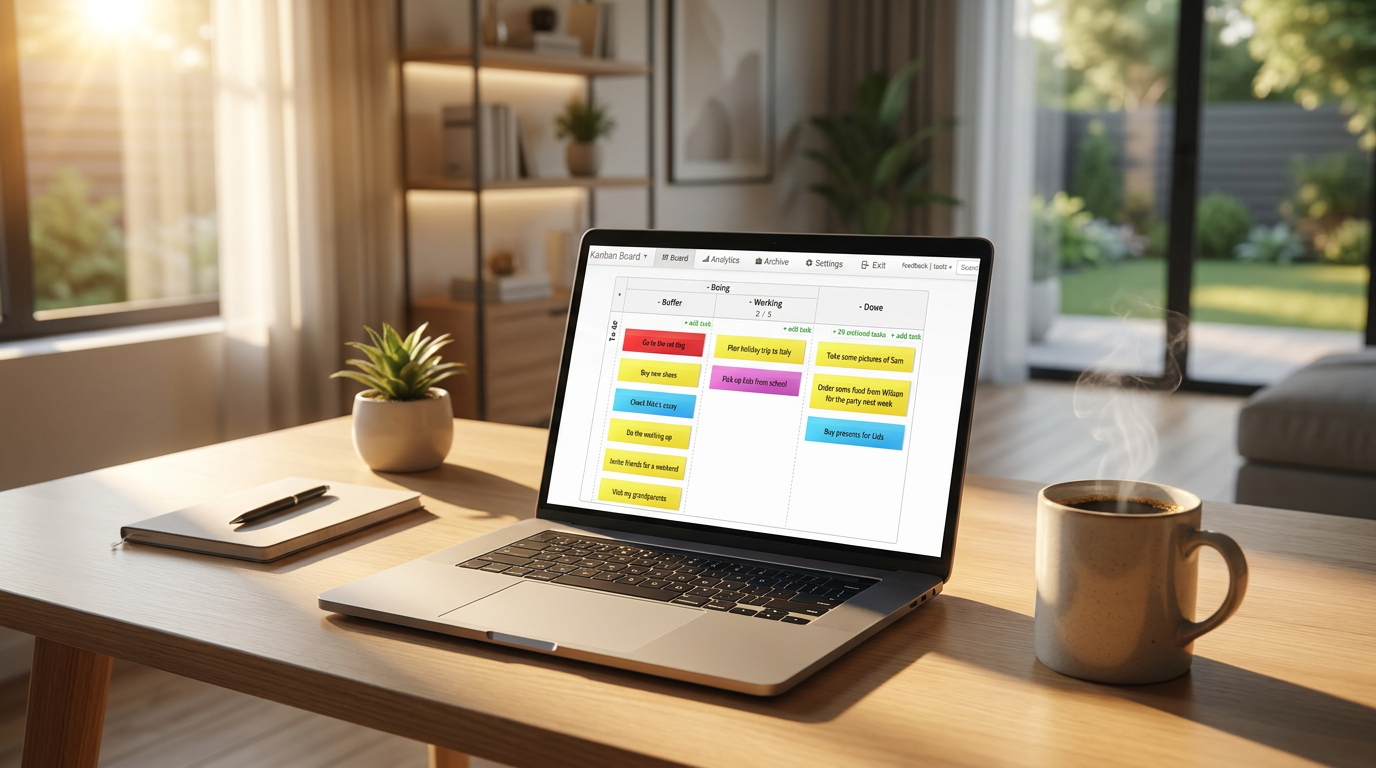
Asynchronous communication is not merely a new set of software tools; it is a fundamental rewiring of corporate culture. In an async-first environment, the default method of collaboration shifts from verbal meetings to written documentation, recorded video walkthroughs, and structured project management boards.[3]
The core philosophy is simple: clarity replaces urgency. Instead of asking who is online right now to answer a question, the system demands that project leaders ask whether the next step is documented clearly enough for anyone to pick it up whenever they log on.[1]
Pioneers of this model, such as the fully remote software company GitLab, have built comprehensive public playbooks detailing their operations. By prioritizing documentation over conversation, these organizations report massive efficiency gains, including a 37% reduction in necessary meeting hours.[3]
This shift unlocks the holy grail of knowledge work: uninterrupted focus. When employees are freed from the obligation to monitor chat channels and attend status updates, they can engage in deep work. Internal research from major tech firms shows that when employees are granted meeting-free calendar blocks, perceived productivity jumps by 15%.[6]

Beyond raw productivity, asynchronous work is proving to be a powerful engine for workplace inclusivity. For neurodivergent employees, introverts, or those who simply process information differently, the pressure to formulate brilliant ideas on the spot during a live video call can be paralyzing.[1]
Beyond raw productivity, asynchronous work is proving to be a powerful engine for workplace inclusivity.
Async environments level the playing field. By moving discussions to shared documents or threaded forums, team members are granted the time to digest complex information, research their positions, and contribute thoughtful, well-reasoned responses on their own schedules.[1]
It also fundamentally solves the geographic limitations of the modern workforce. As companies increasingly hire across borders, attempting to shoehorn a global team into a single time zone's working hours creates inevitable friction.[3]
In a synchronous culture, someone is always forced to take a call late at night or wake up before dawn. Asynchronous workflows erase these borders, allowing a developer in Tokyo to seamlessly hand off a project to a designer in London without either party sacrificing their sleep schedule.[3]
Transitioning to this model requires a profound shift in managerial mindset. For decades, corporate management has relied on physical or digital presence as a proxy for productivity—if an employee is visible at their desk or active on a video call, they must be working.[1]
Asynchronous work forces leaders to abandon presence-based tracking and instead measure actual output. Trust becomes the foundational currency of the organization. Managers must define clear goals, establish expected response times, and then step back to let their teams execute.[1]
Interestingly, the data suggests that hybrid meetings—where some participants are in a conference room and others join via video—are often the least effective collaboration method of all. They frequently suffer from technical failures and leave remote participants feeling excluded from the physical room's side conversations.[1]
By defaulting to asynchronous updates, companies bypass the awkwardness of hybrid meetings entirely. When a meeting is genuinely necessary—such as for complex brainstorming, sensitive personnel issues, or team bonding—it is treated as a rare, high-value event rather than a default reflex.[1]

To make this work, teams are adopting new toolkits. Instead of scheduling a 30-minute sync to explain a new software feature, a product manager might record a five-minute screen-share video, allowing colleagues to watch it at an accelerated speed whenever their schedule permits.[1]
As federal labor statistics note that nearly 23% of the U.S. workforce continues to work remotely at least part of the time, the demand for sustainable work practices has never been higher.[7]
The organizations that thrive in this new era will not be the ones that successfully replicate the physical office on a computer screen. They will be the ones that recognize the unique advantages of the digital medium.[1]
By embracing asynchronous work, companies are offering their employees something far more valuable than a ping-pong table or a free lunch: the autonomy to design their own days, protect their attention, and finally conquer the calendar tetris.[1]

How we got here
Early 2020
The global pandemic forces a massive shift to remote work, heavily reliant on synchronous video calls.
2022
Academic studies begin documenting the severe cognitive toll of 'Zoom fatigue' and constant context switching.
2024
Major tech companies begin experimenting with mandatory 'no-meeting days' to combat employee burnout.
2026
Asynchronous work emerges as the gold standard for distributed teams, shifting focus from presence to documented output.
Viewpoints in depth
Async-First Pioneers
Advocates who believe documentation and written communication scale infinitely better than verbal meetings.
Organizations that have fully embraced this model argue that synchronous meetings are an artifact of the physical office that fails to translate to the digital world. By forcing all communication into searchable, written documentation or recorded videos, they create an institutional memory that outlasts any single employee. They point to massive reductions in wasted time and emphasize that async work is the only truly equitable way to manage a global workforce spread across multiple time zones.
Traditional Managers
Leaders concerned about the loss of spontaneous collaboration and team cohesion.
Many traditional managers and human resources professionals caution against abandoning real-time interaction entirely. They argue that while asynchronous work is excellent for executing defined tasks, it struggles to replicate the spontaneous 'water cooler' moments that often lead to creative breakthroughs. Furthermore, they express concern that a purely text-based culture can feel isolating, making it difficult to build psychological safety, onboard junior employees, and foster a cohesive team identity.
Neurodivergent & Introverted Workers
Employees who find asynchronous environments liberating and more conducive to their working styles.
For many workers, the shift away from real-time meetings is a profound relief. Neurodivergent individuals and introverts often report that the pressure to process information and formulate immediate responses during a live video call causes significant anxiety. Asynchronous workflows allow these employees to digest complex information at their own pace, research their positions thoroughly, and contribute highly structured, thoughtful insights without the stress of performing on the spot.
What we don't know
- How effectively asynchronous models can be adapted for highly collaborative, creative industries like film production or live event planning.
- The long-term impact of reduced face-to-face interaction on the career progression and mentorship of entry-level employees.
Key terms
- Asynchronous work
- Collaboration that does not require participants to be online or communicating at the exact same time.
- Synchronous work
- Real-time collaboration where participants must be present simultaneously, such as video calls or live meetings.
- Context switching
- The cognitive process of shifting attention from one task to another, which significantly drains mental energy and reduces efficiency.
- Deep work
- Extended periods of uninterrupted cognitive focus required to complete complex, high-value tasks.
- Service-Level Agreement (SLA)
- In an internal communication context, a predefined expectation for how quickly a team member should respond to a message or request.
Frequently asked
What is the difference between remote work and asynchronous work?
Remote work simply means working from a location outside the traditional office. Asynchronous work is a specific collaboration style where team members do not need to be online or communicating at the exact same time to get work done.
Does asynchronous work mean a company has no meetings at all?
No. Most async-first companies still hold meetings, but they reserve them for complex problem-solving, sensitive personnel discussions, or team bonding, rather than routine status updates.
How do asynchronous teams handle urgent emergencies?
Async teams establish clear communication protocols. While daily work happens in shared documents and project boards, they maintain a dedicated 'synchronous' channel (like a specific chat group or phone tree) strictly reserved for true, time-sensitive emergencies.
Is this model only effective for software developers?
While pioneered by tech companies, asynchronous principles are increasingly being adopted by marketing agencies, legal teams, design firms, and any organization that relies heavily on knowledge work and deep focus.
Sources
Source coverage
7 outlets
3 viewpoints surfaced






[1]Factlen Editorial TeamAsync-First Pioneers
Synthesis by Factlen editorial team
Read on Factlen Editorial Team →[2]University of California, IrvineNeurodivergent & Introverted Workers
The Cost of Interrupted Work: More Speed and Stress
Read on University of California, Irvine →[3]GitLabAsync-First Pioneers
GitLab's Guide to Asynchronous Communication
Read on GitLab →[4]Stanford Virtual Human Interaction LabNeurodivergent & Introverted Workers
Nonverbal Overload: A Theoretical Argument for the Causes of Zoom Fatigue
Read on Stanford Virtual Human Interaction Lab →[5]Owl Labs
State of Remote Work 2025
Read on Owl Labs →[6]Microsoft WorkLabTraditional Managers
Work Trend Index: Meeting Overload and the Future of Work
Read on Microsoft WorkLab →[7]Bureau of Labor Statistics
Telework and Remote Work Statistics 2025
Read on Bureau of Labor Statistics →

Every angle. Every day.
Get careers work stories with full source coverage and perspective breakdowns delivered to your inbox.