
The Longevity Revolution in Elite Gymnastics: How Science and NIL are Extending Careers
Advances in biomechanics and the financial empowerment of collegiate NIL deals have transformed elite gymnastics, allowing athletes to compete safely and profitably into their late twenties while securing lifelong health benefits.
By Factlen Editorial Team
- Sports Scientists & Biomechanists
- Advocates for data-driven load management and individualized training to extend athletic careers.
- Collegiate Athletes & Advocates
- Focuses on the financial and educational empowerment provided by the NIL era.
- Traditional Elite Coaches
- Navigating the transition from teenage prodigies to mature, professional athletes.
What's not represented
- · Recreational gymnasts who do not have access to elite biomechanical tracking
Why this matters
The transformation of gymnastics from a sport of disposable teenagers to one of enduring professionals proves that combining modern sports science with fair economic models can fundamentally extend human peak performance and long-term health.
Key points
- The average age of elite female gymnasts has risen significantly, with athletes routinely competing into their mid-twenties.
- NCAA NIL rules allow gymnasts to earn substantial income, removing the financial pressure to retire early.
- Advanced biomechanics and individualized training loads have drastically reduced career-ending overuse injuries.
- A 2024 study revealed that elite gymnastics adds an average of 8.2 years to an athlete's lifespan.
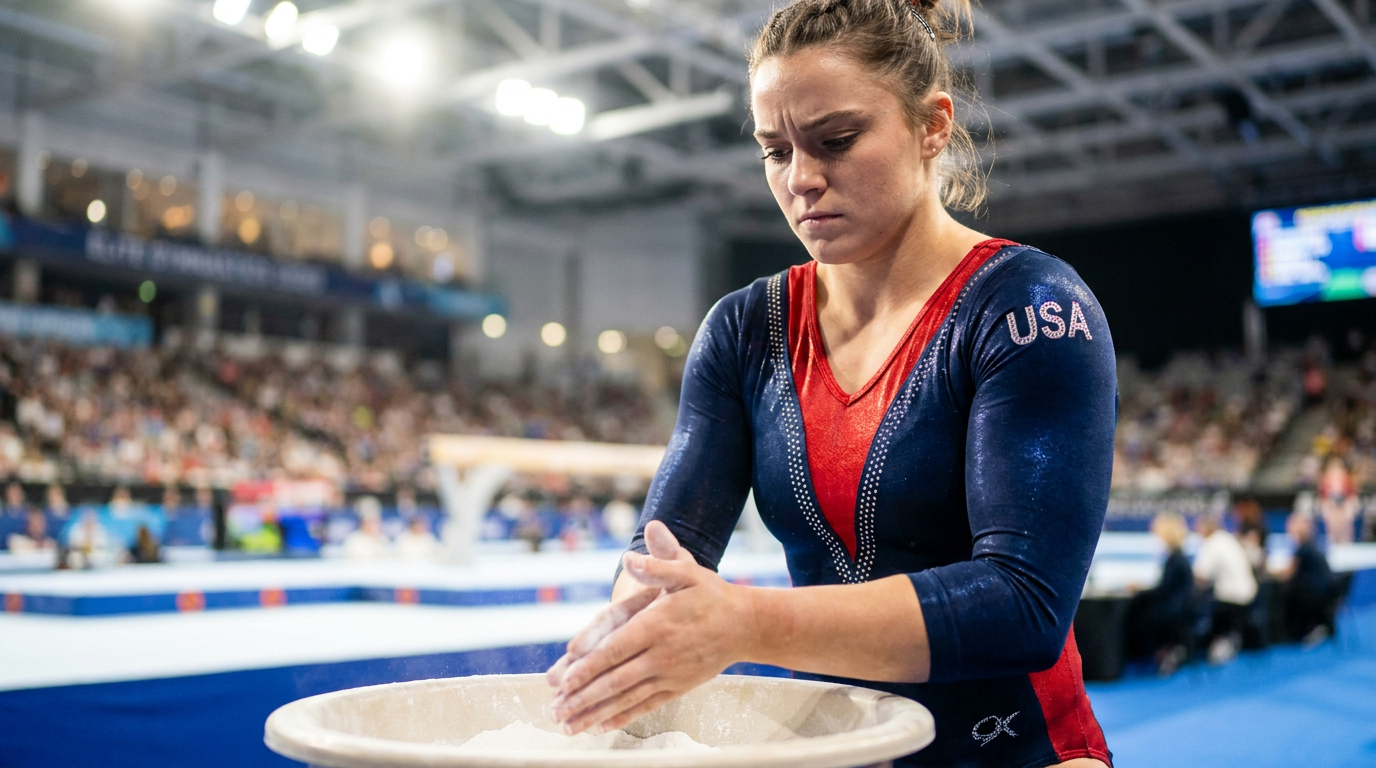
For decades, the visual archetype of an elite female gymnast was a teenage prodigy, peaking before high school graduation and retiring shortly after. But at the most recent Olympic Games, the narrative shifted dramatically on the global stage. The United States women's team was anchored by athletes in their mid-twenties, including a 27-year-old who became the oldest all-around champion since 1952. This demographic shift is not a temporary anomaly; it represents a fundamental transformation in how the sport is practiced, managed, and monetized at the highest levels.[1]
The contrast with the 1970s and 1980s is stark. During the eras of Olga Korbut and Nadia Comaneci, it was widely believed that female gymnasts peaked in their early teens, and that physical maturation would inevitably hinder their complex routines. As recently as 2016, a 22-year-old Aly Raisman was affectionately dubbed 'grandma' by her younger teammates because her longevity was considered so unusual. Today, that 'grandma' label is entirely obsolete, as the average age of the world's best competitors continues to climb.[1]
This longevity revolution is not an accident of genetics or a sudden change in human biology. It is a deliberate, structural evolution driven by two massive, intersecting forces: the new economics of collegiate sports and the rapid advancement of sports biomechanics. Together, these factors have dismantled the old, punishing model of elite gymnastics. They have replaced a system that routinely burned out young athletes with a sustainable framework that actively supports and preserves mature professionals for a decade or more of high-level competition.[6]
The economic engine driving this change is the NCAA's adoption of Name, Image, and Likeness (NIL) rules in 2021. Before this policy shift, elite gymnasts faced a brutal binary choice. They could either turn professional to monetize their Olympic fame—thereby forfeiting their collegiate eligibility—or they could maintain their amateur status to compete in the NCAA, delaying any financial reward for their lifelong dedication to the sport. This forced many athletes to abandon the sport entirely once they needed to earn a living.[2]

The NIL rule change completely transformed the sport's timeline and incentive structure. Elite gymnasts can now compete on national television for their university programs while simultaneously earning substantial income through brand partnerships, sponsorships, and social media monetization. They no longer have to choose between an education, the camaraderie of NCAA competition, and financial security. By allowing athletes to cash in on their peak visibility while staying in school, the system naturally encourages them to remain in the sport much longer.[2][3]
The financial numbers backing this shift are staggering, proving the immense commercial viability of the sport. Female gymnasts have consistently commanded some of the highest average NIL deal values among all NCAA athletes, significantly outperforming many traditional collegiate sports like basketball and softball. With massive television audiences tuning into collegiate meets and millions of followers on platforms like TikTok and Instagram, top-tier gymnasts have become highly sought-after marketing partners for global brands ranging from athletic apparel to cosmetics and financial services.[3]
Athletes at the top of the sport have successfully built seven-figure portfolios, partnering with major corporations while remaining firmly embedded in the collegiate athletic system. This newfound financial security removes the immense pressure to retire early in order to start a traditional post-athletic career. When athletes are fairly compensated for their labor and market value, the urgency to leave the gym diminishes entirely. This economic freedom allows them to focus on refining their skills, pacing their training, and extending their competitive windows well into their mid-to-late twenties.[2][3]

This newfound financial security removes the immense pressure to retire early in order to start a traditional post-athletic career.
However, favorable economics only matter if the athlete's body can withstand the immense physical demands of the sport. Gymnastics is notoriously punishing, subjecting the human frame to extreme gravitational forces and torque. A comprehensive 2025 systematic review of biomechanical risk factors found that over 91 percent of competitive gymnasts experience at least one injury per season. The sheer volume of high-impact landings, combined with the repetitive stress of daily training, has historically been the primary reason careers were cut abruptly short before athletes reached their physical prime.[5]
To combat this high attrition rate, the sport has fully embraced advanced biomechanics and modern sports science. Elite coaches and medical staff now routinely utilize sophisticated motion capture systems, force plates, and electromyography to analyze a gymnast's movement patterns in real-time. By quantifying the exact stresses placed on joints during complex takeoffs and high-velocity landings, sports scientists can identify physical vulnerabilities and mechanical flaws long before they manifest as debilitating chronic overuse injuries or acute traumas. This proactive approach marks a massive departure from the reactive medical treatments of the past.[5]
The old methodology of endless, grinding repetition has been replaced by calculated, data-driven precision. In the past, gymnasts would perform a complex skill dozens of times a day to build muscle memory, regardless of the cumulative toll it took on their cartilage and ligaments. Today, by tracking joint kinematics and conducting detailed force analyses, training programs are highly individualized. Coaches monitor daily training loads meticulously, ensuring that athletes achieve maximum technical proficiency with the minimum necessary physical impact, preserving their bodies for competition.[5]

Proper landing techniques and targeted plyometric conditioning are now heavily emphasized to safely absorb and distribute the massive impact forces transmitted through the musculoskeletal system. Rather than simply pushing through pain, modern gymnasts incorporate specific neuromuscular control exercises, joint stabilization routines, and tailored recovery protocols into their daily schedules. This scientific approach to pacing and load management is the biological key that allows athletes to maintain peak physical condition, avoid catastrophic injury, and execute world-class routines well into their late twenties.[5]
The benefits of this extended time in the sport appear to last a lifetime, extending far beyond the podium and the television cameras. While the immediate focus of athletes and coaches is naturally on Olympic cycles and NCAA championships, the long-term physiological dividends of sustained gymnastics training are profound. By keeping athletes engaged in comprehensive physical conditioning for an extra decade, the sport is inadvertently creating a powerful blueprint for exceptional long-term health, mobility, and healthy aging. The data supporting this is becoming impossible to ignore.[6]
A landmark 2024 study published in the journal GeroScience analyzed the lifespans of tens of thousands of elite athletes across 44 different sports disciplines, spanning well over a century of data. The researchers sought to determine which athletic pursuits provided the greatest long-term health benefits and mortality reduction. They found that gymnastics is one of the most effective sports in the world for extending human life, significantly outpacing many traditional endurance activities and popular team sports in its longevity benefits.[4]
The comprehensive study revealed that male elite gymnasts lived an average of 8.2 years longer than the general population, a massive lifespan extension that trailed only pole vaulters. While historical mortality data for female athletes was scarcer due to the later integration of women into professional sports tracking, researchers strongly believe the underlying physiological mechanisms apply universally across genders. The rigorous, multi-faceted demands of the sport fundamentally alter the body's aging trajectory in a highly positive and sustainable way.[4]

Researchers theorize that the unique combination of physical requirements in gymnastics is the biological key to this remarkable longevity. The sport demands a rare, balanced blend of aerobic conditioning, explosive anaerobic power, extreme flexibility, and precise spatial awareness. This mixed-training approach creates a incredibly robust physiological foundation. It strengthens bone density, preserves joint mobility, enhances neuromuscular coordination, and maintains cardiovascular health, all of which actively ward off the standard markers of age-related physical decline decades after retirement.[4]
The cultural narrative around gymnastics has fundamentally and permanently changed over the last two Olympic cycles. The sport is no longer viewed as a fleeting, dangerous endeavor for teenagers who must sacrifice their long-term bodily health for a brief, singular window of Olympic glory. The outdated era of the disposable gymnast has been definitively replaced by an era of athlete empowerment, where competitors have the scientific tools to protect themselves and the financial backing to dictate their own career timelines.[1][6]
Instead of a dead-end sprint that ends at high school graduation, elite gymnastics has matured into a sustainable, long-term athletic profession. Athletes can now build enduring personal brands in the NCAA, protect their physical health through cutting-edge biomechanical science, and ultimately reap lifelong longevity benefits that extend their lifespans by nearly a decade. As the average age of competitors continues to rise, the sport stands as a powerful, uplifting testament to what happens when fair economics and modern medicine align to support human potential.[6]
How we got here
1970s-1990s
The era of the 'teenage prodigy' dominates women's gymnastics, with athletes typically peaking before age 18.
2016
Aly Raisman wins Olympic gold at age 22, earning the affectionate nickname 'grandma' from her younger teammates.
July 2021
The NCAA adopts interim NIL rules, allowing collegiate gymnasts to profit from their personal brands.
August 2024
The US women's gymnastics team, featuring four athletes over the age of 20, dominates the Paris Olympics.
September 2024
A landmark GeroScience study reveals that elite gymnastics adds over 8 years to an athlete's lifespan.
Viewpoints in depth
Sports Scientists & Biomechanists
Advocates for data-driven load management and individualized training to extend athletic careers.
This camp argues that the traditional high-repetition model of gymnastics training is obsolete. By utilizing force plates and motion capture, biomechanists emphasize that injury is not an inevitable consequence of the sport, but a variable that can be managed. They point to the reduction in chronic overuse injuries when athletes adopt scientifically optimized landing techniques and targeted recovery protocols.
Collegiate Athletes & Advocates
Focuses on the financial and educational empowerment provided by the NIL era.
For decades, elite gymnasts were forced to choose between monetizing their Olympic fame and experiencing collegiate athletics. Advocates in this camp highlight that NIL has fundamentally corrected this imbalance. By allowing athletes to build seven-figure brands while competing for NCAA titles, the system now incentivizes staying in the sport longer, fostering a healthier, more mature competitive environment.
Traditional Elite Coaches
Navigating the transition from teenage prodigies to mature, professional athletes.
Coaches who previously built programs around 16-year-old peaks are now adapting to athletes in their mid-twenties. This perspective acknowledges the challenge of balancing rigorous NCAA competition schedules with the pacing required for Olympic cycles. They emphasize that coaching older athletes requires a shift from strict authoritarian models to collaborative partnerships focused on long-term physical preservation.
What we don't know
- Whether the lifespan extension benefits observed in male gymnasts will be statistically identical for the current generation of female athletes.
- How the long-term commercial viability of gymnastics NIL deals will evolve as the market matures.
Key terms
- NIL (Name, Image, and Likeness)
- NCAA rules allowing college athletes to earn money from endorsements, sponsorships, and personal brands while maintaining their amateur status.
- Biomechanics
- The study of the mechanical laws relating to the movement or structure of living organisms, used in sports to optimize technique and prevent injury.
- Force Plates
- Measuring instruments placed on the floor that assess the ground reaction forces generated by a body standing on or moving across them, crucial for analyzing gymnastics landings.
- Kinematics
- A branch of biomechanics that describes the motion of points, bodies, and systems without considering the forces that cause them.
Frequently asked
Why are gymnasts competing at older ages now?
Advances in sports science, better injury prevention, and the ability to earn money through college NIL deals have allowed gymnasts to extend their careers into their mid-to-late twenties.
How does gymnastics affect long-term health?
A 2024 study found that elite gymnastics is associated with an 8.2-year increase in lifespan, likely due to the sport's mix of aerobic, anaerobic, and flexibility training.
What role does NIL play in gymnastics longevity?
NIL allows elite gymnasts to earn significant income while competing in the NCAA, removing the financial pressure to turn professional early and forfeit their college eligibility.
Sources
Source coverage
6 outlets
3 viewpoints surfaced






[1]The GuardianTraditional Elite Coaches
Older gymnastics stars in Paris are thriving, refuting the long-held belief that only teenagers can excel in the sport
Read on The Guardian →[2]ForbesCollegiate Athletes & Advocates
How The Next Wave Of NCAA Gymnasts Is Cashing In On NIL
Read on Forbes →[3]Front Office SportsCollegiate Athletes & Advocates
NCAA Gymnasts Have Top NIL Earning Potential
Read on Front Office Sports →[4]GeroScienceSports Scientists & Biomechanists
The association between different sports and lifespan: a study of elite athletes
Read on GeroScience →[5]IGI InsightSports Scientists & Biomechanists
Gymnastics injury prevention: A systematic review of biomechanical risk factors
Read on IGI Insight →[6]Factlen Editorial Team
Synthesis by Factlen editorial team
Read on Factlen Editorial Team →

More in sports
See all 5 stories →Predictive Biomechanics
How Markerless Motion Capture and AI Are Eradicating Catastrophic Sports Injuries
8 sources
NBA Salary Cap
The Knicks Won Their First Title in 53 Years. Now the NBA's 'Second Apron' Threatens to Break Them Up.
8 sources

Women's Soccer
Women's Soccer Reaches New Heights as NWSL Shatters Attendance Records and USL Super League Crowns Champion
7 sources

Every angle. Every day.
Get sports stories with full source coverage and perspective breakdowns delivered to your inbox.