
How Markerless Motion Capture and AI Are Eradicating Catastrophic Sports Injuries
By combining 8K cameras with predictive machine learning, professional sports teams are identifying micro-fatigue and biomechanical flaws weeks before a major injury occurs.
By Factlen Editorial Team
- Sports Scientists
- View AI as a revolutionary tool to shift medicine from reactive treatment to proactive prevention.
- Coaches & Management
- Value the competitive edge and ROI, but remain cautious about false positives and algorithmic benching recommendations.
- Players & Unions
- Welcome the potential for longer careers, but harbor deep concerns over biometric data privacy and contract weaponization.
What's not represented
- · Amateur athletes priced out of elite tech
- · Traditional sports physiotherapists
Why this matters
Career-ending injuries have long been accepted as an inevitable risk of professional sports. This technology is shifting the paradigm from treating injuries to preventing them entirely, extending the careers of beloved athletes and protecting billions in team investments.
Key points
- Markerless motion capture uses 8K cameras and AI to track athlete biomechanics in real-time.
- The technology eliminates the need for wearable sensors or controlled laboratory environments.
- Predictive AI models can forecast injury risk with up to 95% accuracy by detecting micro-fatigue.
- Tensions remain over false positives, algorithmic transparency, and biometric data privacy.
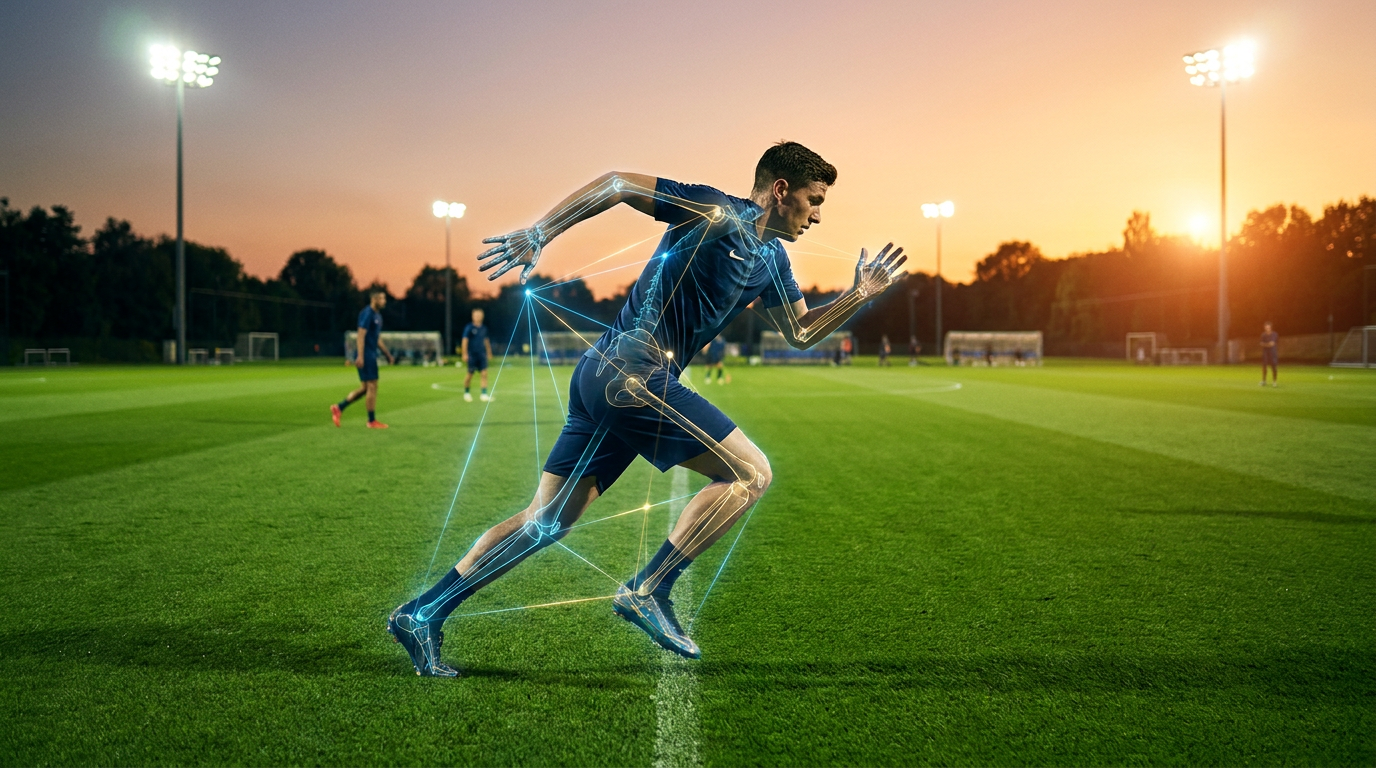
The era of athletes looking like cyborgs in practice—strapped with GPS vests, heart-rate monitors, and biomechanical sensors—is quietly ending. In 2026, the most powerful injury-prevention tool in professional sports is entirely invisible to the players.[7]
Welcome to the age of markerless motion capture. Using high-definition 8K cameras, LiDAR, and computer vision, teams can now track an athlete's skeletal movement in real-time, right on the practice pitch or stadium floor.[4][8]
For decades, biomechanical analysis required athletes to wear reflective markers in controlled laboratory settings. Today, vision-based systems powered by artificial intelligence can identify joint centers and compute kinematics with clinical precision—often within a 15-millimeter margin of error—during live, unencumbered competition.[3][4]
But capturing the data is only half the equation. The true breakthrough lies in predictive analytics. By feeding this multimodal data into advanced machine learning architectures, teams are shifting from reactive treatment to proactive injury prevention.[1][3]

These AI models—often utilizing convolutional neural networks and random forests—analyze millions of data points to detect micro-fatigue. They spot the subtle biomechanical compensations, such as a slight shift in ground reaction force or a fractionally slower stride, that occur days or weeks before a catastrophic muscle tear or ligament snap.[1][2]
The results are staggering. Contemporary predictive models can now forecast injury risk with up to 90% to 95% accuracy before any physical symptoms appear.[1]
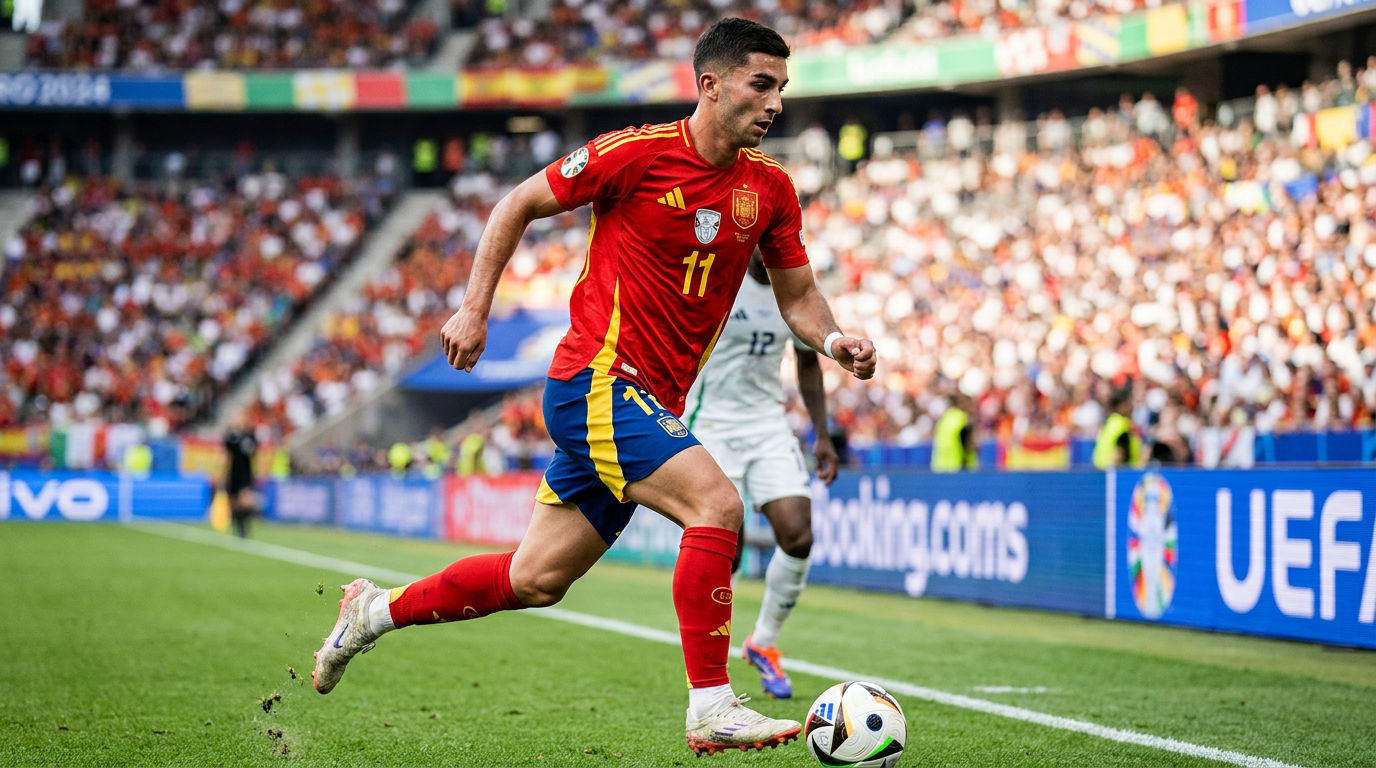
In practice, this translates to massive competitive advantages and extended careers. Early adopters of AI injury prediction models, such as elite European soccer clubs, have reportedly reduced first-team muscle injuries by up to 50%.[7]
In practice, this translates to massive competitive advantages and extended careers.
Similarly, professional football and basketball leagues are aggregating optical tracking and sensor data across their teams to flag danger signs before they manifest as missed games. Sports science professionals are increasingly relying on platforms that detect subtle biomechanical fatigue signals invisible to the naked eye.[5][6]
This economic calculus is driving massive investment. Protecting elite athlete contracts worth tens or hundreds of millions of dollars has made injury prevention one of the fastest-growing applications in the sports technology market.[5][8]

However, the technology is not without friction. The opaque nature of deep learning models means that algorithms sometimes recommend benching a star player without providing a clear, explainable reason to the coaching staff.[1][2]
False positives are a genuine concern. When an AI system flags a player for high injury risk, coaches face a difficult dilemma: rest a healthy player and risk losing a crucial match, or ignore the algorithm and risk a season-ending injury.[2]
Data privacy also looms large. As systems collect highly sensitive biometric and kinematic data, players' unions and leagues are actively negotiating who owns this digital twin, and whether a player's inherent injury risk score could be weaponized against them in contract negotiations.[1]

Despite these hurdles, the trajectory is clear. As cloud computing costs drop and edge-GPU deployments become standard in stadiums, markerless motion capture is democratizing.[4][8]
How we got here
Pre-2015
Biomechanical analysis required athletes to wear reflective markers in controlled laboratory settings.
2018-2021
Wearable GPS and accelerometer vests became standard in elite sports for tracking workload and speed.
2023
Major soccer and NFL franchises began piloting markerless motion capture using stadium cameras.
2026
AI predictive models reach 95% accuracy, making proactive injury prevention a standard operational practice.
Viewpoints in depth
Sports Scientists & Medical Staff
Advocating for proactive health management over reactive treatment.
For medical professionals, markerless motion capture represents the holy grail of biomechanics. By continuously monitoring athletes in their natural competitive environment rather than a sterile lab, scientists can build highly accurate baseline profiles. When an athlete deviates from their baseline—perhaps favoring one leg by a fraction of a percent due to micro-fatigue—the medical staff can intervene with targeted recovery protocols before a catastrophic injury occurs.
Coaches & Front Offices
Balancing competitive advantage with the realities of algorithmic uncertainty.
Management views predictive analytics as an insurance policy on their most valuable assets. However, coaches on the ground often express frustration with the opaque nature of AI. If an algorithm suggests resting a star player ahead of a championship game due to an invisible 15% spike in injury risk, the coach must weigh a statistical probability against immediate competitive needs. False positives remain a significant friction point in locker rooms.
Players' Associations
Fighting to protect biometric data rights and future earning potential.
While athletes universally want to avoid injuries and extend their careers, their unions are raising alarms about data ownership. A predictive model that labels a player as 'injury-prone' based on proprietary kinematic data could severely impact their value in free agency. Players' associations are actively pushing for collective bargaining clauses that restrict how front offices can use predictive health scores during contract negotiations.
What we don't know
- How courts and arbitrators will handle contract disputes based on AI-generated injury risk scores.
- The exact rate of false positives across different sports and demographics.
- When markerless motion capture will become affordable enough for universal high school adoption.
Key terms
- Markerless Motion Capture
- Technology that uses cameras and computer vision to track human movement and joint angles without requiring the subject to wear physical sensors.
- Kinematics
- The branch of biomechanics that describes the motion of bodies—such as stride length or joint rotation—without considering the forces that cause them.
- Convolutional Neural Network (CNN)
- A type of artificial intelligence highly effective at analyzing visual imagery, used here to process video feeds of athletes.
- Digital Twin
- A highly detailed virtual model of an individual athlete's body and biomechanics used to run simulations and predict fatigue.
- False Positive
- When an AI system incorrectly flags a healthy player as being at high risk for an imminent injury.
Frequently asked
Do athletes still need to wear trackers?
Increasingly, no. While GPS vests are still common, markerless motion capture uses stadium cameras to track movement without any physical wearables.
How accurate are these AI injury predictions?
Recent studies show that advanced multimodal AI models can forecast injury risk with up to 90% to 95% accuracy by detecting subtle biomechanical changes.
Can AI replace team doctors?
No. AI acts as an early warning system, but human medical staff are required to interpret the data, diagnose the underlying issue, and prescribe recovery protocols.
Who owns the biometric data?
This is currently a major point of contention. Leagues, teams, and players' unions are actively negotiating data ownership and privacy rights.
Sources
Source coverage
8 outlets
3 viewpoints surfaced








[1]International Journal of AI & Big DataSports Scientists
The convergence of artificial intelligence and sports biomechanics
Read on International Journal of AI & Big Data →[2]MDPISports Scientists
Artificial Intelligence for Sports Injury Prediction
Read on MDPI →[3]National Institutes of HealthSports Scientists
Artificial Intelligence in Sports Biomechanical Analysis: An Overview
Read on National Institutes of Health →[4]MOVE4DCoaches & Management
2026 Trends: markerless motion capture in the field becomes the new standard
Read on MOVE4D →[5]Research.comSports Scientists
Sports Science Careers in the Age of AI
Read on Research.com →[6]CourseraCoaches & Management
How Is AI Being Used in Sports Analytics Today?
Read on Coursera →[7]Factlen Editorial TeamPlayers & Unions
Synthesis by Factlen editorial team
Read on Factlen Editorial Team →[8]HYPE Sports InnovationCoaches & Management
Precision Sports Technology: Elevating Athlete Performance with AI
Read on HYPE Sports Innovation →
Every angle. Every day.
Get sports stories with full source coverage and perspective breakdowns delivered to your inbox.