
How Content Credentials and Invisible Watermarks Are Solving the AI Deepfake Problem
As generative AI blurs the line between reality and synthesis, a new 'dual-layer' standard combining C2PA metadata and SynthID watermarking has emerged to cryptographically verify digital media. Driven by looming EU regulations, this technology is rebuilding trust across the internet.
By Factlen Editorial Team
- Provenance Standard Developers
- Advocates for cryptographic manifests that create a tamper-evident chain of custody.
- AI Model Builders
- Focuses on embedding durable, invisible signals directly into the generation layer.
- Regulators & Compliance Experts
- Prioritizes mandatory, machine-readable disclosures to protect consumers.
What's not represented
- · Open-source developers concerned about the compute overhead of watermarking
- · Privacy advocates worried about the tracking implications of persistent digital manifests
Why this matters
With AI-generated deepfakes threatening the integrity of news, elections, and digital evidence, the ability to definitively prove the origin of an image or video is crucial. The widespread adoption of these provenance standards ensures that users can finally verify what is real and what is synthetic.
Key points
- The tech industry has shifted from trying to detect AI fakes to cryptographically proving the authenticity of digital media.
- The C2PA standard acts as a 'nutritional label' for files, recording their origin and edit history in a tamper-evident manifest.
- Because metadata can be stripped by screenshots, AI developers are pairing C2PA with invisible watermarks like Google's SynthID.
- SynthID embeds statistical signatures directly into pixels, audio, and text, surviving heavy compression and manipulation.
- The EU AI Act makes machine-readable transparency for synthetic content legally mandatory starting in August 2026.
The internet has a reality problem. With generative artificial intelligence now capable of producing photorealistic images, flawless audio clones, and human-grade text, the old adage that seeing is believing has collapsed. For years, the tech industry attempted to solve this by building AI detection tools—software designed to guess whether a piece of media was synthetic. But those tools quickly lost the arms race against increasingly sophisticated models, often flagging real content as fake or missing deepfakes entirely [4]. In 2026, the technology sector has officially abandoned the reactive game of detecting fakes. Instead, a powerful, standardized solution has reached maturity: proving what is real [7].[4][7]
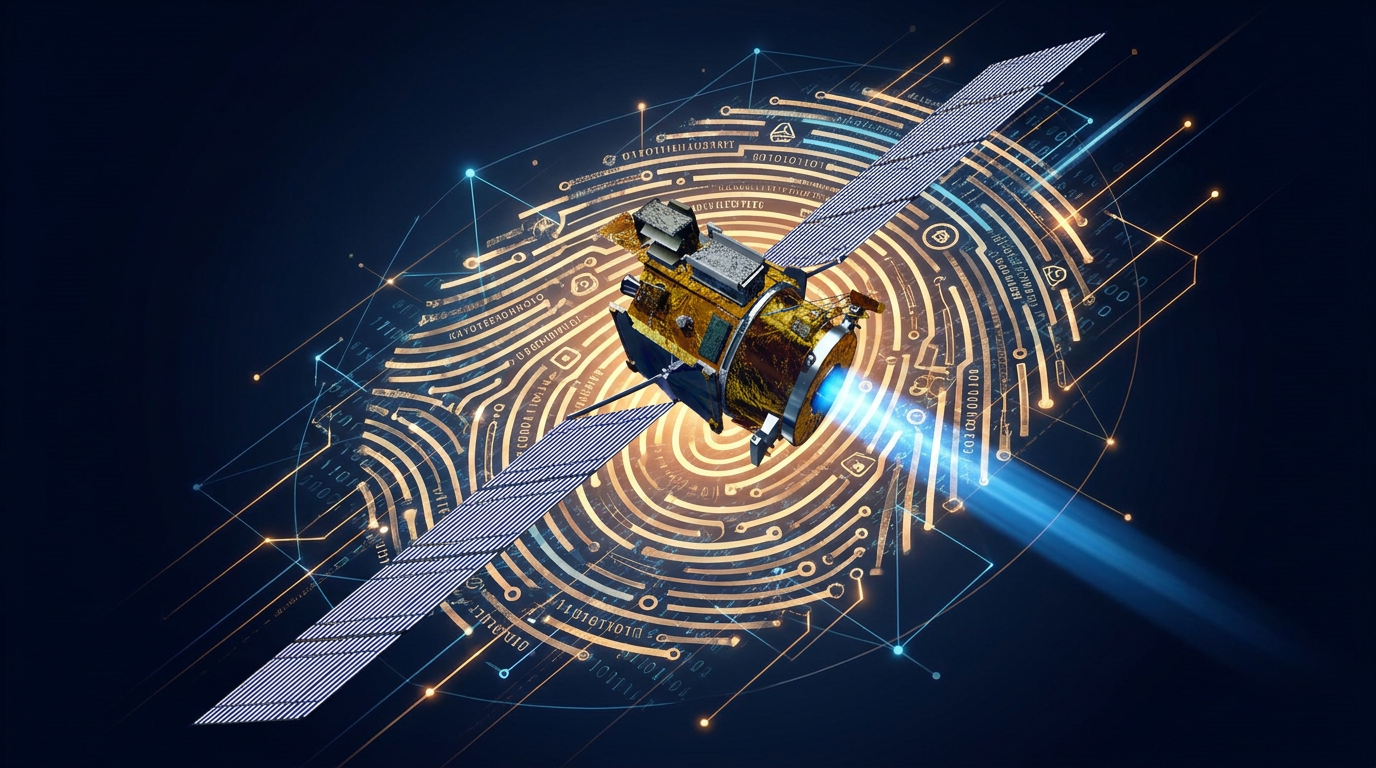
This shift in strategy relies on digital provenance—a framework that establishes a verifiable chain of custody for media from the moment of its creation. At the center of this movement is the Coalition for Content Provenance and Authenticity (C2PA), an open technical standard backed by a massive consortium including Adobe, Microsoft, Intel, and the BBC [1]. Rather than guessing a file's origins after the fact, C2PA operates like a nutritional label for digital content. It embeds a cryptographically signed manifest directly into the file, detailing exactly who created it, what tools were used, and whether AI was involved in its generation [4].[1][4]
The C2PA standard has moved rapidly from a niche concept to a hardware-level reality. In 2026, major camera manufacturers like Sony, Nikon, and Leica are shipping professional and consumer devices that natively attach Content Credentials to photographs the millisecond the shutter clicks [1]. When an image is subsequently opened in editing software like Adobe Photoshop, the C2PA manifest updates to record every crop, color adjustment, or AI-generated fill [1]. Because the manifest is secured using X.509 digital certificates and cryptographic hashing, any unauthorized tampering immediately invalidates the signature, alerting the viewer that the file's history has been compromised [1, 4].[1][4]

However, C2PA has a known vulnerability: it relies on metadata. While a cryptographic manifest provides incredibly rich context, metadata can be easily stripped away. Most major social media platforms automatically scrub metadata from uploaded images to save space and protect user privacy [2]. Furthermore, a user can simply take a screenshot of a C2PA-protected image, creating a brand-new file that leaves the original provenance data behind [4]. To build a truly resilient system, the industry realized that metadata alone was not enough to protect the digital ecosystem [5].[2][4][5]
This vulnerability necessitated a second layer of defense: imperceptible watermarking. Unlike metadata, which sits alongside the file, invisible watermarks are woven directly into the structure of the content itself [4]. Google DeepMind’s SynthID has emerged as the industry’s leading framework for this approach. By May 2026, Google reported that more than 10 billion pieces of content had been watermarked using SynthID, which now ships by default across the company's Gemini, Imagen, Lyria, and Veo models [3].[3][4]
This vulnerability necessitated a second layer of defense: imperceptible watermarking.
SynthID operates by embedding mathematical signatures that are invisible to humans but easily verifiable by specialized detection software [3]. For images, the system modifies pixel values in ways that mimic natural sensor noise. For audio, it alters frequency bands beyond human perception [3]. Crucially, these watermarks are designed to survive the exact transformations that destroy C2PA metadata. A SynthID-watermarked image can be heavily compressed, cropped, color-shifted, or screenshotted, and the underlying statistical signature will remain intact and detectable [3, 4].[3][4]
Watermarking text proved to be a significantly harder engineering challenge, as there are no pixels to subtly adjust without changing the meaning of a sentence. DeepMind solved this through a technique called tournament sampling [3]. As the AI model generates text, SynthID uses a developer-held key to assign secret values to candidate words. The model is then subtly biased to choose words that match a specific statistical pattern [3]. Over the course of a paragraph, this bias creates a measurable fingerprint that persists even if the text is copied, pasted, or lightly edited [3].[3]
Recognizing that neither approach is perfect on its own, the artificial intelligence industry has converged on a dual-provenance gold standard in 2026. Major developers, including OpenAI and Google, are now deploying C2PA manifests and invisible watermarks simultaneously to protect their ecosystems [2, 4]. When a user generates an image using ChatGPT or the DALL-E 3 API, the file is exported with a rich C2PA Content Credential detailing its AI origins, while a SynthID watermark is simultaneously baked into its pixels to ensure the signal persists [2].[2][4]

These two systems perfectly reinforce one another. The C2PA manifest carries the detailed context—the specific model used, the timestamp, and the generation parameters—while the SynthID watermark serves as a durable anchor [2]. If the image is shared on a platform that strips the metadata, or if a user attempts to launder the image via a screenshot, the invisible watermark survives to prove the content's synthetic origins [2, 4]. The recently released C2PA 2.1 standard officially incorporates this synergy, allowing digital watermarks to be used to recover lost Content Credentials [5].[2][4][5]
This rapid technological alignment is not purely altruistic; it is being heavily driven by looming regulatory deadlines. On August 2, 2026, the transparency obligations of the European Union’s AI Act become fully enforceable [1, 6]. The law mandates that providers of general-purpose AI systems must ensure their synthetic outputs are marked in a machine-readable format [1, 6]. The EU's Code of Practice explicitly requires a multi-layered approach, demanding both metadata embedding and imperceptible watermarking [1].[1][6]
The financial stakes for non-compliance are severe. Under the EU AI Act, penalties for transparency violations start at €7.5 million or 1.5% of a company's global turnover [1]. Similar pressures are mounting in the United States, where California’s SB 942 took effect in January 2026, requiring imperceptible machine-detectable watermarking and provenance data for AI systems used by state residents [1]. For enterprise software vendors and AI labs, robust provenance tracking has transitioned from a voluntary best practice to a strict legal requirement [6, 7].[1][6][7]

The widespread adoption of C2PA and SynthID represents a critical turning point in the maturation of the internet. By shifting the burden of proof from the consumer—who previously had to guess if a video was a deepfake—to the creator and the platform, the digital ecosystem is rebuilding its foundation of trust [7]. While no security system is entirely foolproof against dedicated state-level actors, the dual-layer provenance standard ensures that the vast majority of synthetic media can be instantly and reliably identified, empowering users to navigate the digital world with confidence [2, 7].[2][7]
How we got here
Feb 2021
The Coalition for Content Provenance and Authenticity (C2PA) is founded by Adobe, Microsoft, BBC, and others.
Aug 2023
Google DeepMind launches the first prototype of SynthID for image watermarking.
Jan 2026
California's SB 942 takes effect, requiring machine-detectable watermarking for AI systems.
May 2026
C2PA 2.1 is released, officially incorporating digital watermarks to recover lost credentials.
Aug 2026
The EU AI Act's Article 50 transparency obligations become fully enforceable.
Viewpoints in depth
Provenance Standard Developers
Advocates for cryptographic manifests that create a tamper-evident chain of custody.
Organizations like the C2PA and Adobe argue that fighting disinformation requires certifying the origin of authentic content at the moment of creation. By embedding cryptographic manifests into files, they aim to provide a rich, tamper-evident history of an asset's lifecycle, ensuring that users have full transparency into how a piece of media was captured and edited.
AI Model Builders
Focuses on embedding durable, invisible signals directly into the generation layer.
Companies like Google DeepMind and OpenAI emphasize that metadata is too fragile to survive the modern internet, where screenshots and social media platforms routinely strip file data. They advocate for invisible watermarks like SynthID, which weave statistical signatures directly into the pixels, audio frequencies, or text tokens, ensuring the provenance signal survives heavy compression and manipulation.
Regulators & Compliance Experts
Prioritizes mandatory, machine-readable disclosures to protect consumers.
Legal analysts and the architects of the EU AI Act argue that voluntary transparency is insufficient. They mandate a multi-layered approach—combining both metadata and watermarking—to ensure that synthetic content is always machine-detectable. For regulators, the focus is on accountability, ensuring that AI providers face strict financial penalties if they fail to label their outputs.
What we don't know
- How quickly legacy social media platforms will update their infrastructure to stop stripping C2PA metadata from user uploads.
- Whether open-source AI models will universally adopt invisible watermarking, given the technical overhead required to implement it.
- How courts will handle copyright disputes when an image's C2PA manifest has been intentionally stripped by a malicious actor.
Key terms
- C2PA
- An open technical standard that embeds cryptographically signed metadata into digital media to verify its origin and edit history.
- Content Credentials
- The user-facing implementation of the C2PA standard, often appearing as a clickable badge that reveals a file's 'nutritional label'.
- SynthID
- An invisible watermarking technology developed by Google DeepMind that embeds statistical signatures directly into the pixels, audio, or text of AI-generated content.
- Tournament Sampling
- A technique used to watermark AI-generated text by subtly biasing the model's word choices to create a measurable statistical fingerprint.
- X.509 Certificate
- A standard format for public key certificates used to cryptographically sign C2PA manifests, ensuring they are tamper-evident.
Frequently asked
Does C2PA detect deepfakes?
No. C2PA does not analyze content to guess if it is fake. Instead, it records the verified history of a file. If an AI tool implements C2PA, the resulting deepfake will carry a manifest explicitly stating it was AI-generated.
Can C2PA metadata be removed?
Yes. Metadata can be easily stripped by social media platforms or by taking a screenshot. This is why invisible watermarking is used alongside C2PA as a backup.
Is invisible watermarking visible to the human eye?
No. Technologies like SynthID alter pixel values, audio frequencies, or text tokens at a level that is imperceptible to humans but easily readable by specialized detection software.
Does watermarking degrade the quality of AI text?
Extensive testing by Google DeepMind has shown that techniques like tournament sampling preserve the underlying quality and meaning of the language model's output while still embedding a detectable signal.
Sources
Source coverage
7 outlets
3 viewpoints surfaced







[1]TrueScreenProvenance Standard Developers
The Complete Guide to C2PA and Content Credentials in 2026
Read on TrueScreen →[2]OpenAIAI Model Builders
C2PA and SynthID in OpenAI-generated images
Read on OpenAI →[3]The FalconAI Model Builders
SynthID is Google DeepMind's invisible watermark for AI-generated content
Read on The Falcon →[4]C2PA.aiProvenance Standard Developers
C2PA Content Credentials vs. Invisible Watermarking
Read on C2PA.ai →[5]DigimarcProvenance Standard Developers
C2PA 2.1: Strengthening Content Credentials with Digital Watermarks
Read on Digimarc →[6]Law Society GazetteRegulators & Compliance Experts
EU AI Act: Transparency and the provenance of training data
Read on Law Society Gazette →[7]Factlen Editorial TeamRegulators & Compliance Experts
Synthesis by Factlen editorial team
Read on Factlen Editorial Team →

More in ai
See all 6 stories →AI Copyright Law
The AI Copyright Liability Trap: Evidence Pack on the 2026 Supreme Court Fallout
7 sources
Self-Driving Labs
How Self-Driving Labs and Agentic AI Are Automating Scientific Discovery
6 sources

Medical AI
UK Launches 'London Region I' Sandbox to Fast-Track AI Medical Devices into NHS Clinics
7 sources

AI Reasoning
OpenAI Model Disproves 80-Year-Old Erdős Math Conjecture in Breakthrough for AI Reasoning
6 sources

Every angle. Every day.
Get ai stories with full source coverage and perspective breakdowns delivered to your inbox.