
US and Iran Sign Interim Peace Deal, Reopening Strait of Hormuz After 100-Day Conflict
The United States and Iran have signed a memorandum of understanding to end a 100-day military conflict, initiating the reopening of the critical Strait of Hormuz to global shipping. However, energy analysts warn that global oil flows through the chokepoint may only recover to 70% of pre-war levels as regional producers permanently shift to alternative routes.
By Factlen Editorial Team
- US Administration
- Frames the interim agreement as a decisive diplomatic victory that rapidly stabilizes global markets.
- Iranian Leadership
- Views the deal as a successful defense of sovereignty and proof of their leverage over global chokepoints.
- Energy Markets
- Focuses on the permanent structural shift in oil routing and the long-term resilience of supply chains.
- Foreign Policy Critics
- Argues the narrow focus on maritime security leaves broader strategic and nuclear questions unresolved.
What's not represented
- · Commercial Shipping Insurers
- · Asian Energy Importers
Why this matters
The Strait of Hormuz facilitates roughly 20% of the world's daily oil consumption. Its reopening eases immediate fears of a global energy crisis, but the permanent rerouting of 30% of regional crude will fundamentally reshape Middle Eastern trade and long-term global energy prices.
Key points
- The US and Iran signed an interim MOU to end a 100-day conflict.
- The agreement initiates the reopening of the Strait of Hormuz to commercial shipping.
- Goldman Sachs projects oil flows through the strait will only recover to 70% of pre-war levels.
- Regional producers have permanently shifted 30% of exports to alternative overland pipelines.
- The deal focuses on maritime security, differing from the broader nuclear focus of the JCPOA.
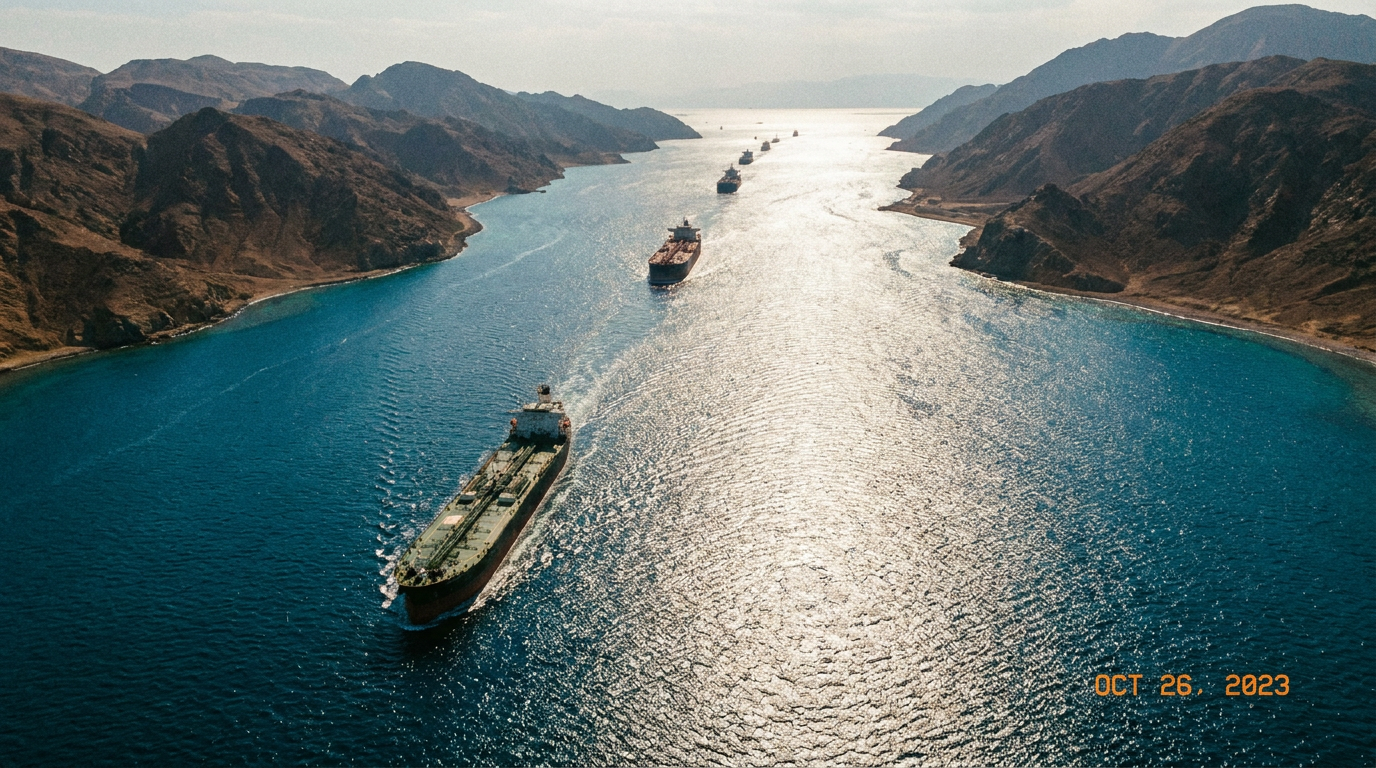
The United States and Iran have officially signed a memorandum of understanding (MOU), pausing a 100-day military conflict that had effectively paralyzed one of the world's most vital economic arteries. The immediate centerpiece of the interim agreement is the reopening of the Strait of Hormuz, a narrow waterway between the Persian Gulf and the Gulf of Oman.[1][7]
For over three months, the conflict had halted the transit of commercial shipping and oil tankers through the strait, sending shockwaves through global energy markets and forcing shipping conglomerates to execute costly reroutes. The Trump administration has heralded the MOU as a decisive diplomatic victory, emphasizing that the rapid timeline for the agreement's implementation will immediately stabilize global markets.[4][5][7]
However, the economic landscape emerging from the 100-day war looks fundamentally different than the one that preceded it. According to projections from Goldman Sachs, oil flows through the Strait of Hormuz may only recover to roughly 70% of their pre-war volume.[2]
This permanent reduction is not due to ongoing blockades, but rather a structural shift in how regional producers export their crude. During the prolonged closure, Gulf states accelerated the development and utilization of alternative overland pipelines and alternative port facilities, bypassing the vulnerable chokepoint entirely.[2][5]

Analysts note that Iran successfully leveraged its ability to close the strait during negotiations, demonstrating the profound asymmetric power the waterway holds over the global economy. The new MOU differs significantly from previous diplomatic frameworks, such as the Obama-era Joint Comprehensive Plan of Action (JCPOA).[3]
The new MOU differs significantly from previous diplomatic frameworks, such as the Obama-era Joint Comprehensive Plan of Action (JCPOA).
While the JCPOA focused heavily on long-term nuclear enrichment limits in exchange for broad sanctions relief, this interim deal is narrowly tailored to immediate de-escalation and maritime security. Critics of the agreement argue that by focusing primarily on reopening the strait, the MOU leaves critical questions about Iran's long-term strategic capabilities unresolved.[3][8]
In Tehran, the agreement is being framed domestically as a successful defense of national sovereignty. Iranian officials have highlighted the lifting of immediate maritime blockades as a concession wrung from Washington, framing the 100-day standoff as proof of their regional deterrence capabilities.[6]
The global oil market reacted cautiously to the news, with prices stabilizing rather than plummeting. This muted reaction reflects the reality that the 30% permanent rerouting of crude has already been priced into long-term contracts, and traders remain wary of the fragile nature of an interim deal.[4]

The coming weeks will test the durability of the MOU, as international maritime coalitions begin the complex process of sweeping the strait for mines and re-establishing safe transit corridors. Shipping insurers are expected to maintain elevated premiums for vessels entering the Persian Gulf until the security environment demonstrates sustained stability.[1][4]
Beyond the immediate energy implications, the 100-day conflict has accelerated a broader decoupling of global supply chains from vulnerable maritime chokepoints. Multinational logistics firms are increasingly factoring geopolitical risk premiums into their long-term routing models.[5]

The shift away from Hormuz dependence represents a strategic victory for Gulf states that have spent billions over the past decade building alternative export infrastructure. Pipelines terminating in the Red Sea and the Gulf of Oman have proven their worth as critical economic lifelines during the crisis.[2][5]
How we got here
March 2026
Military conflict begins, effectively closing the Strait of Hormuz to commercial traffic.
April–May 2026
Gulf producers accelerate the use of alternative overland pipelines to bypass the blockade.
June 18, 2026
The US and Iran sign an interim MOU to end the conflict and reopen the waterway.
Viewpoints in depth
US Administration
Frames the interim agreement as a decisive diplomatic victory that rapidly stabilizes global markets.
The Trump administration is emphasizing the immediate economic relief brought by the MOU. By securing a rapid timeline for the reopening of the Strait of Hormuz, officials argue they have neutralized a major threat to global energy security and demonstrated effective deterrence. The administration views the narrow focus of the deal as a pragmatic way to achieve immediate market stabilization without getting bogged down in protracted negotiations over broader strategic issues.
Iranian Leadership
Views the deal as a successful defense of sovereignty and proof of their leverage over global chokepoints.
In Tehran, the 100-day conflict and subsequent MOU are being portrayed as a demonstration of Iran's asymmetric power. State media highlights the economic pain inflicted on global markets during the closure as proof that Iran cannot be bypassed in regional security arrangements. The lifting of immediate blockades is framed as a concession won through resilience, reinforcing the domestic narrative of successful resistance against Western pressure.
Energy Markets
Focuses on the permanent structural shift in oil routing and the long-term resilience of supply chains.
Commodity analysts and logistics firms are looking past the immediate diplomatic breakthrough to the long-term structural changes in the energy market. The realization that 30% of regional crude will permanently bypass the Strait of Hormuz via alternative pipelines is viewed as a massive de-risking event for global supply chains. Markets are pricing in a future where the global economy is significantly less vulnerable to a single maritime chokepoint.
What we don't know
- How quickly international maritime coalitions can clear the strait of mines and ensure safe passage.
- Whether this interim MOU will serve as a stepping stone to a broader, permanent treaty.
- How long shipping insurers will maintain elevated risk premiums for vessels entering the Persian Gulf.
Key terms
- Strait of Hormuz
- A critical maritime chokepoint between the Persian Gulf and the Gulf of Oman, historically handling roughly 20% of global oil consumption.
- Memorandum of Understanding (MOU)
- A formal agreement between parties that outlines the terms of a mutual understanding, often serving as an interim step before a comprehensive treaty.
- JCPOA
- The Joint Comprehensive Plan of Action, a 2015 agreement that limited Iran's nuclear program in exchange for sanctions relief.
Frequently asked
Why won't oil flows return to 100%?
During the 100-day closure, regional producers accelerated the use of alternative overland pipelines to bypass the strait, creating a permanent structural shift in how crude is exported.
Is this a permanent peace treaty?
No. It is an interim memorandum of understanding (MOU) focused narrowly on immediate de-escalation and reopening maritime trade routes.
How did global markets react?
Oil prices stabilized rather than dropping sharply, as markets had already priced in the permanent rerouting of 30% of Middle Eastern crude.
Sources
Source coverage
8 outlets
4 viewpoints surfaced






[1]BloombergUS Administration
US and Iran Sign Interim Peace Deal
Read on Bloomberg →Goldman Says Hormuz Oil Flows May Recover to Only 70% After War
Read on Bloomberg →Bohl: Iran Successfully Leveraged Hormuz In Negotiations
Read on Bloomberg →[4]ReutersEnergy Markets
Oil prices stabilize as US-Iran sign MOU to reopen Hormuz chokepoint
Read on Reuters →[5]Financial TimesEnergy Markets
The 100-day war: How the Hormuz closure rewired global energy maps
Read on Financial Times →[6]Al JazeeraIranian Leadership
Tehran claims diplomatic victory as interim US deal lifts immediate blockades
Read on Al Jazeera →[7]Fox NewsUS Administration
Trump administration secures historic interim peace agreement with Iran
Read on Fox News →[8]The New York TimesForeign Policy Critics
Interim Iran deal leaves long-term nuclear questions unanswered, critics warn
Read on The New York Times →

Every angle. Every day.
Get business stories with full source coverage and perspective breakdowns delivered to your inbox.