
UK Faces Escalating Russian Hybrid Warfare Following Starmer Arson Convictions and Channel Confrontation
Two men were convicted of Russian-directed arson attacks on properties linked to the UK Prime Minister, while a Russian warship fired warning shots at a British yacht in the English Channel. The dual incidents highlight a sharp escalation in Moscow's use of proxy sabotage and maritime intimidation against Western targets.
By Factlen Editorial Team
- UK Government & Security Officials
- View the incidents as a coordinated campaign of state-sponsored sabotage and disinformation designed to destabilize British democracy.
- Cybersecurity & Disinformation Analysts
- Focus on how Russian intelligence uses Telegram, cryptocurrency, and proxy hacktivist groups to recruit low-level criminals for deniable sabotage.
- Russian State Apparatus
- Denies involvement in the arson attacks and claims the maritime incident was a standard defensive measure against a vessel on a dangerous course.
What's not represented
- · The Ukrainian diaspora in the UK facing reputational damage from proxy recruitment
- · Commercial shipping operators navigating the increasingly militarized English Channel
Why this matters
This marks a dangerous escalation in state-sponsored hybrid warfare, demonstrating that hostile foreign powers are now actively recruiting local proxies to carry out physical attacks on Western soil. For the public, it signals that the geopolitical conflict in Eastern Europe is increasingly spilling over into domestic security, maritime trade, and the digital information space.
Key points
- Two men were convicted of Russian-directed arson attacks on properties linked to UK Prime Minister Keir Starmer.
- The attackers were recruited via Telegram by a handler linked to Russian intelligence and offered cryptocurrency.
- A Russian frigate fired warning shots at a British civilian yacht in the English Channel.
- The maritime incident follows the UK's interception of a Russian shadow fleet oil tanker.
- Starmer warned that the UK faces proxy attacks from hostile state actors every single day.
The UK is confronting a sharp escalation in Russian hybrid warfare, underscored by two unprecedented incidents this week: the conviction of proxy arsonists who targeted Prime Minister Keir Starmer's family, and a Russian warship firing warning shots at a British civilian yacht in the English Channel.[1][8]
On Monday, a jury at the Old Bailey found two men—Roman Lavrynovych, a 22-year-old Ukrainian, and Stanislav Carpiuc, a 27-year-old Romanian—guilty of conspiring to commit arson. The attacks, carried out in May 2025, targeted a Toyota RAV4 previously owned by Starmer and two homes linked to his family, including one occupied by his sister-in-law.[1][5][7]
The court heard that the men were recruited and directed via the encrypted messaging app Telegram by a Russian-speaking handler using the pseudonym "El Money" (or "Hroshi" in Ukrainian). The anonymous contact offered Lavrynovych £3,000 in cryptocurrency to set the fires, film the destruction, and ensure the attacks made the evening news.[1][2][7]
Investigations by the Financial Times and the BBC traced "El Money" directly to the Russian state. Digital forensics, including cryptocurrency wallet tracking and Telegram archives, linked the handler to NoName057(16), a pro-Kremlin hacktivist syndicate described by US cybersecurity agencies as a state-sanctioned project.[2][3]

The BBC further identified the handler as Evgeny Lyukshin, a 23-year-old Russian diplomat trained in information warfare. Following the attacks, the handler reportedly messaged Lavrynovych, stating, "Look, you attacked the home of a very high-ranking person in Britain. I'll send you money, you need to leave the city."[1][3][7]
The physical fires were only the first phase of the operation. Within 15 minutes of Lavrynovych's arrest, a coordinated network of far-right accounts and Russian state media began amplifying a fabricated conspiracy theory that the arsonists were unpaid male prostitutes seeking revenge on the Prime Minister.[6]
Cybersecurity analysts note that this dual-track approach—physical sabotage followed by digital disinformation—is a hallmark of modern Russian intelligence. By recruiting low-level criminals and vulnerable migrants via Telegram, Moscow maintains plausible deniability while attempting to foment social division and project reach deep into Western capitals.[2][6][7]
Cybersecurity analysts note that this dual-track approach—physical sabotage followed by digital disinformation—is a hallmark of modern Russian intelligence.
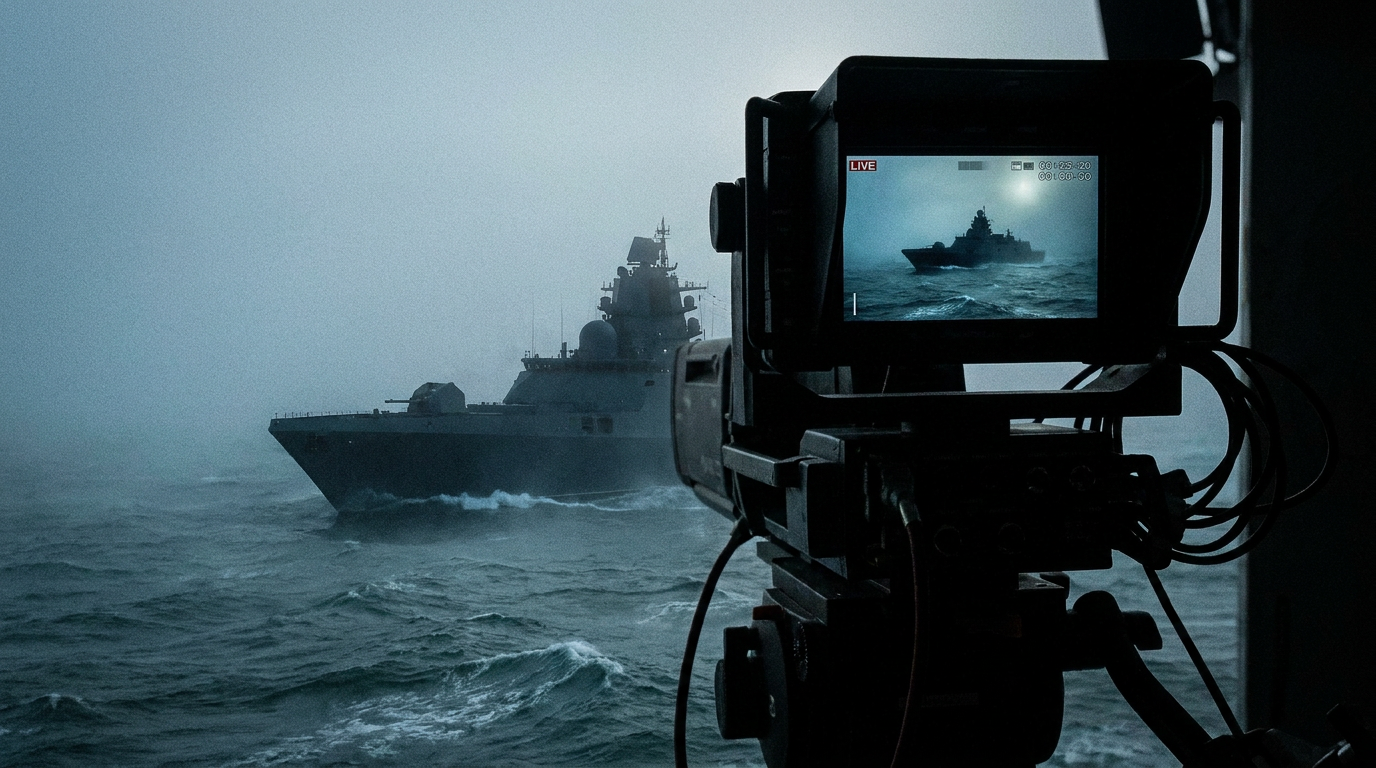
As the arson trial concluded, a second confrontation unfolded at sea. On Tuesday morning, the Russian frigate Admiral Grigorovich fired warning flares and small-arms shots across the bow of the Bright Future, a 12-metre British sailing yacht navigating the English Channel.[4][8]
The yacht, sailed by retired couple Jane and Alan Kelvey, was approximately 20 nautical miles south of the Isle of Wight. The Kelveys reported that the stationary warship blasted its horn five times before firing four to five rounds into the air from a distance of roughly 450 metres, forcing the couple to abruptly alter course.[4][8]
The Russian Ministry of Defense defended the frigate's actions, claiming the yacht was on a "dangerous course" and had ignored radio contact and signal flares. Moscow asserted that the warning shots were a standard maritime procedure to prevent a collision after the civilian vessel approached within 150 metres.[4][8]
The maritime clash did not happen in a vacuum. The Admiral Grigorovich has been operating in the Channel to escort Russia's "shadow fleet" of sanctions-busting oil tankers. Just two days prior, British Royal Marines intercepted and boarded the Smyrtos, a shadow tanker carrying 98,000 tonnes of sanctioned Russian oil.[1][4][8]
While the Ministry of Defense officially characterized the yacht shooting as an isolated incident involving a drifting frigate, naval sources privately warned that Moscow may be probing British maritime defenses in retaliation for the Smyrtos seizure.[1][8]

Speaking from the G7 summit in Évian-les-Bains, France, Prime Minister Starmer condemned the maritime confrontation as "deeply concerning and reckless." Addressing the arson convictions, he revealed the profound personal impact on his family and issued a stark warning to allied leaders.[1]
Starmer declared that the UK is now dealing with proxy attacks from Russia "every single day." He framed the combined physical and digital assaults as the work of hostile state actors actively seeking to "exploit division" and "destabilise our democracy" from within.[1]
The events of this week illustrate a dangerous evolution in European security. With conventional military forces bogged down in Ukraine, Moscow is increasingly relying on a shadow war of outsourced arson, maritime intimidation, and algorithmic disinformation to strike at the heart of its Western adversaries.[2][6]
How we got here
September 2024
Russian handler 'El Money' begins communicating with Roman Lavrynovych via Telegram.
May 8, 2025
A Toyota RAV4 previously owned by Keir Starmer is set on fire in north London.
May 12, 2025
Arsonists target the front door of Starmer's former family home, occupied by his sister-in-law.
June 14, 2026
British Royal Marines intercept the Smyrtos, a Russian shadow fleet oil tanker, in the English Channel.
June 15, 2026
Lavrynovych and Stanislav Carpiuc are convicted at the Old Bailey for the arson attacks.
June 16, 2026
The Russian frigate Admiral Grigorovich fires warning shots at a British civilian yacht in the Channel.
Viewpoints in depth
UK Government & Security Officials
A coordinated campaign to destabilize democracy.
British intelligence and political leaders view these incidents not as isolated crimes, but as a deliberate strategy of hybrid warfare. By outsourcing sabotage to petty criminals and aggressively patrolling the Channel, Moscow aims to project power and exploit domestic divisions without crossing the threshold of Article 5 military conflict.
Russian State Apparatus
Standard maritime defense and denial of proxy attacks.
The Kremlin consistently denies any involvement in European sabotage, dismissing the arson convictions as a domestic UK criminal matter. Regarding the Channel confrontation, the Russian Defense Ministry maintains that the Admiral Grigorovich acted strictly within international maritime law to prevent a collision with a civilian vessel that ignored repeated warnings.
Cybersecurity & Disinformation Analysts
The weaponization of Telegram and cryptocurrency.
Researchers highlight how the digital ecosystem has lowered the barrier to entry for state-sponsored terrorism. Handlers aligned with groups like NoName057(16) can use encrypted apps and untraceable cryptocurrency to recruit disposable proxies. The physical damage is often secondary; the primary goal is to generate footage that fuels pre-planned disinformation campaigns online.
What we don't know
- Whether the Russian handler 'El Money' will face formal international charges or sanctions.
- If the maritime confrontation was a direct retaliatory order from Moscow for the seizure of the Smyrtos tanker.
- The full extent of the NoName057(16) network's proxy recruitment operations across other European nations.
Key terms
- Hybrid Warfare
- The use of non-conventional methods—such as cyberattacks, disinformation, and proxy sabotage—to achieve strategic goals without triggering open military conflict.
- Shadow Fleet
- A network of aging, often uninsured commercial vessels used by Russia to transport oil and bypass international sanctions.
- NoName057(16)
- A pro-Kremlin hacktivist group that conducts cyberattacks and recruits proxies to further Russian state interests across Europe.
- Proxy Sabotage
- The practice of recruiting third-party individuals, often criminals or vulnerable migrants, to carry out physical attacks on behalf of a hostile state.
Frequently asked
Why did the Russian warship fire at the yacht?
The Russian Defense Ministry claims the yacht was on a dangerous course and ignored signals. The British sailors say the warship was stationary and fired warning shots from 450 metres away to force them to change direction.
Who is 'El Money'?
'El Money' is the Telegram pseudonym of the Russian-speaking handler who directed the arson attacks. Investigations have linked the account to Evgeny Lyukshin, a 23-year-old Russian diplomat trained in information warfare.
Why did the arsonists target Keir Starmer?
The attackers were paid proxies who had no personal political grievances. They were directed by Russian intelligence to target the Prime Minister's property to generate news coverage and sow domestic instability.
Is the UK at war with Russia?
No, but Prime Minister Keir Starmer stated that the UK is facing proxy attacks from Russia 'every single day' as part of a broader campaign of state-sponsored sabotage and disinformation.
Sources
Source coverage
8 outlets
3 viewpoints surfaced








[1]The GuardianUK Government & Security Officials
Russia-linked arson attacks show bad actors targeting UK, says Starmer
Read on The Guardian →[2]Financial TimesCybersecurity & Disinformation Analysts
Russian online sabotage network behind Starmer arson attacks
Read on Financial Times →[3]BBC NewsCybersecurity & Disinformation Analysts
Russian diplomat linked to Starmer arson plot
Read on BBC News →[4]The Moscow TimesRussian State Apparatus
Russian Warship Fires Warning Shots at UK Yacht in English Channel
Read on The Moscow Times →[5]Crown Prosecution ServiceUK Government & Security Officials
Two men found guilty of arson attacks linked to Prime Minister
Read on Crown Prosecution Service →[6]The Week UKCybersecurity & Disinformation Analysts
How Starmer arson attacks became a nexus for misinformation
Read on The Week UK →[7]Kyiv PostCybersecurity & Disinformation Analysts
Russia Linked to Arson Attacks Targeting UK Prime Minister, Investigation Reveals
Read on Kyiv Post →[8]Channel News AsiaCybersecurity & Disinformation Analysts
Russia fires warning shots at UK yacht in English Channel
Read on Channel News Asia →
More in news politics
See all 7 stories →Hormuz Deal
U.S. Gas Prices Fall Below $4 Following $300 Billion Strait of Hormuz Agreement
8 sources
Strait of Hormuz
U.S. and Iran Reach $300 Billion Agreement to Reopen Strait of Hormuz, Easing Global Energy Markets
7 sources
Strait of Hormuz
The U.S.-Iran Peace Deal and the $300 Billion Reconstruction Fund, Explained
8 sources
Iran Peace Deal
U.S. and Iran Reach Historic Peace Agreement, Reopening Strait of Hormuz Amid $300 Billion Dispute
8 sources
Every angle. Every day.
Get news politics stories with full source coverage and perspective breakdowns delivered to your inbox.