
The Evidence Behind Right to Repair: Does Fixing Our Own Devices Actually Work?
As sweeping 'Right to Repair' laws take effect across the US and Europe in 2026, policymakers are weighing conflicting data on consumer savings, e-waste reduction, and device security.
By Factlen Editorial Team
- Consumer & Environmental Advocates
- Argue that repairability extends device lifespans, drastically cuts e-waste, and saves households hundreds of dollars annually.
- Manufacturing & Industry Groups
- Warn that mandated repairability risks cybersecurity, intellectual property, and consumer safety.
- Free-Market Economists
- Contend that the financial savings of repair laws are vastly overstated and may ultimately raise retail prices.
- Regulatory Agencies
- Focus on market competition, finding little empirical evidence that independent repair compromises safety.
What's not represented
- · Independent Repair Shop Owners
- · E-waste Recycling Facility Operators
Why this matters
The ability to repair your own smartphone, appliance, or tractor determines not only your household budget, but the trajectory of the world's fastest-growing waste stream. As manufacturers are forced to redesign products for repairability, consumers will see shifts in both upfront device costs and long-term maintenance fees.
Key points
- Major Right to Repair laws are taking effect across the US and EU in 2026.
- Advocates point to massive environmental benefits, including curbing the 62 million tonnes of annual e-waste.
- Economists argue that claimed household savings of nearly $400 a year are vastly overestimated.
- The FTC found 'scant evidence' to support manufacturer claims that independent repair compromises device safety or security.
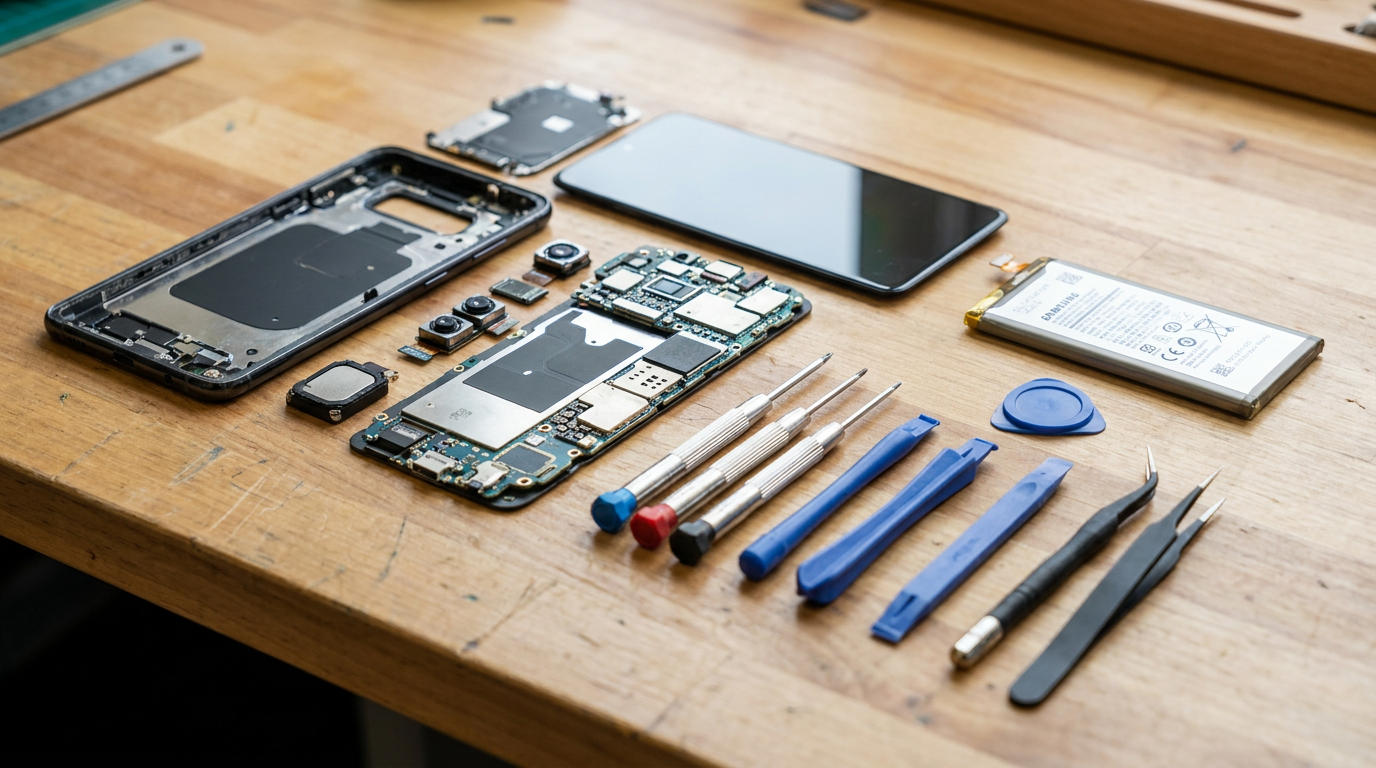
As sweeping "Right to Repair" mandates take effect globally—anchored by the European Union’s expansive directive enforceable by July 2026 and a wave of legislation across US states like California, New York, and Oregon—the consumer electronics landscape is undergoing a forced evolution. For decades, the prevailing industry model relied on a disposable tech culture, where replacing a malfunctioning device was often cheaper and easier than fixing it. Now, lawmakers are attempting to mandate a circular economy by requiring original equipment manufacturers (OEMs) to make diagnostic software, specialized tools, and replacement parts available to the general public and independent repair shops.[6][7]
The legislative push is fundamentally an attempt to break manufacturer monopolies on the aftermarket. Historically, companies utilized proprietary screws, industrial adhesives, and restrictive software locks—a practice known as "parts pairing"—to ensure that only authorized technicians could successfully swap a battery or replace a cracked screen. By dismantling these barriers, policymakers aim to democratize maintenance. However, as the regulatory framework solidifies, a fierce debate has emerged over the actual empirical evidence driving these policies, with consumer advocates, free-market economists, and industry lobbying groups presenting starkly different data on the economic and environmental outcomes.[2][4][7]
The strongest evidence supporting Right to Repair lies in its environmental impact, specifically concerning the mitigation of electronic waste. E-waste is currently the fastest-growing municipal waste stream globally, with the world generating roughly 62 million tonnes of discarded electronics in 2022—a figure projected to reach 82 million tonnes by 2030. These discarded devices contain toxic heavy metals like lead, mercury, and cadmium, which can leach into groundwater when landfilled. Furthermore, manufacturing new electronics requires the extraction of critical rare-earth minerals, a process with a massive carbon footprint.[2][6]

Extending the lifespan of existing devices yields quantifiable emissions reductions. A comprehensive study conducted by the Öko-Institut on behalf of the German consumer organization VZBV modeled the climate impact of prolonged device utility. The researchers found that extending the operational life of televisions to 13 years and smartphones to seven years could save 3.93 million tonnes of CO2 equivalents annually in Germany alone—the emissions equivalent of removing 1.85 million gas-powered cars from the road. Repair advocates argue that these figures provide an unassailable mandate for legislation that keeps hardware in active use.[2][5]
Industry groups, however, have introduced counter-claims regarding the environmental calculus. The National Association of Manufacturers (NAM) argues that forcing OEMs to manufacture, warehouse, and ship every individual spare part across decentralized distribution networks could inadvertently increase supply chain emissions. Under laws like New York’s Digital Fair Repair Act, companies must maintain vast inventories of components that may never be purchased, potentially offsetting the carbon savings gained from deferred device replacements. While this logistical burden is real, environmental analysts generally maintain that the emissions cost of spare-part warehousing is dwarfed by the massive carbon footprint of manufacturing entirely new devices.[2][4][5]
Industry groups, however, have introduced counter-claims regarding the environmental calculus.
While the environmental benefits are broadly supported by data, the economic claims surrounding Right to Repair are highly contested. Proponents, including the US Public Interest Research Group (PIRG) and various legislative sponsors, have frequently cited research claiming that repairability saves the average American household roughly $380 to $400 per year. This figure is derived from the assumption that consumers will opt for inexpensive component fixes rather than purchasing premium replacement hardware, leaving billions of dollars in the pockets of the working class.[3][6]
Free-market economists have aggressively challenged these financial projections, arguing that the savings are vastly overestimated. An analysis by the Competitive Enterprise Institute (CEI) scrutinized the baseline data from the Bureau of Labor Statistics used in the PIRG report, noting that it improperly included non-repairable miscellaneous housewares—like glass cups and silverware—in its small appliance calculations. After adjusting for actual breakage rates, warranty coverage, and the likelihood of successful consumer repair, the CEI forecasted the actual savings to be closer to $55 per household annually.[3]

Furthermore, economists warn of unintended market consequences. A study published in the journal Management Science suggested that mandatory repair laws could create a scenario that compromises manufacturer profit and reduces overall consumer surplus. If OEMs are forced to absorb high compliance costs to redesign products with modular components and maintain sprawling parts inventories, they are highly likely to pass those costs onto the consumer by raising the base retail price of new devices. In this scenario, the upfront cost of technology increases for everyone, regardless of whether they ever utilize their right to repair.[3][4]
The most intense battleground in the Right to Repair debate centers on device security, intellectual property, and consumer safety. For years, manufacturers have argued that opening up access to central processors, proprietary diagnostic codes, and sensitive internal components like lithium-ion batteries would expose consumers to cybersecurity attacks, physical injury, and degraded device performance. Industry lobbyists have consistently warned lawmakers that independent repair shops lack the rigorous quality control of authorized networks, making them a vector for counterfeit parts and data breaches.[4]
Despite these dire warnings, federal regulators have found little empirical backing for the industry's safety claims. In a landmark 2021 report to Congress titled "Nixing the Fix," the Federal Trade Commission (FTC) conducted a sweeping review of the repair aftermarket. The Commission concluded that there was "scant evidence" to support manufacturers' justifications for repair restrictions. Crucially, despite repeated requests from FTC staff, OEMs failed to provide any empirical data demonstrating that independent repairs were inherently more dangerous or inferior to authorized repairs, nor could they prove that repair access undermined intellectual property rights.[1]

The FTC's findings fundamentally shifted the regulatory posture in the United States, highlighting how manufacturers had effectively diluted the Magnuson-Moss Warranty Act's anti-tying provisions through technological advancements and software locks. By weaponizing proprietary diagnostics, OEMs had steered consumers into lucrative first-party repair networks or forced premature upgrades. The lack of evidence supporting the safety argument gave state legislatures the political cover needed to pass aggressive repair mandates without fear of compromising consumer security.[1][6]
As the 2026 enforcement deadlines approach, the technology sector is being forced into a paradigm shift. While the precise economic savings for individual households remain fiercely debated, the macro-level evidence points toward a necessary market correction. By dismantling artificial barriers to maintenance, Right to Repair legislation establishes a baseline of consumer ownership that has been eroding for a decade. Whether it ultimately saves a family fifty dollars or four hundred, the transition toward a repairable, circular economy represents a definitive victory for environmental sustainability and aftermarket competition.[3][5][7]
How we got here
July 2019
The FTC hosts 'Nixing the Fix,' a workshop gathering empirical data on repair restrictions.
May 2021
The FTC releases its report to Congress, finding no evidence that independent repair compromises safety.
December 2022
New York passes the Digital Fair Repair Act, becoming the first state to mandate electronics repairability.
March 2024
Oregon passes a Right to Repair law that specifically bans the practice of parts pairing.
July 2026
The European Union's Right to Repair directive becomes fully enforceable across member states.
Viewpoints in depth
Consumer & Environmental Advocates
Argue that repairability extends device lifespans, drastically cuts e-waste, and saves households hundreds of dollars annually.
This coalition, which includes public interest groups and environmental organizations, views the disposable tech culture as an ecological crisis. They point to the 62 million tonnes of e-waste generated annually as proof that manufacturers must be forced to support older hardware. By mandating access to parts and diagnostic tools, advocates believe consumers will opt for inexpensive component fixes rather than buying new devices, simultaneously reducing the carbon footprint of manufacturing and keeping money in local economies.
Manufacturing & Industry Groups
Warn that mandated repairability risks cybersecurity, intellectual property, and consumer safety.
Original equipment manufacturers (OEMs) and industry lobbying groups argue that modern electronics are highly complex and potentially dangerous if mishandled. They contend that opening up access to central processors and lithium-ion batteries to untrained individuals increases the risk of physical injury and data breaches. Furthermore, they warn that forcing companies to warehouse and ship every conceivable spare part will create massive logistical inefficiencies, potentially increasing supply chain emissions and undermining the environmental goals of the legislation.
Free-Market Economists
Contend that the financial savings of repair laws are vastly overstated and may ultimately raise retail prices.
Economic analysts skeptical of repair mandates argue that the projected household savings of nearly $400 a year are based on flawed data that ignores actual consumer behavior and device failure rates. They estimate actual savings to be closer to $55 annually. More importantly, they warn of unintended market consequences: if manufacturers face high compliance costs to redesign products for modularity and maintain sprawling parts inventories, they are highly likely to pass those costs onto consumers by raising the base retail price of new devices.
Regulatory Agencies
Focus on market competition, finding little empirical evidence that independent repair compromises safety.
Federal watchdogs like the FTC approach the issue primarily through the lens of antitrust and consumer protection. In their investigations, regulators found that manufacturers had effectively created aftermarket monopolies by using software locks and proprietary tools to steer consumers into expensive first-party repair networks. Crucially, the FTC concluded there was 'scant evidence' to support the industry's claims that independent repairs were inherently more dangerous or of lower quality, providing the empirical foundation for lawmakers to draft aggressive repair mandates.
What we don't know
- Whether the compliance costs of maintaining vast spare-part inventories will ultimately cause manufacturers to raise the base price of new electronics.
- How strictly the European Union and US states will enforce the ban on software-based 'parts pairing' as technology evolves.
Key terms
- Circular Economy
- An economic model focused on minimizing waste and making the most of resources by repairing, reusing, and recycling products rather than discarding them.
- Parts Pairing
- The use of software locks by manufacturers to ensure that only components authorized by their own diagnostic tools will function properly in a device.
- E-waste
- Electronic waste, encompassing discarded appliances, smartphones, computers, and other devices that often contain toxic heavy metals.
- Magnuson-Moss Warranty Act
- A US federal law that governs consumer product warranties, including provisions that generally prohibit companies from voiding warranties simply because a consumer used an independent repair service.
Frequently asked
Does Right to Repair mean I have to fix my own devices?
No. The legislation simply ensures that independent repair shops and consumers have access to the same parts and manuals as authorized dealers, giving you more choices on where to get a fix.
Will these laws make new electronics more expensive?
It is a debated possibility. Economists warn that if manufacturers face high compliance costs to redesign products and warehouse spare parts, they may pass those costs onto consumers through higher retail prices.
Did the government find that independent repair is dangerous?
No. A 2021 FTC investigation found "scant evidence" to support manufacturer claims that independent repairs compromise safety, cybersecurity, or device quality.
What is "parts pairing"?
It is a practice where manufacturers use software locks to tie a specific component (like a screen or battery) to a specific device's motherboard, preventing aftermarket parts from functioning even if physically installed correctly.
Sources
Source coverage
7 outlets
4 viewpoints surfaced







[1]Federal Trade CommissionRegulatory Agencies
Nixing the Fix: An FTC Report to Congress on Repair Restrictions
Read on Federal Trade Commission →[2]ForbesConsumer & Environmental Advocates
Right To Repair Laws Can Save The Climate Along With Our Pocketbooks
Read on Forbes →[3]Competitive Enterprise InstituteFree-Market Economists
Right to repair will not save households over $300 a year
Read on Competitive Enterprise Institute →[4]National Association of ManufacturersManufacturing & Industry Groups
The Risks of 'Right-to-Repair' Mandates
Read on National Association of Manufacturers →[5]Repair.euConsumer & Environmental Advocates
Repair saves emissions and cash – German study
Read on Repair.eu →[6]Zero Waste WashingtonConsumer & Environmental Advocates
Right to Repair: Protecting consumers, small businesses, and the environment
Read on Zero Waste Washington →[7]Factlen Editorial Team
Synthesis by Factlen editorial team
Read on Factlen Editorial Team →
Every angle. Every day.
Get technology stories with full source coverage and perspective breakdowns delivered to your inbox.