
The Glymphatic System: How the Brain Washes Away Toxic Waste During Sleep
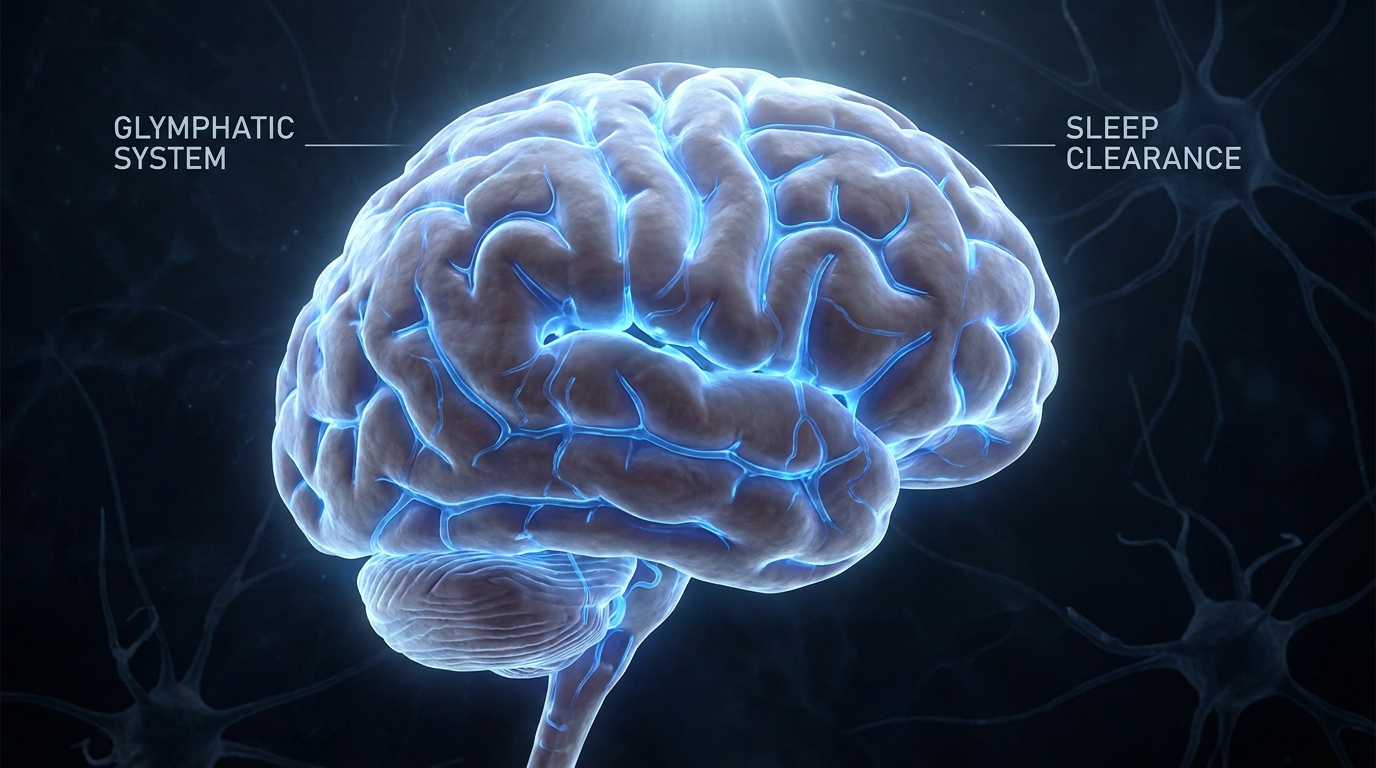
Scientists have discovered a hidden plumbing network in the brain that flushes out neurotoxic waste. This 'glymphatic system' activates primarily during deep sleep, offering a physiological explanation for why we sleep and how to prevent Alzheimer's disease.
By Factlen Editorial Team
- Neurobiologists
- Focusing on the cellular and biophysical mechanisms of fluid transport.
- Sleep Physicians
- Viewing glymphatic clearance as the biological imperative for restorative sleep.
- Neurodegenerative Researchers
- Targeting the clearance pathway to prevent Alzheimer's and dementia.
What's not represented
- · Patients with neurodegenerative diseases
- · Pharmaceutical developers
Why this matters
For decades, science couldn't fully explain why humans spend a third of their lives asleep. The discovery of the glymphatic system reveals that deep sleep is a non-negotiable biological necessity—a nightly 'power wash' that flushes toxic waste from the brain and serves as our primary defense against neurodegenerative diseases like Alzheimer's.
Key points
- The brain lacks a traditional lymphatic system and instead uses a glia-dependent network called the glymphatic system to clear metabolic waste.
- Cerebrospinal fluid washes through the brain tissue along blood vessels, facilitated by aquaporin-4 water channels.
- The glymphatic system is highly active during deep sleep, when the brain's interstitial space expands by up to 60%.
- Impaired glymphatic clearance allows toxic proteins like amyloid-beta to accumulate, driving neurodegenerative diseases like Alzheimer's.
- Treating sleep disorders such as sleep apnea is now considered a primary strategy for protecting long-term brain health.
The human brain is a metabolic furnace. Despite accounting for just 2% of body weight, it consumes roughly 20% of the body's energy. This intense, continuous cellular activity generates a massive amount of metabolic waste that must be efficiently removed to maintain healthy cognitive function.[1][5]
For decades, a fundamental anatomical mystery persisted regarding how exactly the central nervous system clears this cellular garbage. Unlike the rest of the body, the brain lacks a conventional lymphatic system—the network of vessels that drains waste from peripheral tissues and organs.[2]
The answer arrived in a paradigm-shifting 2012 discovery by neuroscientist Maiken Nedergaard and her team at the University of Rochester. They identified a previously unrecognized, brain-wide clearance network that fundamentally altered our understanding of neurobiology.[2][7]
Nedergaard's team demonstrated that the brain possesses a specialized, glia-dependent plumbing network, which they dubbed the "glymphatic system." It operates as a shadow plumbing network that piggybacks on the brain's existing blood vessels, utilizing the spaces around arteries to pump cerebrospinal fluid deep into the brain tissue.[2][5]
This intricate fluid exchange is managed by star-shaped brain cells called astrocytes. The "endfeet" of these astrocytes completely encase the brain's blood vessels and are densely packed with specialized water channels known as aquaporin-4.[2][5]

These channels act as microscopic valves, allowing cerebrospinal fluid to wash through the dense brain tissue. As the fluid flows, it collects soluble waste proteins and metabolic byproducts, eventually pooling in channels around veins before draining out of the brain into the peripheral lymphatic system in the neck.[2][5]
Perhaps the most profound revelation regarding the glymphatic system is its intimate relationship with our circadian rhythms. The system is largely disengaged during wakefulness but becomes highly active the moment we fall asleep, suggesting that brain clearance is the primary biological purpose of sleep.[3][7]
Perhaps the most profound revelation regarding the glymphatic system is its intimate relationship with our circadian rhythms.
Specifically, during deep, non-rapid eye movement slow-wave sleep, the brain undergoes a radical structural shift. The interstitial space—the fluid-filled area between brain cells—expands by up to 60%.[3][5]

This massive expansion dramatically reduces tissue resistance, allowing fluid to flood through the brain and wash away neurotoxic waste at a rapid clip. Researchers now propose that this nightly "power wash" is the core physiological reason why all animal species require sleep to survive.[3][7]
The stakes of this nightly clearance are incredibly high, as the waste products removed by this system include amyloid-beta and tau proteins. When these specific proteins accumulate and clump together, they form the plaques and tangles that are the primary hallmarks of Alzheimer's disease and other forms of dementia.[2][6]
Recent human studies utilizing magnetic resonance imaging have validated the initial rodent data. By injecting contrast agents into the spinal fluid of human subjects, researchers have been able to track the brain-wide distribution and clearance of these tracers over 48 hours.[4]
These imaging studies revealed that tracer clearance is significantly delayed in patients suffering from dementia and idiopathic normal pressure hydrocephalus. This provides crucial in vivo evidence that impaired glymphatic flow directly correlates with cognitive decline in humans.[4]
Because the glymphatic system relies so heavily on deep slow-wave sleep, common clinical conditions that fragment sleep—such as obstructive sleep apnea and chronic insomnia—are now viewed as fundamental threats to brain clearance.[6]
Sleep fragmentation induces sympathetic hyperactivity and prevents the brain from sustaining the slow-wave states necessary for the interstitial space to expand. Over years and decades, this chronic reduction in waste clearance allows neurotoxic proteins to slowly accumulate.[6]

Consequently, the field of sleep medicine is undergoing a conceptual shift. The systematic diagnosis and treatment of sleep disorders are no longer viewed merely as lifestyle interventions to improve daytime alertness; they are emerging as tangible, accessible strategies for preventing neurodegenerative diseases.[6]
While the existence of the glymphatic pathway is now widely accepted, the exact biomechanical drivers remain contested within the scientific community. Some biophysical models challenge the idea that arterial pulsations alone can generate enough convective force to drive fluid through the dense brain tissue, suggesting other osmotic forces must be at play.[1][4]
Furthermore, measuring glymphatic function in living humans currently requires invasive intrathecal contrast injections. Developing non-invasive, high-resolution imaging techniques to monitor this system in routine clinical settings remains the critical next frontier for neuroscientists seeking to unlock the full therapeutic potential of the brain's hidden plumbing.[1][4]
How we got here
2012
Maiken Nedergaard's laboratory publishes the first paper describing the glymphatic system in mice.
2013
Researchers demonstrate that glymphatic clearance is dramatically enhanced during sleep.
2018
MRI studies provide in vivo evidence of the glymphatic pathway operating in the human brain.
2024
Maiken Nedergaard is awarded the HFSP Nakasone Award for her transformative discoveries in sleep and brain health.
Viewpoints in depth
Neurobiologists
Focusing on the cellular and biophysical mechanisms of fluid transport.
For cellular biologists and biophysicists, the glymphatic system represents a triumph of anatomical discovery. Their focus remains on the precise mechanics of the aquaporin-4 water channels and the role of astrocyte endfeet. A major ongoing debate within this camp involves the biophysics of the fluid flow—specifically, whether arterial pulsations alone generate sufficient convective force to push fluid through the dense brain parenchyma, or if other osmotic forces are at play.
Sleep Physicians
Viewing glymphatic clearance as the biological imperative for sleep.
Sleep medicine specialists view the glymphatic system as the ultimate validation of their field. For decades, sleep was understood primarily through the lens of daytime fatigue and cognitive performance. Now, sleep physicians argue that restorative, slow-wave sleep is a non-negotiable physiological requirement for brain maintenance. They advocate for aggressive treatment of sleep apnea and insomnia not just to improve energy, but as primary preventative care for the brain.
Neurodegenerative Researchers
Targeting the clearance pathway to prevent Alzheimer's and dementia.
Researchers focused on Alzheimer's and Parkinson's diseases see glymphatic failure as a critical missing link in neurodegeneration. Rather than just trying to break up amyloid plaques after they form, this camp is investigating ways to prevent their accumulation in the first place. They are exploring pharmacological interventions, lifestyle modifications, and sleep enhancements designed to upregulate glymphatic flow and keep the brain's waste-clearance machinery running efficiently into old age.
What we don't know
- Whether arterial pulsations alone provide enough physical force to drive fluid through the dense brain tissue, or if other osmotic mechanisms are required.
- How to accurately and non-invasively measure glymphatic flow in routine clinical settings without injecting contrast agents into the spinal fluid.
Key terms
- Glymphatic System
- A brain-wide fluid clearance pathway that removes metabolic waste during sleep, managed by glial cells.
- Cerebrospinal Fluid (CSF)
- The clear fluid surrounding the brain and spinal cord that washes through brain tissue to remove waste.
- Astrocytes
- Star-shaped glial cells in the brain whose "endfeet" encase blood vessels and regulate fluid exchange.
- Aquaporin-4 (AQP4)
- Specialized water channel proteins located on astrocytes that facilitate the flow of fluid into the brain tissue.
- Amyloid-beta
- A metabolic waste protein that, when not properly cleared, can clump together to form plaques associated with Alzheimer's disease.
- Interstitial Space
- The fluid-filled area between the cells of the brain tissue where waste products accumulate.
Frequently asked
How does the brain clear its waste?
The brain uses the glymphatic system, a network that pumps cerebrospinal fluid through the brain tissue to wash away metabolic waste, primarily while we sleep.
Why is deep sleep so important for brain health?
During deep, slow-wave sleep, the space between brain cells expands by up to 60%, allowing the glymphatic system to rapidly flush out toxic proteins.
Can poor sleep lead to Alzheimer's disease?
Chronic sleep disruption impairs the brain's ability to clear amyloid-beta and tau proteins, which are known to accumulate and form the plaques associated with Alzheimer's.
Can we measure this system in humans?
Yes, researchers use specialized MRI scans with contrast agents to track how fluid moves through and clears out of the living human brain.
Sources
Source coverage
7 outlets
3 viewpoints surfaced







[1]Factlen Editorial Team
Synthesis by Factlen editorial team
Read on Factlen Editorial Team →[2]Science Translational MedicineNeurobiologists
A Paravascular Pathway Facilitates CSF Flow Through the Brain Parenchyma and the Clearance of Interstitial Solutes, Including Amyloid β
Read on Science Translational Medicine →[3]BrainSleep Physicians
Is glymphatic clearance the secret to restorative sleep?
Read on Brain →[4]JCI InsightNeurobiologists
Brain-wide glymphatic enhancement and clearance in humans assessed with MRI
Read on JCI Insight →[5]Cleveland ClinicNeurodegenerative Researchers
Glymphatic System: What It Is, Function & How It Works
Read on Cleveland Clinic →[6]Belgian Neurological SocietySleep Physicians
When sleep fails, brain clearance suffers: the role of glymphatic impairment in clinical neurology
Read on Belgian Neurological Society →[7]Human Frontier Science ProgramNeurodegenerative Researchers
2024 HFSP Nakasone Award: Maiken Nedergaard
Read on Human Frontier Science Program →

More in science
See all 6 stories →Neuroprotection
Two-Drug Combination Induces Chemical Hypothermia to Limit Brain Damage from Stroke
4 sources

Quantum Computing
A 98-Qubit Breakthrough Challenges How We Build Quantum Computers
6 sources

Offshore Wind
US Government Pays $765 Million to Cancel Four Major Offshore Wind Projects
7 sources

Photonic AI
How 'Speed of Light' Metasurfaces Are Rewriting the Rules of Machine Vision
6 sources

Every angle. Every day.
Get science stories with full source coverage and perspective breakdowns delivered to your inbox.