
The Best Smart Rings of 2026: Comparing Oura, Samsung, Ultrahuman, and RingConn
As smart rings go mainstream in 2026, consumers face a divided market of subscription models, ecosystem locks, and battery champions. We break down the top contenders to help you find the right fit.
By Factlen Editorial Team
- Holistic Health Seekers
- Value deep sleep data, readiness scores, and polished app experiences, and are willing to pay subscriptions for continuous algorithm updates.
- Ecosystem Loyalists
- Value seamless integration with existing devices, specifically Android and Samsung, and prioritize zero subscription fees.
- Data-Driven Biohackers
- Value raw metrics, circadian rhythm tracking, and lightweight hardware without paywalls to optimize athletic performance.
- Value Maximizers
- Prioritize battery life, durability, and avoiding recurring costs, preferring hardware that acts as a one-time purchase.
What's not represented
- · Traditional Watchmakers
- · Medical Device Regulators
Why this matters
Smart rings have evolved from niche gadgets to powerful, screen-free health monitors that track sleep, stress, and recovery. Choosing the right device dictates not only your upfront costs and subscription fees, but how seamlessly your personal health data integrates into your daily life.
Key points
- The Oura Ring 4 offers the most refined sleep and recovery insights but requires a $5.99 monthly subscription.
- Samsung's Galaxy Ring provides a seamless, subscription-free experience exclusively for Android users.
- The Ultrahuman Ring Air caters to data-driven fitness enthusiasts with deep metabolic and circadian rhythm tracking.
- RingConn Gen 2 leads the market in battery life, lasting up to 12 days on a single charge.
- Smart ring sensors have matured to rival premium smartwatches, making them ideal for screen-free health monitoring.
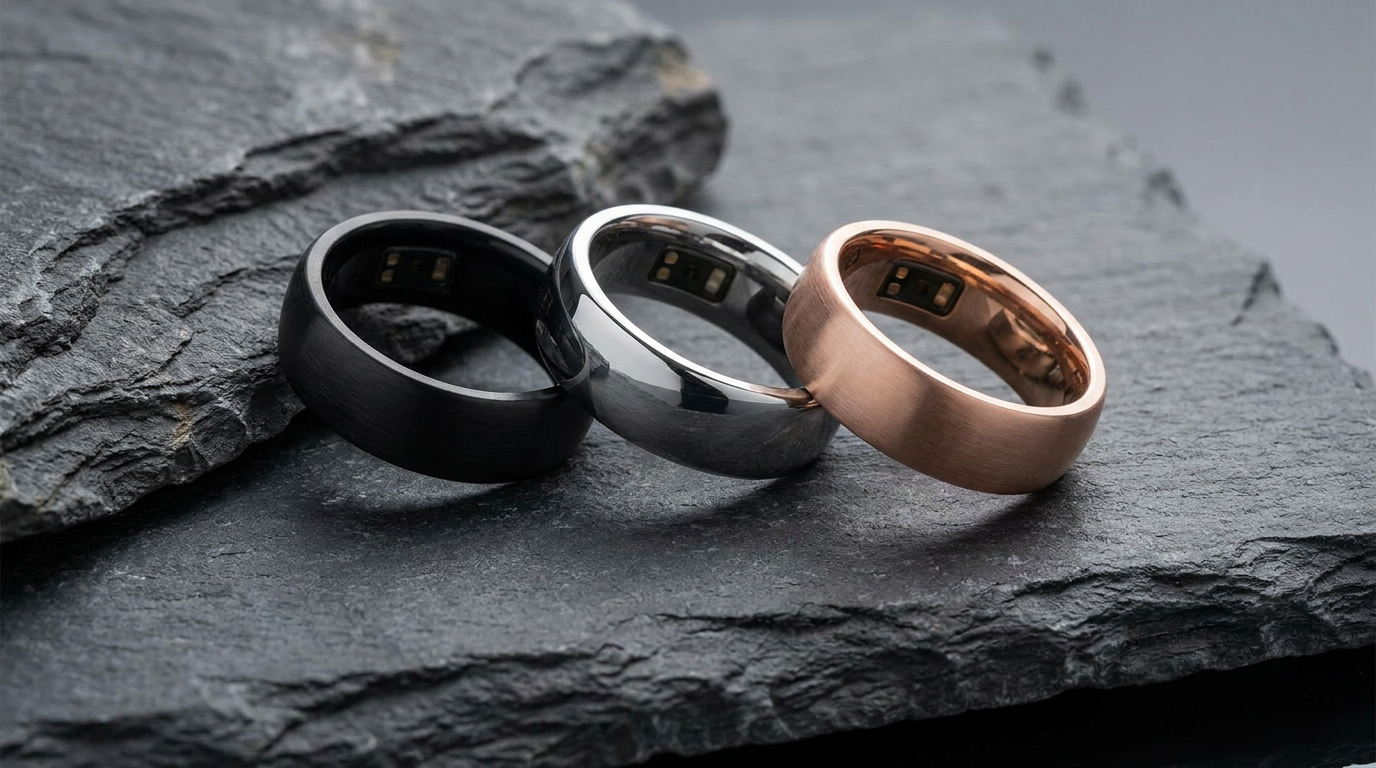
Smart rings have officially transitioned from niche biohacking accessories to mainstream health essentials in 2026. With global shipments surging and major tech giants entering the fray, the days of bulky wrist-worn fitness trackers dominating the market are fading. Consumers are increasingly drawn to the discreet, screen-free nature of smart rings, which offer continuous heart rate, sleep, and recovery tracking without the constant distraction of notifications. As the technology has matured, the sensors have become remarkably precise, allowing these tiny titanium bands to deliver insights that rival the most advanced smartwatches.[6]
For years, the conversation around smart rings began and ended with a single brand, but the landscape has fundamentally shifted. The market is now a fiercely competitive arena featuring the Oura Ring 4, the Samsung Galaxy Ring, the Ultrahuman Ring Air, and the RingConn Gen 2. Each of these devices approaches health tracking with a distinct philosophy, forcing buyers to weigh trade-offs between subscription models, ecosystem lock-in, battery life, and data depth. Navigating this crowded field requires a side-by-side analysis of what each ring does best, where it falls short, and the clinical or real-world evidence backing its claims.[4][5]
When evaluating the Oura Ring 4, the case for the device centers on its unparalleled sleep staging, highly polished companion app, and holistic readiness scores. The argument against it comes down almost entirely to its pricing model, which pairs a $349 base price with a mandatory $5.99 monthly subscription to access detailed metrics. The evidence, however, consistently places Oura at the top of peer-reviewed accuracy tests, particularly for heart rate variability and deep sleep tracking, where it closely mirrors clinical polysomnography. Ultimately, the Oura Ring 4 fits well when you want the most refined, validated health insights available and do not mind a recurring fee. It does not fit when you are fundamentally opposed to subscription paywalls.[1][2]

The Samsung Galaxy Ring represents a massive shift in the wearable market, built specifically to dominate the Android landscape. The case for the Galaxy Ring is built on its seamless integration with the Samsung Health ecosystem, its durable concave titanium design, and the complete absence of monthly subscription fees. The primary argument against it is its strict platform exclusivity; the device is entirely incompatible with Apple iPhones and reserves its best features, like the AI-driven Energy Score, for Samsung smartphone users. Evidence from extensive testing highlights its exceptional comfort and reliable core tracking, though it lacks some of the niche medical-grade sensors found in competitors.[3][5]
This strict ecosystem approach makes the buying decision remarkably straightforward for a specific demographic. The Samsung Galaxy Ring fits well when you are already deeply entrenched in the Samsung Galaxy ecosystem and want a premium, subscription-free tracker that works flawlessly with your phone. It does not fit when you use an iOS device, prefer to keep your health data platform-agnostic, or anticipate switching smartphone brands in the near future.[5]
This strict ecosystem approach makes the buying decision remarkably straightforward for a specific demographic.
For those seeking deep data without corporate lock-in, the Ultrahuman Ring Air offers a compelling alternative. The case for the Ultrahuman centers on its ultra-lightweight 2.4-gram titanium build, its lack of subscription fees, and its hyper-specific actionable insights, such as circadian rhythm alignment and personalized caffeine cutoff windows. The argument against it is that its app can feel overwhelmingly dense with charts and metrics, and its industrial design looks slightly more like a piece of technology than traditional jewelry. Evidence from fitness experts confirms that its metabolic tracking and recovery algorithms rival dedicated sports watches, making it a powerhouse for athletic optimization.[7][8]
Because of its intense focus on actionable data, the Ultrahuman Ring Air caters to a very specific type of user. It fits well when you are a data-hungry fitness enthusiast or biohacker who wants granular, continuous metrics without being tethered to a monthly paywall. It does not fit when you prefer a simple, minimalist daily summary or want a ring that perfectly masquerades as a traditional wedding band.[8]
Finally, the RingConn Gen 2 enters the comparison by solving the most common frustration with wearable technology: constant charging. The case for the RingConn is its staggering 10 to 12-day battery life, its incredibly thin profile, and its one-time purchase price of $299 with zero ongoing fees. The argument against it focuses on its companion app, which, while functional, lacks the sophisticated AI coaching and deep narrative insights provided by Oura or Ultrahuman. The evidence shows that in real-world use, the RingConn outlasts every other ring on the market by nearly double, and its included charging case extends that stamina to over a hundred days away from a wall outlet.[4][6]

This endurance-focused design carves out a distinct and highly practical niche in the 2026 market. The RingConn Gen 2 fits well when charging anxiety is your primary concern and you want a 'set it and forget it' device that covers all the baseline health metrics reliably. It does not fit when you are looking for advanced medical-grade insights, FDA-cleared cycle tracking, or highly personalized daily lifestyle coaching.[6]
Beyond the individual hardware, the choice of a smart ring in 2026 also dictates how you interact with your own health data. Devices that charge a subscription, like Oura, justify the cost by continuously updating their algorithms and acting as an active health coach that interprets the data for you. Devices without subscriptions, like Ultrahuman and RingConn, provide the raw telemetry and leave more of the interpretation up to the user. This philosophical divide is just as important as the physical design of the ring itself.[1][4]

Accuracy across all these top-tier devices has reached a point of diminishing returns for the average consumer. Whether measuring resting heart rate, blood oxygen saturation, or skin temperature variations, the optical sensors packed into these tiny bands are universally excellent. The true differentiator is no longer whether the ring can capture the data, but how effectively the software translates that data into behavioral changes that improve sleep, reduce stress, and optimize daily energy.[2][7]
Ultimately, the era of a single default smart ring is over, replaced by a mature market of specialized tools. Consumers no longer have to compromise on their specific priorities, whether that means avoiding subscriptions, maximizing battery life, or staying within a preferred smartphone ecosystem. By clearly defining what you value most—seamless integration, deep analytics, or sheer convenience—finding the perfect smart ring has never been easier.[4][5]
How we got here
2015
Oura launches its first-generation smart ring via Kickstarter, establishing the modern smart ring category.
2021
Oura Ring Gen 3 introduces a mandatory monthly subscription model, sparking industry debate over recurring fees.
2023
Ultrahuman and RingConn enter the market, offering premium hardware without subscription paywalls.
July 2024
Samsung officially launches the Galaxy Ring, bringing a major tech giant into the smart ring space.
Early 2026
The Oura Ring 4 and RingConn Gen 2 debut, pushing battery life and sensor accuracy to new heights.
Viewpoints in depth
Holistic Health Seekers
Users who prioritize polished, AI-driven coaching and are willing to pay a subscription for it.
This camp argues that raw data is useless without proper interpretation. They favor the Oura Ring because its subscription funds continuous algorithm updates and provides a highly refined app experience that translates complex metrics into simple, actionable readiness scores. For them, the $5.99 monthly fee is a worthwhile investment for a digital health coach that actively helps them improve their sleep and manage stress.
Ecosystem Loyalists
Users who believe wearables should seamlessly integrate with their phone's native health app without third-party bridges.
Ecosystem loyalists prioritize friction-free technology. They champion the Samsung Galaxy Ring because it feeds directly into Samsung Health without requiring a separate app or subscription. This group argues that the best wearable is the one that works natively with the device you already own, allowing for features like the AI-driven Energy Score to pull data from both the ring and the phone simultaneously.
Data-Driven Biohackers
Fitness enthusiasts who prioritize raw, unfiltered telemetry and specialized metrics over simple readiness scores.
Biohackers and athletes often find standard readiness scores too reductive. They gravitate toward devices like the Ultrahuman Ring Air because it provides granular data on circadian rhythms, metabolic health, and personalized caffeine windows. This camp believes that users should own their health data outright, rejecting subscription models in favor of hardware that allows them to export and analyze their own metrics for peak athletic optimization.
Value Maximizers
Consumers who believe hardware should be a one-time purchase and prioritize battery life to reduce daily friction.
This perspective focuses on the total cost of ownership and the practical realities of wearing a device every day. Value maximizers argue that a smart ring is only useful if it is actually on your finger, making the 12-day battery life of the RingConn Gen 2 a killer feature. They fundamentally reject the idea of paying a monthly fee to access data generated by their own bodies, favoring devices that offer a strong baseline of tracking for a single upfront price.
What we don't know
- Whether Apple will enter the smart ring market to compete directly with Samsung and Oura.
- How upcoming FDA regulations might impact the medical claims made by subscription-free ring manufacturers.
Key terms
- Photoplethysmography (PPG)
- An optical sensor technology that uses light to measure changes in blood volume, commonly used in smart rings to track heart rate.
- Heart Rate Variability (HRV)
- The variation in time between consecutive heartbeats, used by health trackers as a key indicator of physical recovery and stress.
- Circadian Rhythm
- The body's internal 24-hour clock that regulates sleep-wake cycles and metabolic processes.
- Polysomnography (PSG)
- A comprehensive sleep study used as the clinical gold standard for measuring sleep stages and disorders, often used to validate smart ring accuracy.
- Blood Oxygen Saturation (SpO2)
- A measure of the amount of oxygen carried in the red blood cells, tracked during sleep to detect breathing disturbances.
Frequently asked
Do I have to pay a monthly fee to use a smart ring?
Only the Oura Ring requires a mandatory monthly subscription ($5.99) for full feature access. Competitors like Samsung, Ultrahuman, and RingConn do not charge ongoing fees.
Does the Samsung Galaxy Ring work with an iPhone?
No, the Samsung Galaxy Ring is exclusively compatible with Android devices, and works best within the Samsung Galaxy ecosystem.
Which smart ring has the longest battery life?
The RingConn Gen 2 currently leads the market with a battery life of 10 to 12 days on a single charge.
Are smart rings better than smartwatches for sleep tracking?
Many users find rings more comfortable to wear at night than bulky watches, and the finger's blood vessels provide highly accurate heart rate and oxygen readings.
Sources
Source coverage
8 outlets
4 viewpoints surfaced








[1]Forbes VettedHolistic Health Seekers
Best Smart Rings 2026
Read on Forbes Vetted →[2]PCMagHolistic Health Seekers
The Best Smart Rings We've Tested for 2026
Read on PCMag →[3]TechRadarEcosystem Loyalists
Best smart ring 2026: From Oura and Samsung to other discreet fitness trackers
Read on TechRadar →[4]The GadgeteerValue Maximizers
Best Smart Ring 2026: Oura Isn't the Default Anymore
Read on The Gadgeteer →[5]MashableEcosystem Loyalists
The best smart rings of 2026 — Oura, Ultrahuman, and Samsung
Read on Mashable →[6]WareableValue Maximizers
Best smart rings 2026: Oura and top alternatives tested
Read on Wareable →[7]Runner's WorldData-Driven Biohackers
The best smart rings: Oura, Ultrahuman and more, tested
Read on Runner's World →[8]Garage Gym ReviewsData-Driven Biohackers
Expert-Tested: Ultrahuman Ring Review (2026)
Read on Garage Gym Reviews →



Every angle. Every day.
Get shopping stories with full source coverage and perspective breakdowns delivered to your inbox.