
US and Iran Sign 14-Point Agreement to End 110-Day War
President Trump and Iranian President Masoud Pezeshkian have signed a memorandum of understanding to halt hostilities, lift blockades, and reopen the Strait of Hormuz, sparking fierce backlash from Israel and US conservatives.
By Factlen Editorial Team
- US Administration
- Frames the deal as a major victory that averted a global economic depression and secured commitments to curb Iran's nuclear stockpile.
- Israeli & Conservative Critics
- Condemns the deal as a strategic disaster and appeasement that rewards Tehran with billions while failing to permanently dismantle its nuclear infrastructure.
- Iranian Government
- Views the agreement as a record of US failure, emphasizing the lifting of sanctions and asserting sovereign rights to charge shipping tolls.
- Global Markets
- Reacts positively to the immediate de-escalation and the reopening of critical energy shipping lanes.
What's not represented
- · Commercial Shipping Companies
- · Lebanese Civilians
Why this matters
The agreement halts a major global conflict that choked the world's most critical oil chokepoint, immediately lowering global energy prices. However, the deal's concessions—and Iran's vow to charge tolls in the Strait of Hormuz—set the stage for severe geopolitical realignments and domestic political battles in the US and Israel.
Key points
- The US and Iran signed a 14-point memorandum of understanding to end their 110-day war.
- The deal includes an immediate ceasefire, lifting of the US naval blockade, and oil sanctions waivers.
- Iran agreed to down-blend 440kg of highly enriched uranium and open the Strait of Hormuz toll-free for 60 days.
- Iran's chief negotiator stated Tehran will charge shipping tolls in the Strait after the 60-day window expires.
- US Republicans and Israeli officials fiercely criticized the deal, calling it a strategic disaster that rewards Iran.
- Global markets reacted positively, with oil prices dropping and stock futures rallying on the news.
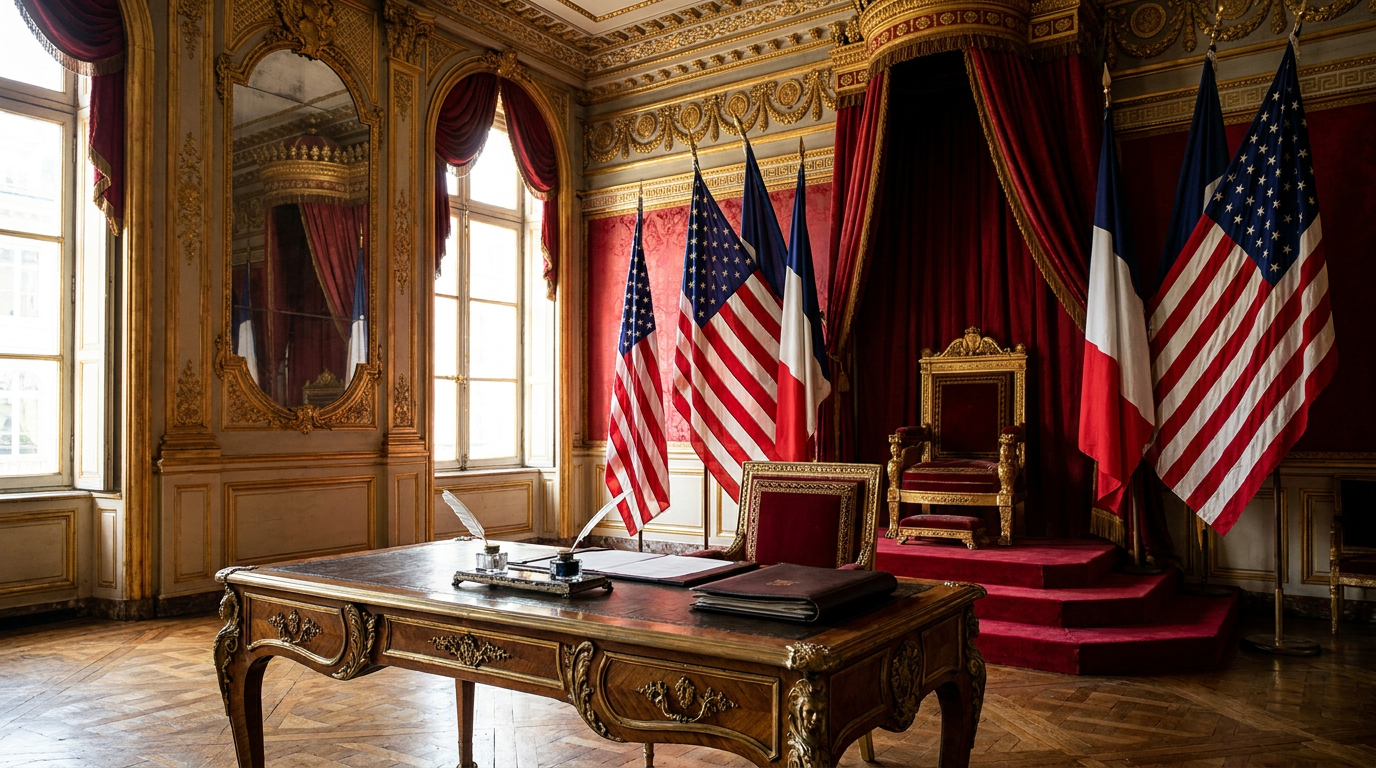
The United States and Iran have officially signed a 14-point memorandum of understanding (MoU), bringing an immediate halt to a 110-day military conflict that has devastated the global economy. US President Donald Trump signed the document at the Palace of Versailles following the G7 summit in France, while Iranian President Masoud Pezeshkian signed remotely. The agreement enacts a permanent ceasefire across all fronts, including in Lebanon, and initiates a 60-day window to negotiate a comprehensive final treaty.[1][2][6]
The immediate terms of the MoU offer significant economic relief to Tehran in exchange for nuclear concessions and the reopening of global shipping lanes. The US will lift its naval blockade on Iranian ports, issue immediate waivers for Iranian crude oil exports, and unfreeze billions of dollars in Iranian assets. In return, Iran has agreed to down-blend its 440-kilogram stockpile of highly enriched uranium, a critical step the US administration says will prevent Tehran from obtaining a nuclear weapon.[2][6]
A central pillar of the agreement is the reopening of the Strait of Hormuz, the transit point for roughly a fifth of the world's oil consumption. The MoU stipulates that Iran must ensure toll-free passage for commercial vessels for at least 60 days. President Trump defended the concessions by arguing that the alternative was a "worldwide depression," noting that the market "loves" the resolution.[2][7]

Global markets reacted swiftly to the de-escalation. Brent crude oil prices dropped by over 1.5 percent as the prospect of normalized shipping returned, while stock indices across Asia and US futures rallied on the news that the blockade was ending.[7]
However, the ink was barely dry before Iranian officials challenged the US framing of the deal. Iran's chief negotiator, Parliament Speaker Mohammad Bagher Ghalibaf, called the agreement a "record of US failure" and explicitly stated that the Strait of Hormuz will not return to its pre-war status. Ghalibaf announced on state television that once the 60-day fee-free period expires, Iran will assert its sovereignty and begin charging international shipping companies a toll for transit services.[3]
However, the ink was barely dry before Iranian officials challenged the US framing of the deal.
That assertion has fueled intense backlash in Washington, where several of Trump's Republican allies are openly revolting against the administration's diplomatic pivot. Senator Bill Cassidy of Louisiana condemned the MoU as the "worst foreign policy blunder in decades." Cassidy argued that the deal rewards Iranian aggression, allows Tehran to rebuild its infrastructure with unfrozen funds, and essentially surrenders control of the Strait of Hormuz to the Islamic Republic.[5]
Conservative critics point out that the deal lacks verifiable mechanisms to permanently dismantle Iran's nuclear weapons program or its ballistic missile capabilities. Former Vice President Mike Pence and other prominent Republicans have compared the MoU unfavorably to the 2015 Obama-era nuclear accord, which Trump himself previously scrapped and labeled the "worst deal in history."[5][6]

The fury in Washington is mirrored by outrage in Jerusalem. Israeli Prime Minister Benjamin Netanyahu, who had promised the Israeli public "total victory" over Iran, remained conspicuously silent as the deal was announced. Behind the scenes, senior Israeli officials have described the agreement as a "strategic and political disaster" that was negotiated without Israel's interests being taken into account.[4]
Israeli analysts and opposition leaders have been scathing in their assessments, accusing Netanyahu of a colossal strategic failure. Critics argue that Netanyahu led the Trump administration into a war while misjudging the US President's appetite for a protracted conflict. The MoU's requirement for an immediate cessation of hostilities in Lebanon also severely curtails Israel's military operations against Hezbollah, leaving Netanyahu politically isolated and vulnerable at home.[4]
The agreement also floats the creation of a $300 billion reconstruction fund for Iran, financed by regional partners in the Gulf, though the exact mechanics of this fund remain undefined. Access to Iran's frozen funds is reportedly contingent on the regime actively implementing the agreement's terms, rather than being released immediately upon signing.[2][7]

Both sides now enter a fragile 60-day negotiating period to hammer out a final, binding treaty that would require endorsement by the UN Security Council. US officials have warned that they will know within days if Iran is stalling, and that Washington is prepared to walk away and significantly tighten economic pressure if the talks collapse. For now, the bombs have stopped falling, but the geopolitical fallout is only just beginning.[2][6]
How we got here
Feb 2026
The US and Israel launch a military conflict against Iran, leading to a naval blockade and the closure of the Strait of Hormuz.
June 14, 2026
The 14-point memorandum of understanding is digitally signed by US and Iranian representatives.
June 17, 2026
President Trump officially signs the document at the Palace of Versailles, enacting an immediate ceasefire.
August 2026
The 60-day negotiation window is set to expire, at which point Iran plans to begin charging tolls in the Strait of Hormuz.
Viewpoints in depth
The US Administration's View
The deal is a necessary compromise to avert a global economic catastrophe.
The Trump administration frames the 14-point memorandum as a massive diplomatic victory that achieved what military force alone could not: the reopening of the Strait of Hormuz. Officials argue that without this deal, the world was plunging toward a severe economic depression driven by skyrocketing energy costs. Furthermore, the administration points to Iran's commitment to down-blend its 440-kilogram stockpile of highly enriched uranium as proof that the agreement actively curbs Tehran's nuclear ambitions, buying time for a more permanent treaty.
The Iranian Government's View
The agreement is a validation of Iranian resilience and a failure of US pressure.
Tehran is projecting the ceasefire as a triumph over the US naval blockade. Iranian officials, led by Parliament Speaker Mohammad Bagher Ghalibaf, emphasize that the deal forces the US to unfreeze billions in assets and issue oil waivers without Iran surrendering its ballistic missile program. Crucially, Iran views the 60-day toll-free period in the Strait of Hormuz not as a permanent concession, but as a temporary grace period. After it expires, Tehran asserts it has the sovereign right to charge international shipping companies for maritime security and services.
Israeli & Conservative Critics' View
The MoU is a dangerous capitulation that rewards Iranian aggression.
Opponents of the deal, including Israeli Prime Minister Benjamin Netanyahu and US Republicans like Senator Bill Cassidy, view the agreement as a historic blunder. They argue that lifting the blockade and unfreezing billions of dollars rescues Iran's economy just as sanctions were taking a fatal toll. Critics are particularly alarmed that the deal leaves Iran's core nuclear infrastructure intact and forces Israel to halt its military operations in Lebanon. They warn that allowing Iran to eventually charge tolls in the Strait of Hormuz essentially legitimizes Tehran's control over the world's most critical energy chokepoint.
What we don't know
- Whether Iran will actually follow through on its threat to charge tolls in the Strait of Hormuz after 60 days.
- How the proposed $300 billion regional reconstruction fund for Iran will be financed and managed.
- Whether the US and Iran can successfully negotiate a permanent, UN-backed treaty before the 60-day window closes.
- How the Israeli government will respond militarily if the ceasefire in Lebanon breaks down.
Key terms
- Memorandum of Understanding (MoU)
- A formal agreement between two or more parties that establishes a framework for cooperation, often serving as a stepping stone to a final, binding treaty.
- Strait of Hormuz
- A narrow, strategically vital waterway between the Persian Gulf and the Gulf of Oman, through which roughly 20% of the world's oil consumption passes.
- Down-blending
- The process of mixing highly enriched uranium with natural or depleted uranium to reduce its concentration, making it unusable for nuclear weapons.
- Sanctions waiver
- A temporary exemption granted by a government that allows certain prohibited economic activities, such as purchasing Iranian oil, to take place without penalty.
Frequently asked
What does the US-Iran memorandum actually do?
It implements an immediate ceasefire across all fronts, lifts the US naval blockade on Iranian ports, and provides sanctions waivers for Iranian oil. In return, Iran agrees to down-blend its highly enriched uranium and keep the Strait of Hormuz open toll-free for 60 days.
Will ships have to pay to use the Strait of Hormuz?
The agreement guarantees 60 days of toll-free passage. However, Iran's chief negotiator has stated that after this period, Iran will assert its sovereignty and charge fees for maritime services.
Why are Israeli officials angry about the deal?
Israeli leaders view the deal as a strategic disaster because it unfreezes billions of dollars for Iran without permanently dismantling its nuclear program, and it forces a halt to Israeli military operations in Lebanon.
What happens after the 60-day period?
The 60 days serve as a window for the US and Iran to negotiate a comprehensive, final treaty that would be backed by the UN Security Council. If talks fail, both sides have threatened to walk away.
Sources
Source coverage
7 outlets
4 viewpoints surfaced







[1]CBS NewsUS Administration
Trump signs Iran memorandum of understanding at Versailles
Read on CBS News →[2]The GuardianIranian Government
Donald Trump signs 14-point agreement with Iran, claiming 'major win'
Read on The Guardian →[3]Times of IsraelIranian Government
Iran's chief negotiator calls deal a 'failure' for US, says Tehran to charge Hormuz shipping fees after 60 days
Read on Times of Israel →[4]AxiosIsraeli & Conservative Critics
Netanyahu fumes, allies rage over Trump's Iran deal
Read on Axios →[5]Al JazeeraIsraeli & Conservative Critics
Louisiana Senator Bill Cassidy blasts US-Iran MoU as 'worst foreign policy blunder in decades'
Read on Al Jazeera →[6]The Straits TimesUS Administration
Trump signs interim deal to end war with Iran, reopen Strait of Hormuz
Read on The Straits Times →[7]Investing.comGlobal Markets
Trump signs US-Iran deal in Versailles- reports
Read on Investing.com →

Every angle. Every day.
Get news politics stories with full source coverage and perspective breakdowns delivered to your inbox.