
NWSL Joins Global 'Project ACL' Initiative to Combat Knee Injury Epidemic in Women's Soccer
The National Women's Soccer League has partnered with FIFPRO and European leagues in a three-year research initiative to eliminate the gender gap in ACL injuries. The project targets player workload, female-specific footwear, and biomechanics to protect athletes.
By Ryder James

The National Women's Soccer League and its players' union have officially joined "Project ACL," a global research coalition aimed at solving one of the most persistent and devastating problems in women's sports: the anterior cruciate ligament injury epidemic.
The U.S. league joins the English Women's Super League, global players' union FIFPRO, and Nike in a comprehensive three-year study designed to protect athletes. By pooling resources across continents, the initiative represents the most coordinated effort in the sport's history to address the environmental, biological, and hardware factors that have historically been ignored in the women's game.[1]
For years, the women's game has been haunted by a disproportionate rate of knee injuries. Female soccer players are currently between two and six times more likely to suffer an ACL tear than their male counterparts.
The injury has sidelined some of the sport's biggest stars during peak competitions, including international standouts like Sam Kerr, Leah Williamson, and Catarina Macario. These high-profile absences have prompted urgent calls from players, coaches, and fans for systemic intervention rather than placing the blame on individual conditioning. The consensus is that the sport itself must adapt to the athletes.
Historically, the sports science community has offered few concrete solutions, largely because female athletes have been chronically understudied. According to Project ACL researchers, women make up as little as eight percent of all sports science research globally. Most training regimens, recovery protocols, and equipment designs have been based entirely on male prototypes, leaving female athletes to navigate a high-performance environment built for different bodies. This massive data gap has meant that prevention strategies were often just guesswork, applying male-centric biomechanical assumptions to female athletes with entirely different physiological profiles.[2]
Project ACL aims to close that critical data gap by tracking the specific environmental and biological factors that contribute to ligament ruptures. Since its initial launch, the initiative has surveyed medical staff and interviewed dozens of players across all twelve WSL clubs in England. It will now expand that rigorous data collection to the NWSL's sixteen franchises in the United States. By gathering thousands of data points across multiple professional leagues, researchers hope to build the first truly comprehensive, female-specific database of injury risk factors in global soccer.[1]
A primary focus of the ongoing research is player workload and scheduling. Using FIFPRO's advanced Player Workload Monitoring tool, researchers are meticulously tracking travel schedules, total game minutes, and 'critical zone' appearances—matches played with fewer than five days of rest.
Player advocates and union representatives argue that the rapidly expanding international and club calendars have severely outpaced the development of adequate recovery environments. They hypothesize that forcing players to compete on short rest pushes fatigued muscles past their breaking points, leaving the knee ligaments vulnerable to catastrophic failure during routine plays.[1]
Beyond scheduling and fatigue, the initiative is taking a hard look at the physical equipment female athletes use, specifically their footwear. For decades, the industry standard was a 'shrink it and pink it' approach, where manufacturers simply scaled down male cleats to smaller sizes and added feminine colorways without altering the structural geometry of the shoe.
This meant that professional women were competing at the highest levels of the sport in boots that fundamentally did not fit the mechanical realities of their bodies, a practice that researchers now view as a major contributing factor to the injury crisis.[3]
This historical practice ignored significant anatomical differences between the sexes. Studies utilizing 3D imaging of female players' feet have revealed that women typically have narrower heels, wider forefeet, and higher arches than men.
Wearing ill-fitting boots designed for male biomechanics can lead to altered movement patterns, severe discomfort, and increased pressure on the medial side of the knee during dynamic shifts in direction. When the foot is not properly supported by the boot's last, the rotational forces generated during a sprint or a cut are transferred directly up the leg and absorbed by the ACL.[2][3]
In response to these findings, equipment manufacturers are finally engineering female-specific soccer cleats from the ground up. Nike's Phantom Luna, developed over two years of dedicated research, features a lower cuff to accommodate the female ankle and a specialized stud configuration designed to reduce rotational traction. Independent brands have also entered the market with lasts built entirely around female foot anatomy, prioritizing joint health alongside on-field performance. These new designs aim to provide the lockdown and support necessary to keep the knee aligned during the sport's most explosive movements.[2]
The interaction between these cleats and various playing surfaces is another critical risk factor being evaluated by the coalition. Sports medicine experts note that wearing traditional hard-ground grass studs on artificial turf can cause the cleat to get stuck in the surface during a sharp turn, leading directly to non-contact ACL tears.
Because women's leagues have historically played a higher percentage of matches on artificial turf than men's leagues, standardizing footwear for specific surfaces is now viewed as a crucial preventative measure that must be communicated to players at all levels.[2][3]
Biological factors are also being integrated into the new prevention models. Women generally have a wider Q-angle—the angle formed between the hip and the knee—which naturally increases the inward stress on the ACL during jumping and cutting movements. Additionally, hormonal fluctuations during the menstrual cycle, particularly the increase in ligament laxity during certain phases, are being studied to help trainers tailor strength and conditioning programs. By understanding when ligaments are naturally looser, medical staffs can adjust training loads to protect players during their most vulnerable windows.[2][3]
While the three-year study aims to produce new, league-wide regulations, medical professionals are already pushing for immediate grassroots interventions. At the June 2026 Soccer Medicine Updates conference hosted by Cedars-Sinai in Los Angeles, experts emphasized the effectiveness of standardized neuromuscular training, specifically highlighting the FIFA 11+ warmup program. The conference brought together physicians, athletic trainers, and researchers who agreed that waiting for the final results of Project ACL should not delay the implementation of proven safety measures that are available right now.
The FIFA 11+ is a free, fifteen-minute routine of running, strength, and plyometric exercises that requires no special equipment and can be performed on any pitch. When implemented consistently before training sessions and matches, it has been shown to reduce the risk of ACL injuries by up to seventy percent. Medical directors are urging coaches at all levels, from local youth leagues to the professional ranks, to adopt the protocol immediately to protect the next generation of players from preventable joint trauma.[3]
The FIFA 11+ is a free, fifteen-minute routine of running, strength, and plyometric exercises that requires no special equipment and can be performed on any pitch.
The ultimate goal of Project ACL is to transform these biomechanical findings and workload data into mandatory, regulated protocols across global leagues, similar to the frameworks that now exist for concussions. By shifting the sport's focus from post-injury surgical recovery to proactive, data-driven prevention, the coalition hopes to fundamentally change the landscape of women's soccer. If successful, the initiative will extend the careers of countless female athletes and ensure that a devastating ACL tear is no longer accepted as an inevitable hazard of the profession.
The essentials
- The NWSL has joined Project ACL, a global initiative with FIFPRO and the WSL to combat knee injuries in women's soccer.
- Female players are currently two to six times more likely to suffer an ACL tear than male players.
- The three-year study tracks player workload, travel schedules, and matches played on short rest to identify environmental risks.
- Equipment manufacturers are abandoning the 'shrink it and pink it' approach to develop female-specific cleats that accommodate different foot shapes.
- Medical experts are urging the immediate adoption of the 15-minute FIFA 11+ warmup, which can reduce injury risk by up to 70%.
Timeline
2023
A wave of high-profile ACL injuries sidelines top players ahead of the FIFA Women's World Cup, sparking global demands for better research.
2024
The English Women's Super League (WSL) and FIFPRO officially launch Project ACL to study the injury epidemic.
April 2026
The NWSL and its players' union join Project ACL, expanding the research to the United States.
June 2026
Sports medicine experts convene at Cedars-Sinai to push for immediate adoption of standardized prevention protocols like the FIFA 11+.
- Player Unions & Advocates
- Argue that congested match calendars and inadequate recovery time are the primary drivers of the injury epidemic.
- Sports Scientists
- Emphasize anatomical differences and the need for female-specific biomechanical research and standardized warmups.
- Equipment Manufacturers
- Focus on technological interventions, specifically engineering female-specific boots to reduce turf traction and joint stress.
Perspectives this story doesn't cover
- Grassroots Coaches
- Youth Soccer Organizations
Sources
Source coverage
3 outlets
3 viewpoints surfaced



- [1]ReutersPlayer Unions & Advocates
NWSL and players' union join Project ACL to combat injury epidemic
Read on Reuters → - [2]MDPISports Scientists
Biomechanical Effects of Sex-Specific Football Cleats in Female Players
Read on MDPI → - [3]SciPublicationsSports Scientists
The Necessity of Sex-Specific Soccer Cleats for Female Athletes
Read on SciPublications →

More in Sports
See all →Saudi Pro League
Ronaldo Returns to Al-Nassr Lineup for Critical Clash Against Al-Diriyah
5 sources
Eredivisie Title Race
Depleted PSV Eindhoven Hosts SC Heerenveen Following First Eredivisie Defeat
7 sources

Saudi Pro League
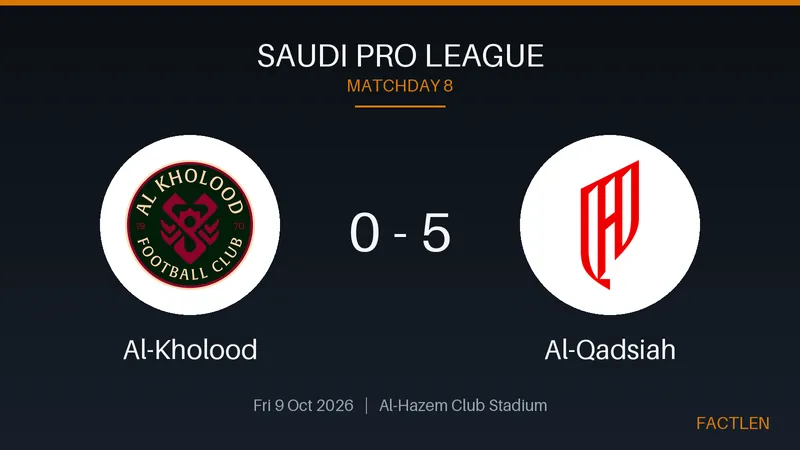
Al-Qadsiah Dismantles Al-Kholood 5-0 to Seize Top Spot in Saudi Pro League
6 sources
Pitch Geometry
Enforcing Law 14's 9.15-Metre Buffer: Why Soccer's Penalty Arc Extends Four Yards Beyond the Box
4 sources
Comments
Every angle. Every day.
Get Sports stories with full source coverage and perspective breakdowns, free every day.