
US and Iran Sign Interim Peace Deal, Reopening Strait of Hormuz to Global Trade
The United States and Iran have signed an interim peace agreement aimed at ending recent hostilities and reopening the critical Strait of Hormuz. While the pact immediately stabilized global energy markets, analysts warn that oil flows may only recover to 70% of pre-war levels as regional producers maintain alternative shipping routes.
By Factlen Editorial Team
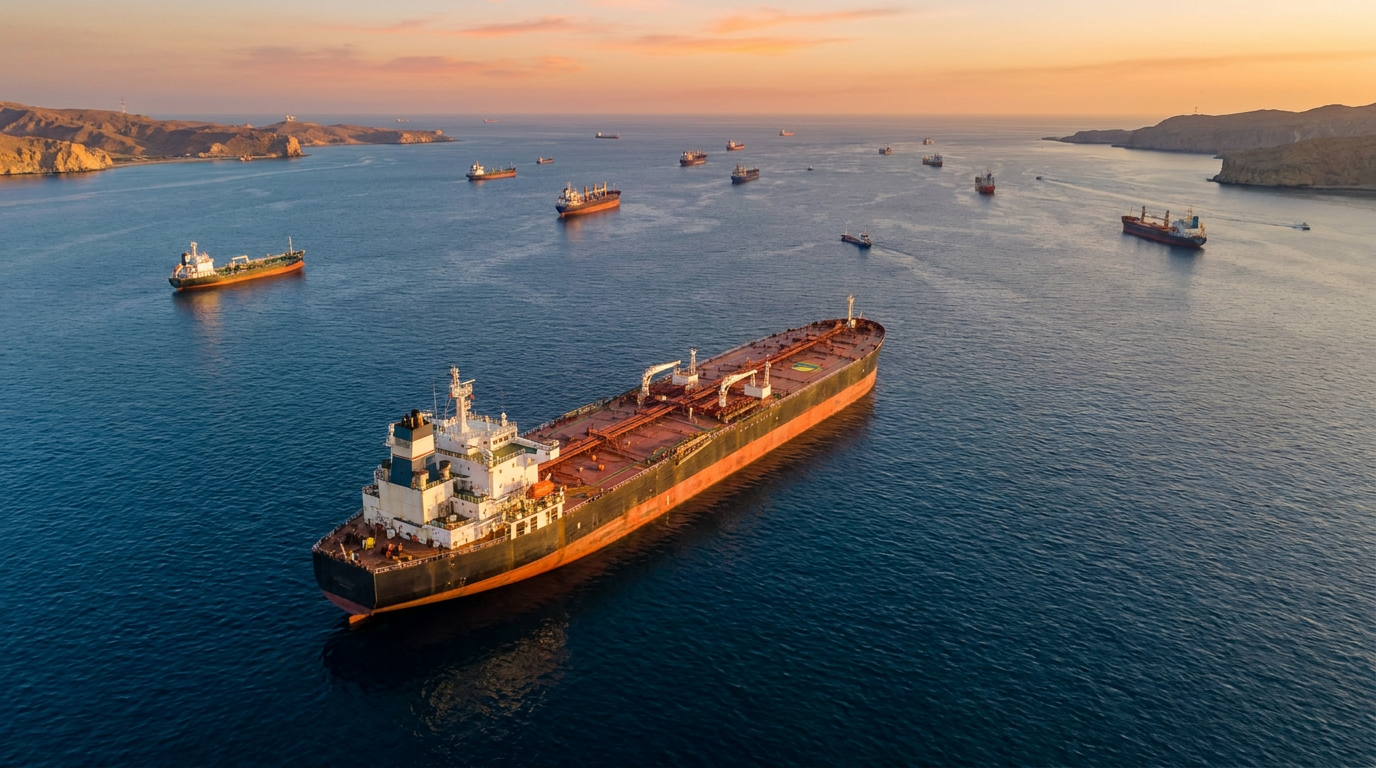
- Energy Market Pragmatists
- Focuses on the permanent structural shift toward alternative pipelines and the 70% recovery ceiling for the strait.
- Geopolitical Optimists
- Emphasizes the immediate de-escalation, the resumption of global trade, and the easing of macroeconomic inflationary pressures.
- Risk & Security Skeptics
- Highlights the fragility of the 'interim' label, lingering war-risk insurance premiums, and domestic political hurdles in both nations.
What's not represented
- · Iranian civilian economy
- · Oman maritime authorities
Why this matters
The Strait of Hormuz is the world's most important oil chokepoint, historically handling 20% of global petroleum consumption. Reopening this waterway eases the immediate threat of a global energy crisis and inflationary spikes, though permanently altered shipping routes mean energy prices may not fully return to pre-conflict baseline levels.
Key points
- The US and Iran signed an interim peace deal to immediately reopen the Strait of Hormuz.
- Global energy and commodity markets stabilized on the news, easing some inflation fears.
- Goldman Sachs projects oil flows through the strait will only recover to 70% of pre-war levels.
- Gulf producers are permanently shifting a portion of their exports to alternative overland pipelines.
- The agreement includes a 90-day phased drawdown of naval escorts for commercial shipping.
The United States and Iran have officially signed an interim peace agreement, marking a critical de-escalation in a conflict that has severely disrupted global trade. The centerpiece of the pact is the immediate reopening of the Strait of Hormuz, the world's most vital maritime chokepoint for energy transit. After months of military posturing and blockades that sent shockwaves through the global economy, the agreement establishes a framework for mutual naval withdrawal and the resumption of commercial shipping.[1][4]
The immediate reaction across global financial markets has been a collective, albeit cautious, exhalation. Energy prices, which had been highly volatile during the closure, began to stabilize as the timeline for the agreement's implementation accelerated. Broader commodity markets also responded to the easing of supply chain bottlenecks; notably, copper prices fell more than one percent, wiping out earlier weekly gains as the inflationary panic tied to energy scarcity began to subside.[1][3]
To understand the magnitude of this development, it is essential to examine the mechanics of the Strait of Hormuz itself. The strait is a narrow waterway, only 21 miles wide at its narrowest point, separating Oman and Iran. It serves as the sole sea passage connecting the petroleum-rich Persian Gulf to the Arabian Sea and the broader global ocean. Before the recent conflict, approximately one-fifth of the world's total daily oil consumption passed through this specific channel, making it the single most important energy artery on the planet.[5][7]

The interim nature of the deal means that while the waterway is technically open, the resumption of traffic will be phased. The agreement outlines a 90-day confidence-building period during which commercial vessels will still operate under heightened security protocols, and international naval escorts will gradually draw down their presence. This phased approach is designed to prevent accidental skirmishes between lingering military assets and massive commercial tankers navigating the tight shipping lanes.[4][8]
Despite the diplomatic breakthrough, energy analysts warn that the global oil trade will not simply snap back to its pre-war status quo. According to projections from Goldman Sachs, oil flows through the Strait of Hormuz may only recover to approximately 70 percent of their historical baseline. This permanent reduction reflects a fundamental structural shift in how regional energy producers manage their export logistics in the wake of the conflict.[2]
The primary driver behind this 70 percent ceiling is the rapid acceleration of alternative infrastructure. During the months when the strait was contested, major Gulf producers, including Saudi Arabia and the United Arab Emirates, heavily leaned on and expanded alternative pipeline networks that bypass the Strait of Hormuz entirely. These overland routes, which deliver crude directly to the Red Sea and the Gulf of Oman, have transitioned from emergency backups to preferred, risk-adjusted export channels.[2][6]

The primary driver behind this 70 percent ceiling is the rapid acceleration of alternative infrastructure.
"The conflict served as a stress test for the global energy supply chain, and the producers adapted," notes the Wall Street Journal's analysis of the shifting infrastructure. By permanently diverting a portion of their exports through these alternative pipelines, Gulf nations are actively reducing the geopolitical leverage that any single actor can wield by threatening to close the strait in the future.[6][7]
The shipping and maritime insurance industries are also dictating the pace of the recovery. While the interim peace deal has prompted insurers to cautiously lower the exorbitant premiums that effectively halted traffic, "war risk" surcharges remain partially in effect. Underwriters at Lloyd's of London and other major hubs are requiring sustained proof of safe passage before they fully normalize rates, meaning the cost of shipping through the strait remains elevated compared to pre-conflict levels.[5]
This lingering friction in the shipping market has direct implications for global inflation. Central banks around the world have been closely monitoring the Hormuz situation, as energy shocks are notoriously difficult to manage with standard monetary policy. The reopening of the strait provides undeniable relief to headline inflation metrics, reducing the immediate pressure on central banks to maintain punishingly high interest rates to cool economies.[3][8]
However, monetary policymakers are not declaring premature victory. In the United States, Federal Reserve Chair Kevin Warsh used his debut press conference to position himself as an inflation hawk, sparking speculation about potential rate hikes despite the diplomatic progress. Warsh's stance indicates that while the Hormuz reopening removes a massive inflationary tail-risk, underlying domestic price pressures remain a primary concern for the central bank.[3]

For the broader OPEC+ coalition, the interim deal introduces a new layer of complexity to their production quotas. If the peace agreement holds and sanctions are potentially eased in subsequent diplomatic phases, Iranian crude could begin returning to the global market in larger volumes. OPEC+ members will have to carefully calibrate their own output to accommodate this returning supply without crashing prices, a delicate balancing act in a market already adjusting to new transit routes.[7]
The political durability of the interim deal remains the most significant unknown variable. In both Washington and Tehran, the agreement faces intense scrutiny from domestic hardliners who view the concessions as premature. Because the pact is explicitly "interim," it serves as a bridge to a more comprehensive treaty—a process that is historically fraught with setbacks and requires sustained diplomatic capital.[4][8]

Furthermore, the global economy's adaptation to the closure has permanently altered the strategic calculus of the region. The realization that the world could endure a disruption at the Strait of Hormuz—albeit at a high cost—has somewhat demystified the ultimate "doomsday" scenario of energy markets. This resilience may paradoxically make future diplomatic negotiations less prone to panic-driven concessions.[5][6]
Ultimately, the US-Iran interim peace deal represents a triumph of pragmatic de-escalation over catastrophic conflict. While the Strait of Hormuz is open for business once again, the global energy map has been indelibly redrawn. The legacy of this conflict will not be a return to the old normal, but rather the establishment of a more diversified, cautious, and structurally resilient global oil trade.[1][2][8]
How we got here
Pre-Conflict
The Strait of Hormuz handles roughly 20% of global daily oil consumption.
Recent Months
Military posturing and blockades severely disrupt commercial shipping, spiking global energy prices.
June 18, 2026
The US and Iran sign an interim peace deal to reopen the waterway and de-escalate naval presence.
Next 90 Days
A phased confidence-building period begins, gradually reducing international naval escorts for commercial vessels.
Viewpoints in depth
Gulf Oil Producers' View
Accelerating alternative routes to permanently reduce reliance on the Strait.
For nations like Saudi Arabia and the UAE, the recent conflict validated their long-term investments in alternative infrastructure. By permanently shifting a portion of their crude exports to overland pipelines that terminate in the Red Sea or the Gulf of Oman, these producers are actively diluting the geopolitical leverage of the Strait of Hormuz. They view the 70% recovery projection not as a failure of the peace deal, but as a strategic success in risk diversification.
Shipping Insurers' View
Maintaining elevated risk premiums until the 90-day confidence period proves successful.
The maritime insurance industry operates on realized safety, not diplomatic promises. While the interim deal is a positive signal, underwriters at major hubs like Lloyd's of London are keeping 'war risk' surcharges partially intact. They argue that until the 90-day phased naval drawdown is completed without incident, the physical risk to massive commercial vessels navigating the narrow 21-mile channel remains too high to return to pre-conflict pricing models.
Central Bankers' View
Welcoming the supply shock relief but remaining hawkish on underlying domestic inflation.
Monetary policymakers view the reopening of the strait as the removal of a massive, unpredictable tail-risk to the global economy. However, as evidenced by Federal Reserve Chair Kevin Warsh's recent hawkish positioning, central banks are cautious not to overreact to falling energy prices. They argue that while the supply-side shock has eased, underlying domestic demand and service-sector inflation still require restrictive monetary policy to fully tame.
What we don't know
- Whether the 'interim' peace deal will successfully translate into a permanent, comprehensive treaty.
- Exactly how quickly maritime insurance premiums will return to pre-conflict baseline levels.
- How OPEC+ will adjust its production quotas if Iranian crude begins returning to the market in larger volumes.
Key terms
- Strait of Hormuz
- A narrow, strategically vital waterway between Oman and Iran that connects the Persian Gulf to the Arabian Sea.
- War Risk Premium
- An additional surcharge levied by maritime insurers for vessels traveling through active conflict zones or areas with high geopolitical tension.
- Interim Agreement
- A temporary diplomatic pact intended to de-escalate immediate tensions and build trust while a permanent treaty is negotiated.
- OPEC+
- An alliance of crude oil producers, including the Organization of the Petroleum Exporting Countries and allied non-members like Russia, that coordinates global output.
Frequently asked
Will oil prices drop back to pre-war levels immediately?
Not necessarily. While prices have stabilized, shipping insurance premiums remain elevated, and regional producers are permanently diverting some exports to alternative pipelines.
Why is the Strait of Hormuz so important?
It is a 21-mile-wide waterway that serves as the only sea passage from the Persian Gulf to the open ocean, historically handling about 20% of the world's daily oil consumption.
What does an 'interim' peace deal mean?
It is a temporary agreement designed to immediately halt hostilities and reopen trade routes while diplomats negotiate a more comprehensive, long-term treaty.
Why are oil flows only projected to recover to 70%?
During the conflict, Gulf nations heavily expanded alternative overland pipelines to bypass the strait. They plan to continue using these routes to reduce future geopolitical risks.
Sources
Source coverage
8 outlets
3 viewpoints surfaced






[1]BloombergEnergy Market Pragmatists
US and Iran Sign Interim Peace Deal
Read on Bloomberg →Goldman Says Hormuz Oil Flows May Recover to Only 70% After War
Read on Bloomberg →Copper Falls After Fed Chairman Warsh Positions as Inflation Hawk
Read on Bloomberg →[4]Al JazeeraRisk & Security Skeptics
Tehran and Washington sign interim agreement, easing Gulf tensions
Read on Al Jazeera →[5]Financial TimesRisk & Security Skeptics
Shipping insurers cautiously lower Gulf premiums following US-Iran deal
Read on Financial Times →[6]The Wall Street JournalEnergy Market Pragmatists
Energy markets skeptical of full Hormuz recovery despite peace deal
Read on The Wall Street Journal →[7]S&P GlobalEnergy Market Pragmatists
OPEC+ producers weigh output adjustments amid Strait of Hormuz reopening
Read on S&P Global →[8]The New York TimesGeopolitical Optimists
What the U.S.-Iran Interim Peace Deal Means for Global Inflation
Read on The New York Times →

More in business
See all 5 stories →Strait of Hormuz
US and Iran Sign Interim Peace Deal, Reopening Strait of Hormuz After 100-Day Conflict
8 sources
Autonomous Vehicles
WeRide and Uber to Launch Commercial Robotaxi Service in Zurich
6 sources

Super-Apps
How Uzbekistan Built Its First Tech Unicorn: Inside the Rise of the Uzum Super-App
6 sources

Every angle. Every day.
Get business stories with full source coverage and perspective breakdowns delivered to your inbox.