
How Cold-Climate Heat Pumps Are Finally Conquering Older, Drafty Homes
Advancements in cold-climate technology and high-temperature units are allowing century-old homes to ditch fossil fuels without sacrificing their original architecture.
By Factlen Editorial Team
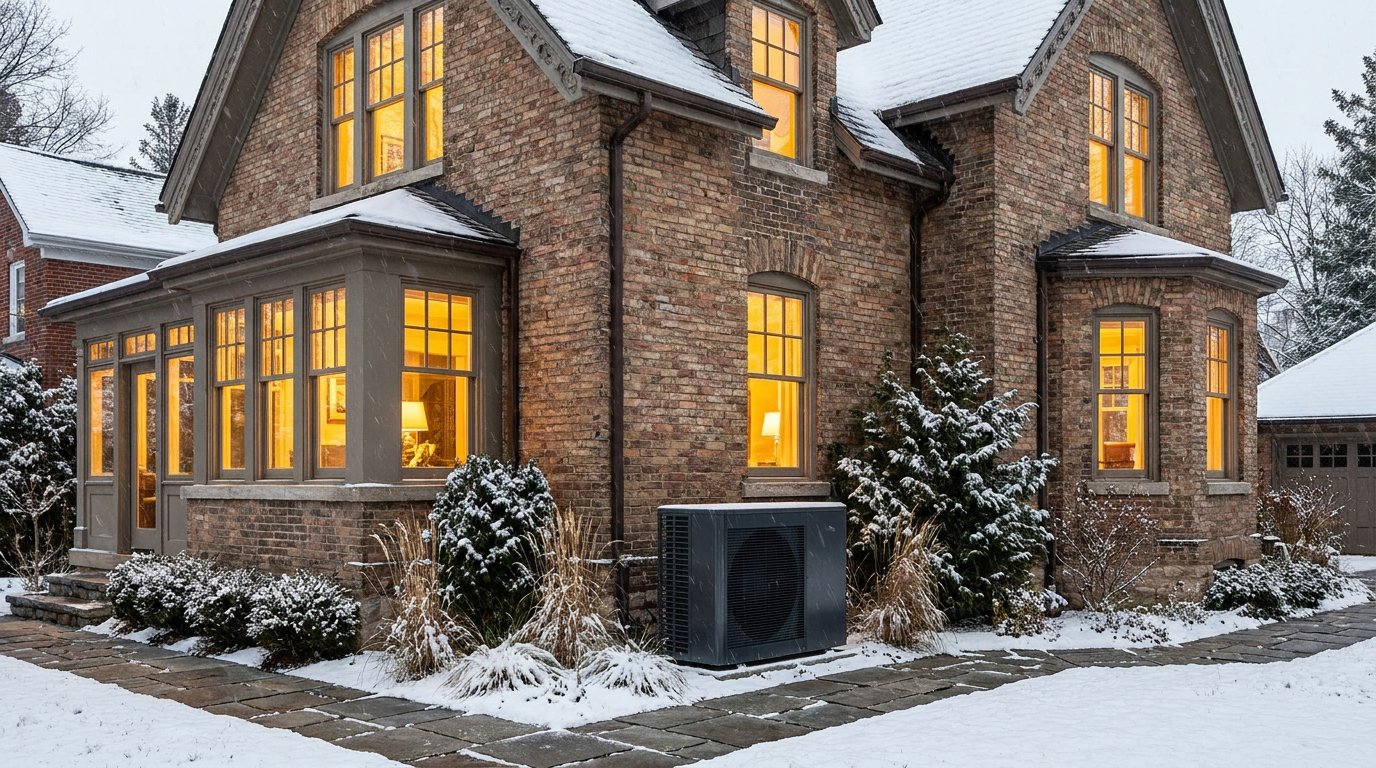
- Electrification Advocates
- Argue that modern cold-climate heat pumps are technologically ready for mass adoption and offer massive efficiency gains over fossil fuels.
- Retrofit Realists
- Emphasize that older homes require significant weatherization, insulation, and sometimes specialized high-temp units before a heat pump makes financial sense.
- Historic Preservationists
- Focus on maintaining the architectural integrity of older properties using low-impact installations like mini-splits or high-velocity systems.
What's not represented
- · Renters in older buildings who cannot control their heating infrastructure
- · Electric grid operators managing the increased winter load from mass electrification
Why this matters
For decades, owners of older, drafty homes were told that energy-efficient heat pumps wouldn't work in their properties or in freezing climates. New advancements in cold-climate technology mean millions of historic homes can now transition away from fossil fuels without freezing in the winter or destroying their original architecture.
Key points
- Cold-climate heat pumps can now efficiently heat homes in temperatures as low as -13°F.
- Variable-speed compressors and Enhanced Vapor Injection (EVI) solve historical freezing issues.
- Older homes usually require weatherization and insulation before a heat pump can be effective.
- High-temperature heat pumps allow historic homes to keep their original cast-iron radiators.
- Ductless and high-velocity systems offer low-impact installation options that preserve original plaster.
- Major 2026 government subsidies in the US and UK are offsetting high upfront installation costs.
For decades, the conventional wisdom in home improvement was simple: heat pumps belong in the Sunbelt, not in drafty, century-old homes in freezing climates. Early generations of the technology struggled when temperatures dropped below freezing, forcing homeowners in northern regions to rely on expensive, carbon-intensive backup systems like oil furnaces or electric resistance heaters. The idea of retrofitting a Victorian terrace or a historic colonial with a heat pump was widely dismissed as an expensive folly.[7]
In 2026, that conventional wisdom is entirely obsolete. A wave of advancements in cold-climate heat pump (CCHP) technology has shattered the myth that renewable heating is only for new builds or mild weather. Today, specialized systems are successfully heating older properties in the upper Midwest, New England, and the United Kingdom, offering a sustainable alternative to traditional combustion boilers.[2][7]
To understand why older homes were previously incompatible with this technology, it helps to understand the mechanism. Unlike a gas or oil furnace, a heat pump does not generate heat by burning fuel. Instead, it moves heat from one place to another, operating much like a refrigerator in reverse. In the winter, it extracts ambient thermal energy from the outside air, compresses it to raise its temperature, and transfers it indoors.[1][2]
The historical challenge was that extracting heat from freezing air is physically demanding. Older, single-speed compressors simply could not keep up when the mercury plummeted. Modern cold-climate heat pumps solve this through the use of variable-speed, inverter-driven compressors. Rather than turning on and off in rigid cycles, an inverter compressor continuously modulates its speed to match the exact heating load of the home, maintaining efficiency even in extreme cold.[2][3]
Manufacturers have also introduced a mechanism known as Enhanced Vapor Injection (EVI). This technology borrows heat from the hottest part of the refrigerant cycle and injects a warm vapor directly into the compressor. This mid-cycle boost significantly improves the system's heating capacity and prevents the unit from losing power when outside temperatures drop well below freezing.[3]

The performance data for these modern units is striking. High-efficiency cold-climate heat pumps can now provide reliable heating in temperatures as low as -13°F to -22°F. Even at freezing temperatures, these systems can achieve a Coefficient of Performance (COP) between 2.5 and 3.5, meaning they generate up to three and a half units of heat for every single unit of electricity they consume.[2][3]
Regulatory bodies have updated their testing frameworks to reflect these advancements. The United States Department of Energy recently implemented rigorous new efficiency metrics, known as SEER2 and HSPF2, which test equipment under higher external static pressures to better simulate real-world duct systems. These standards ensure that the heat pumps being installed today genuinely perform as advertised in the field.[1]
Regulatory bodies have updated their testing frameworks to reflect these advancements.
However, the technological readiness of the heat pump does not mean retrofitting an older home is a simple appliance swap. Industry experts emphasize the "Insulation Rule": a heat pump provides a steady, continuous flow of lower-temperature heat, which means a drafty, uninsulated home will lose thermal energy faster than the system can replace it. Weatherization, including air sealing and upgraded insulation, is almost always a mandatory first step before installation.[4][6]

Another major hurdle in historic properties is the heat distribution system. Many older homes rely on cast-iron radiators designed to run on water heated to 80°C by a gas or oil boiler. Standard heat pumps typically output water at around 45°C to 50°C, which is insufficient to warm a room using existing, undersized radiators.[4]
The industry has responded with the development of high-temperature heat pumps. These specialized units use advanced refrigerants to heat water up to 70°C, perfectly mimicking the output of a traditional boiler. While they operate at a slightly lower overall efficiency than standard heat pumps, they allow homeowners to retain their original pipes and radiators, saving thousands of dollars in invasive renovation costs.[4]
For historic homes that lack ductwork entirely, preservation is a primary concern. Homeowners are often hesitant to tear open original plaster walls to install bulky air ducts. In these cases, installers are increasingly utilizing ductless mini-split systems or high-velocity "small duct" setups. These low-impact installations snake flexible, narrow tubing through existing wall cavities, providing modern climate control without destroying the property's architectural integrity.[5]

The economics of these retrofits remain a complex calculation. While heat pumps are vastly more efficient than combustion systems—capable of reaching 400% efficiency compared to a gas boiler's 90%—the upfront installation costs are substantial. Furthermore, because electricity is often more expensive than natural gas, the return on investment depends heavily on local utility rates and the home's baseline energy efficiency.[2][4][6]
To bridge this financial gap, governments are offering unprecedented subsidies in 2026. In the United States, the Federal Energy Efficient Home Improvement Credit (25C) provides a tax credit of up to $2,000 for qualifying high-efficiency heat pumps, which can often be stacked with local utility rebates. In the United Kingdom, the Boiler Upgrade Scheme has been increased to offer grants of up to £9,000 for eligible off-grid homes, aiming to accelerate the transition away from delivered fossil fuels.[5][6]

Despite these incentives, the transition of the older housing stock will not happen overnight. Heating systems have slow replacement cycles, and many homeowners will opt for step-by-step upgrade pathways—improving insulation one year, upgrading radiators the next—rather than undertaking an immediate, full-system overhaul.[6]
Ultimately, retrofitting a century-old home for a heat pump is a surgical operation that requires custom engineering and careful planning. But the core technological barrier has been broken. Homeowners no longer have to choose between preserving the character of their historic properties and embracing the clean, efficient future of home heating.[5][7]
How we got here
1970s-1990s
Early heat pumps struggle in sub-zero temperatures, cementing the belief they are only for mild climates.
2018
The US Department of Energy begins a multi-phase initiative to increase minimum efficiency standards for HVAC equipment.
2023
New SEER2 and HSPF2 testing standards take effect, holding heat pumps to more rigorous real-world performance metrics.
2025
The UK updates permitted development rights to make it easier to install heat pumps without planning permission.
2026
Expanded federal tax credits and increased UK grants make cold-climate retrofits more financially accessible for older homes.
Viewpoints in depth
Electrification Advocates
Argue that modern cold-climate heat pumps are technologically ready for mass adoption and offer massive efficiency gains over fossil fuels.
Proponents of rapid electrification point to the hard engineering data: modern cold-climate heat pumps equipped with Enhanced Vapor Injection (EVI) and variable-speed compressors no longer fail in freezing weather. Organizations like the Center for Energy and Environment highlight that these units can operate at up to 400% efficiency, vastly outperforming the theoretical maximums of even the best combustion boilers. For this camp, the technology is fully mature, and the focus should now be on aggressive deployment to reduce residential carbon emissions.
Retrofit Realists
Emphasize that older homes require significant weatherization, insulation, and sometimes specialized high-temp units before a heat pump makes financial sense.
Installers and retrofit planners caution against treating heat pumps as a simple plug-and-play solution for older housing stock. They argue that the "Insulation Rule" cannot be ignored: because heat pumps deliver a lower, steadier heat than gas boilers, putting one in a drafty, uninsulated home will lead to high electricity bills and cold rooms. This camp advocates for a step-by-step approach, prioritizing building envelope upgrades—like air sealing and loft insulation—and utilizing high-temperature heat pumps to avoid the cost of replacing entire radiator networks.
Historic Preservationists
Focus on maintaining the architectural integrity of older properties using low-impact installations like mini-splits or high-velocity systems.
For owners of historic and period properties, the primary concern is often architectural rather than purely financial. This viewpoint stresses the importance of using low-impact installation methods that do not require tearing down original plaster, crown molding, or structural elements to fit bulky ductwork. They champion ductless mini-splits and high-velocity "small duct" systems that can be snaked through existing wall cavities, ensuring that the home's historical character remains intact while still benefiting from modern climate control.
What we don't know
- How quickly the shortage of trained HVAC technicians experienced in cold-climate retrofits will be resolved.
- Whether local electrical grids in older neighborhoods will require significant upgrades to handle the increased winter load of mass heat pump adoption.
Key terms
- Cold-Climate Heat Pump (CCHP)
- An advanced heat pump designed to extract heat from outdoor air even in sub-zero temperatures using variable-speed compressors.
- Coefficient of Performance (COP)
- A ratio measuring heating efficiency; a COP of 3.0 means three units of heat are produced for every one unit of electricity consumed.
- Enhanced Vapor Injection (EVI)
- A technology that injects warm refrigerant vapor directly into the compressor, boosting heating capacity in freezing weather.
- High-Temperature Heat Pump
- A specialized unit capable of heating water to 70°C (158°F), allowing older homes to keep their existing cast-iron radiators.
- SEER2 / HSPF2
- Updated Department of Energy metrics that measure cooling and heating efficiency under rigorous, real-world static pressure conditions.
Frequently asked
Do heat pumps actually work in freezing weather?
Yes. Modern cold-climate heat pumps use variable-speed compressors and advanced refrigerants to extract heat from the air in temperatures as low as -13°F to -22°F.
Can I keep my old radiators if I switch to a heat pump?
Yes, but you will likely need a "high-temperature" heat pump, which can heat water to 70°C to match the output of a traditional boiler, though they operate at slightly lower efficiency than standard units.
Do I need to insulate my old house first?
Almost certainly. Heat pumps provide a steady, "low and slow" heat, meaning drafty homes will lose heat faster than the system can replace it without proper weatherization.
Are there tax credits for installing a heat pump in 2026?
Yes. In the US, the 25C tax credit provides up to $2,000 for qualifying installations, while the UK offers grants up to £9,000 for eligible off-grid homes.
Sources
Source coverage
7 outlets
3 viewpoints surfaced






[1]US Department of EnergyElectrification Advocates
Operating Tips for Air-Source Heat Pumps
Read on US Department of Energy →[2]Center for Energy and EnvironmentElectrification Advocates
Cold-Climate Air Source Heat Pumps
Read on Center for Energy and Environment →[3]Bosch Home ComfortElectrification Advocates
How Heat Pumps Perform in Cold Climates
Read on Bosch Home Comfort →[4]Renewables ExcellenceRetrofit Realists
Heat Pumps in Older Properties: Key Takeaways
Read on Renewables Excellence →[5]Bulletproof AirHistoric Preservationists
Cost to Install Central Air in Old House Retrofits
Read on Bulletproof Air →[6]Fuel Oil NewsRetrofit Realists
Boiler Upgrade Scheme support increased to £9,000
Read on Fuel Oil News →[7]Factlen Editorial Team
Synthesis by Factlen editorial team
Read on Factlen Editorial Team →


Every angle. Every day.
Get home stories with full source coverage and perspective breakdowns delivered to your inbox.