
India's National Stock Exchange Files for Record-Breaking $3.6 Billion IPO
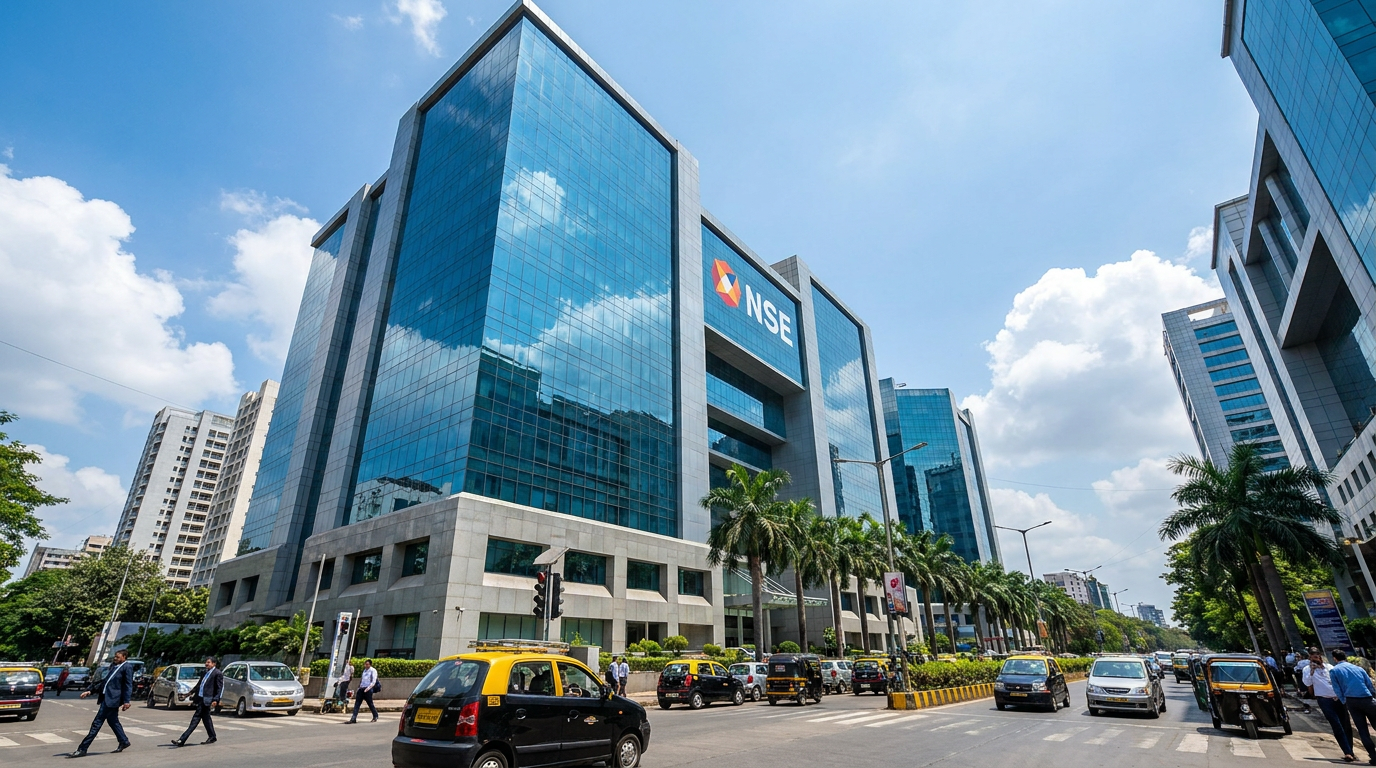
The National Stock Exchange of India has filed draft papers for a $3.6 billion initial public offering, setting the stage for the largest public listing in the country's history. The 100% offer-for-sale will value the exchange at roughly $55 billion and arrives after a decade of regulatory delays.
By Factlen Editorial Team
- Selling Institutional Backers
- Early investors are capitalizing on the IPO to realize unprecedented returns and unlock liquidity.
- Long-Term Stakeholders
- Several major investors are refusing to sell, betting on the exchange's continued structural dominance.
- Market Regulators
- SEBI is prioritizing diversified ownership and strict governance following past controversies.
- Retail Market Participants
- Public investors are eager to gain direct ownership access to India's most profitable financial infrastructure.
What's not represented
- · Rival exchanges preparing for the influx of trading volume the NSE listing will bring to their platforms.
- · Retail brokers who will manage the anticipated massive retail demand for the IPO.
Why this matters
The public listing of the National Stock Exchange opens up direct ownership of the critical infrastructure powering India's financial boom. For investors, it represents a rare opportunity to buy into a highly profitable structural monopoly, while its sheer size is expected to inject massive liquidity and global attention into the broader Indian market.
Key points
- The National Stock Exchange has filed draft papers for an IPO estimated at ₹30,000 crore ($3.6 billion).
- The listing is a 100% Offer for Sale, meaning no fresh capital is being raised by the exchange.
- Early institutional backers like Morgan Stanley and Temasek are selling, while LIC is retaining its stake.
- The IPO follows a decade of delays stemming from the 2016 co-location scandal, which was settled in 2025.
- If priced at the top of its range, it will become the largest initial public offering in Indian history.
After nearly a decade of regulatory delays, leadership overhauls, and false starts, the National Stock Exchange of India (NSE) has officially filed its Draft Red Herring Prospectus (DRHP) with the Securities and Exchange Board of India (SEBI). The comprehensive filing, submitted on June 17, 2026, sets the definitive stage for what is widely expected to be the largest and most highly anticipated initial public offering in the history of Indian capital markets, unlocking billions in value for its earliest backers.[3][5]
The proposed public offering is structured entirely as an Offer for Sale (OFS), meaning the exchange itself will not issue any new shares or raise fresh capital to fund its ongoing operations. Instead, a consortium of existing institutional shareholders will offload up to 14.89 crore equity shares, representing roughly 6% of the NSE's total paid-up capital, allowing them to monetize their long-held investments while introducing public market liquidity to the stock. This structure ensures that the exchange's core financials remain untouched by the listing, focusing the event purely on shareholder transition rather than corporate fundraising.[4][5]
Based on prevailing prices in the unlisted grey market, where shares have recently traded actively above the ₹1,935 mark, the exchange commands a staggering implied valuation of over ₹5 trillion, or approximately $55 billion. At this premium valuation, the 6% stake sale is expected to raise anywhere between ₹25,000 crore and ₹30,000 crore ($3 billion to $3.6 billion), instantly placing the NSE among the most valuable exchange operators on the planet alongside the London Stock Exchange Group and the CME Group.[6][7]
If the issue prices at the upper end of that projected range, it will comfortably shatter the previous Indian IPO record, which is currently held by Hyundai Motor India's ₹27,870 crore listing that launched in late 2024. Before Hyundai, the record belonged to the Life Insurance Corporation of India's ₹20,557 crore debut, underscoring just how massive the NSE offering is relative to the historical scale of the country's domestic equity capital markets. The sheer size of the offering is expected to draw immense interest from both domestic retail investors and massive foreign institutional funds seeking exposure to India's growth.[3][5]

The list of selling shareholders participating in the OFS reads like a who's who of global and domestic high finance. The State Bank of India (SBI) stands as the largest single seller, offering up to 2.48 crore shares to the public. They are joined by international heavyweights including affiliates of Morgan Stanley, Singapore's sovereign wealth fund Temasek, and the Canada Pension Plan Investment Board (CPPIB), alongside a cohort of domestic public sector insurers like General Insurance Corporation of India.[4][5]
For these early institutional backers, the upcoming IPO represents a historic and highly lucrative liquidity event. Having held their stakes patiently through years of regulatory limbo and legal disputes, some of the exchange's earliest investors are positioned to realize extraordinary windfalls. Bloomberg reports that the listing may deliver up to a staggering 6,400-fold return on their initial invested capital, marking one of the most successful private market investments in the region's modern financial history. This massive wealth creation highlights the underlying profitability of the exchange model as India's broader economy has expanded.[2]
For these early institutional backers, the upcoming IPO represents a historic and highly lucrative liquidity event.
Yet, the offering is equally defined by the prominent investors who are actively choosing not to sell a single share. The Life Insurance Corporation of India (LIC), which remains the exchange's single largest shareholder with a commanding 10.72% stake, is retaining its entire position. Prominent billionaire investors Radhakishan Damani and Premji Invest have also opted out of the OFS, signaling deep long-term conviction that the exchange's structural growth story is far from over despite its already massive valuation.[4][5]
The sheer scale and dominance of the NSE's daily operations easily explain that long-term conviction. As of early 2026, the exchange stands as the undisputed largest platform in India by total cash market turnover, and it ranks third globally by the sheer number of cash equity trades executed. Its robust technology infrastructure processes an astonishing average of 12 to 14 billion messages daily, serving as the critical, irreplaceable backbone of India's booming financial sector and derivatives market. This near-monopoly status in key trading segments provides the exchange with a highly resilient and compounding revenue stream.[4]

Reaching this monumental listing milestone required resolving one of the most complex and protracted regulatory standoffs in Indian corporate history. The NSE initially filed draft papers for an IPO back in December 2016, but the process was abruptly halted by the infamous co-location scandal. In that controversy, certain brokers were accused of receiving preferential, high-speed access to the exchange's trading servers, fundamentally undermining the integrity of the market and triggering immediate intervention by the regulator. The ensuing fallout forced the exchange to completely overhaul its management team and rebuild its technological safeguards.[3][8]
The fallout from the co-location issue led to years of intense litigation, forensic audits, and deep regulatory investigations that kept the IPO frozen in place. The deadlock finally broke in mid-2025 when the NSE offered a record-breaking ₹1,388 crore to settle the co-location and dark fiber cases with SEBI. That massive financial settlement paved the way for the regulator to officially issue a crucial No Objection Certificate (NOC) in January 2026, finally greenlighting the current DRHP filing and closing a dark chapter in the exchange's history.[3][8]
In a unique quirk of Indian market regulations, a stock exchange is strictly prohibited from listing its own shares on its own trading platform to prevent any potential conflicts of interest or self-regulation issues. Consequently, when the National Stock Exchange finally goes public and begins trading, its shares will be listed exclusively on the platform of its primary historical rival, the BSE, creating a fascinating dynamic where India's largest exchange drives daily trading volume for its competitor. This cross-listing requirement ensures independent regulatory oversight of the stock's daily price movements and corporate disclosures.[5][6]

The mega-listing arrives at a moment of profound, unprecedented expansion for Indian equities, characterized by domestic retail participation sitting at all-time highs and foreign capital flowing steadily into the subcontinent. Market analysts note that the NSE IPO, alongside the highly anticipated upcoming listing of Mukesh Ambani's Reliance Jio, is expected to anchor a blockbuster second half of the year for Indian capital markets, injecting massive new liquidity and global attention into the country's financial ecosystem. These mega-issues are viewed as a sign of maturity for India's markets, capable of absorbing multi-billion-dollar offerings with ease.[1][6]
With the comprehensive draft papers now firmly in SEBI's hands, the market regulator will conduct a rigorous review process that typically spans anywhere from 30 to 90 days. If the regulatory approvals proceed smoothly without further requests for information, the National Stock Exchange is targeting a blockbuster market debut before the end of December 2026, finally opening its highly profitable doors to public investors and concluding a listing journey that was a full decade in the making. For the millions of retail investors who trade on its platform daily, the IPO offers the first real chance to own a piece of the engine that drives their portfolios.[6][8]
How we got here
December 2016
The NSE files its first draft prospectus for an IPO, but the process is halted due to investigations into the co-location scandal.
June 2025
The exchange files a settlement application with SEBI, offering a record ₹1,388 crore to resolve the co-location and dark fiber cases.
January 2026
SEBI issues a No Objection Certificate (NOC) to the NSE, officially clearing the regulatory hurdles for a public listing.
February 2026
The NSE board formally approves the IPO plan, structuring it entirely as an Offer for Sale.
June 17, 2026
The NSE officially files its new Draft Red Herring Prospectus with SEBI, targeting a listing by the end of the year.
Viewpoints in depth
Selling Institutional Backers
Early investors are capitalizing on the IPO to realize unprecedented returns.
For entities like Morgan Stanley, Temasek, and the State Bank of India, the IPO represents the culmination of a decade-long wait. Having backed the exchange during its earlier growth phases, these institutions are now positioned to reap returns that Bloomberg estimates could reach up to 6,400-fold for the earliest entrants. Their participation in the Offer for Sale allows them to unlock billions in liquidity while still leaving the exchange with a highly diversified ownership base.
Long-Term Stakeholders
Several major investors are refusing to sell, betting on the exchange's continued dominance.
Despite the astronomical valuations, the Life Insurance Corporation of India (LIC)—the exchange's single largest shareholder—alongside prominent investors like Premji Invest and Radhakishan Damani, have opted out of the OFS. Their refusal to cash out signals a strong conviction that the NSE's structural monopoly in equity derivatives and its massive daily trading volumes will continue to compound in value, making it a permanent hold rather than a liquidity event.
Market Regulators
SEBI is prioritizing diversified ownership and strict governance following past controversies.
For the Securities and Exchange Board of India (SEBI), the IPO is the final chapter in a long regulatory cleanup. After the 2016 co-location scandal, regulators stalled the listing to ensure the exchange overhauled its technological access and leadership. Having secured a ₹1,388 crore settlement, SEBI is now enforcing rules that cap any single investor's stake at 5% without explicit approval, ensuring that the backbone of India's capital markets cannot be controlled by a concentrated group of private interests.
What we don't know
- The exact price band for the shares, which will be determined closer to the launch date after consultations with merchant bankers.
- How retail investor quotas will be structured and whether the massive demand will lead to record oversubscription rates.
- The precise date of the listing, which depends on how quickly SEBI processes the 30-to-90-day review of the draft prospectus.
Key terms
- Draft Red Herring Prospectus (DRHP)
- A preliminary registration document filed with market regulators by a company planning to go public, detailing its business operations, financials, and the structure of the offering.
- Offer for Sale (OFS)
- A mechanism where existing shareholders of a company sell their shares to the public, rather than the company issuing new shares to raise capital.
- Co-location
- A service where a stock exchange allows brokers to place their trading servers in the same facility as the exchange's matching engine, reducing latency and enabling high-frequency trading.
- Paid-up Capital
- The amount of money a company has received from shareholders in exchange for shares of stock.
Frequently asked
When will the NSE IPO actually happen?
The exchange filed its draft papers in mid-June 2026. Pending SEBI's review, the NSE is targeting a public listing before December 2026.
Will the NSE raise new money to fund operations?
No. The IPO is a 100% Offer for Sale (OFS), meaning existing shareholders are selling a portion of their stakes. The exchange itself will not receive any proceeds.
Why did the IPO take 10 years to happen?
The listing was stalled by the 2016 co-location scandal, where certain brokers allegedly received unfair access to trading servers. The NSE settled the case with regulators in 2025, clearing the path for the IPO.
Where will the NSE shares be traded?
Because Indian regulations prevent a stock exchange from listing on its own platform to avoid conflicts of interest, NSE shares will trade on its rival exchange, the BSE.
Sources
Source coverage
8 outlets
4 viewpoints surfaced







[1]BloombergSelling Institutional Backers
India's Biggest Exchange NSE Eyes IPO
Read on Bloomberg →NSE’s India IPO May Deliver 6,400-Fold Return for Early Backers
Read on Bloomberg →[3]The HinduMarket Regulators
NSE files draft papers for India's largest IPO
Read on The Hindu →[4]The Economic TimesLong-Term Stakeholders
NSE files DRHP for mega IPO; issue entirely an offer-for-sale
Read on The Economic Times →[5]LiveMintSelling Institutional Backers
NSE files draft papers for what could be India's biggest IPO
Read on LiveMint →[6]The Telegraph IndiaMarket Regulators
NSE IPO filing sets stage for India's biggest stock market listing in years
Read on The Telegraph India →[7]GrowwRetail Market Participants
NSE Files DRHP With SEBI for Long-Awaited IPO; Valuation Could Exceed ₹5 Trillion
Read on Groww →[8]Kotak SecuritiesRetail Market Participants
NSE IPO Details
Read on Kotak Securities →

More in business
See all 5 stories →Strait of Hormuz
US and Iran Sign Interim Peace Deal, Reopening Strait of Hormuz After 100-Day Conflict
8 sources

Autonomous Vehicles
WeRide and Uber to Launch Commercial Robotaxi Service in Zurich
6 sources

Super-Apps
How Uzbekistan Built Its First Tech Unicorn: Inside the Rise of the Uzum Super-App
6 sources

Every angle. Every day.
Get business stories with full source coverage and perspective breakdowns delivered to your inbox.