
Retail Investors Buy More SpaceX Stock Than All 'Magnificent Seven' Combined Following Historic IPO
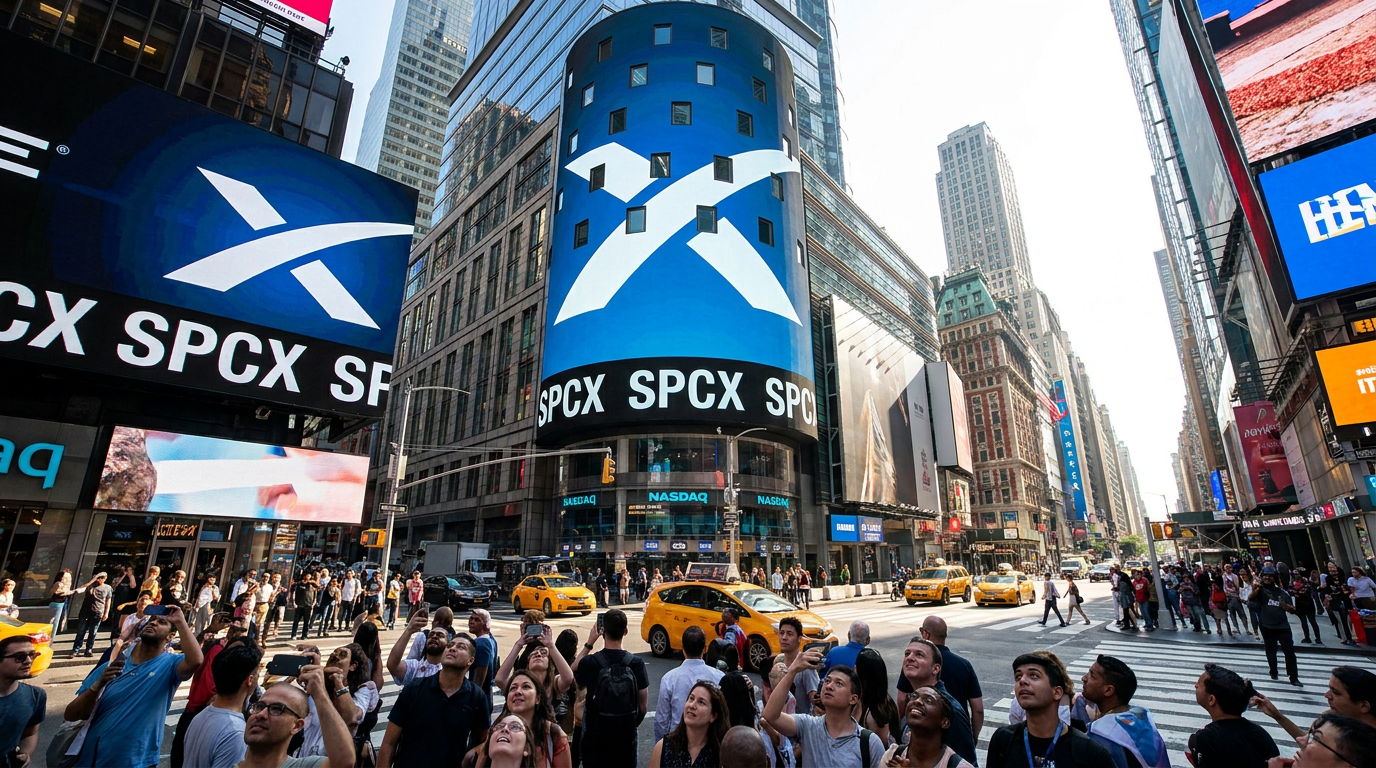
Everyday investors poured nearly $370 million into SpaceX during its first three days of trading, capitalizing on an unprecedented 20% retail allocation in the world's largest public offering.
By Factlen Editorial Team
- Retail Investors
- Everyday traders viewing the IPO as a long-awaited opportunity to own a piece of the space economy.
- Institutional Funds
- Large asset managers capitalizing on early trading volume and structural advantages.
- Market Analysts
- Financial strategists assessing the impact of a $2 trillion company entering the public markets.
What's not represented
- · SpaceX Employees
- · Competitors in the Aerospace Industry
Why this matters
For decades, the most explosive growth in technology companies happened behind closed doors, accessible only to venture capitalists and institutional funds. SpaceX's decision to allocate a massive portion of its record-breaking IPO to everyday investors signals a historic democratization of the stock market, allowing the public to directly participate in the commercial space economy.
Key points
- Retail investors net purchased $369.8 million of SpaceX stock in its first three days of trading.
- SpaceX allocated roughly 20% of its $75 billion IPO to everyday investors globally.
- The massive influx of retail capital outpaced combined purchases of the 'Magnificent Seven' tech stocks.
- Major brokerages ensured that users who requested shares at the IPO price received at least one.
- Retail buyers face 15- to 30-day 'flipping' restrictions that prevent them from selling immediately.
Retail investors are pouring into SpaceX following its historic June 12 initial public offering, buying up more shares of the aerospace giant than all of the "Magnificent Seven" tech stocks combined. The unprecedented demand highlights a major shift in market dynamics as everyday traders finally gain access to a generational company that spent two decades growing entirely in private markets.[1]
In the first three days of trading alone, mom-and-pop investors net purchased nearly $370 million worth of SpaceX stock. This tidal wave of retail capital has provided a massive bedrock of support for the newly public entity, proving that individual investors are eager to fund the next frontier of space exploration and satellite internet infrastructure.[1]
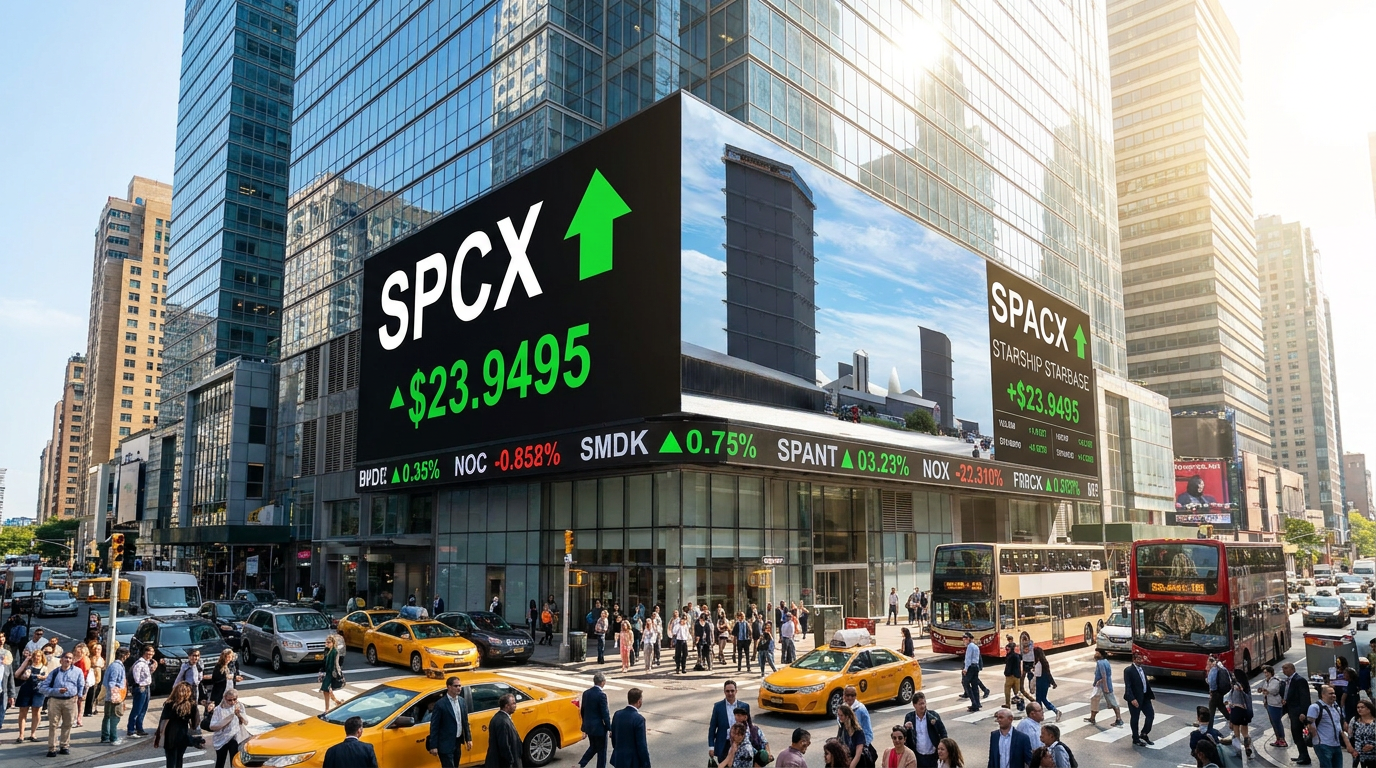
SpaceX's public debut shattered every existing financial record, raising $75 billion and ending its first day with a staggering valuation of $2.1 trillion. Shares originally priced at $135 surged to close near $161, a jump that instantly made founder Elon Musk the world's first trillionaire and cemented the company's status as a mega-cap titan.[2][6]

Unlike traditional mega-IPOs where institutional hedge funds hoard the initial shares and lock out the public, SpaceX deliberately engineered its offering to include everyday buyers. Approximately 20% of the entire IPO was allocated to retail investors globally, a remarkably high figure for an offering of this magnitude.[5]
Approximately 20% of the entire IPO was allocated to retail investors globally, a remarkably high figure for an offering of this magnitude.
Customers at major brokerages like Robinhood, Fidelity, and Charles Schwab who requested shares received at least one, ensuring broad participation across the retail landscape. Robinhood alone successfully filled requests for over 850,000 of its customers at the initial offering price, democratizing access to what was previously a closely guarded Silicon Valley asset.[5]
The sheer gravity of SpaceX's market capitalization is already forcing Wall Street to rewrite its vocabulary. Analysts are declaring the end of the "Magnificent Seven" era, proposing new acronyms like "MANGOS"—Meta, Anthropic, Nvidia, Google, OpenAI, and SpaceX—to reflect the new frontier of artificial intelligence and space technology dominating the indices.[3]

While retail enthusiasm is sky-high, the playing field isn't entirely level for all participants. Mom-and-pop investors face strict "flipping" restrictions from their brokerages, preventing them from selling shares within 15 to 30 days without risking penalties or permanent bans from participating in future IPOs.[4]
In contrast, large hedge funds and asset managers often trade without these restrictions, allowing them to instantly profit from the initial price pop. Despite this structural asymmetry, retail buyers appear entirely unfazed, overwhelmingly focusing on long-term holding and viewing the stock as a foundational asset rather than a quick trade.[4]
As SpaceX settles into its life as a public entity, the company faces the dual challenge of funding its ambitious Starship programs and Mars colonization efforts while meeting the rigorous quarterly earnings expectations of Wall Street. For now, however, the retail army has spoken, cementing the rocket maker as the new anchor of the modern investment portfolio.[1][2][3][6]
How we got here
April 2026
SpaceX confidentially submits a draft registration statement to the SEC to begin the IPO process.
June 12, 2026
SpaceX completes the largest IPO in history, raising $75 billion and debuting on the Nasdaq.
June 15, 2026
Data reveals retail investors bought nearly $370 million in shares during the first three days of trading.
Viewpoints in depth
Retail Investors
Everyday traders viewing the IPO as a long-awaited opportunity to own a piece of the space economy.
For retail investors, the SpaceX IPO represents a victory over the traditional Wall Street gatekeepers. After watching the company achieve historic milestones in reusable rocketry and satellite internet for two decades, everyday traders finally have the ability to participate in its financial upside. Many are treating the stock as a generational 'buy and hold' asset, ignoring short-term volatility in favor of the company's long-term ambitions for Mars.
Institutional Funds
Large asset managers capitalizing on early trading volume and structural advantages.
Hedge funds and institutional asset managers acknowledge the historic nature of the IPO but remain focused on the immediate trading mechanics. Because many large funds are exempt from the strict 'flipping' restrictions imposed on retail accounts, they have the flexibility to lock in profits from the initial price surge. However, they also recognize that the massive retail float provides a strong floor for the stock's valuation.
Market Analysts
Financial strategists assessing the impact of a $2 trillion company entering the public markets.
Wall Street analysts view SpaceX's debut as a paradigm shift that fundamentally alters the composition of major indices. The immediate $2.1 trillion valuation instantly makes SpaceX one of the most heavily weighted stocks in the market, forcing index funds to rebalance their portfolios. Analysts argue this marks the official transition from the consumer-internet era of the 'Magnificent Seven' to a new hardware and AI-driven market cycle.
What we don't know
- How retail investors will react to SpaceX's first quarterly earnings report as a public company.
- Whether the 'MANGOS' acronym will officially replace the 'Magnificent Seven' in mainstream financial reporting.
- How the strict flipping restrictions will impact the stock's volatility once the 30-day lockup periods expire.
Key terms
- Initial Public Offering (IPO)
- The process by which a private company offers its shares to the public for the first time, allowing anyone to invest.
- Flipping
- The practice of buying shares in an IPO and selling them almost immediately to capture a quick profit from the initial price jump.
- Magnificent Seven
- A group of high-performing mega-cap technology stocks, including Apple and Microsoft, that have historically dominated market indices.
- Market Capitalization
- The total dollar market value of a company's outstanding shares of stock, calculated by multiplying the stock price by the total number of shares.
Frequently asked
How much did SpaceX raise in its IPO?
SpaceX raised a record-breaking $75 billion, valuing the company at over $2.1 trillion by the end of its first day of trading.
Did retail investors get access to the IPO price?
Yes, approximately 20% of the IPO was allocated to retail investors. Major brokerages like Robinhood ensured that users who requested shares received at least one.
Can retail investors sell their SpaceX shares immediately?
Most retail brokerages impose a 15- to 30-day restriction on 'flipping' IPO shares, penalizing users who sell too quickly by banning them from future offerings.
Sources
Source coverage
6 outlets
3 viewpoints surfaced





[1]MarketWatchRetail Investors
Retail investors have been buying more SpaceX shares than all of the 'Magnificent Seven' combined
Read on MarketWatch →[2]The GuardianMarket Analysts
Elon Musk becomes world's first trillionaire as SpaceX ends trading day with valuation of $2.1tn
Read on The Guardian →[3]ForbesMarket Analysts
SpaceX's Public Debut Marks The End Of Big Tech's 'Magnificent 7' Era
Read on Forbes →[4]BNN BloombergInstitutional Funds
Retail investors face tighter limits than funds in SpaceX IPO flipping
Read on BNN Bloomberg →[5]The Straits TimesRetail Investors
SpaceX investors at US retail brokers got at least one IPO share
Read on The Straits Times →[6]Built InMarket Analysts
SpaceX IPO Explained: Valuation, Stock Details and Future
Read on Built In →
More in finance
See all 5 stories →Market Science
The Illusion of Investing Skill: Why Financial Science Says You Should Stop Trying to Beat the Market
6 sources

Retirement Psychology
The Psychology of Decumulation: How to Overcome the Fear of Spending Your Retirement Savings
6 sources

SpaceX IPO
Retail Investors Pour Record Capital Into SpaceX, Reshaping Wall Street's Tech Hierarchy
7 sources
Every angle. Every day.
Get finance stories with full source coverage and perspective breakdowns delivered to your inbox.