
The Music Industry's 'Green Vinyl' Breakthrough: Sugarcane Records Lead a Sustainable Shift
A new fossil-fuel-free vinyl format made from sugarcane waste is transforming physical music production, arriving just as listeners seek tangible alternatives to AI-generated streaming.
By Chen Wang

The music industry is experiencing a quiet revolution in 2026, driven not by a new streaming platform, but by sugarcane. As vinyl records continue their historic resurgence, the environmental cost of traditional polyvinyl chloride (PVC) manufacturing has become a glaring liability. Now, a wave of material breakthroughs and sustainable studio practices is proving that the future of physical media can be entirely fossil-fuel-free.[1]
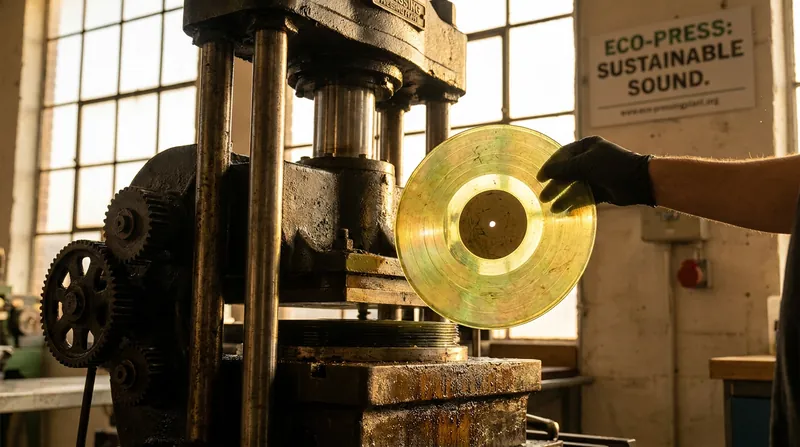
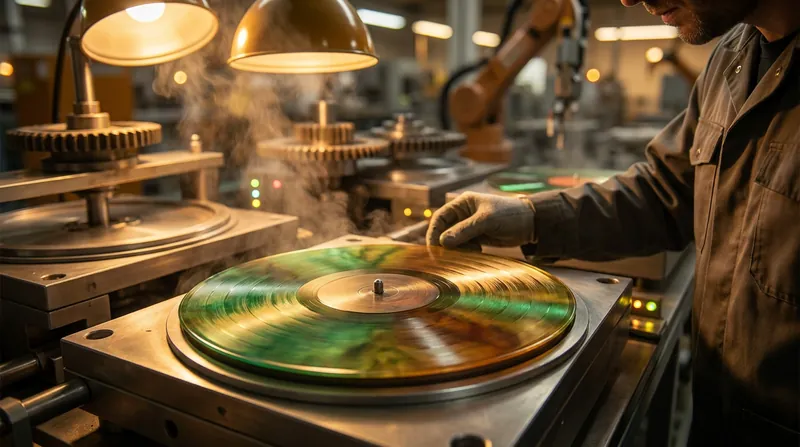
The vanguard of this shift is Evovinyl, a pioneering format developed by Evolution Music. In May 2026, the company announced a major milestone: the successful creation of records pressed entirely from sugarcane waste and natural polymers. Unlike previous "eco-vinyl" attempts that merely reduced the percentage of toxic chemicals, Evovinyl eliminates PVC completely.[1]
The breakthrough has caught the attention of the mainstream music business. Evovinyl recently secured a nomination for the Music Consumer Innovation Award at the 2026 Music Week Awards, placing sustainable manufacturing alongside the biggest names in the industry. For developers, the recognition signals that major labels and pressing plants are finally ready to commercialize the technology on a global scale.[1]
This material innovation coincides with a broader "Green Note" movement sweeping through recording studios. Universal Production Music recently launched its "Go Green Guidelines" in partnership with environmental consultancy Pilio. The framework encourages composers and producers to adopt energy-efficient practices, utilize solar-powered studios, and embrace remote collaboration to drastically cut the carbon footprint of the recording process itself.
Interestingly, this push for sustainability is actually influencing the sonic texture of new releases. Producers are increasingly leaning into "organic minimalism"—a philosophy where simplicity and human nuance outweigh massive, energy-intensive digital processing. Industry experts note that this human-led approach brings a sense of space and imperfection that feels natural to the listener, acting as the sonic equivalent of recycled materials.
The timing of this analog, sustainable renaissance is no coincidence. It arrives as the digital streaming ecosystem faces an unprecedented flood of artificial intelligence. By April 2026, AI-generated tracks accounted for a staggering 44 percent of all uploads on platforms like Deezer.
With streaming fraud siphoning an estimated $1 billion annually and algorithms dominating discovery, music journalists and analysts have dubbed 2026 the "year of analog." Fans are increasingly yearning for a visceral, emotional connection to art that algorithms simply cannot replicate.[3]
This digital fatigue is driving young listeners—traditionally the arbiters of musical trends—toward physical formats. Vinyl has continued to outsell compact discs, with a new generation discovering the wonders of ownership over mere access. Even cassette tapes are seeing a cultural resurgence as tangible statements of fandom.
The desire for authenticity extends beyond the living room and into the live music sector. Analysts predict that sustainability will heavily influence touring decisions throughout 2026, with a noticeable shift toward smaller, more localized tours rather than massive, production-heavy global spectacles.[2]
Ultimately, the intersection of green technology and the analog revival offers a hopeful blueprint for the music industry's future. By replacing toxic PVC with sugarcane and prioritizing human-led, energy-efficient production, the business is proving that it can satisfy the booming demand for physical media without sacrificing the planet.[1][3]
Perspectives explored
Sustainable Innovators
Advocates pushing to eliminate fossil fuels from music production.
This camp, led by material science startups and forward-thinking production houses, argues that the music industry can no longer ignore its environmental footprint. They emphasize that true sustainability requires ground-up innovation—like replacing PVC with sugarcane waste—rather than incremental reductions in toxic chemicals. For these innovators, adopting solar-powered studios and organic minimalism isn't just an environmental imperative; it's a way to inject authentic, human texture back into the art form.
Analog Purists
Listeners and critics prioritizing tangible media and human connection.
Driven by digital fatigue, this viewpoint champions the return to physical formats and intimate live experiences. With AI-generated tracks flooding streaming platforms, purists argue that the true value of music lies in human connection and ownership. They view the resurgence of vinyl and cassettes not as mere nostalgia, but as a necessary cultural pushback against algorithmic curation and the industrialization of synthetic music.
Industry Pragmatists
Major labels and executives balancing green initiatives with commercial scale.
While supportive of sustainable breakthroughs, major industry players remain focused on the logistical realities of global distribution. They acknowledge the critical need to adopt green technologies, as evidenced by the celebration of eco-innovations at major award shows. However, their primary challenge lies in scaling these solutions—ensuring that sugarcane vinyl and localized touring models can meet the massive commercial demands of blockbuster artists without disrupting the supply chain.
Key points
- A new vinyl format called Evovinyl has successfully replaced toxic PVC with sugarcane waste.
- The breakthrough was recognized at the 2026 Music Week Awards, signaling mainstream commercial interest.
- Studios are adopting 'Go Green Guidelines' to lower the carbon footprint of the recording process.
- The push for sustainable physical media coincides with a massive influx of AI-generated music on streaming platforms.
Open questions
- How quickly major pressing plants will be able to retool their machinery to accommodate sugarcane-based polymers at a global scale.
- Whether the cost of producing sustainable vinyl will eventually match or undercut the historically cheap production of PVC records.
Timeline
Late 2023
Generative AI music tools launch, beginning the flood of synthetic tracks on streaming platforms.
January 2026
Analysts declare 2026 the 'year of analog' as vinyl continues to outsell CDs and fans demand human connection.
April 2026
AI-generated tracks reach 44% of all uploads on major streaming platforms like Deezer.
May 2026
Evolution Music achieves a major breakthrough with Evovinyl, securing a nomination at the Music Week Awards for its 100% PVC-free records.
- Sustainable Innovators
- Advocates pushing to eliminate fossil fuels from music production.
- Analog Purists
- Listeners and critics prioritizing tangible media and human connection.
- Industry Pragmatists
- Major labels and executives balancing green initiatives with commercial scale.
Perspectives this story doesn't cover
- Independent pressing plants facing the cost of transitioning to new materials
- Streaming platform executives managing the influx of AI content
Sources
Source coverage
3 outlets
3 viewpoints surfaced



- [1]Evolution MusicSustainable Innovators
May 2026: Recognition, Connection and a Material Breakthrough
Read on Evolution Music → - [2]SynchtankIndustry Pragmatists
Anticipating the Future of Music and Media: What Lies Ahead in 2026?
Read on Synchtank → - [3]Sowmya KrishnamurthyAnalog Purists
What's Going to Happen in Music in 2026? | Music Journalist Predictions
Read on Sowmya Krishnamurthy →

More in Entertainment
See all →AI Music Rights
Music Industry Draws Hard Line on AI as Creators Demand Consent and Labels Acquire Tracking Tech
6 sources

Eco-Vinyl
The Music Industry's Green Revolution: Bioplastic Vinyl Reaches Mass Production
6 sources
Sustainable Music
The Vinyl Revival Finally Goes Green: Inside the Music Industry's Shift to 'Eco-Vinyl'
4 sources
AI Copyright Law
Universal and Sony Sue AI Music Generator Suno Over New V6 Model, Calling It 'Fruit of the Same Poisoned Tree'
3 sources

Comments
Every angle. Every day.
Get Entertainment stories with full source coverage and perspective breakdowns, free every day.