
U.S. and Iran Sign 14-Point Memorandum to End Conflict and Halt Nuclear Program
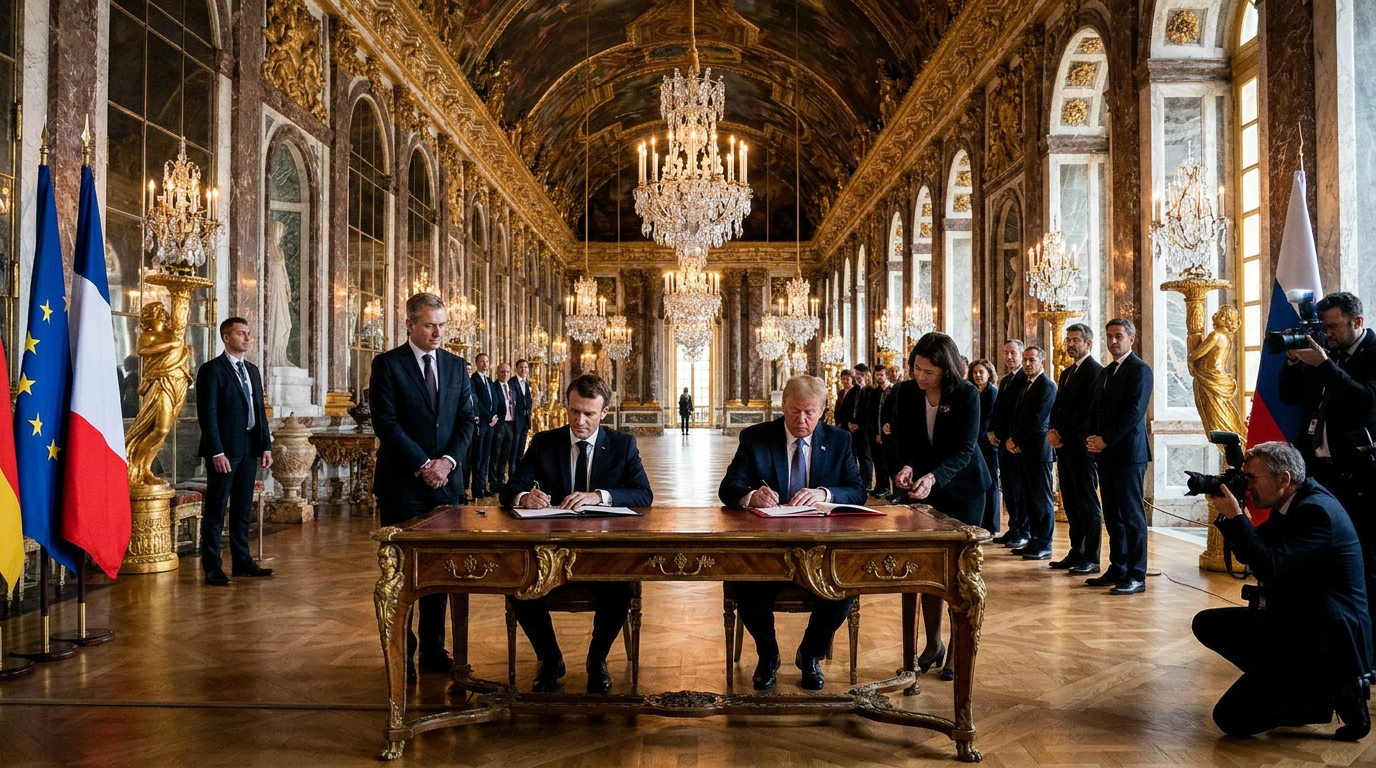
The United States and Iran have signed a landmark 14-point agreement at the Palace of Versailles, officially ending hostilities and securing a commitment against Iranian nuclear weaponization in exchange for a $300 billion redevelopment package.
By Factlen Editorial Team
- Iranian Leadership & Allies
- Views the deal as a historic triumph of resistance, securing regime survival and massive economic relief while framing the U.S. as yielding.
- U.S. Administration
- Frames the agreement as a pragmatic victory that permanently halts Iran's nuclear weapons program and avoids a costly regional war.
- Israeli Government
- Considers the agreement an existential threat and a strategic disaster, arguing the $300 billion will fund regional terrorism.
- Global Markets
- Focuses on the immediate stabilization of energy supply chains and the reduction of geopolitical risk premiums on oil.
What's not represented
- · Iranian civilian opposition groups
- · Gulf Arab states (Saudi Arabia, UAE)
Why this matters
This agreement fundamentally reshapes Middle Eastern geopolitics, formally ending direct military confrontation between Washington and Tehran while injecting $300 billion into the Iranian economy. For global markets, it stabilizes energy supply chains, but it creates a severe diplomatic rift with Israel, whose leadership views the survival of the current Iranian government as an existential threat.
Key points
- The U.S. and Iran signed a 14-point agreement at the Palace of Versailles to end direct hostilities.
- Iran committed to never developing a nuclear weapon in exchange for a $300 billion redevelopment package.
- Iranian and Hezbollah leaders declared the agreement a historic victory and a 'record of US failure.'
- Israeli officials, excluded from the final talks, condemned the deal as a strategic disaster.
- Global energy markets stabilized immediately following the announcement of the ceasefire.
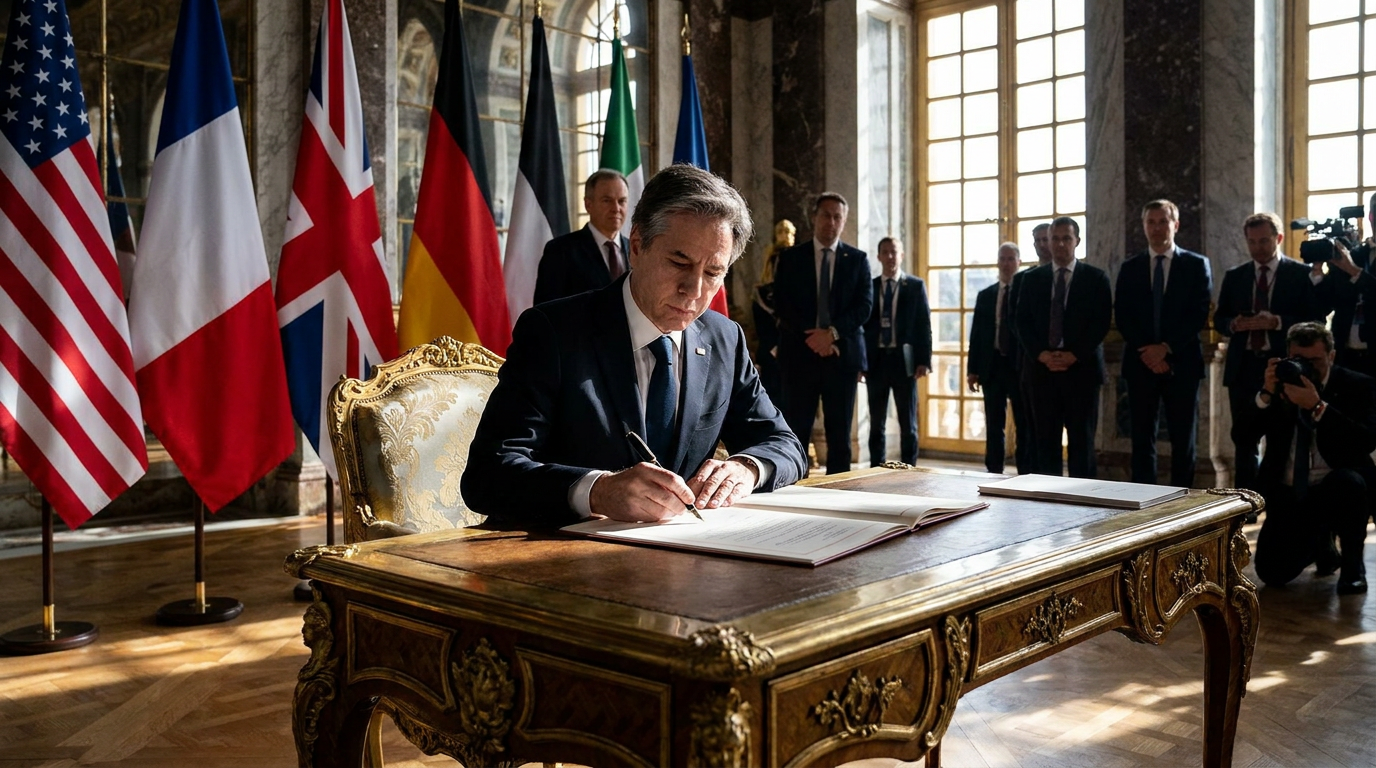
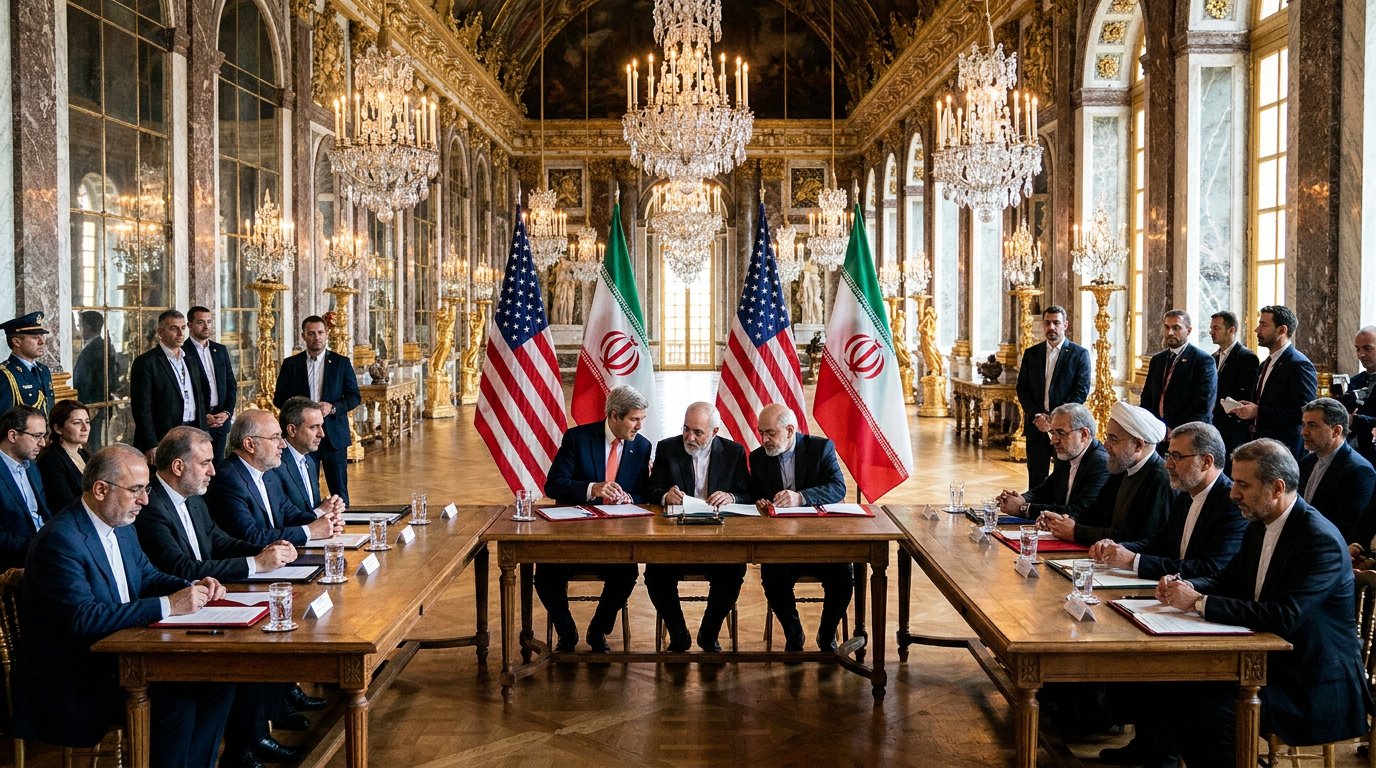
In a sweeping diplomatic maneuver that fundamentally alters the geopolitical landscape of the Middle East, the United States and Iran have officially signed a 14-point Memorandum of Understanding (MoU). The agreement, finalized at a post-G7 dinner at the Palace of Versailles in France, was signed by U.S. President Donald Trump and Iranian President Masoud Pezeshkian.[2][4]
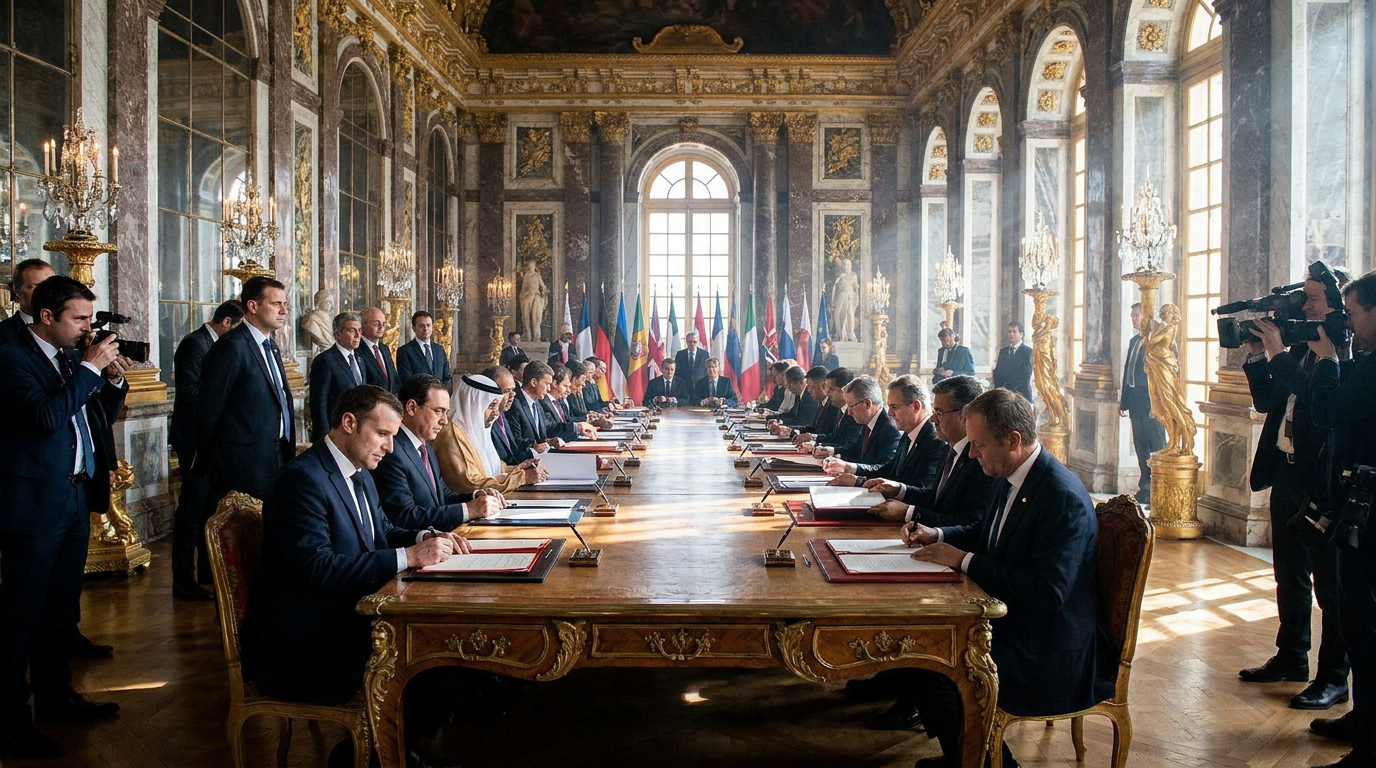
The core of the 14-paragraph document rests on a grand bargain: a formal end to direct military hostilities and a permanent Iranian commitment to never develop a nuclear weapon, in exchange for a massive $300 billion redevelopment package for Iran. The text of the memorandum, now public, outlines a phased de-escalation designed to freeze the current conflict lines.[1][6]
Evidence regarding the nuclear constraints suggests a return to, and expansion of, previous non-proliferation frameworks. According to the primary text, Iran has agreed to a verifiable halt on all weapons-grade uranium enrichment. However, the exact enforcement mechanisms and the degree of access granted to international inspectors remain a point of intense scrutiny among defense analysts.[1][6]

The financial component of the deal is unprecedented in scale. The $300 billion redevelopment package is intended to rebuild Iranian infrastructure severely degraded by years of sanctions and recent military strikes. The funding structure—specifically how much consists of unfrozen Iranian assets versus new international credit lines—has not been fully detailed in the initial public releases.[1][5]
Reactions from the Iranian political and military establishment have been triumphant. Iran’s chief negotiator, Mohammad Bagher Ghalibaf, publicly characterized the agreement as a "record of US failure," asserting that the diplomatic talks delivered far more for Tehran than continued warfare could have achieved. State media outlets have widely amplified this narrative.[2][4][8]
This sentiment extends to Iran's regional allies. Naim Qassem, the leader of Hezbollah, proclaimed the signing a "great victory" for the so-called Axis of Resistance. The framing from Tehran and its proxies emphasizes that the regime survived direct confrontation with the United States and emerged with a massive economic lifeline.[2]
Naim Qassem, the leader of Hezbollah, proclaimed the signing a "great victory" for the so-called Axis of Resistance.
In stark contrast, the agreement has triggered a political earthquake in Israel. Israeli Prime Minister Benjamin Netanyahu, who had promised the Israeli public "total victory" over Iran, was notably silent in the immediate aftermath of the signing. Behind the scenes, Israeli officials are reportedly furious, having been entirely cut out of the final negotiation process.[3][7]
Israeli defense and political figures view the Versailles agreement as a "strategic and political disaster." The primary concern in Jerusalem is that the $300 billion package will inevitably flow to regional proxies—including Hezbollah and Hamas—and that the survival of the current Iranian government leaves Israel facing a permanently hostile, newly enriched neighbor.[3][7]

The choice of venue has also drawn intense historical comparisons. The Guardian noted the heavy symbolism of signing the memorandum at the Palace of Versailles, the same location where the punitive treaties ending the First World War were signed. Critics of the deal have seized on this symbolism to argue the U.S. made too many concessions.[2]
Global markets, however, have reacted to the certainty of the agreement rather than its political optics. Energy markets stabilized immediately following the announcement, with Brent crude futures reflecting a reduced risk premium for Middle Eastern oil supply disruptions. The formal end to hostilities removes the immediate threat of a blockade in the Strait of Hormuz.[5]
Significant uncertainty remains regarding the implementation of the MoU. The document is a Memorandum of Understanding, not a formal treaty ratified by the U.S. Senate. This legal distinction raises questions about the long-term durability of the agreement, particularly concerning the disbursement of the $300 billion package over multiple years.[1][6]
Furthermore, the text leaves the status of ongoing proxy conflicts ambiguous. While the U.S. and Iran have agreed to end direct fighting, it is unclear what specific commitments Tehran has made regarding the arming and funding of militant groups across Lebanon, Syria, Yemen, and Gaza. This loophole is the primary driver of anxiety among U.S. allies in the region.[1][3][6]

Domestically, the U.S. administration is framing the deal as a major foreign policy win that prevents a nuclear-armed Iran without requiring a protracted, trillion-dollar ground war. Proponents argue that the economic package is a necessary lever to ensure compliance, shifting the battlefield from military confrontation to economic integration.[1][2]
As the initial shockwaves settle, the focus now shifts to the International Atomic Energy Agency (IAEA) and the establishment of the verification regime. The coming weeks will test whether the 14 points signed at Versailles can hold under the immense pressure of regional rivalries and domestic political opposition in both Washington and Jerusalem.[1][6]
How we got here
Early 2026
Direct military confrontations and proxy skirmishes escalate across the Middle East.
June 2026
Secret backchannel negotiations accelerate between U.S. and Iranian diplomats.
June 17, 2026
The 14-point Memorandum of Understanding is signed at a post-G7 dinner in Versailles.
Viewpoints in depth
U.S. Administration's view
The agreement is a necessary pragmatic step to prevent a nuclear Iran without a trillion-dollar war.
From Washington's perspective, the primary strategic objective in the Middle East has been preventing Iran from acquiring a nuclear weapon. Proponents of the deal argue that military strikes only delay enrichment programs, whereas a negotiated settlement with heavy economic incentives provides a verifiable, long-term halt. The $300 billion package is viewed not as a concession, but as the necessary leverage required to enforce compliance and shift the arena of conflict from the battlefield to the economic sphere.
Iranian Leadership's view
The deal represents a historic victory of endurance against Western pressure.
Tehran and its regional allies are framing the Versailles agreement as a total vindication of their 'resistance' strategy. By surviving years of crippling sanctions and direct military threats, the Iranian government secured a massive economic lifeline without collapsing. Statements from figures like Mohammad Bagher Ghalibaf emphasize that the U.S. was forced to the negotiating table, portraying the $300 billion package as reparations for past economic warfare rather than a conditional grant.
Israel's view
The agreement abandons a key ally and enriches an existential threat.
The Israeli defense establishment views the MoU with profound alarm. Having been promised 'total victory' by Prime Minister Netanyahu, the sudden pivot to a diplomatic settlement leaves Israel feeling isolated. The core Israeli argument is that the Iranian regime is fundamentally untrustworthy regarding nuclear commitments, and that injecting $300 billion into its economy will inevitably lead to a massive surge in funding for Hezbollah, Hamas, and other proxy forces directly on Israel's borders.
What we don't know
- The exact breakdown of the $300 billion package and the timeline for its disbursement.
- Whether the agreement includes secret annexes regarding Iran's funding of regional proxy groups.
- The specific mechanisms the IAEA will use to verify the permanent halt to weapons-grade enrichment.
Key terms
- Memorandum of Understanding (MoU)
- A formal agreement between two or more parties that outlines shared terms and goals, but is generally not as legally binding as a ratified treaty.
- Axis of Resistance
- A political and military alliance led by Iran, which includes the Syrian government, Hezbollah in Lebanon, Hamas in Gaza, and the Houthi movement in Yemen.
- Weapons-grade enrichment
- The process of increasing the concentration of the U-235 isotope in uranium to 90% or higher, the threshold required to construct a nuclear explosive device.
Frequently asked
What does the $300 billion package cover?
The $300 billion is designated as a 'redevelopment package' to rebuild Iran's economy and infrastructure, though the exact breakdown of unfrozen assets versus new credit lines remains unclear.
Is Iran allowed to have a nuclear program?
Under the agreement, Iran has committed to never developing a nuclear weapon, which involves halting weapons-grade uranium enrichment, though civilian nuclear energy may still be permitted under strict oversight.
Why is Israel upset about the deal?
Israeli leadership was cut out of the final negotiations and fears the $300 billion injection will ultimately be used by Iran to fund hostile proxy groups like Hezbollah and Hamas.
Sources
Source coverage
8 outlets
4 viewpoints surfaced







[1]BBCU.S. Administration
What's in the US-Iran agreement that's now in effect
Read on BBC →[2]The GuardianIranian Leadership & Allies
Trump news at a glance: Donald Trump surrenders himself to Iran deal
Read on The Guardian →[3]AxiosIsraeli Government
Netanyahu fumes, allies rage over Trump's Iran deal
Read on Axios →[4]Al JazeeraIranian Leadership & Allies
US and Iran sign Memorandum of Understanding to end war
Read on Al Jazeera →[5]ReutersGlobal Markets
Global markets react to US-Iran peace deal, oil prices stabilize
Read on Reuters →[6]U.S. Department of StateU.S. Administration
Memorandum of Understanding Between the United States and the Islamic Republic of Iran
Read on U.S. Department of State →[7]The Jerusalem PostIsraeli Government
Israel sidelined as US and Iran finalize Versailles agreement
Read on The Jerusalem Post →[8]IRNAIranian Leadership & Allies
President Pezeshkian secures historic diplomatic victory in France
Read on IRNA →
More in news politics
See all 7 stories →US-Iran Deal
Understanding the 14-Point US-Iran Peace Framework: Mechanisms, Markets, and Global Fallout
7 sources
US-Iran Deal
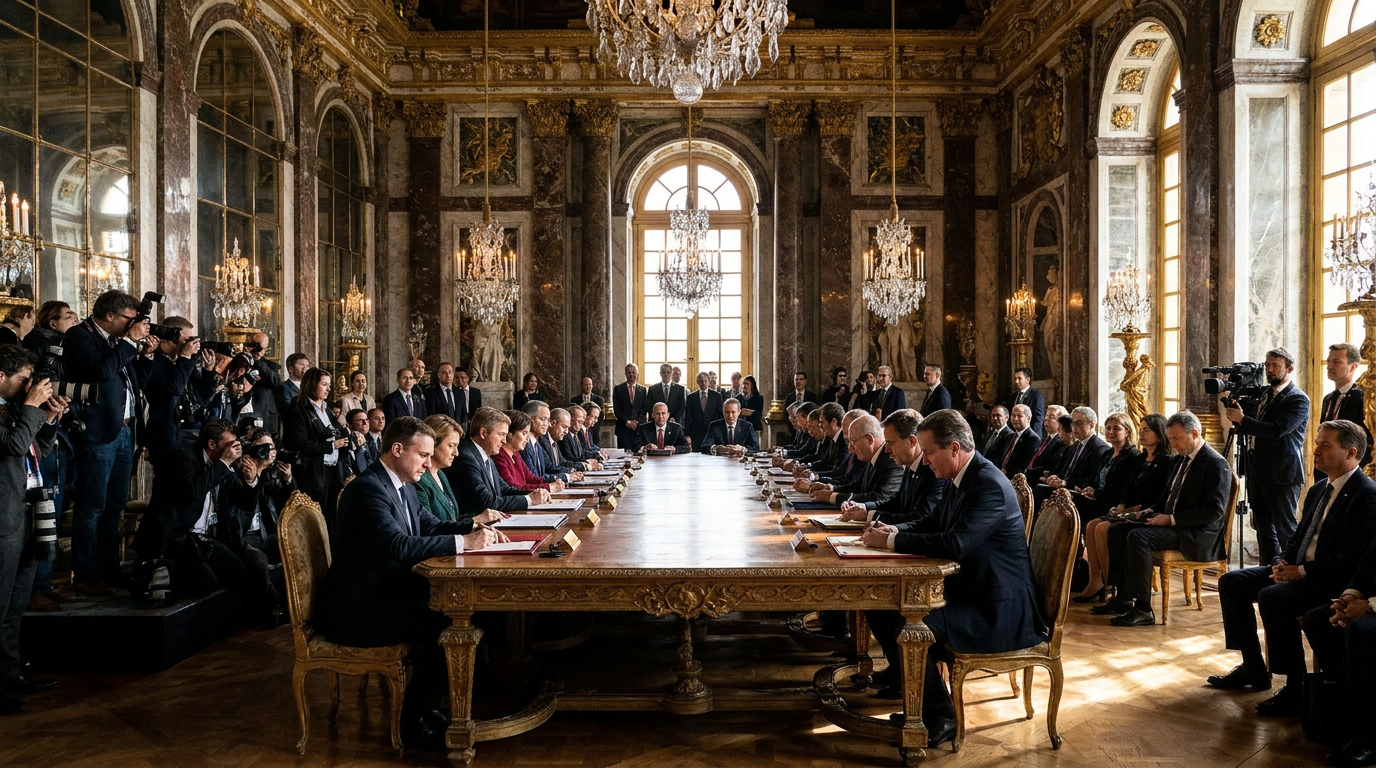
The US-Iran Peace Framework: What the Versailles Memorandum Actually Does
7 sources
US-Iran Relations
U.S. and Iran Sign 14-Point Memorandum of Understanding at Versailles
8 sources
US-Iran Agreement
What Is in the US-Iran 14-Point Agreement Signed at Versailles?
6 sources
Every angle. Every day.
Get news politics stories with full source coverage and perspective breakdowns delivered to your inbox.