
The 'Green Premium': How Energy Efficiency and Climate Resilience Are Reshaping Home Values
A growing body of empirical evidence shows that homes with energy-efficient and climate-resilient features sell faster and for a measurable premium. From solar panels to hurricane shutters, sustainability is transitioning from a niche preference to a core driver of real estate valuation.
By Factlen Editorial Team
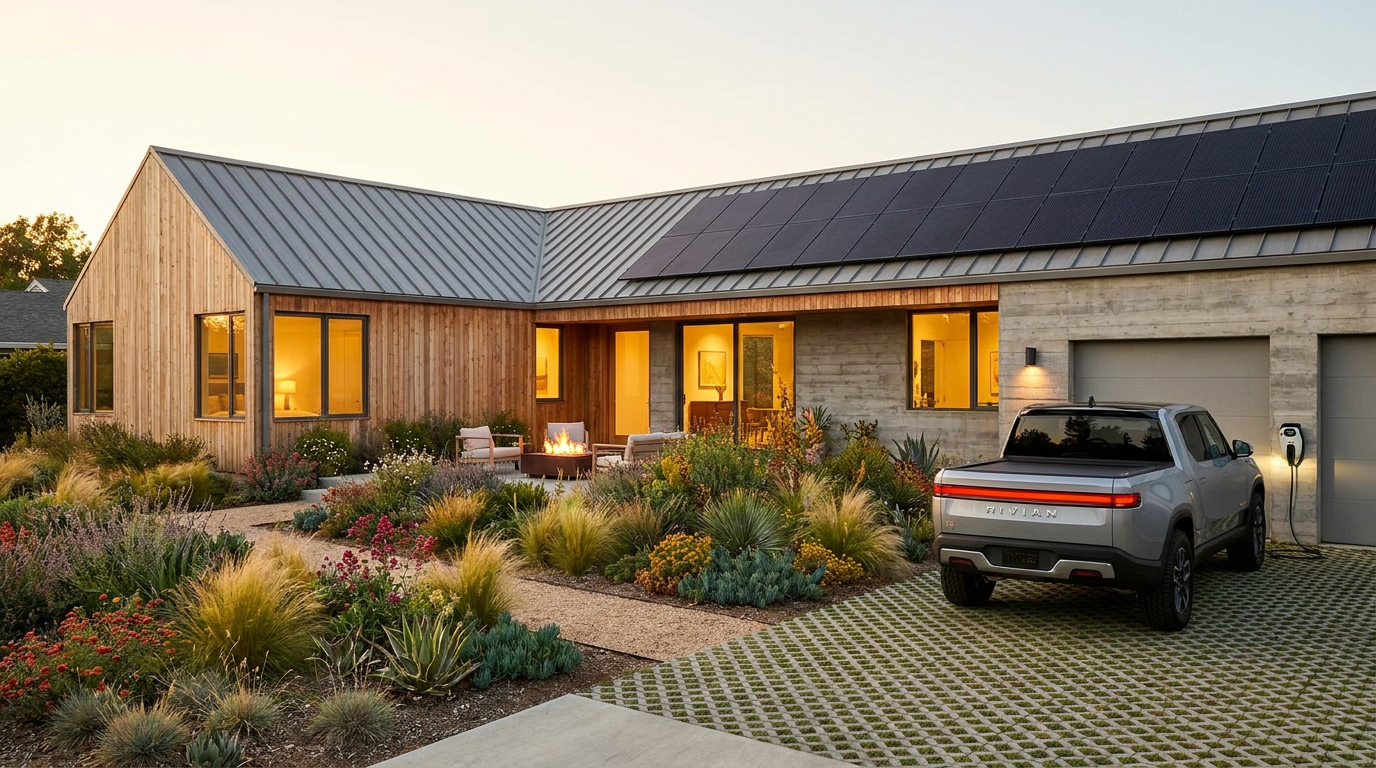
- Real Estate Appraisers & Lenders
- Focuses on the quantifiable reduction in mortgage default risk and the challenge of standardizing green valuations in appraisal datasets.
- Eco-Conscious Homebuyers
- Values the long-term reduction in operating costs, increased home comfort, and protection against climate-related disasters.
- Sellers & Listing Agents
- Views green features as a critical marketing tool to differentiate properties, accelerate sales, and maximize final closing prices.
What's not represented
- · Home Builders & Contractors
- · Local Zoning Boards
Why this matters
For homeowners, this data proves that energy-efficient upgrades are no longer just environmental choices—they are wealth-building investments. For buyers, it highlights the importance of factoring long-term utility savings and climate resilience into the upfront purchase price.
Key points
- Homes with high energy efficiency ratings sell for a 2.7% to 5% premium over unrated homes.
- Eco-friendly features like EV chargers and double-pane windows can reduce time on the market by up to 9 days.
- Climate-resilient additions, such as hurricane shutters and seismic retrofitting, measurably increase home values.
- Energy-efficient homes carry lower mortgage default risks due to reduced utility burdens on homeowners.
- The 'appraisal gap' currently suppresses the true market value of green upgrades due to a lack of standardized data.
The residential real estate market is undergoing a quiet but profound repricing. For decades, the financial return on energy-efficient home upgrades was treated as anecdotal—a "nice-to-have" aesthetic for a niche subset of environmentally conscious buyers. Appraisers struggled to quantify the value of insulation, and sellers often viewed green upgrades as sunk costs.[6]
Today, a robust body of empirical evidence from mortgage giants, academic institutions, and real estate platforms confirms the existence of a distinct "Green Premium." The data shows that sustainability metrics now heavily influence both the final sale price of a home and its velocity on the open market.[1][2][6]
This evidence pack examines the data behind sustainable real estate, mapping specific claims to primary research to separate proven market trends from wishful thinking. The consensus is clear: the market is actively pricing in energy efficiency and climate resilience.[6]
Claim 1: Energy efficiency directly increases final sale prices. The strongest evidence for the green premium comes from the secondary mortgage market, which has access to vast, standardized datasets.[1]

A comprehensive study by Freddie Mac analyzed 450,000 properties, comparing homes with a Home Energy Rating System (HERS) index against unrated equivalents. The data revealed that HERS-rated homes sold for an average of 2.7% more than comparable unrated homes.[1]
Furthermore, the Freddie Mac research demonstrated a sliding scale of value: homes with the lowest HERS scores—indicating the highest energy efficiency—commanded a 3% to 5% premium over lesser-rated homes. The better the energy performance, the higher the financial return at closing.[1]
Regional studies corroborate this national trend. A rigorous paired-sales analysis in Northern California, funded by Pacific Gas and Electric (PG&E), found that GreenPoint Rated and LEED-labeled homes sold for a 2.19% premium, translating to roughly $18,750 in additional value on a typical Bay Area home.[3]
Similarly, an analysis of 146,000 home sales in San Antonio, Texas, published in The Appraisal Journal, identified a sustained 4.2% price premium for homes with green features over a ten-year period, proving the trend holds in diverse climates and markets.[4]
Claim 2: Eco-friendly features significantly reduce time on the market. Beyond the final sale price, sustainability metrics heavily influence buyer velocity, acting as powerful magnets in competitive housing markets.[2]
Claim 2: Eco-friendly features significantly reduce time on the market.
Research from Zillow, which analyzed 3.1 million home sales, found that homes boasting electric vehicle (EV) charging stations and drought-resistant landscaping sold, on average, more than nine days faster than similar homes without those features.[2]
Listings that highlighted double-pane windows—a staple of basic energy efficiency—sold a full week faster and for a 1% higher price. Even smart home technologies aimed at conservation, such as programmable thermostats and smart sprinkler systems, accelerated sales by up to six days.[2]

Claim 3: Climate resilience is being priced into vulnerable markets. As severe weather events become more frequent, buyers are actively seeking defensive architecture, and they are willing to pay for the peace of mind.[2][6]
The Zillow analysis revealed that homes equipped with features designed to withstand climate-related disasters command a distinct premium. Listings mentioning hurricane or storm shutters sold for 1.4% more than comparable homes in the same neighborhoods.[2]
Properties elevated on stilts or piers to mitigate flood risk saw a 1.1% price bump, while homes that underwent seismic retrofitting to resist earthquakes sold an impressive 19 days faster than their non-retrofitted counterparts.[2]
Claim 4: Energy-efficient homes carry lower mortgage default risk. The financial benefits of green homes extend beyond the seller to the lender, fundamentally altering the risk profile of the asset.[1]
Freddie Mac's underwriting analysis found that owners of HERS-rated homes exhibited lower delinquency rates—both at the 60-day and 90-day marks—compared to owners of unrated homes. The mechanism is straightforward: lower utility bills result in more disposable income, reducing the financial stress on the homeowner and insulating them against energy price shocks.[1]

Where the evidence is weak or nuanced: Despite the clear premiums, the data reveals significant market inefficiencies. The primary barrier is the "appraisal gap," where the true value of green upgrades is lost in translation during the sale process.[3][6]
Because the Uniform Appraisal Dataset lacks standardized coding for green features, these upgrades are often invisible to algorithms and appraisers at the time of sale. Real estate experts argue that the current 2% to 5% green premium is likely artificially suppressed; if energy data were seamlessly integrated into Multiple Listing Services (MLS), the premium would likely be higher.[3]
Additionally, a sale premium does not always guarantee a positive short-term return on investment (ROI). For example, while geothermal heat pumps offer a high price boost, their installation costs can range from $2,500 to $12,500, meaning the upgrade is better suited for long-term residency rather than a quick flip.[2][6]
Viewpoints in depth
Real Estate Appraisers & Lenders
Focuses on the quantifiable reduction in mortgage default risk and the challenge of standardizing green valuations.
For the financial institutions backing the housing market, the Green Premium is fundamentally about risk mitigation. Freddie Mac's data proves that lower utility bills translate directly into higher disposable income, which insulates borrowers against economic shocks and lowers delinquency rates. However, appraisers face a structural hurdle: the Uniform Appraisal Dataset does not have dedicated fields for many modern green features. This forces appraisers to rely on manual documentation and paired-sales analyses, which can lead to the systemic undervaluation of sustainable homes in markets where green data isn't aggressively marketed by the listing agent.
Eco-Conscious Homebuyers
Values the long-term reduction in operating costs, increased home comfort, and protection against climate-related disasters.
Today's buyers—particularly Millennials and Gen Z, who now make up a massive share of the market—view climate change not just as an environmental issue, but as a direct threat to their property and finances. For this demographic, the Green Premium is a willingness to pay upfront for long-term security. They are actively filtering listings for drought-resistant landscaping to lower water bills, solar panels to hedge against grid instability, and climate-resilient architecture to survive extreme weather. To these buyers, a home without energy-efficient features is increasingly viewed as a deferred maintenance liability.
Sellers & Listing Agents
Views green features as a critical marketing tool to differentiate properties, accelerate sales, and maximize final closing prices.
In a fluctuating housing market, sellers are utilizing the Green Premium as a competitive wedge. Real estate agents are increasingly advising clients to highlight specific keywords—like 'tankless,' 'double-pane,' and 'smart thermostat'—in listing descriptions, knowing these terms trigger algorithms that push the home to efficiency-minded buyers. While agents caution against undertaking massive, expensive retrofits (like geothermal) purely for a quick flip, they strongly advocate for marketing existing green features aggressively, as the data proves it reliably shaves days off the market and boosts the final closing price.
What we don't know
- How the integration of standardized green data into the Multiple Listing Service (MLS) will ultimately affect the size of the Green Premium.
- Whether the premium for climate-resilient features will outpace the premium for energy efficiency as severe weather events become more common.
- The exact threshold at which the installation cost of high-end green tech (like geothermal) reliably yields a positive ROI upon immediate sale.
Key terms
- Green Premium
- The measurable increase in sale price or rental value that a property commands due to its energy-efficient or sustainable features.
- HERS Index
- The Home Energy Rating System, a nationally recognized system for inspecting and calculating a home's energy performance.
- Paired-Sales Analysis
- An appraisal method that compares the sale prices of two nearly identical properties to determine the value of a single differing feature, such as a green certification.
- Uniform Appraisal Dataset
- The standardized reporting format used by appraisers in the United States to transmit loan data to mortgage enterprises like Fannie Mae and Freddie Mac.
Frequently asked
Do solar panels actually increase home value?
Yes. Data from Zillow indicates that homes with solar panels sell for a 1.4% premium on average, and often sell faster than comparable homes without them.
What is a HERS score?
The Home Energy Rating System (HERS) index is an industry standard that measures a home's energy efficiency. A lower score indicates a more energy-efficient home.
Are green upgrades worth it for a quick flip?
Not always. While features like geothermal systems increase sale prices, their high upfront installation costs can exceed the immediate premium, making them better suited for long-term homeowners.
Why don't all green homes appraise for more?
The Uniform Appraisal Dataset lacks standardized coding for many green features, meaning these upgrades are sometimes invisible to appraisers unless specifically highlighted by the seller or listing agent.
Sources
Source coverage
6 outlets
3 viewpoints surfaced






[1]Freddie MacReal Estate Appraisers & Lenders
Energy Efficiency: Value Added to Properties & Loan Performance
Read on Freddie Mac →[2]Zillow ResearchEco-Conscious Homebuyers
Listings Highlighting Eco-Friendly Features Sell up to 10 Days Faster
Read on Zillow Research →[3]Build It GreenReal Estate Appraisers & Lenders
Green Home Sales Prices in Northern California: Appraiser-Driven Paired Sales Analysis
Read on Build It Green →[4]The Appraisal JournalReal Estate Appraisers & Lenders
An Empirical Assessment of the Value of Green in Residential Real Estate
Read on The Appraisal Journal →[5]PATRIZIA AGEco-Conscious Homebuyers
The Green Premium in Residential Real Estate
Read on PATRIZIA AG →[6]Factlen Editorial TeamSellers & Listing Agents
Synthesis by Factlen editorial team
Read on Factlen Editorial Team →

Every angle. Every day.
Get real estate stories with full source coverage and perspective breakdowns delivered to your inbox.