
How Next-Generation Geothermal Energy is Unlocking 24/7 Clean Power
By borrowing drilling techniques from the oil and gas industry, Enhanced Geothermal Systems (EGS) are turning hot, dry rock into a limitless source of firm, carbon-free electricity.
By Factlen Editorial Team
- Geothermal Industry & Investors
- Focuses on the rapidly improving unit economics, bankability, and massive total addressable market unlocked by tech demand.
- Energy Policy & Grid Analysts
- Emphasizes the critical need for firm, dispatchable clean power to balance intermittent renewables and replace retiring coal plants.
- Scientific & Environmental Monitors
- Highlights the necessity of rigorous subsurface monitoring to prevent induced seismicity and manage water usage.
What's not represented
- · Local communities near drilling sites
- · Water rights advocates in the American West
Why this matters
As the AI boom and widespread electrification strain the power grid, the world desperately needs clean energy that runs 24/7. Next-generation geothermal proves we can engineer our way out of the geographic limits that once held this limitless power source back.
Key points
- Enhanced Geothermal Systems (EGS) use oil and gas drilling techniques to unlock geothermal energy anywhere, not just in volcanic regions.
- The technology provides 'firm' baseload power that runs 24/7, making it an ideal zero-carbon complement to intermittent wind and solar.
- Fervo Energy's 2026 IPO and $421 million debt facility proved that EGS projects are now bankable without government backing.
- Tech hyperscalers are driving massive demand for EGS to power energy-intensive AI data centers.
- Drilling speeds have improved by 70%, driving well costs down by nearly 75% over the last three years.
- Scientists are deploying advanced high-temperature sensors to monitor and mitigate the risks of induced seismicity.
The world is facing an unprecedented electricity supply challenge in 2026. The convergence of artificial intelligence data centers, manufacturing reshoring, and widespread electrification is driving a surge in power demand not seen in decades.[7]
Grid operators are scrambling for "firm," dispatchable power—energy that is available 24 hours a day, 365 days a year. While solar and wind are the cheapest sources of clean energy, their intermittency means they cannot shoulder the baseload burden alone. Historically, coal and natural gas filled this gap, but climate targets and fuel price volatility are forcing a rapid transition.[3][7]
Enter next-generation geothermal energy. For over a century, traditional geothermal power has been a highly effective but geographically constrained niche resource. It has been largely confined to volcanic regions with naturally occurring underground hot water reservoirs, such as Iceland, Kenya, and parts of the western United States.[3]
Because traditional geothermal requires a rare, naturally occurring combination of heat, fluid, and highly permeable rock, it currently supplies less than 1% of the world's electricity. But that geographic limitation is now being shattered by a breakthrough known as Enhanced Geothermal Systems (EGS).[3]
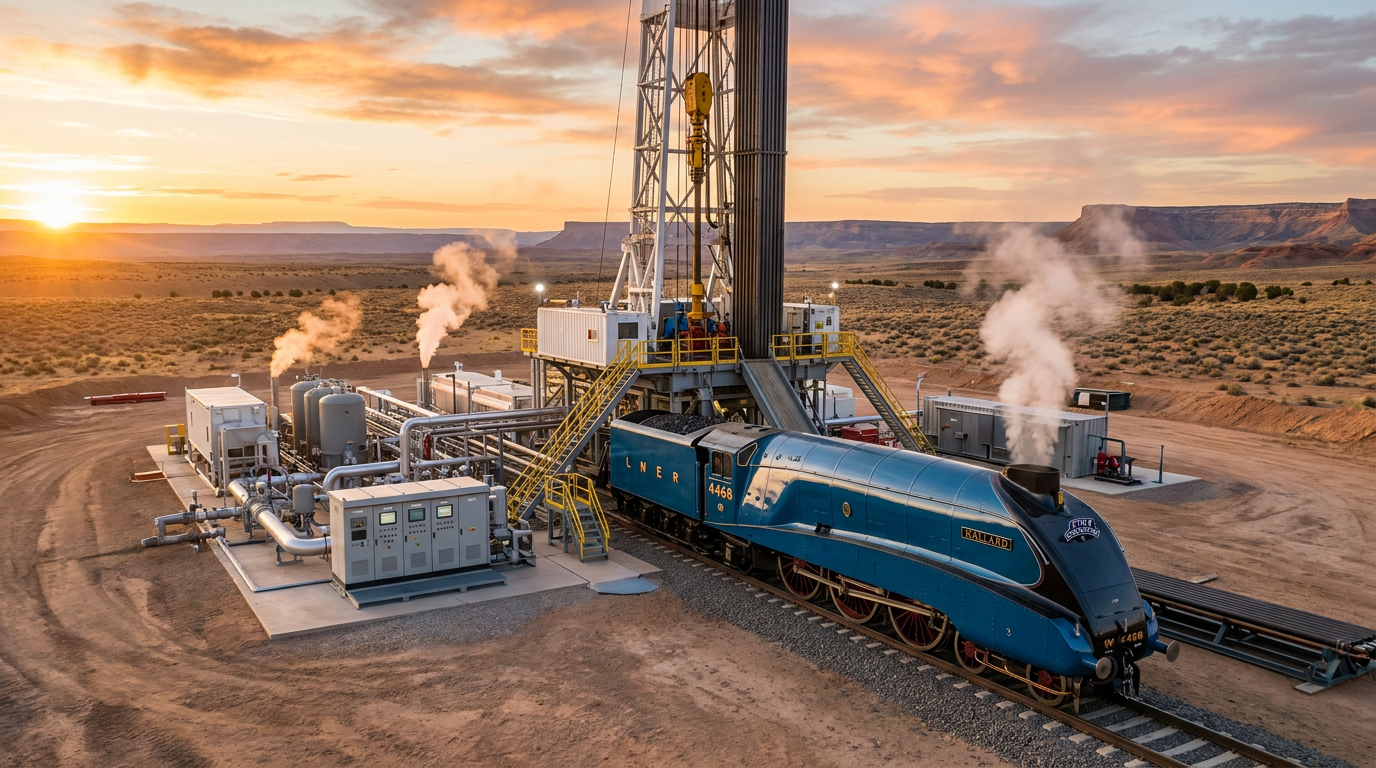
Instead of hunting for natural underground aquifers, EGS engineers artificial reservoirs in hot, dry rock deep beneath the Earth's surface. By drilling three to ten kilometers down into crystalline rock where temperatures exceed 150 degrees Celsius, developers can access virtually limitless heat that exists almost everywhere on the planet.[2][7]

The mechanism borrows heavily from the oil and gas industry. Using horizontal drilling and hydraulic fracturing techniques, engineers create or expand tiny fractures in the otherwise impermeable rock. Water is then injected into these artificial pathways, where it absorbs the ambient heat before returning to the surface to drive steam turbines and generate electricity.[3][7]
The result is a closed-loop, underground radiator that can be deployed at scale. The Massachusetts Institute of Technology suggests that, fully realized, geothermal energy could meet total global energy demand twice over. The U.S. Department of Energy estimates that EGS could unlock up to 150 gigawatts of firm capacity in the United States alone by 2050—a massive leap from the 2.7 gigawatts currently online.[1][2]
The result is a closed-loop, underground radiator that can be deployed at scale.
The transition from pilot projects to commercial deployment reached a critical inflection point in the spring of 2026. Fervo Energy, the industry leader in EGS, went public in May, raising $1.89 billion in an initial public offering that valued the company at nearly $10 billion on its opening day.[6][8]
Beyond the IPO, the true milestone for the sector was Fervo's ability to secure $421 million in non-recourse debt financing for its Cape Station project in Utah. Backed by a syndicate of nine major banks, it marked the first time a first-of-a-kind EGS project was financed at the project level without backing from the Department of Energy's Loan Programs Office.[6]
This credit decision fundamentally alters the cost-of-capital math for the entire geothermal industry. Historically, geothermal development has been hindered by high upfront capital expenditures and drilling risks, with financing costs hovering around 15% at the pre-drilling stage compared to 5% for wind and solar. Proving bankability on Wall Street signals that EGS is now viewed as a mature, scalable infrastructure asset.[1][6]
The commercial demand for this firm, clean power is immense, driven largely by the tech sector. In March 2026, Google signed a massive 3-gigawatt framework agreement with Fervo to power its expanding fleet of AI data centers. Hyperscalers require constant, reliable electricity, making EGS the ideal zero-carbon complement to their existing renewable portfolios.[6]

This rapid commercialization is underpinned by steep cost reductions. Between early pilot projects and the ongoing construction at Cape Station, drilling speeds have improved by roughly 70%, matching the pace of mature shale drilling. Consequently, well costs have plummeted by nearly 75%, alleviating one of the most significant bottlenecks in geothermal development.[6]
Despite the economic momentum, EGS deployment is not without environmental and technical hurdles. The hydraulic fracturing process induces microseismic events—tiny earthquakes that, while rarely felt at the surface, require rigorous monitoring to prevent larger induced seismicity.[5]
To mitigate these risks, scientists from the Lawrence Berkeley National Laboratory recently completed a seven-month continuous monitoring operation at Fervo's Cape Station. Deploying custom high-temperature seismometers nearly 7,000 feet underground at 338 degrees Fahrenheit, the team achieved a breakthrough in long-term reservoir monitoring, providing the data necessary to expand EGS safely.[5]
Water usage also presents a localized challenge, particularly in the arid American West where many early EGS plants are located. While geothermal projects use less water than coal or nuclear plants, they are more water-intensive than solar and wind, requiring careful resource management.[3]

Looking ahead, researchers are already developing the next iterations of the technology. Advanced Geothermal Systems (AGS) utilize entirely closed-loop pipes to eliminate seismic risks and fluid loss, while Superhot Rock (SHR) geothermal aims to drill even deeper to access supercritical fluids at 400 degrees Celsius, promising five to ten times the energy output per well.[4][7]
For now, EGS represents the most viable path to decarbonizing the baseload grid. With minimal land-use requirements, zero conventional air pollutants, and the ability to ramp generation up and down to ensure grid reliability, next-generation geothermal is poised to transition from a geological novelty to a foundational pillar of the global energy transition.[1][3]
How we got here
1980s–2010s
Geothermal energy remains a niche resource, confined strictly to regions with naturally occurring underground hot water reservoirs.
2023
Early EGS pilot projects successfully demonstrate the viability of using shale fracking techniques to create artificial geothermal reservoirs.
Late 2025
Advanced Geothermal Systems (AGS) deliver their first commercial power using closed-loop designs.
March 2026
Fervo Energy secures a historic $421 million non-recourse debt facility and signs a 3-gigawatt framework agreement with Google.
May 2026
Fervo Energy goes public on the Nasdaq, achieving a nearly $10 billion valuation and signaling Wall Street's acceptance of EGS.
Viewpoints in depth
Geothermal Developers & Investors
Focused on the rapidly improving unit economics and massive total addressable market.
For the industry and its financial backers, the 2026 milestones prove that geothermal has finally solved its scaling problem. By adapting mature drilling technology from the shale boom, developers have slashed well costs by 75% and dramatically accelerated drilling speeds. Investors view the recent influx of non-recourse debt from top-tier banks as the ultimate validation that Enhanced Geothermal Systems are now a bankable, mature infrastructure asset capable of meeting the insatiable energy demands of AI hyperscalers.
Grid Operators & Utilities
Focused on the critical need for firm, dispatchable clean power to balance the grid.
Utility operators view next-generation geothermal as the missing puzzle piece in the energy transition. While wind and solar are cheap, their intermittency requires massive battery storage or fossil-fuel backups to maintain grid stability. Geothermal provides 'firm' baseload power that runs 24/7, regardless of the weather. For grid managers facing the retirement of aging coal and nuclear plants alongside spiking electricity demand, EGS offers a reliable, zero-carbon drop-in replacement.
Scientific & Environmental Monitors
Focused on mitigating the subsurface risks of induced seismicity and water usage.
While broadly supportive of geothermal's low-carbon profile, geophysicists and environmental monitors emphasize the need for rigorous oversight. The hydraulic fracturing required for EGS inherently creates microseismic events. Researchers stress that continuous, high-temperature subsurface monitoring is non-negotiable to ensure these micro-fractures do not trigger larger, damaging earthquakes. Additionally, monitors in arid regions point out that EGS requires significant water inputs, necessitating careful resource management as the industry scales.
What we don't know
- How quickly the supply chain for specialized high-temperature drilling equipment can scale to meet the projected 150 GW demand.
- Whether water scarcity in the American West will ultimately cap the regional expansion of fluid-intensive EGS projects.
- How soon next-generation 'Superhot Rock' (SHR) systems will become commercially viable compared to current EGS technology.
Key terms
- Enhanced Geothermal Systems (EGS)
- A technology that extracts heat by creating artificial fractures in deep, hot, dry rock and circulating water through them.
- Baseload Power
- The minimum level of electricity demand on a grid over a period of time, requiring power plants that can run continuously.
- Dispatchable Energy
- Sources of electricity that can be turned on or off, or adjust their power output, according to market demand.
- Induced Seismicity
- Minor earthquakes and tremors that are caused by human activity that alters the stresses and strains on the Earth's crust.
- Hyperscaler
- Large cloud service providers and tech companies that operate massive data centers requiring enormous amounts of electricity.
Frequently asked
What is the difference between traditional and enhanced geothermal?
Traditional geothermal relies on finding natural underground hot water aquifers. Enhanced Geothermal Systems (EGS) create artificial reservoirs by fracturing hot, dry rock and injecting water into it.
Why is geothermal energy considered 'firm' power?
Unlike solar and wind, which depend on the weather and time of day, geothermal plants draw on the Earth's constant internal heat, allowing them to generate electricity 24/7.
Does EGS cause earthquakes?
The fracturing process does create microseismic events. While these are usually too small to be felt at the surface, operators use advanced sensors to monitor the subsurface and prevent larger induced seismicity.
How much of the grid could geothermal power?
The U.S. Department of Energy estimates that next-generation geothermal could provide up to 150 gigawatts of capacity by 2050, which is roughly a quarter of the country's current total electricity capacity.
Sources
Source coverage
8 outlets
3 viewpoints surfaced








[1]BloombergNEFGeothermal Industry & Investors
Next-Generation Geothermal Technologies Are Heating Up
Read on BloombergNEF →[2]Switchgear MagazineGeothermal Industry & Investors
Geothermal breakthrough may unlock 150 GW
Read on Switchgear Magazine →[3]World Resources InstituteEnergy Policy & Grid Analysts
Next-Generation Geothermal Can Help Unlock 100% Clean Power
Read on World Resources Institute →[4]MIT NewsScientific & Environmental Monitors
Next-generation geothermal energy: Promise, progress, and challenges
Read on MIT News →[5]Lawrence Berkeley National LaboratoryScientific & Environmental Monitors
Scientists Develop New Technology to Continuously Monitor Geothermal Energy Operations
Read on Lawrence Berkeley National Laboratory →[6]Cleantech GroupGeothermal Industry & Investors
Fervo's IPO Establishes Enhanced Geothermal Baselines
Read on Cleantech Group →[7]ITIFEnergy Policy & Grid Analysts
Advanced Geothermal Energy Is Widely Available, Clean, and Maybe Cheap Enough to Make a Big Impact
Read on ITIF →[8]BenzingaGeothermal Industry & Investors
Top Wall Street Forecasters Revamp Fervo Energy Expectations Ahead Of Q1 Earnings
Read on Benzinga →

Every angle. Every day.
Get guides stories with full source coverage and perspective breakdowns delivered to your inbox.