
The Science of Temperature Therapy: When to Use Ice Baths vs. Saunas for Muscle Recovery
While cold plunges and saunas have both surged in popularity, sports science reveals that using the wrong temperature modality at the wrong time can actively sabotage muscle growth and recovery.
By Factlen Editorial Team
- Hypertrophy & Strength Coaches
- Prioritize long-term muscle adaptation and advise against post-workout cold exposure.
- Endurance & Team Sport Athletes
- Value immediate recovery of performance and pain reduction over long-term muscle mass accretion.
- Sports Science Researchers
- Emphasize that thermal therapies are secondary tools that cannot replace foundational recovery habits.
What's not represented
- · Physical Therapists treating acute injuries
- · Casual gym-goers with limited time
Why this matters
Understanding the distinct biological mechanisms behind heat and cold exposure prevents athletes and casual gym-goers from accidentally blunting their muscle growth or prolonging their fatigue. Periodizing your recovery tools ensures that the effort you put into training translates directly into physiological results.
Key points
- Cold water immersion reduces acute inflammation and numbs pain, making it ideal for immediate performance recovery during tournaments.
- Ice baths actively blunt the mTOR signaling pathway, significantly reducing long-term muscle growth if used after resistance training.
- Heat therapy promotes vasodilation, increasing blood flow and delivering nutrients to damaged muscle tissue.
- Saunas trigger the release of Heat Shock Proteins, which help repair damaged cellular structures without blunting adaptation.
- Neither hot nor cold therapy can replace foundational recovery pillars like adequate sleep and proper protein intake.
The modern fitness landscape is awash in temperature extremes. From boutique recovery studios offering infrared saunas to the ubiquitous social media posts of athletes plunging into ice-filled tubs, thermal therapy has transitioned from elite training facilities to the mainstream. But as these modalities become more accessible, a critical question has emerged among sports scientists: when does temperature therapy actually help, and when might it be sabotaging your hard-earned gains?[6]
The human body responds to physical stress through a delicate cascade of inflammation and repair. Exercise, particularly resistance training, creates micro-tears in muscle fibers. The body's natural response is to trigger an inflammatory cascade that clears away damaged tissue and signals for new, stronger proteins to be built.[2]
For decades, the prevailing wisdom was to aggressively ice any sore muscle to blunt this inflammation. However, recent meta-analyses and cellular-level research have forced a paradigm shift. Sports scientists now understand that inflammation is not always an enemy to be vanquished; in many cases, it is the very signal required for muscular adaptation.[1]
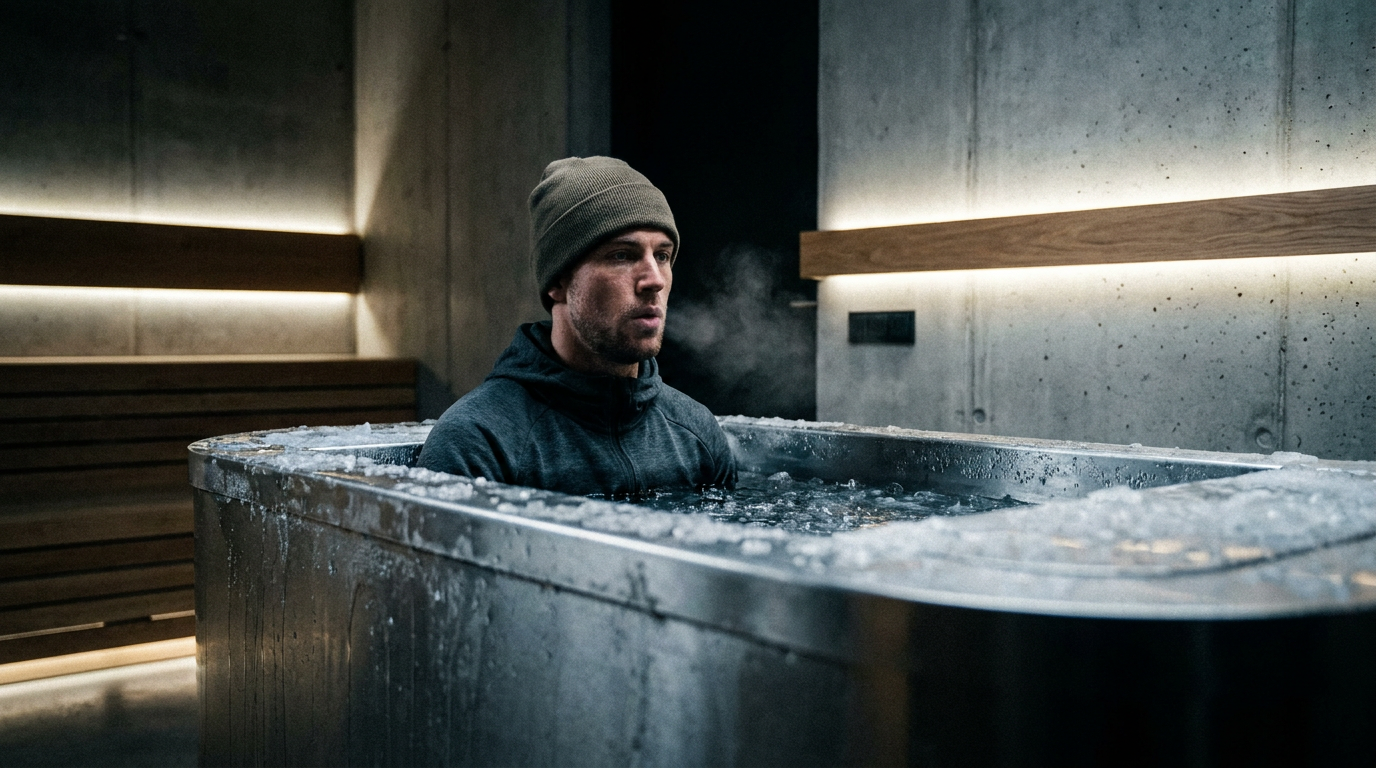
Cold water immersion, typically defined as submerging the body in water between 46°F and 59°F for 10 to 15 minutes, triggers profound physiological changes. The immediate shock causes severe peripheral vasoconstriction, shunting blood away from the extremities and toward the core to preserve heat.[4]

This vasoconstrictive effect is highly effective at reducing acute swelling and numbing the peripheral nerves, which provides immediate analgesic relief. For an athlete in the middle of a multi-day tournament, a CrossFit competitor between events, or a soccer player facing three matches in eight days, this rapid reduction in perceived fatigue and soreness is invaluable.[4]
However, that same mechanism makes ice baths actively detrimental for anyone whose primary goal is building muscle or increasing absolute strength. A landmark study published in the Journal of Applied Physiology demonstrated that cold water immersion significantly blunts the activation of the mTOR pathway—the primary cellular signaling mechanism responsible for muscle protein synthesis.[1]
By restricting blood flow to the muscles post-workout, cold plunging reduces the delivery of essential amino acids to the damaged tissue. Furthermore, researchers found that regular post-exercise cold water immersion attenuated the growth of Type II fast-twitch muscle fibers, resulting in significantly less muscle mass accretion over a 12-week training block compared to active recovery.[2]

By restricting blood flow to the muscles post-workout, cold plunging reduces the delivery of essential amino acids to the damaged tissue.
Heat therapy, conversely, operates on the opposite physiological principle. Whether through traditional dry saunas, steam rooms, or infrared cabins, exposing the body to high temperatures induces widespread vasodilation. Blood vessels expand, dramatically increasing circulation to skeletal muscle, connective tissue, and the skin.[5]
This enhanced blood flow acts as a biological transit system, efficiently delivering oxygen and nutrients to fatigued muscles while flushing out metabolic waste products like lactate. Crucially, heat exposure does not blunt the inflammatory signals required for muscle growth; instead, it supports the later stages of the repair process.[6]
At the cellular level, heat stress triggers the production of Heat Shock Proteins. These specialized molecules act as cellular chaperones, seeking out proteins that have been damaged or misfolded during intense exercise and helping to repair them. This mechanism accelerates recovery without interfering with the body's natural hypertrophic adaptations.[1]
For athletes dealing with Delayed Onset Muscle Soreness—the deep, aching stiffness that typically peaks 24 to 48 hours after an intense workout—heat is often the superior choice. While cold is best for the acute phase immediately following an injury, thermotherapy applied after the initial inflammation has subsided helps counteract muscle stiffness and restores joint range of motion.[6]

Seeking the best of both worlds, many athletes turn to Contrast Water Therapy, which involves alternating between hot and cold immersion. The theory is that the rapid shifting between vasodilation and vasoconstriction creates a pumping action in the vascular system, accelerating the clearance of edema and metabolic waste.[3]
Systematic reviews of contrast therapy show that it is consistently superior to passive rest for reducing the perception of muscle soreness and minimizing strength loss in the days following strenuous exercise. However, researchers note that while it feels highly restorative, its objective physiological benefits over simple active recovery, like a light spin on a stationary bike, remain debated.[3]
The emerging consensus in sports science is that temperature therapy must be periodized just like training. The tool must match the biological goal. If the objective is immediate performance recovery for an impending competition, cold water immersion is a highly effective intervention to clear fatigue and numb pain.[4]

Conversely, if the goal is adaptation—building larger, stronger muscles during an off-season or a dedicated hypertrophy block—cold exposure should be avoided immediately post-training. Instead, athletes should lean on heat therapy to promote blood flow and cellular repair, or simply rely on active recovery.[2]
Ultimately, researchers emphasize that no thermal modality can replace the foundational pillars of recovery. Saunas and ice baths are marginal gains; they cannot compensate for inadequate sleep, poor hydration, or insufficient protein intake. When layered on top of a solid recovery foundation, however, the strategic application of heat and cold becomes a powerful tool for athletic longevity.[6]
Viewpoints in depth
Hypertrophy & Strength Coaches
Prioritize long-term muscle adaptation and advise against post-workout cold exposure.
This camp points to cellular data showing that cold water immersion blunts the mTOR signaling pathway and reduces the activity of satellite cells. Because their primary goal is maximizing muscle cross-sectional area and absolute strength, they view the acute reduction in inflammation caused by ice baths as an active hindrance to the micro-tears required for growth. They advocate for heat therapy or simple active recovery to keep blood flowing to damaged tissues.
Endurance & Team Sport Athletes
Value immediate recovery of performance and pain reduction over long-term muscle mass accretion.
For athletes navigating dense competitive schedules—such as a tennis player in a Grand Slam or a basketball team on a back-to-back road trip—the long-term blunting of muscle growth is irrelevant compared to the immediate need to perform. This camp relies heavily on cold water immersion and contrast therapy to numb peripheral nerves, flush acute fatigue, and restore perceived readiness, allowing them to compete at a high level within 24 hours of exhausting efforts.
Sports Science Researchers
Emphasize that thermal therapies are secondary tools that cannot replace foundational recovery habits.
While acknowledging the specific physiological mechanisms of hot and cold therapies, researchers caution against over-indexing on these modalities. They argue that the fitness industry often markets saunas and ice baths as magic bullets, obscuring the fact that 90% of recovery is driven by adequate sleep architecture and sufficient protein synthesis. In their view, thermal therapy is a 1% optimization that only matters if the foundational pillars are already secured.
What we don't know
- The exact threshold of cold exposure (temperature and duration) required to trigger the blunting effect on muscle hypertrophy.
- Whether the long-term benefits of contrast water therapy definitively outperform simple active recovery protocols like light cycling.
- How individual genetic differences in inflammatory response affect the efficacy of heat and cold therapies.
Key terms
- Vasoconstriction
- The narrowing of blood vessels, which reduces blood flow and helps decrease acute swelling and inflammation.
- Vasodilation
- The widening of blood vessels, which increases blood flow and delivers oxygen and nutrients to tissues.
- mTOR Pathway
- A crucial cellular signaling pathway that triggers muscle protein synthesis and drives muscle growth.
- Heat Shock Proteins (HSPs)
- Molecules produced by the body in response to heat stress that help repair damaged or misfolded proteins.
- Delayed Onset Muscle Soreness (DOMS)
- The deep, aching muscle stiffness that typically peaks 24 to 48 hours after intense or unfamiliar exercise.
Frequently asked
Should I take an ice bath immediately after lifting weights?
No, if your primary goal is to build muscle. Cold water immersion blunts the inflammatory signals and protein synthesis required for muscle growth.
When is the best time to use a sauna for recovery?
Saunas are highly effective when used after the acute phase of inflammation has passed, typically to help alleviate Delayed Onset Muscle Soreness (DOMS) and promote blood flow.
Does contrast therapy actually work?
Yes, alternating hot and cold water creates a vascular pumping action that is proven to reduce perceived muscle soreness and fatigue, though its objective benefits over active recovery are still debated.
Can heat therapy heal a torn muscle?
No. While heat promotes blood flow and helps with general soreness, it cannot accelerate the healing of acute structural injuries like muscle tears or joint sprains.
Sources
Source coverage
6 outlets
3 viewpoints surfaced






[1]Journal of Applied PhysiologyHypertrophy & Strength Coaches
Cold water immersion attenuates anabolic signaling and skeletal muscle fiber hypertrophy
Read on Journal of Applied Physiology →[2]Frontiers in Sports and Active LivingHypertrophy & Strength Coaches
Post-Exercise Cold Water Immersion Effects on Physiological Adaptations to Resistance Training
Read on Frontiers in Sports and Active Living →[3]PLOS OneEndurance & Team Sport Athletes
Contrast Water Therapy and Exercise Induced Muscle Damage: A Systematic Review and Meta-Analysis
Read on PLOS One →[4]Journal of Strength and Conditioning ResearchEndurance & Team Sport Athletes
Effects of cold water immersion and contrast water therapy for recovery from team sport
Read on Journal of Strength and Conditioning Research →[5]Biology of SportSports Science Researchers
Effects of far-infrared sauna bathing on recovery from strength and endurance training sessions
Read on Biology of Sport →[6]Factlen Editorial TeamSports Science Researchers
Synthesis by Factlen editorial team
Read on Factlen Editorial Team →


Every angle. Every day.
Get fitness stories with full source coverage and perspective breakdowns delivered to your inbox.