
Solid-State Batteries Are Finally Here—And They're Powering Motorcycles First
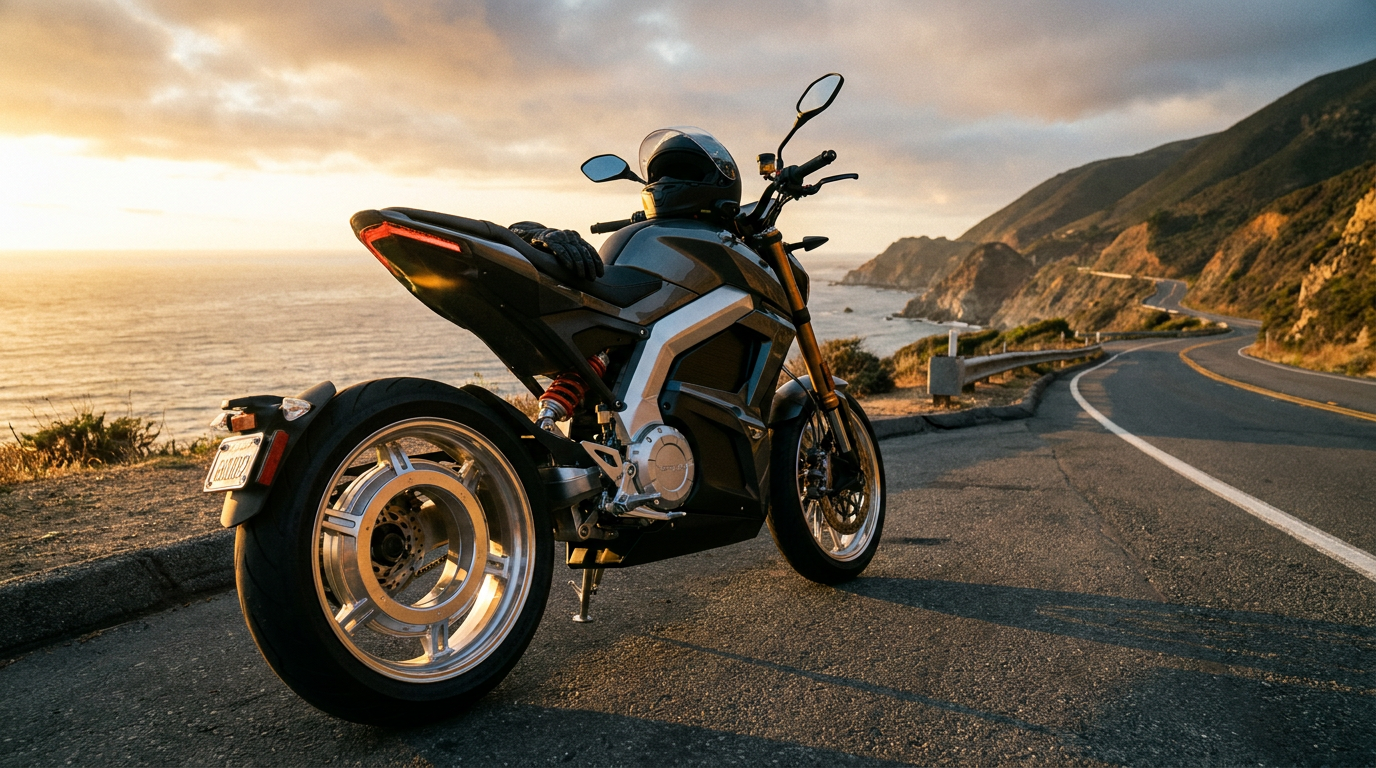
The long-awaited 'holy grail' of EV battery technology has officially entered commercial production, debuting not in a car, but in a high-performance electric motorcycle.
By Factlen Editorial Team
- EV Tech Optimists
- Argue that solid-state batteries are the breakthrough needed to eliminate range anxiety and make electric motorcycles truly viable.
- Battery Industry Skeptics
- Acknowledge the impressive test results but demand long-term, real-world degradation data before declaring the liquid-electrolyte era over.
- Traditional Motorcyclists
- View the $30,000 price tag as prohibitive and remain attached to the mechanical character and affordability of internal combustion engines.
What's not represented
- · Traditional lithium-ion battery manufacturers defending their current technology's cost-effectiveness.
- · Regulators establishing new safety testing standards for solid-state vehicles.
Why this matters
Solid-state batteries have long been the 'holy grail' of electric vehicles, promising massive range and zero fire risk. By successfully commercializing this technology in a motorcycle first, the industry has proven that ultra-fast, 10-minute EV charging is finally a real-world reality, not just a laboratory concept.
Key points
- Verge Motorcycles has begun production of the TS Pro, the world's first mass-produced EV with a solid-state battery.
- The motorcycle boasts up to 370 miles of range and can add 186 miles of charge in just ten minutes.
- Solid-state cells replace flammable liquid electrolytes with solid materials, drastically improving safety and energy density.
- The battery's thermal stability allows it to be entirely air-cooled, saving crucial weight on the motorcycle.
- The flagship technology comes at a premium, with the TS Pro starting at $29,990 in the US market.
For the better part of a decade, the automotive world has been chasing the holy grail of electric vehicle technology: the solid-state battery. Promised to deliver massive range, eliminate fire risks, and charge in minutes, the technology has perpetually seemed five years away. But the first commercially available vehicle to bring this breakthrough to public roads isn't a luxury sedan or a mass-market SUV. It is a motorcycle.[6]
In June 2026, Estonian-Finnish manufacturer Verge Motorcycles officially commenced production of the TS Pro, the world's first mass-produced electric vehicle powered by a fully solid-state battery. Developed in partnership with battery startup Donut Lab, the motorcycle aims to shatter the range and charging limitations that have long held back electric two-wheelers.[2][4]
The specifications read like science fiction for the current EV market. The flagship version of the TS Pro boasts a 33-kilowatt-hour battery pack capable of delivering up to 370 miles (roughly 600 kilometers) of range on a single charge. More crucially, the battery can accept ultra-fast charging rates, adding 186 miles of range in just ten minutes.[1][2][5]

To understand why this is a monumental shift, one must look at the chemistry. Conventional lithium-ion batteries rely on liquid or gel electrolytes to move ions between the anode and the cathode. While effective, these volatile liquids are flammable, sensitive to temperature extremes, and physically bulky, requiring heavy protective casing and complex thermal management systems.[4][6]
Solid-state technology replaces that liquid with a solid conductive material—often a ceramic, glass, or solid polymer. This structural transformation fundamentally changes the battery's physical properties. It drastically increases energy density, minimizes fire risks by removing the flammable liquid, and extends the overall lifespan of the power unit.[2][4]

Motorcycles are the perfect, albeit challenging, proving ground for this technology. Unlike electric cars, which can simply extend their wheelbase to accommodate a larger battery skateboard, motorcycles face severe packaging constraints. Adding more lithium-ion cells to a bike adds prohibitive weight and ruins the handling dynamics. Solid-state cells, which Donut Lab claims achieve an energy density of 400 watt-hours per kilogram, allow Verge to pack massive power into a narrow, lightweight frame.[3][6]
Motorcycles are the perfect, albeit challenging, proving ground for this technology.
Furthermore, the thermal stability of solid electrolytes solves another major headache for electric motorcycles: cooling. Most high-performance EV car batteries rely on heavy liquid-cooling systems to prevent thermal runaway during fast charging. Because solid-state cells generate significantly less heat and are inherently safer, the Verge TS Pro's battery pack is entirely air-cooled, saving crucial weight and mechanical complexity.[3]
The journey to production was not without intense industry skepticism. When Donut Lab first unveiled its 400 Wh/kg solid-state cell at the Consumer Electronics Show (CES) in January 2026, battery experts pushed back hard. Critics pointed to the lack of a working demonstration at the time, with one prominent university professor stating bluntly that without a demo, the claims were unbelievable.[3]
That skepticism began to thaw in March 2026, when Donut Lab released its first pack-level charging test results. Operating inside a real Verge TS Pro motorcycle, an 18 kWh version of the battery pack sustained over 100 kilowatts of charging power—a massive 5C rate—for five minutes straight. The pack charged from 10 percent to 50 percent in just five minutes, and reached 70 percent in slightly over nine minutes, all while relying solely on air cooling.[2][3]

The integration of this battery is paired with Verge's other signature innovation: a hubless, in-wheel electric motor. The 'Donut 2.0' motor is housed entirely within the rear wheel's rim, delivering 137 horsepower and a staggering 1,000 Newton-meters of torque directly to the road. This setup frees up the entire central chassis of the motorcycle to house the solid-state battery pack, optimizing the bike's center of gravity.[1][2][6]
However, this bleeding-edge technology comes at a steep premium. The Verge TS Pro starts at $29,990 in the United States, placing it in the upper echelon of premium motorcycles alongside flagship superbikes from Ducati and Aprilia. Opting for the long-range 33 kWh battery package adds an additional $5,000 to the sticker price.[2][5]

At that price point, the TS Pro is not poised to replace the everyday commuter scooter. Instead, it serves as a high-end halo product that proves solid-state commercialization is possible today. While global automotive giants like Toyota, CATL, and Changan are targeting 2027 to 2030 for meaningful production volumes of solid-state cars, Verge and Donut Lab have effectively beaten them to the punch.[3][5]
For the wider electric vehicle industry, the successful deployment of the TS Pro is a watershed moment. It transitions solid-state batteries from laboratory prototypes and press-release promises into a tangible consumer product. If the real-world reliability matches the laboratory testing, the technology that powers this boutique Finnish motorcycle will soon reshape the entire global automotive landscape.[2][6]
How we got here
January 2026
Donut Lab unveils its 400 Wh/kg solid-state battery cell at CES, facing widespread skepticism from industry experts.
March 2026
Donut Lab releases pack-level testing data, proving the battery can sustain a 100 kW charge rate for five minutes in a real motorcycle.
May 2026
Verge Motorcycles finalizes the integration of the solid-state pack with its proprietary hubless motor design.
June 2026
Production officially begins on the Verge TS Pro, marking the first mass-produced solid-state EV.
Viewpoints in depth
EV Tech Optimists
Solid-state is the tipping point for electric vehicle adoption.
For early adopters and EV advocates, the Verge TS Pro represents the moment electric motorcycles finally overcome their physical limitations. By solving the dual problems of heavy battery weight and slow charging times, this camp believes solid-state technology will rapidly make internal combustion engines obsolete in the premium two-wheel market. They view the successful commercialization by a smaller startup as a necessary catalyst to force legacy automakers to accelerate their own solid-state timelines.
Battery Industry Skeptics
Lab results are impressive, but long-term real-world data is still missing.
While the pack-level charging tests are undeniably impressive, battery chemists and industry analysts remain cautious. They point out that achieving high energy density in a lab or a low-volume boutique vehicle is vastly different from scaling gigawatt-hour production reliably. This camp is waiting to see how these solid-state cells degrade over thousands of heat cycles, fast-charging sessions, and years of real-world abuse before declaring a total victory over liquid-electrolyte lithium-ion batteries.
Traditional Motorcyclists
The technology is fascinating, but the price and experience remain barriers.
For the core motorcycling demographic, a $30,000 electric bike remains a tough sell. This camp argues that while the technology is fascinating, the prohibitive cost keeps it out of reach for the average rider. Furthermore, many traditionalists argue that the silent, linear power delivery of an EV lacks the visceral mechanical engagement, shifting dynamics, and exhaust note that make riding a motorcycle enjoyable in the first place.
What we don't know
- How the solid-state cells will degrade over thousands of charging cycles in real-world, varied weather conditions.
- Whether Donut Lab can successfully scale its boutique manufacturing to supply larger automotive giants.
- How quickly competitors will be able to bring their own solid-state motorcycle models to market to drive down prices.
Key terms
- Solid-State Battery
- A battery technology that uses solid electrodes and a solid electrolyte, rather than the liquid or polymer gel electrolytes found in conventional lithium-ion batteries.
- Energy Density
- The amount of energy a battery contains compared to its weight or size, typically measured in watt-hours per kilogram (Wh/kg).
- Electrolyte
- The medium inside a battery that allows ions to flow between the cathode and anode to generate electricity.
- C-Rate
- A measure of the rate at which a battery is being charged or discharged relative to its maximum capacity. A 5C rate means the battery is being charged at five times its total capacity per hour.
- Thermal Runaway
- A dangerous chain reaction within a battery cell where an increase in temperature causes a further increase in temperature, often leading to a fire.
Frequently asked
What is a solid-state battery?
A solid-state battery replaces the liquid or gel electrolyte found in traditional lithium-ion batteries with a solid conductive material, such as ceramic or glass, making it safer and more energy-dense.
How fast does the Verge TS Pro charge?
The motorcycle can charge from 10% to 50% in just five minutes, and can add roughly 186 miles of range in ten minutes using a DC fast charger.
How much does the Verge TS Pro cost?
The base model starts at $29,990 in the United States, with the extended-range 33 kWh battery package adding an additional $5,000.
Why are solid-state batteries better for motorcycles?
Motorcycles have very little space for batteries. Solid-state cells pack more energy into a smaller, lighter footprint and generate less heat, allowing them to be air-cooled rather than requiring heavy liquid cooling systems.
Sources
Source coverage
6 outlets
3 viewpoints surfaced






[1]Verge MotorcyclesEV Tech Optimists
Verge introduces solid-state battery technology into production motorcycles
Read on Verge Motorcycles →[2]COP31TREV Tech Optimists
The World's First Solid-State Battery Motorcycle Enters Production
Read on COP31TR →[3]ElectrekBattery Industry Skeptics
Donut Lab releases first pack-level charging test results for solid-state motorcycle
Read on Electrek →[4]BikeSalesTraditional Motorcyclists
World-first solid-state battery motorcycle revealed
Read on BikeSales →[5]GearJunkieTraditional Motorcyclists
You Can Finally Buy an EV With a Solid-State Battery: It's a Motorcycle
Read on GearJunkie →[6]Factlen Editorial TeamEV Tech Optimists
Synthesis by Factlen editorial team
Read on Factlen Editorial Team →


Every angle. Every day.
Get shopping stories with full source coverage and perspective breakdowns delivered to your inbox.