
Induction vs. Gas Cooktops: The Evidence on Efficiency, Health, and Performance
As induction technology reaches price parity with traditional gas stoves, homeowners face a critical choice between the familiar control of an open flame and the rapid, emission-free efficiency of electromagnetic heating.
By Factlen Editorial Team
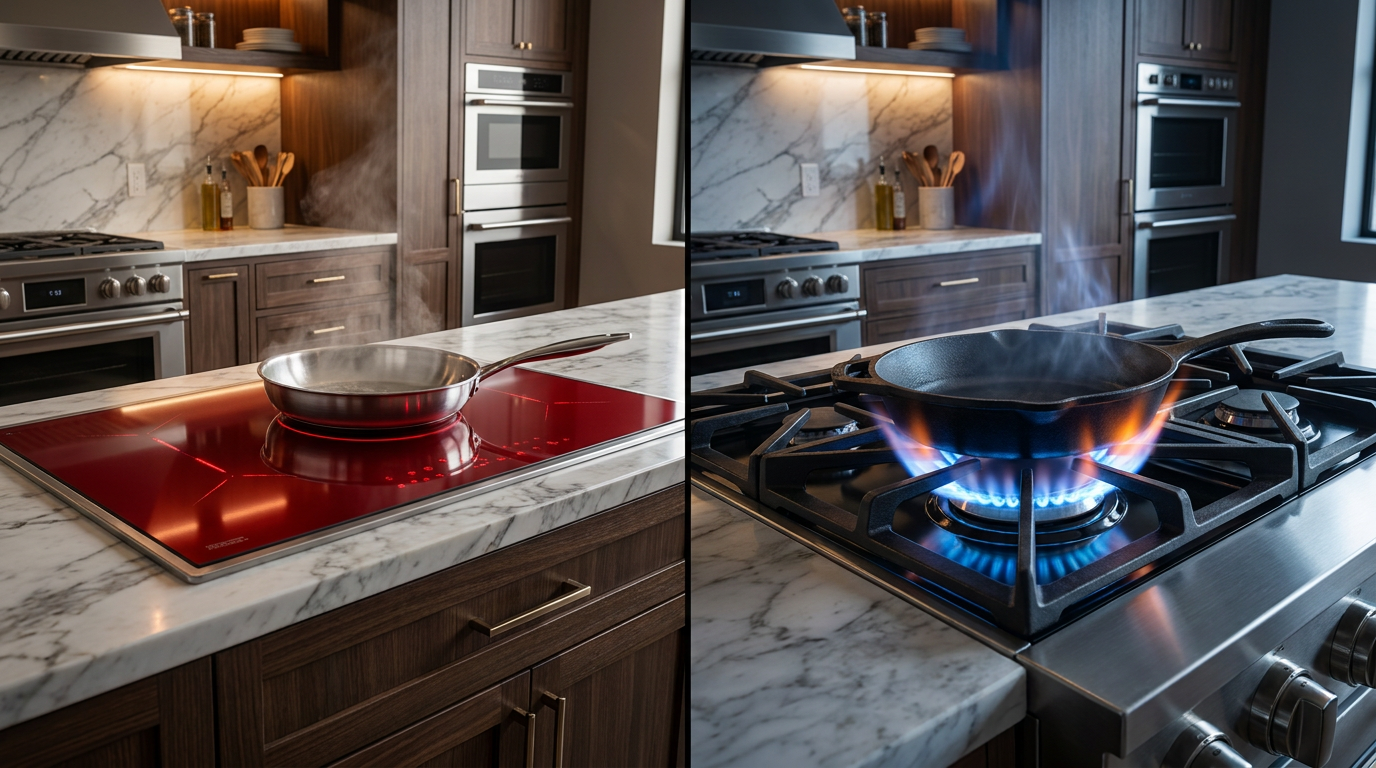
- Health and Climate Advocates
- Argues that gas stoves pose unacceptable respiratory risks and climate impacts, advocating for a rapid transition to electric and induction cooking.
- Culinary Traditionalists
- Values the tactile control, visual feedback, and cookware versatility of open-flame gas cooking, viewing it as essential for certain techniques.
- Efficiency and Tech Adopters
- Focuses on the superior speed, energy transfer, and precision of induction technology, viewing it as a necessary modernization of the kitchen.
What's not represented
- · Renters without appliance control
- · Natural gas industry representatives
Why this matters
Choosing between gas and induction impacts not only your daily cooking experience and utility bills, but also the long-term respiratory health of your household and the carbon footprint of your home.
Key points
- Induction cooktops convert up to 90% of energy into heat, compared to just 40% for gas stoves.
- Gas stoves emit nitrogen dioxide and benzene, which have been linked to respiratory issues like childhood asthma.
- Induction requires ferromagnetic cookware and often necessitates a 220-volt electrical circuit upgrade.
- Professional chefs are increasingly adopting induction for its precision, speed, and ability to keep kitchens cool.
- Gas remains popular for its visual flame feedback, resilience during power outages, and compatibility with all cookware.
For decades, the glowing blue flame of a gas stove has been the undisputed symbol of a serious home kitchen. But a quiet revolution is reshaping how we cook, driven by advances in electromagnetic technology and growing awareness of indoor air quality. The debate between gas and induction cooktops has moved from niche culinary forums to the center of home renovation decisions. Unlike traditional electric coils, induction offers a level of precision and power that rivals, and often exceeds, the performance of combustion. As households weigh the upfront costs of appliance upgrades against long-term health and environmental impacts, the choice of a new cooktop has become one of the most consequential decisions in modern home design. This side-by-side analysis examines the trade-offs, the underlying evidence, and the specific conditions where each technology excels.[8]
Understanding the fundamental mechanics of each system is essential to evaluating their respective merits. Gas cooktops rely on the combustion of natural gas or propane to create an open flame, transferring heat to the cookware through direct contact and convection. This process is familiar and visually intuitive, but inherently leaky. Induction technology, by contrast, uses copper coils beneath a glass surface to generate a fluctuating magnetic field. When a compatible ferromagnetic pan is placed on the surface, this magnetic field induces rapid vibrations in the metal's iron molecules, generating heat directly within the cookware itself. The glass surface remains relatively cool, warming only from the residual heat of the pan. This direct energy transfer fundamentally alters the efficiency equation of daily cooking.[5][8]
The case for induction rests heavily on its unparalleled speed and energy efficiency. Because the cookware itself becomes the heating element, virtually no energy is lost to the surrounding air. Data shows that induction cooktops convert between 85 and 90 percent of their electrical energy into usable cooking heat. By comparison, gas stoves operate at roughly 40 percent efficiency, with the majority of the heat escaping into the kitchen environment. This translates to dramatic differences in performance. In standardized testing, induction burners consistently boil water in nearly half the time it takes a high-output gas burner. For households focused on utility costs and time-saving convenience, the sheer thermal power of induction presents a compelling argument.[5][8]

Against this impressive performance, the primary arguments against induction center on upfront costs and infrastructure requirements. Transitioning from gas to induction is rarely a simple appliance swap. Most induction cooktops require a dedicated 220-volt electrical circuit, which can necessitate expensive electrical panel upgrades, particularly in older homes. Furthermore, induction technology demands ferromagnetic cookware—such as cast iron, carbon steel, or magnetic stainless steel. Homeowners heavily invested in copper, aluminum, or glass cookware must factor the cost of a new kitchen arsenal into their transition budget. The tactile experience also requires adjustment; cooks must learn to rely on digital readouts rather than the visual cue of a flame size to gauge heat levels.[8]
The evidence supporting the shift away from gas, however, is increasingly rooted in public health. A robust body of scientific literature has illuminated the hidden costs of indoor combustion. Gas stoves emit significant levels of nitrogen dioxide (NO2), carbon monoxide, and particulate matter directly into the living space. A landmark study by Stanford University researchers found that gas stoves often expose Americans to NO2 levels that match or exceed outdoor pollution, frequently pushing indoor concentrations past the World Health Organization's safety thresholds. For millions of households, particularly those in smaller dwellings or with inadequate ventilation, routine cooking creates an invisible but potent respiratory hazard.[1][6][7]
The evidence supporting the shift away from gas, however, is increasingly rooted in public health.
The health implications of these emissions are particularly severe for children. Researchers at the Harvard T.H. Chan School of Public Health estimate that 50,000 current cases of childhood asthma in the United States can be directly traced to NO2 exposure from gas stoves. When other pollutants like benzene—a known carcinogen that leaks even when stoves are turned off—are factored in, the health burden grows substantially. Health and climate advocates argue that while range hoods can mitigate some of this risk, they are often underutilized or improperly vented to the outside. Consequently, the medical community is increasingly viewing the transition to electric and induction cooking as a vital preventative health measure.[2][6][7]

Beyond the immediate confines of the kitchen, the environmental footprint of each technology presents another stark contrast. The case against gas extends to its role in the broader climate crisis. Natural gas is primarily composed of methane, a potent greenhouse gas that traps significantly more heat in the atmosphere than carbon dioxide over a 20-year period. Studies indicate that gas stoves leak unburned methane into the atmosphere not just during operation, but continuously while sitting idle. When multiplied across millions of households, these cumulative leaks represent a substantial climate impact. Induction, while reliant on the electrical grid, becomes progressively cleaner as municipalities transition to wind, solar, and other renewable energy sources.[5][7][8]
The case for gas remains anchored in culinary tradition, versatility, and resilience. For many cooks, the visual feedback of an open flame is irreplaceable, allowing for intuitive, split-second temperature adjustments. Gas burners accommodate any type of cookware, including traditional round-bottomed woks that struggle to make contact with flat glass induction surfaces. Furthermore, gas stoves allow chefs to char vegetables directly on the grates or tilt and toss pans without breaking the heat connection—techniques that are difficult or impossible on a standard induction cooktop. In regions prone to frequent electrical grid failures, a gas stove also provides a reliable means of cooking and boiling water during power outages.[3][4][8]
Yet, the professional culinary world is beginning to challenge the supremacy of gas. A growing cohort of professional chefs are adopting induction for its precision and operational benefits. In commercial kitchens, the ambient heat generated by gas burners creates punishing working conditions and demands massive, energy-intensive HVAC systems. Induction dramatically lowers the ambient temperature of the kitchen, creating a safer and more comfortable environment for staff. Chefs also praise the repeatability of induction; a specific numerical setting will deliver the exact same heat every time, eliminating the guesswork of adjusting a flame. The smooth glass surface also allows for rapid cleanup, reducing labor costs at the end of a long service.[3][4][8]

The tactile transition from gas to induction also involves a learning curve that should not be underestimated. Evidence from culinary instructors suggests that new induction users often burn food during their first few weeks, underestimating the sheer speed at which a magnetic field can heat a pan. While gas provides a gentle, gradual ramp-up of heat, induction delivers immediate thermal energy. To bridge this gap, manufacturers are increasingly incorporating smart sensors and precise temperature-holding features that gas simply cannot replicate. For example, some high-end induction units can hold a water bath at exactly 135 degrees for sous-vide cooking or melt chocolate without a double boiler. These advanced capabilities highlight how induction is not just replacing gas, but fundamentally expanding the technical possibilities of the home kitchen.[3][4][8]
When synthesizing these trade-offs, induction fits well when a household prioritizes indoor air quality, energy efficiency, and rapid cooking speeds. It is the optimal choice for families with young children or individuals with respiratory conditions, as it entirely eliminates point-source combustion pollutants. Induction also fits perfectly for those undertaking full kitchen renovations where electrical upgrades can be seamlessly integrated, or for environmentally conscious consumers looking to decarbonize their homes. Conversely, induction does not fit well when a home lacks the necessary 220-volt electrical infrastructure and the cost of upgrading the panel is prohibitive. It is also a poor fit for cooks who rely heavily on specialized non-magnetic cookware, such as traditional copper pots or aluminum pans, and are unwilling to replace their cherished collections.[2][6][8]
On the other side of the ledger, gas fits well when a home already possesses robust gas lines and the budget does not allow for electrical overhauls. It remains a strong fit for culinary traditionalists who place a premium on the tactile, visual experience of flame cooking, or those who frequently use techniques like pan-tossing and direct-flame charring. Gas also fits well in regions with unreliable electrical grids, offering a resilient backup for cooking during power outages. However, gas does not fit well in small, poorly ventilated apartments where toxic byproducts can quickly accumulate. It is also an increasingly poor fit for households focused on long-term sustainability and minimizing their carbon footprint. Ultimately, both technologies can produce exceptional meals, but the optimal choice requires balancing culinary habits with infrastructure realities and health priorities.[1][4][8]
How we got here
1970s
Induction cooktops are first introduced to the consumer market but struggle to gain traction due to high costs.
2010s
Induction technology becomes more affordable and begins replacing gas in high-end European and Asian kitchens.
2022
Major health studies link gas stove emissions to childhood asthma, sparking widespread debate over indoor air quality.
2024
Stanford and Harvard publish comprehensive national assessments quantifying the health risks of gas stove pollution.
2026
Induction cooktops reach price parity with premium gas models, accelerating adoption in North American home renovations.
Viewpoints in depth
Health and Climate Advocates
Focusing on the hidden costs of indoor combustion.
This camp emphasizes that the kitchen is the only place in the modern home where we regularly burn fossil fuels without mandated exterior ventilation. Citing extensive epidemiological data, they argue that the convenience of gas cooking is outweighed by the respiratory risks posed by nitrogen dioxide and benzene emissions. Furthermore, they view the transition to induction as a critical step in decarbonizing residential buildings and reducing methane leaks.
Culinary Traditionalists
Defending the tactile art of open-flame cooking.
For this group, cooking is a sensory experience that relies heavily on visual cues. They argue that the size and color of a gas flame provide immediate, intuitive feedback that digital induction displays cannot replicate. They also highlight the versatility of gas, which accommodates specialty cookware like round-bottomed woks and allows for aggressive techniques like pan-tossing and direct-flame charring without interrupting the heat transfer.
Efficiency and Tech Adopters
Prioritizing speed, precision, and energy transfer.
This perspective views induction as a straightforward technological upgrade, akin to moving from incandescent bulbs to LEDs. They point to the undeniable physics of electromagnetic heating, where 90% of the energy reaches the food compared to just 40% with gas. For these adopters, the ability to boil water in half the time, hold precise temperatures indefinitely, and wipe down a cool glass surface makes induction the objectively superior tool for modern cooking.
What we don't know
- How quickly the electrical grid in various regions will decarbonize to make induction cooking truly zero-emission.
- Whether future building codes will universally mandate induction over gas in all new residential construction.
- How the secondary market for used gas stoves will be affected as more households transition to electric options.
Key terms
- Electromagnetic induction
- A process where a magnetic field generates electric currents inside a magnetic material, creating direct heat within the cookware rather than on the stove surface.
- Ferromagnetic cookware
- Pots and pans containing iron, such as cast iron or magnetic stainless steel, which are required for an induction cooktop to function.
- Nitrogen dioxide (NO2)
- A harmful gaseous pollutant produced by combustion, including the burning of natural gas, linked to respiratory issues like asthma.
- Ambient heat loss
- The energy that escapes into the surrounding air rather than going into the food, a common inefficiency in gas cooking.
Frequently asked
Can I use my current pots and pans on an induction cooktop?
It depends. Induction requires ferromagnetic cookware like cast iron or magnetic stainless steel. Copper, aluminum, and glass will not work unless they have a magnetic base.
Do gas stoves really affect indoor air quality?
Yes. Studies from Stanford and Harvard show that gas stoves emit nitrogen dioxide (NO2) and benzene, which can accumulate indoors and exacerbate respiratory conditions like asthma.
Is induction cheaper to run than gas?
Generally, yes. Because induction transfers 85-90% of its energy directly to the cookware, it wastes far less energy than gas, which can lead to lower utility bills over time.
Do professional chefs actually use induction?
Increasingly, yes. Many commercial kitchens are adopting induction because it offers precise temperature control, faster boil times, and keeps the kitchen environment significantly cooler.
Sources
Source coverage
8 outlets
3 viewpoints surfaced








[1]Stanford UniversityHealth and Climate Advocates
Gas and propane stoves expose people to substantial amounts of nitrogen dioxide
Read on Stanford University →[2]Harvard T.H. Chan School of Public HealthHealth and Climate Advocates
Study estimates NO2 exposure from gas stoves nationally and across demographic groups
Read on Harvard T.H. Chan School of Public Health →[3]The GuardianEfficiency and Tech Adopters
Why professional chefs are turning to induction stoves
Read on The Guardian →[4]CBCCulinary Traditionalists
Professional chefs tout the culinary — and environmental — advantages of induction stoves
Read on CBC →[5]LeafScoreEfficiency and Tech Adopters
The Most Energy Efficient Stovetop: Gas, Electric, or Induction?
Read on LeafScore →[6]RMIHealth and Climate Advocates
Gas Stoves: Health and Air Quality Impacts and Solutions
Read on RMI →[7]ScienceOpenHealth and Climate Advocates
Health impacts of gas stove pollutants
Read on ScienceOpen →[8]Factlen Editorial TeamEfficiency and Tech Adopters
Synthesis by Factlen editorial team
Read on Factlen Editorial Team →



Every angle. Every day.
Get shopping stories with full source coverage and perspective breakdowns delivered to your inbox.